
Canada Goose
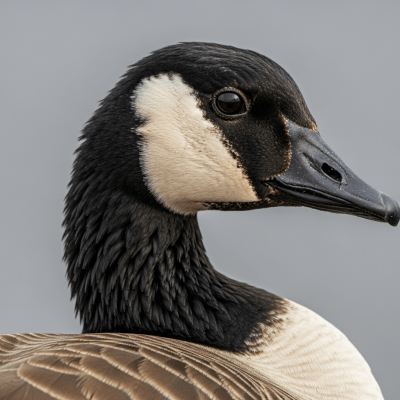
The Canada Goose (Branta canadensis) is a large, iconic waterfowl native to North America, instantly recognized by its black head and neck, white chinstrap, and bold migratory flocks.
The Canada Goose (Branta canadensis) is a large, iconic waterfowl native to North America, instantly recognized by its black head and neck, white chinstrap, and bold migratory flocks.
First described by Carl Linnaeus in 1758, the Canada Goose traces its origins to the vast lakes, rivers, and wetlands of North America. Its lineage belongs to the genus Branta within the family Anatidae, evolving as a wild species without domestication. Over centuries, it has adapted to a range of environments, thriving in both pristine wilderness and bustling urban parks.
The Canada Goose is classified within the family Anatidae, which includes ducks, swans, and other geese. Its scientific name is Branta canadensis. As a member of the genus Branta, it shares close ties with other black-necked geese, distinguished by evolutionary traits and migratory behaviors. This species is one of several recognized subspecies, each adapted to regional habitats across North America.
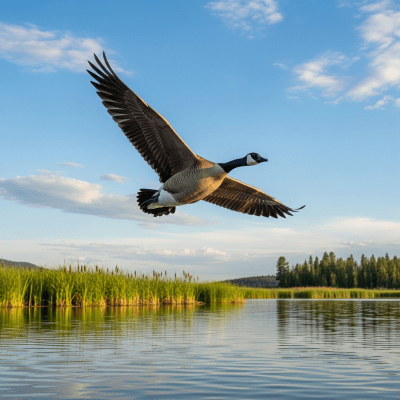
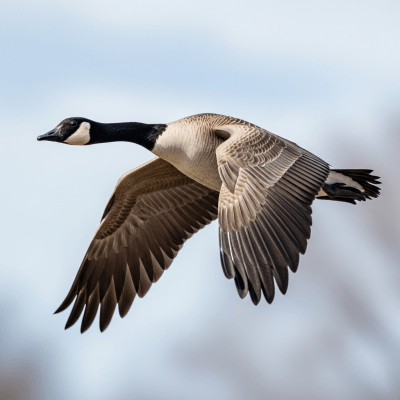
Striking in size and color, the Canada Goose measures 75–110 cm long with a wingspan reaching up to 185 cm. Its defining features include a jet-black head and neck, a crisp white chinstrap, and a brownish-gray body. The plumage is sleek yet robust, and its large, webbed feet are built for both swimming and walking on land. When in flight, their broad wings and graceful V-shaped formations are a hallmark of seasonal migration.
Canada Geese are highly social and adaptable, often seen in flocks that communicate with loud honks. Their migratory journeys, marked by V-shaped flight patterns, are among the most recognizable in the bird world. On the ground, they exhibit strong site fidelity, returning to the same nesting areas year after year. Aggressive nest defense and communal living help protect their young. While wild, they have been hunted for meat and feathers, and their urban presence sometimes requires population management.
Bring this kind into your world illustrated posters, mugs, and shirts.
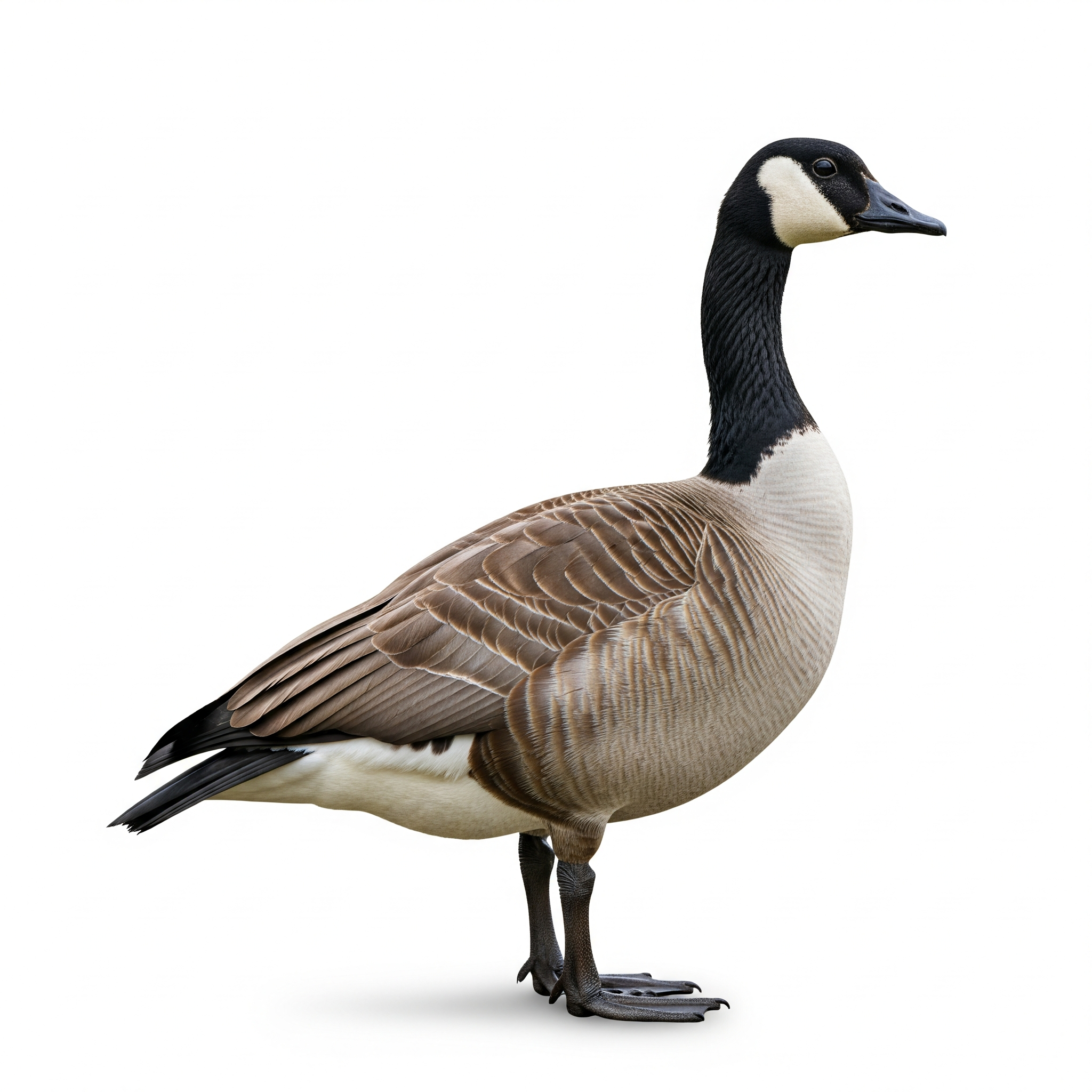
Archival print, museum-grade paper
Buy Poster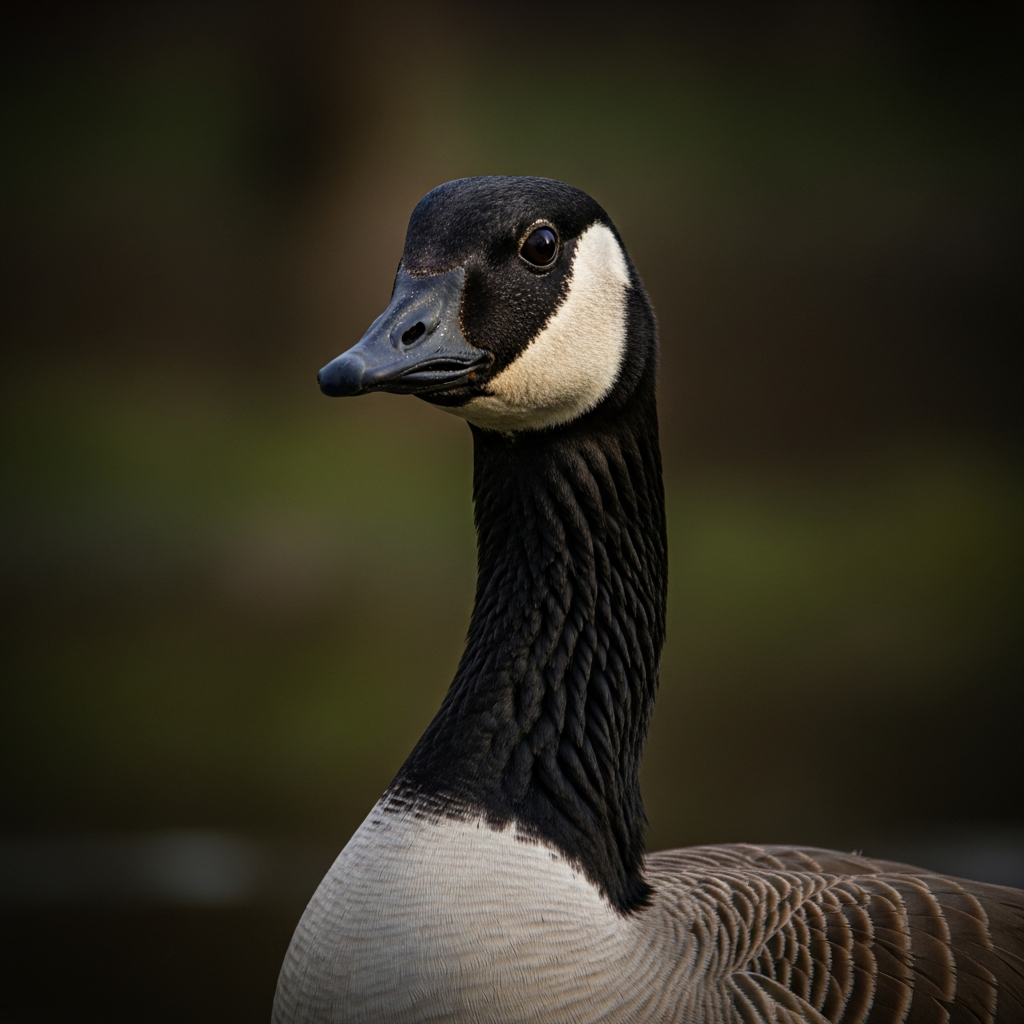
Stoneware mug, dishwasher safe
Buy Mug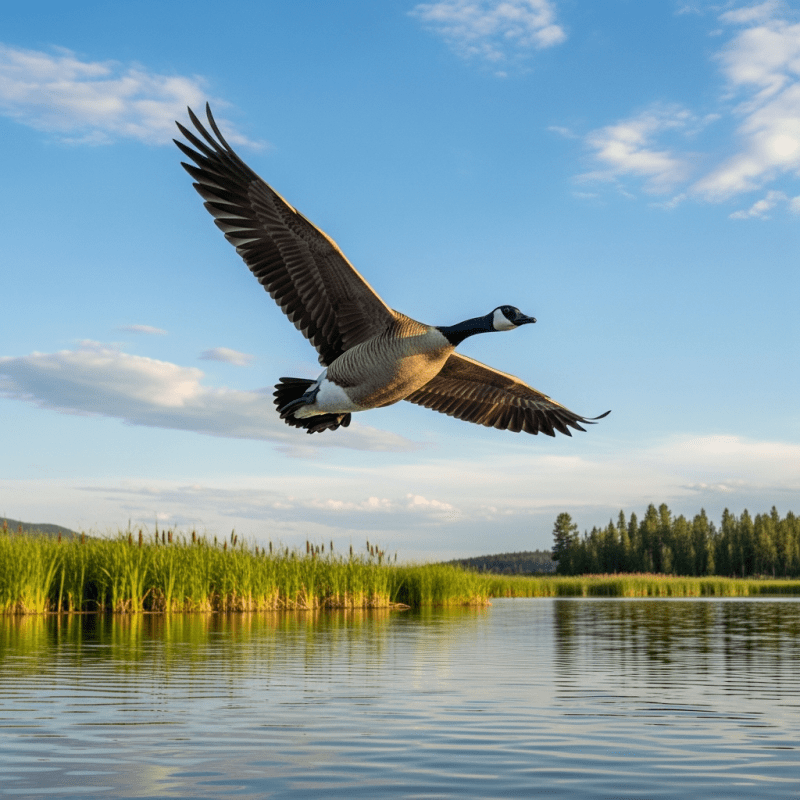
Soft cotton tee, unisex sizes
Buy ShirtThe Canada Goose holds a special place in North American culture, symbolizing wilderness, migration, and seasonal change. Its image appears in art, literature, and folklore, often representing resilience and teamwork. The distinctive honking and V-shaped formations are celebrated in nature documentaries and have inspired countless stories about the rhythms of nature. In some regions, it is affectionately known as the "Honker," and its annual migrations are a sign of spring and autumn.
Canada Geese are native to North America, inhabiting lakes, rivers, wetlands, and increasingly, urban parks and agricultural fields. Their range extends from the Arctic tundra to temperate zones, and their adaptability has allowed them to establish populations in Europe and other regions. Seasonal migrations connect northern breeding grounds with southern wintering areas, making them one of the most widely distributed geese in the world.

Canada Geese are herbivores, feeding mainly on grasses, grains, and aquatic plants. They graze in fields and lawns, and their strong bills are adapted for pulling up roots and shoots. In aquatic habitats, they forage for submerged vegetation. Their diet shifts seasonally, with a preference for tender shoots in spring and grains or seeds in autumn and winter.
Canada Geese form lifelong pair bonds and return to the same nesting sites each year. Nests are built on the ground near water, lined with down feathers. Females lay a clutch of eggs, and both parents guard the nest aggressively. Goslings hatch fully feathered and are able to walk and swim within hours. Family groups stay together throughout the season, and geese can live for many years, often returning to the same breeding grounds annually.
Canada Geese are not currently threatened and are listed as Least Concern by major conservation authorities. Their populations have rebounded in recent decades, thanks to protective legislation and habitat restoration. However, local populations may face challenges from habitat loss, hunting, and urban conflicts, prompting ongoing management and monitoring.
Ecologically, Canada Geese play a vital role in wetland and grassland ecosystems, dispersing seeds and cycling nutrients. Economically, they have limited commercial value today, with regulated hunting for recreation and population management. Their presence in urban areas can lead to nuisance issues, requiring management programs. Historically, they were valued for meat and feathers, but conservation laws now limit commercial exploitation.
The Canada Goose is a wild species with no history of domestication. However, several subspecies are recognized, such as the Giant Canada Goose (B. c. maxima), B. c. interior, and B. c. moffitti, each exhibiting regional differences in size and plumage. These subspecies reflect adaptation to diverse habitats across North America, but none are bred for domestic use.