Blue Jay
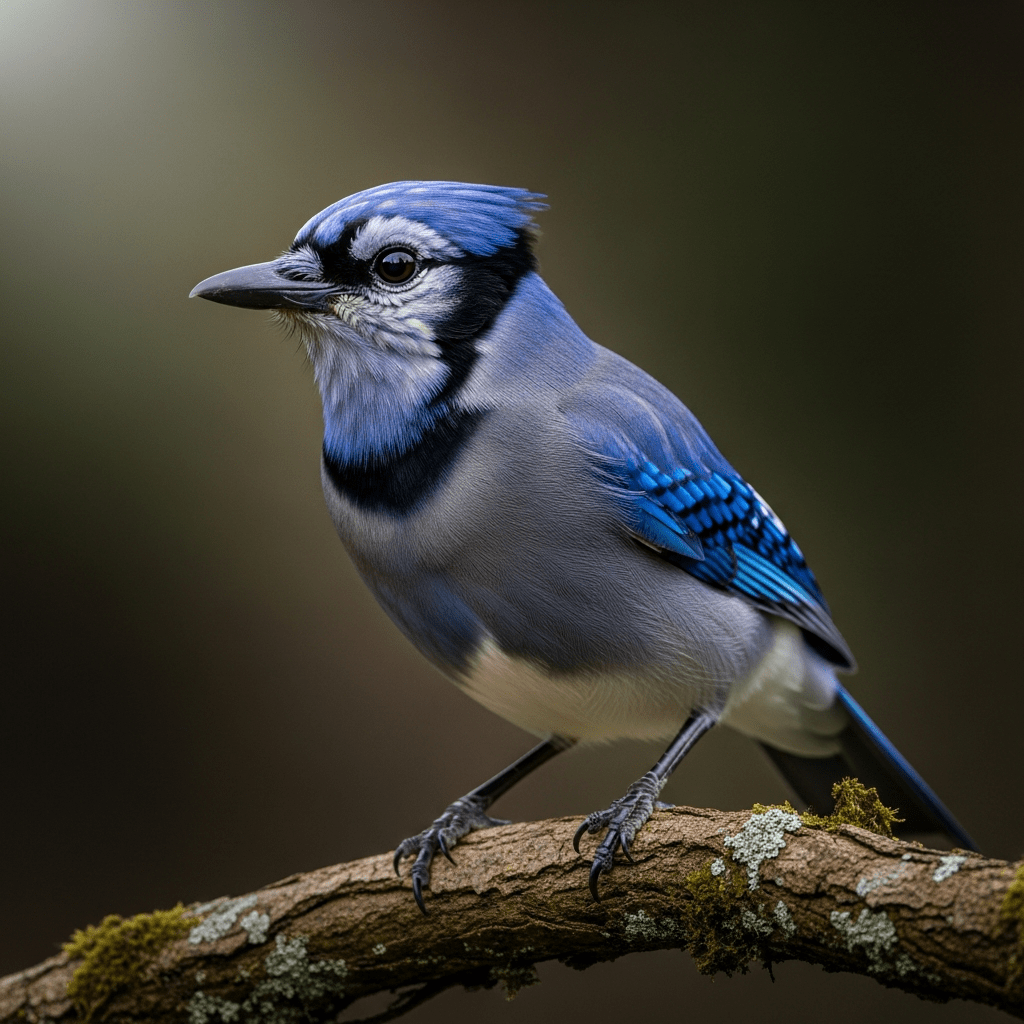
The Blue Jay (Cyanocitta cristata) is a striking, intelligent songbird native to eastern and central North America, instantly recognizable by its vibrant blue plumage, bold crest, and complex social behavior.
The Blue Jay (Cyanocitta cristata) is a striking, intelligent songbird native to eastern and central North America, instantly recognizable by its vibrant blue plumage, bold crest, and complex social behavior.
First formally described by Carl Linnaeus in 1758, the Blue Jay traces its origins to the forests and woodlands of eastern and central North America. As a wild species with no domesticated varieties, its lineage resides within the genus Cyanocitta, making it a close relative of the Steller's Jay. The Blue Jay has adapted over centuries to thrive in both natural and human-altered landscapes, with no known history of breeding or domestication.
The Blue Jay belongs to the order Passeriformes, family Corvidae, and genus Cyanocitta. As a member of the corvid family, it shares close evolutionary ties with crows, ravens, and magpies, all renowned for their intelligence and adaptability. The species is scientifically named Cyanocitta cristata, and is universally recognized across ornithological authorities, with no formally acknowledged subspecies.
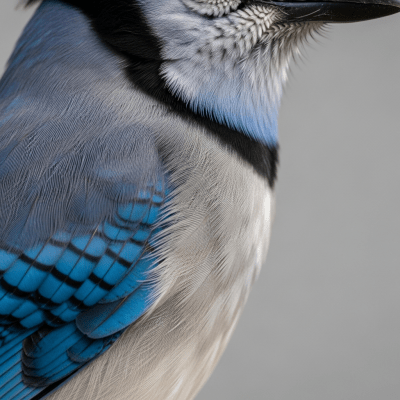
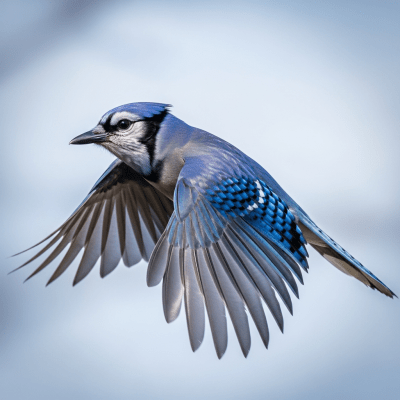
Medium-sized and elegant, Blue Jays measure approximately 22–30 cm (9–12 in) in length and weigh between 70–100 g (2.5–3.5 oz). Their most distinctive features include a prominent blue crest, a bold black necklace across the throat, and wings and tail beautifully barred with white and black. The plumage shimmers with vibrant blue, offset by white underparts and striking facial markings, making the Blue Jay one of North America's most visually arresting birds.
Blue Jays are celebrated for their intelligence, complex social dynamics, and adaptability. They use tools, exhibit vocal mimicry—often imitating hawks—and communicate through a wide repertoire of calls. Highly social, they often form small family groups and are known to cooperate in defending territory. Their omnivorous diet and ability to thrive in forests, parks, and suburban areas underscore their resilience and ecological versatility.
Bring this kind into your world illustrated posters, mugs, and shirts.
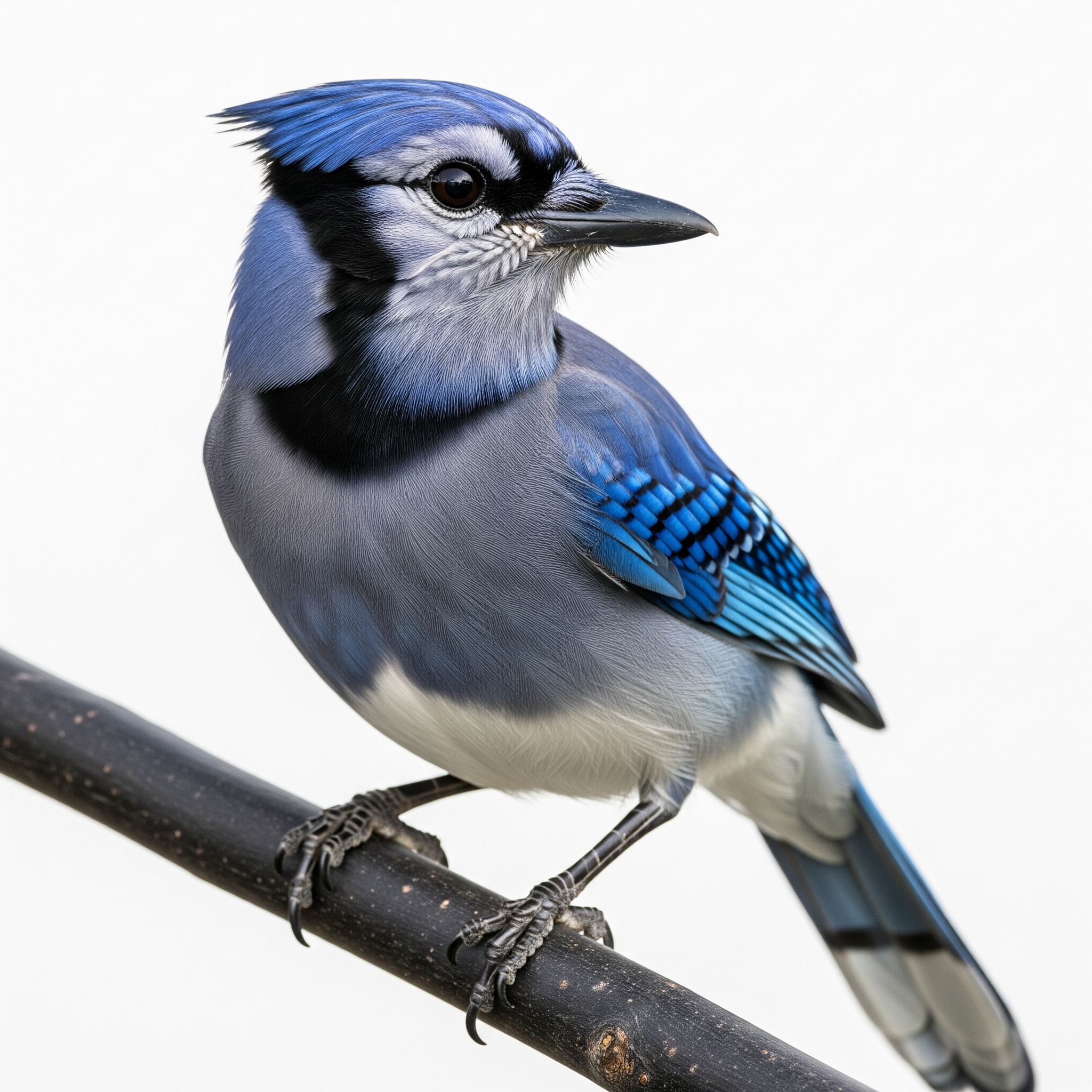
Archival print, museum-grade paper
Buy Poster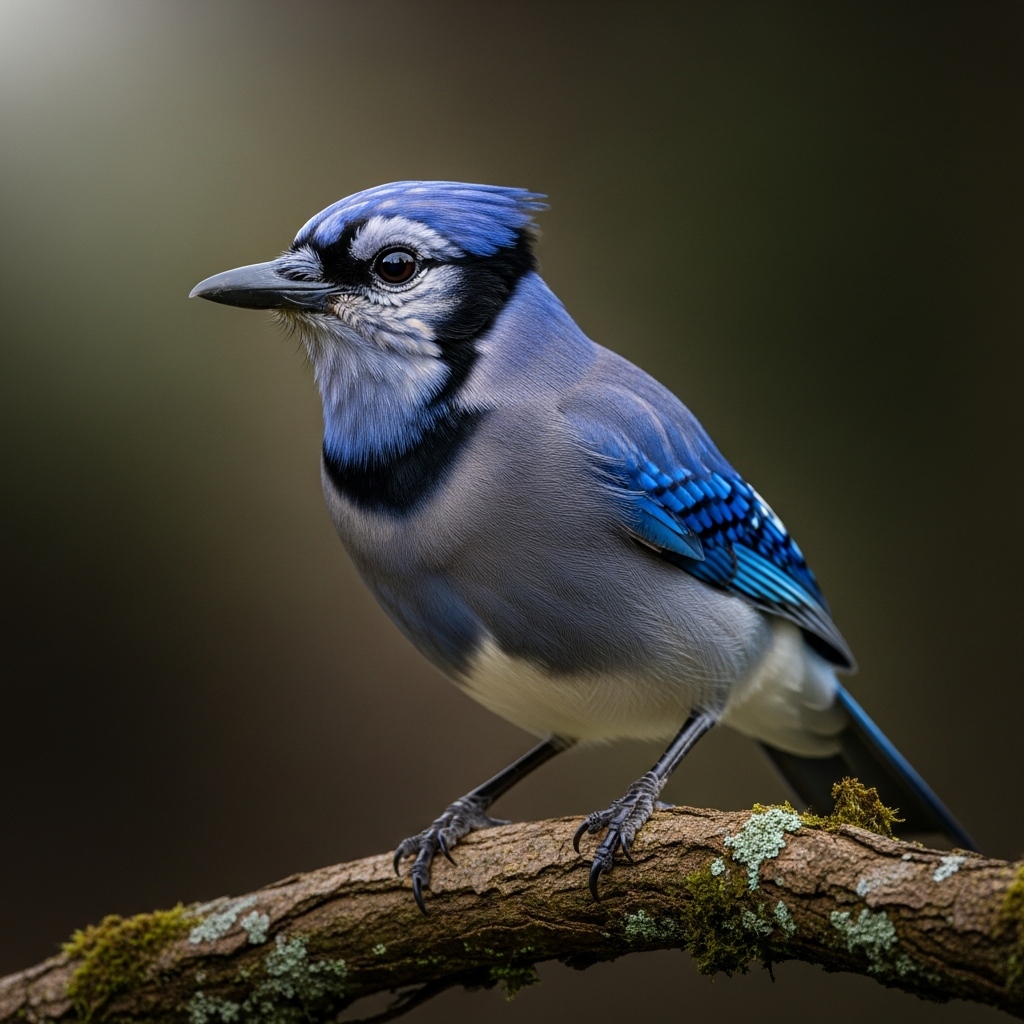
Stoneware mug, dishwasher safe
Buy Mug
Soft cotton tee, unisex sizes
Buy ShirtThe Blue Jay holds a special place in North American culture, appearing in folklore, art, and as an emblematic mascot—most notably for the Toronto Blue Jays baseball team. Its vivid feathers have occasionally been used ornamentally, and its presence in literature and local stories reflects the bird's reputation for cleverness and boldness. Legal protections, such as the Migratory Bird Treaty Act, further highlight its valued status in society.
Blue Jays are native to eastern and central North America, commonly found in deciduous and mixed forests, as well as parks and suburban gardens. Their adaptability allows them to thrive in both rural woodlands and urban neighborhoods, making them a familiar sight across much of their range.
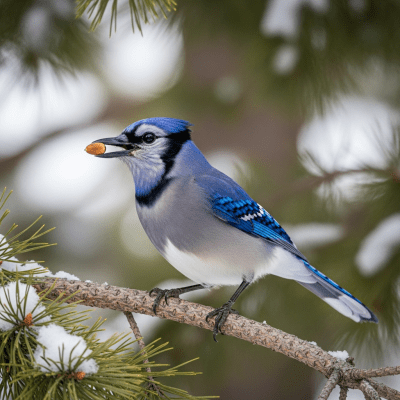
Omnivorous by nature, Blue Jays feed on a diverse array of seeds—especially acorns—nuts, insects, and occasionally small vertebrates. Their strong bills enable them to crack open nuts, and their foraging behavior often includes caching food for later consumption. Blue Jays are also known to visit bird feeders, making them popular among backyard birdwatchers.
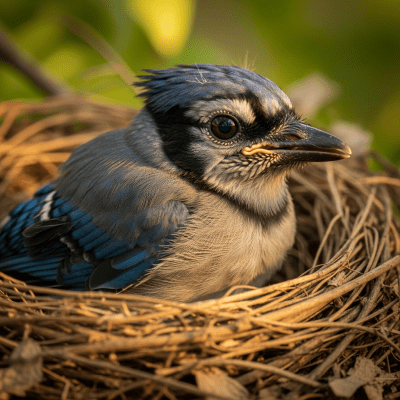
Blue Jays typically breed in spring and early summer, constructing cup-shaped nests high in trees using twigs and plant material. Both parents share in raising the young, which fledge within a few weeks of hatching. While specific details on clutch size and lifespan vary, Blue Jays are known for their attentive parental care and strong family bonds.
Blue Jays are currently not considered threatened and are listed as a species of Least Concern by major conservation authorities. Their adaptability to fragmented habitats and urban environments has helped maintain stable populations, though ongoing protection under legislation ensures their continued survival.
Ecologically, Blue Jays are important seed dispersers, particularly of acorns, contributing to forest regeneration. While they have no direct economic value as food or livestock, their cultural significance as mascots and symbols, along with their role in local ecosystems, underscores their indirect value to both nature and society.
The Blue Jay remains a wild species with no history of domestication or recognized breeds. While minor regional plumage variations exist, there are no formally acknowledged subspecies or varieties. Its close relative, the Steller's Jay, shares the genus Cyanocitta, but the Blue Jay itself is universally recognized as a single, undomesticated species.
Commonly known as the Blue Jay, this species is also referred to as "Jaybird" and "Blue Jaybird" in some regions. The scientific name Cyanocitta cristata is universally accepted, with minimal regional variation in naming.