
Bald Eagle
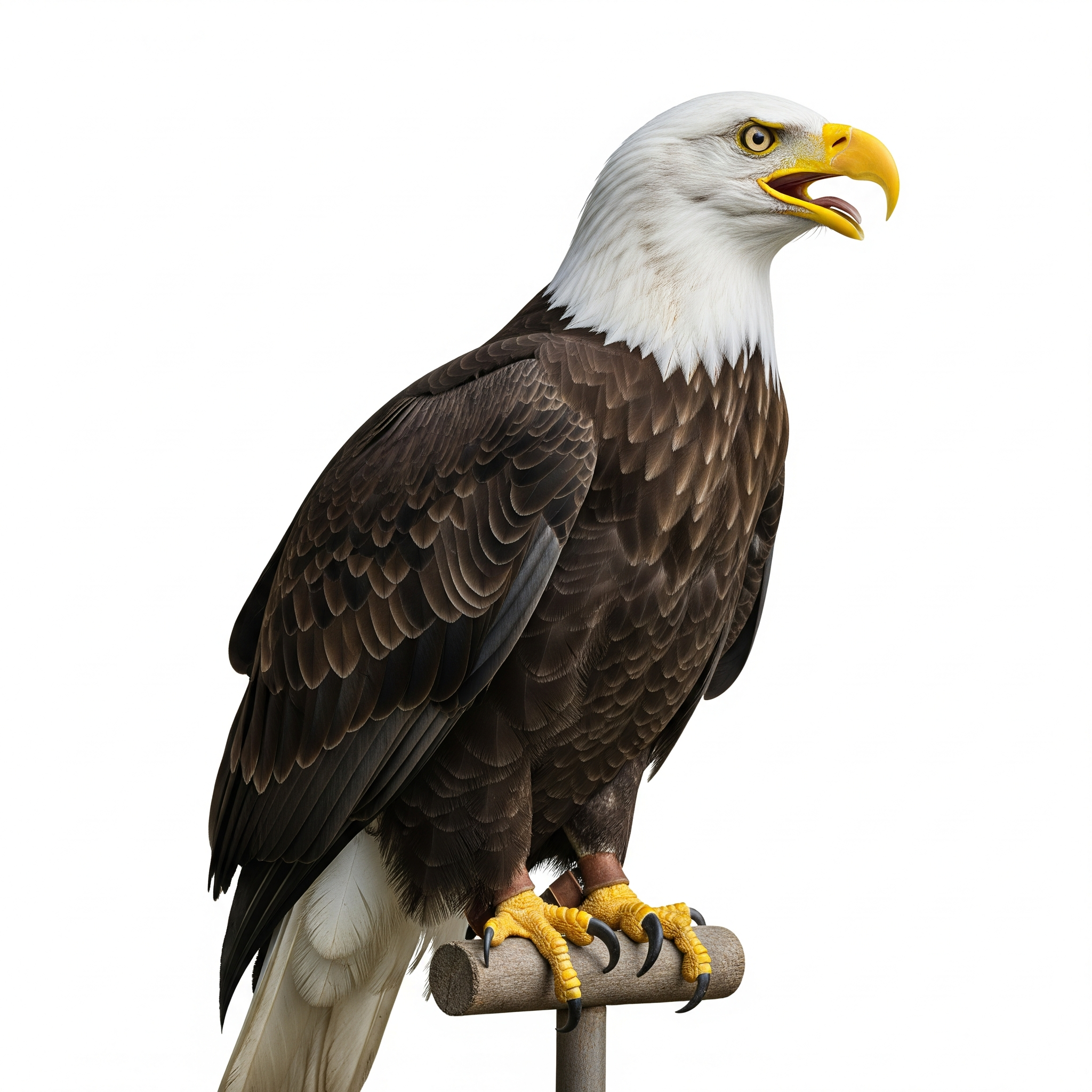
The Bald Eagle (Haliaeetus leucocephalus) is a large North American bird of prey, instantly recognized by its white head and tail, and revered as the national symbol of the United States.
The Bald Eagle (Haliaeetus leucocephalus) is a large North American bird of prey, instantly recognized by its white head and tail, and revered as the national symbol of the United States.
First described by Carl Linnaeus in 1766, the Bald Eagle is native to North America and has evolved to thrive in diverse aquatic environments across the continent. Its scientific name, derived from Greek, means "sea eagle with a white head," reflecting both its habitat and distinctive appearance. The species has never been domesticated and remains a wild icon of American landscapes.
The Bald Eagle belongs to the class Aves, order Accipitriformes, family Accipitridae, and genus Haliaeetus. As a member of the sea eagle group, it is closely related to other large raptors that specialize in hunting near water. Its classification underscores its role as a top predator in North American ecosystems and highlights its evolutionary lineage among birds of prey.
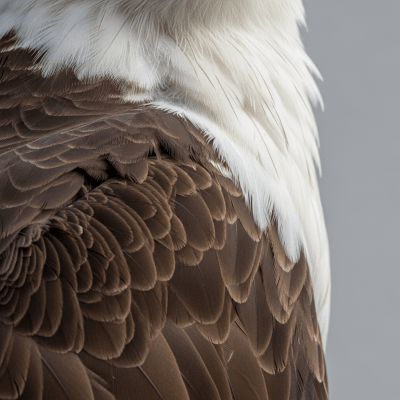
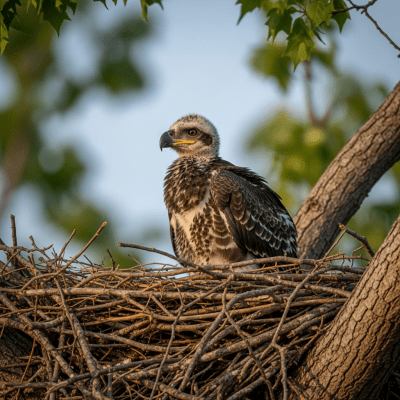
Adult Bald Eagles are imposing birds, measuring 70–102 cm (28–40 in) in length with a wingspan of 1.8–2.3 m (5.9–7.5 ft). Their plumage is dark brown with a striking white head and tail, while juveniles display mottled brown and white feathers until they mature at four to five years. Powerful yellow beaks and talons, exceptional eyesight, and sexual dimorphism—with females larger than males—complete their formidable appearance.
Bald Eagles are known for building massive stick nests, called aeries, near water bodies—often reusing and expanding them year after year. They are monogamous, forming lifelong pairs, and fiercely territorial. Their keen eyesight allows them to spot prey from great distances, primarily hunting fish but also taking waterfowl and small mammals. While not used by humans for food or trade, their presence is vital to the health of aquatic ecosystems.
Bring this kind into your world illustrated posters, mugs, and shirts.
Archival print, museum-grade paper
Buy Poster
Stoneware mug, dishwasher safe
Buy Mug
Soft cotton tee, unisex sizes
Buy ShirtThe Bald Eagle is deeply woven into the cultural and national identity of the United States, serving as its official bird and emblem. It appears on currency, government seals, and military insignia, symbolizing strength, freedom, and resilience. The eagle is also sacred in many Native American traditions, representing spiritual power and connection to the land. Strict legal protections reflect its revered status and the importance of preserving its legacy.
Bald Eagles inhabit a wide range of aquatic environments throughout North America, including lakes, rivers, marshes, and coastal regions. Their distribution spans from Alaska and Canada down through the contiguous United States and northern Mexico, favoring areas with abundant fish and tall trees for nesting.


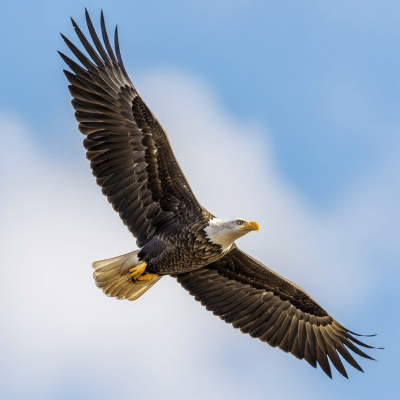
Bald Eagles are primarily piscivorous, hunting fish with their powerful talons and keen eyesight. They also prey on waterfowl, small mammals, and opportunistically feed on carrion. Their hunting technique often involves swooping down over water to snatch prey, showcasing remarkable agility and precision.
Monogamous pairs of Bald Eagles breed once per year, typically from late winter to early spring. They lay a clutch of one to three eggs in enormous stick nests built high in trees near water. Juveniles fledge after about 10–12 weeks and gradually acquire adult plumage over four to five years. In the wild, Bald Eagles can live 20–30 years, with strong nest fidelity and long-term pair bonds.
Once endangered due to habitat loss and pesticide contamination, the Bald Eagle has made a dramatic recovery and is now classified as Least Concern by the IUCN. Major threats include environmental pollution, human disturbance, and loss of nesting sites, but ongoing legal protections and conservation efforts have ensured stable populations across much of their range.
While not commercially exploited, Bald Eagles play a crucial ecological role as apex predators and scavengers, helping to regulate fish and waterfowl populations and maintain healthy aquatic ecosystems. Their recovery is a conservation success story, and their presence draws ecotourism and inspires environmental stewardship.
The Bald Eagle has never been domesticated and there are no recognized breeds or subspecies. It remains a wild species, protected by law and revered for its untamed nature.