American Robin
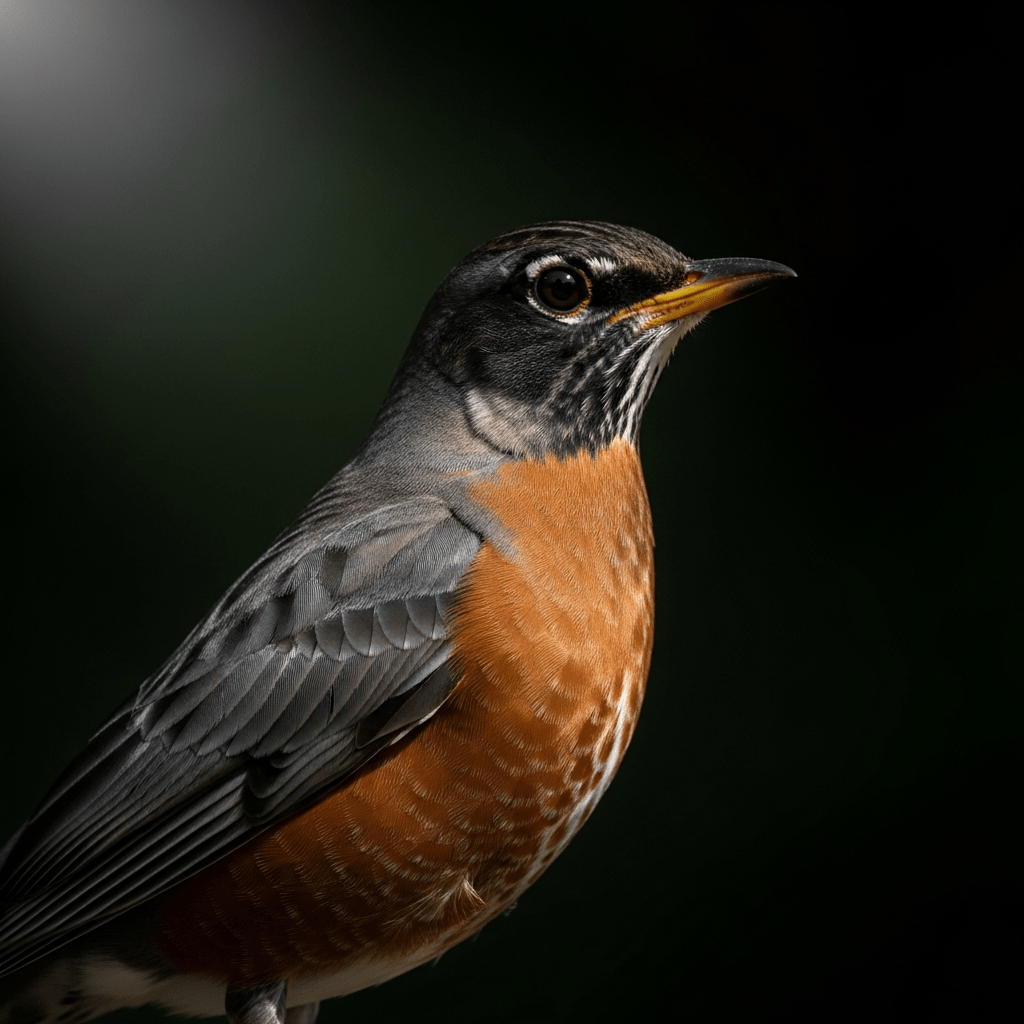
The American Robin (Turdus migratorius) is a familiar North American songbird, instantly recognizable by its orange-red breast and cheerful, melodious song.
The American Robin (Turdus migratorius) is a familiar North American songbird, instantly recognizable by its orange-red breast and cheerful, melodious song.
First described by Carl Linnaeus in 1766, the American Robin is native to North America and has evolved naturally within its range, without human-driven domestication or artificial breeding. Its presence across the continent has made it a symbol of spring for generations, with populations thriving in both wild and urban environments.
Belonging to the family Turdidae and genus Turdus, the American Robin is part of the thrush group—a lineage known for their musical vocalizations and adaptability. Its scientific name, Turdus migratorius, reflects both its migratory habits and its place among true thrushes. The species is organized within the broader class Aves, sharing evolutionary traits with other songbirds.
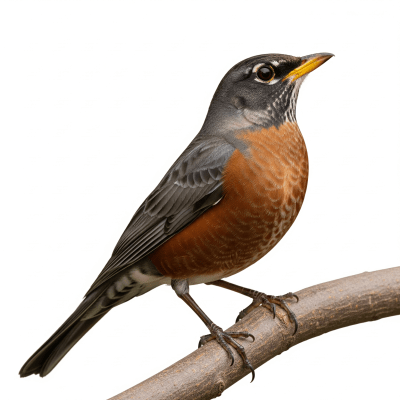
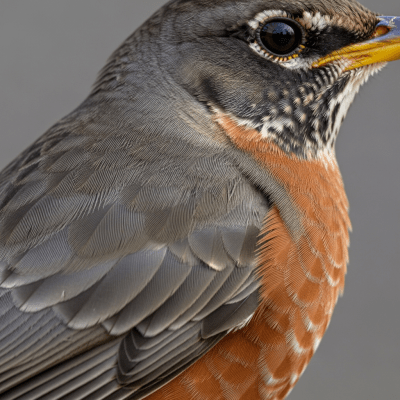
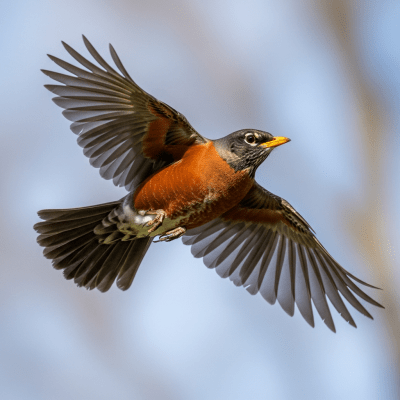
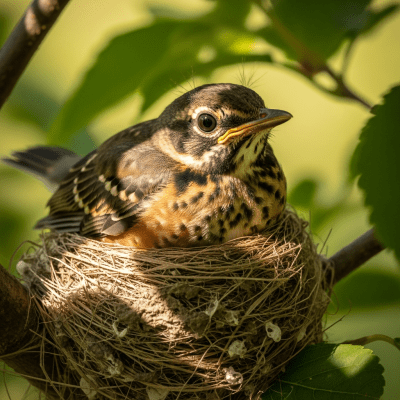
The American Robin measures 23–28 cm in length with a wingspan of 31–41 cm and weighs about 77 grams. Its most striking feature is the vivid orange-red breast, contrasted by gray-brown upperparts and a white throat streaked with black. Juveniles display a spotted breast, and all robins have a sleek, upright posture. Their cup-shaped nests, crafted from mud and grass, are a hallmark of their breeding season.
Highly adaptable, American Robins thrive in woodlands, gardens, parks, and urban areas. They are ground foragers, searching for earthworms, insects, and berries. Northern populations migrate south in winter, returning in spring to breed. Robins are known for their early morning songs and their role as indicators of seasonal change. Their nesting behavior involves building sturdy cup-shaped nests in trees or shrubs, often close to human habitation.
Bring this kind into your world illustrated posters, mugs, and shirts.
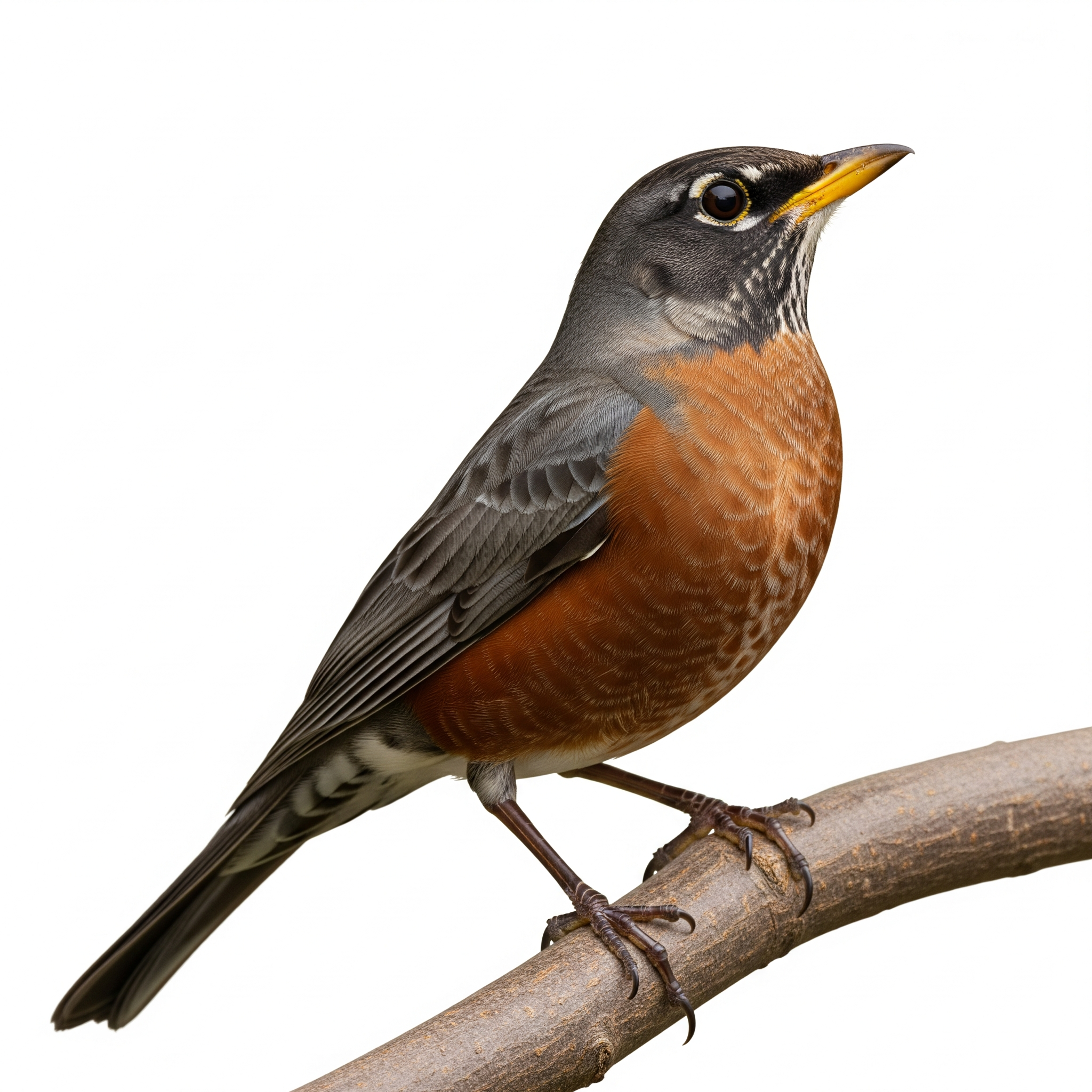
Archival print, museum-grade paper
Buy Poster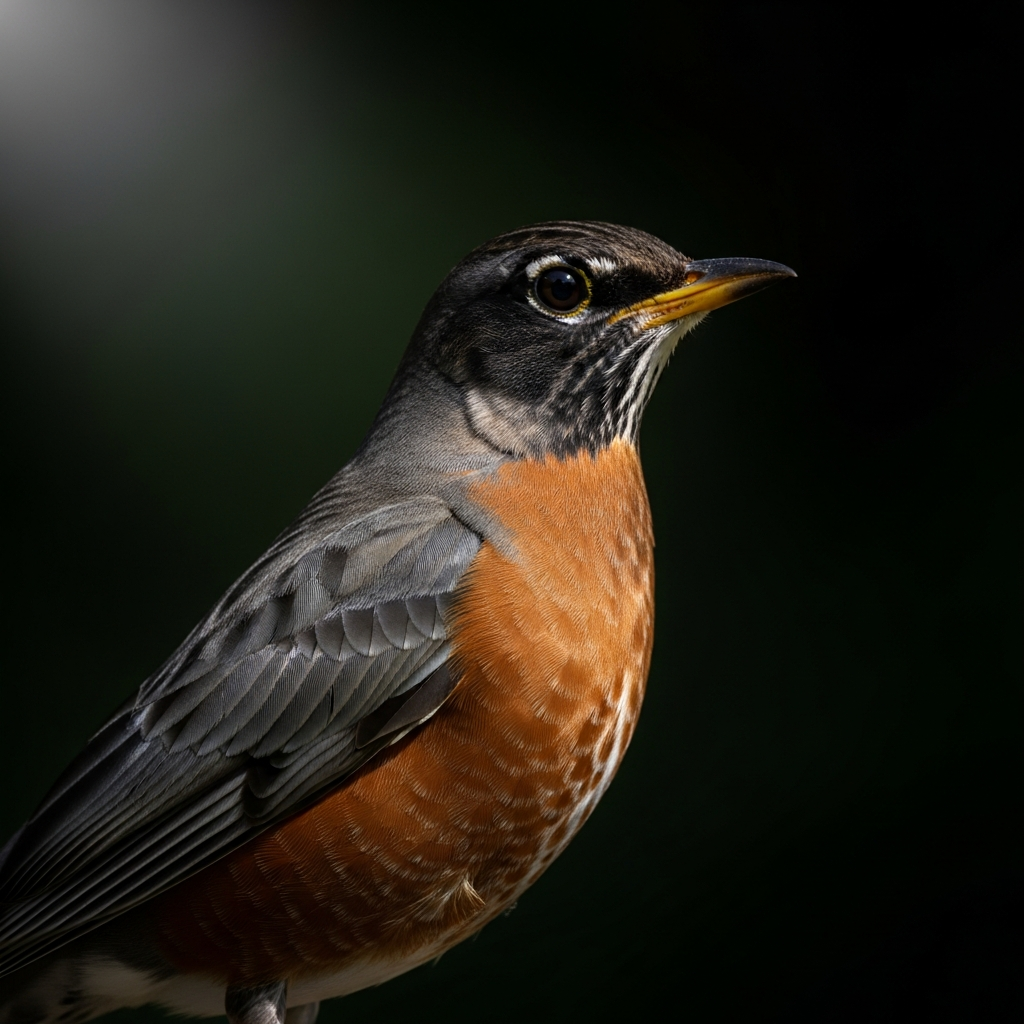
Stoneware mug, dishwasher safe
Buy Mug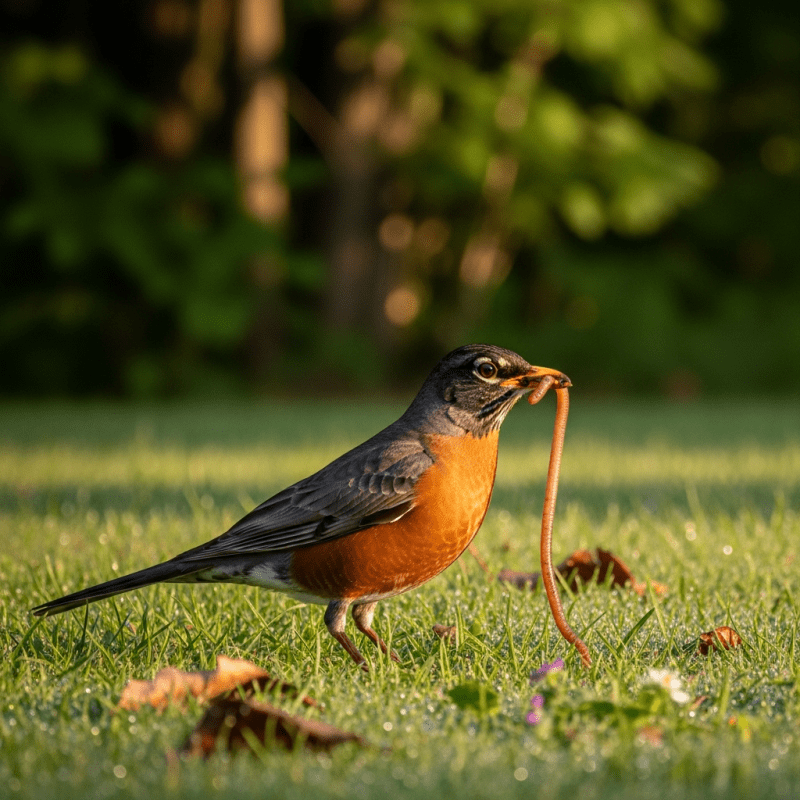
Soft cotton tee, unisex sizes
Buy ShirtThe American Robin is deeply woven into North American folklore and literature, celebrated as a harbinger of spring and renewal. Its appearance is often associated with the end of winter and the beginning of warmer days. The robin’s cheerful song and vibrant plumage have inspired countless poems, stories, and children’s tales, making it one of the continent’s most beloved birds.
American Robins inhabit a wide range of environments across North America, including woodlands, gardens, parks, and urban areas. Their adaptability allows them to thrive from Alaska and Canada to Mexico, with migratory populations shifting southward during colder months.
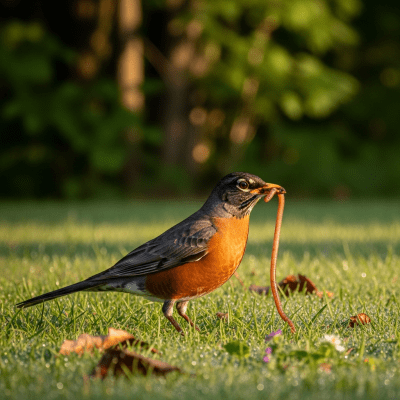
Robins forage mainly on the ground, seeking earthworms, insects, and berries. Their diet shifts seasonally, with worms and insects favored in spring and summer, and berries providing sustenance in fall and winter. Their keen eyesight and quick movements make them efficient hunters in lawns and fields.
American Robins build cup-shaped nests from mud and grass, typically in trees or shrubs. While specific clutch size and breeding season details vary regionally, robins are known for producing multiple broods per year. Juveniles are spotted on the breast and gradually acquire adult plumage as they mature.
The American Robin is widespread and abundant, with no significant conservation threats currently affecting its populations. Its adaptability to human-altered landscapes has ensured its continued success across North America.
While the American Robin has no major economic uses, it plays an important ecological role by controlling insect populations and dispersing seeds through its diet. Its presence in gardens and parks is valued for pest control and as a sign of healthy ecosystems. Culturally, the robin’s image as a symbol of spring enhances its significance in community and environmental awareness.
The American Robin has not been domesticated and does not have recognized breeds. However, several regional subspecies are acknowledged, including T. m. migratorius (nominate), T. m. achrusterus, T. m. caurinus, T. m. confinis, T. m. propinquus, and T. m. nigrideus, reflecting subtle geographic variations.