Albatross
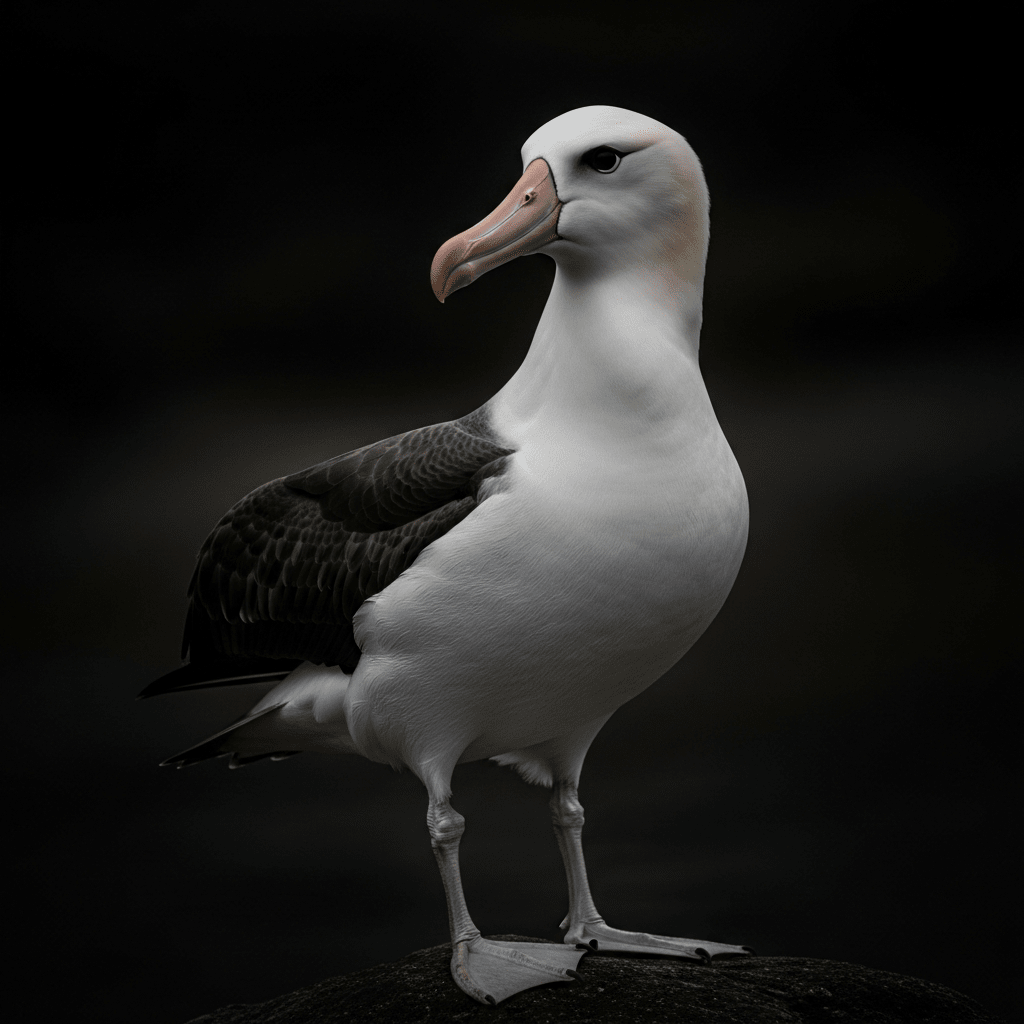
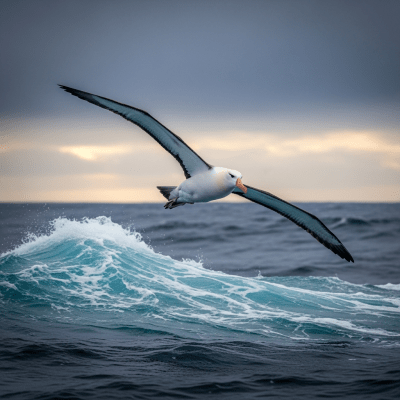
The albatross is a large, long-lived seabird famed for its immense wingspan and unrivaled ability to traverse the world’s oceans with effortless grace.
The albatross is a large, long-lived seabird famed for its immense wingspan and unrivaled ability to traverse the world’s oceans with effortless grace.
Albatrosses trace their lineage back to the Oligocene epoch, with fossil evidence revealing their ancient roots among oceanic birds. The family Diomedeidae was formally described in 1816 by French zoologist Louis Jean Pierre Vieillot. Today, living albatrosses are wild and naturally occurring, with no history of domestication or captive breeding, and their evolutionary story unfolds across the southern oceans and remote islands where they have thrived for millions of years.
Albatrosses belong to the family Diomedeidae within the class Aves, order Procellariiformes. This family encompasses several genera, including Diomedea, Thalassarche, Phoebastria, and Phoebetria. They are closely related to other tube-nosed seabirds, such as petrels and shearwaters, and are distinguished by their specialized adaptations for life at sea.
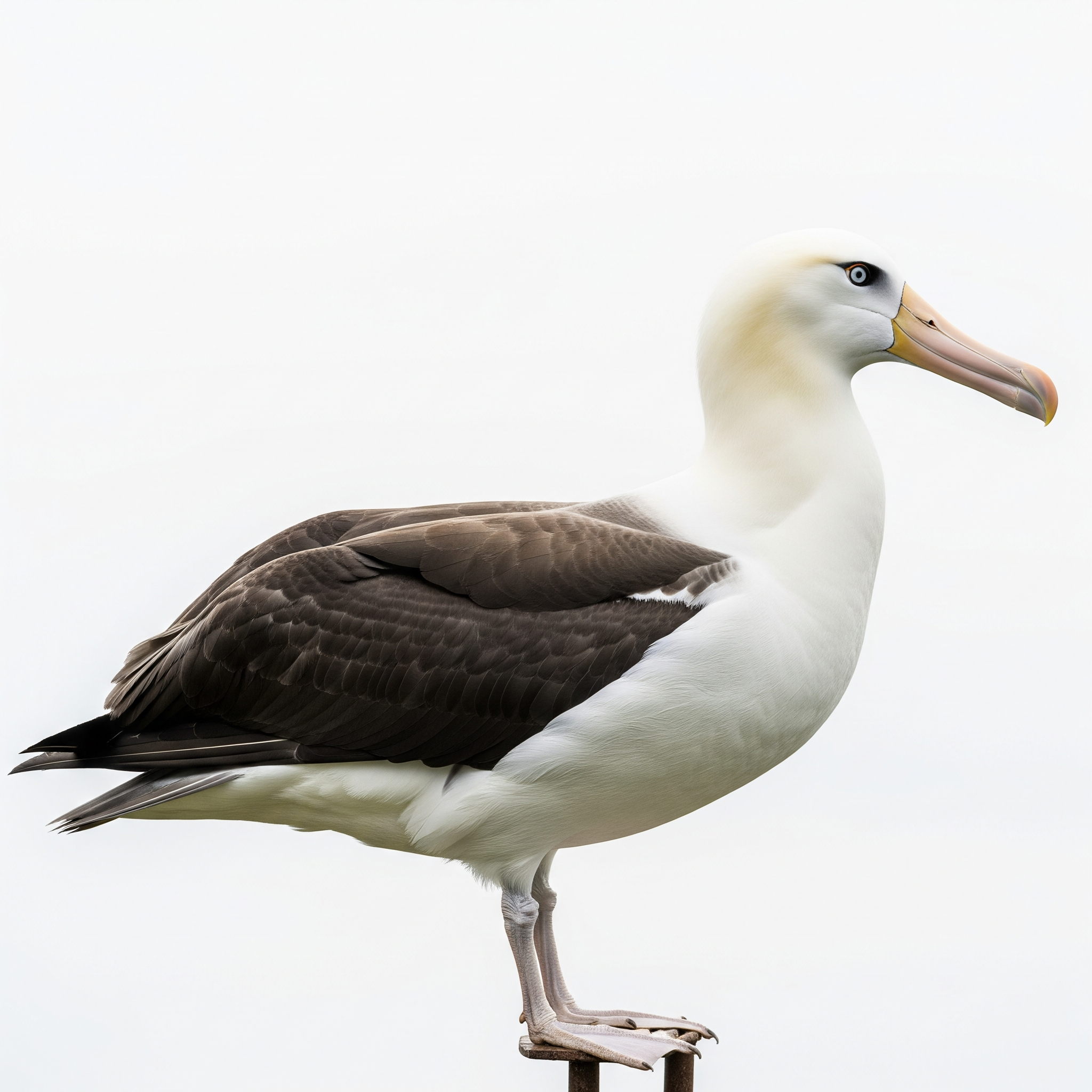
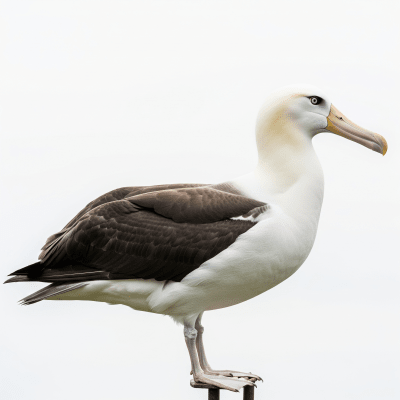
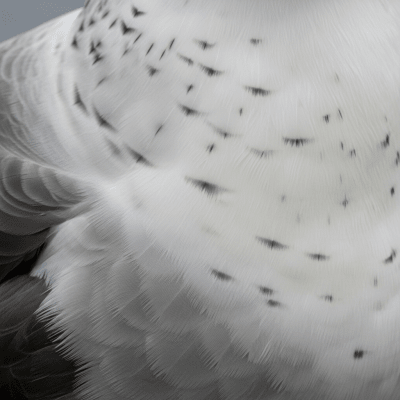
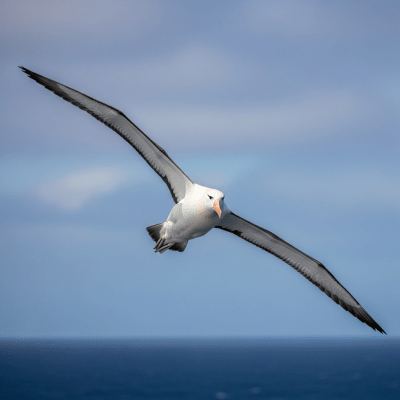
Albatrosses are instantly recognizable for their extraordinary wingspans, which can reach up to 3.5 meters (11.5 feet) in the Wandering Albatross. Their plumage ranges from striking white with bold black markings to deep sooty brown, depending on the species. They possess powerful, hooked bills designed for seizing slippery prey, and their streamlined bodies and long, narrow wings are perfectly adapted for dynamic soaring over vast ocean expanses.
Renowned for their mastery of flight, albatrosses use dynamic soaring to cover thousands of kilometers with minimal energy, often circumnavigating entire oceans. They are apex marine predators, feeding primarily on squid, fish, and crustaceans. Albatrosses are highly social at breeding colonies, forming lifelong monogamous pairs and engaging in elaborate courtship displays. While not utilized by humans in modern times, their ecological role as top predators helps maintain the balance of marine food webs.
Bring this kind into your world illustrated posters, mugs, and shirts.
Archival print, museum-grade paper
Buy Poster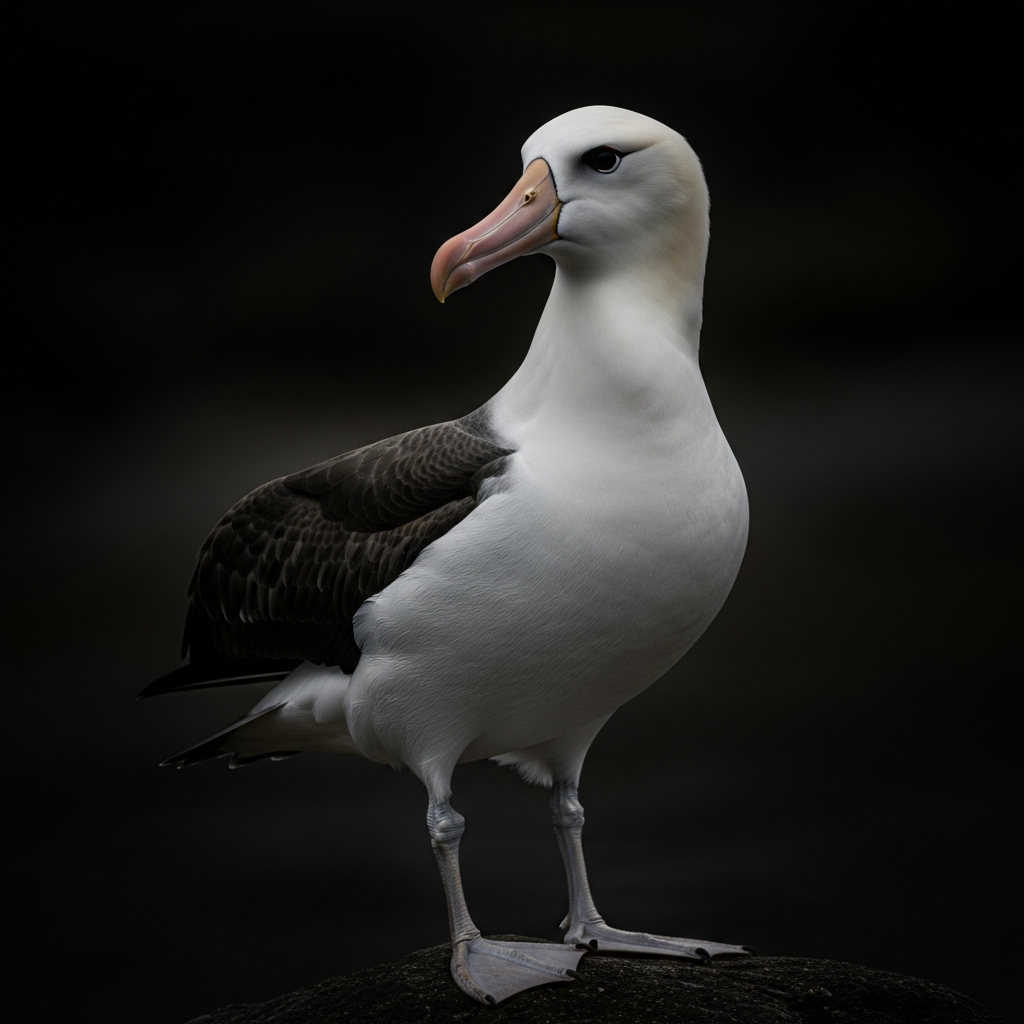
Stoneware mug, dishwasher safe
Buy Mug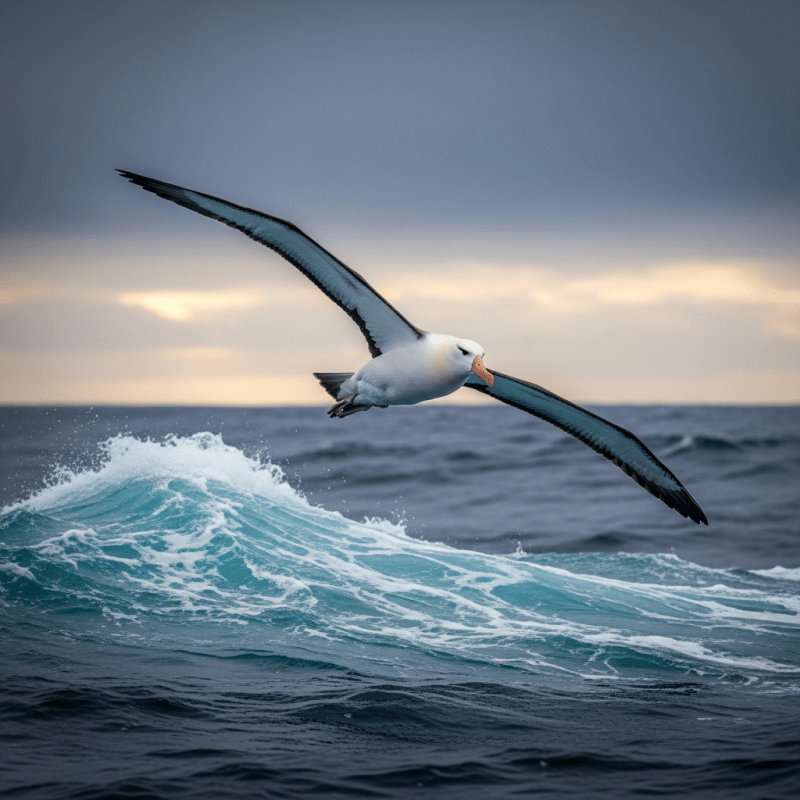
Soft cotton tee, unisex sizes
Buy ShirtAlbatrosses hold a special place in maritime lore, symbolizing endurance, freedom, and the mysteries of the sea. Their image is immortalized in literature, most famously in Samuel Taylor Coleridge’s "The Rime of the Ancient Mariner," where the bird becomes a metaphor for burden and redemption. Indigenous cultures and sailors have long regarded the albatross with reverence, often attributing spiritual significance to its presence on the open ocean.
Albatrosses inhabit the vast open oceans of the Southern Hemisphere, with breeding colonies scattered across remote islands in the Southern Ocean, South Pacific, and parts of the North Pacific. Their range extends from the icy waters near Antarctica to subtropical and temperate regions, with some species venturing into the North Pacific. They spend most of their lives at sea, only coming ashore to breed.
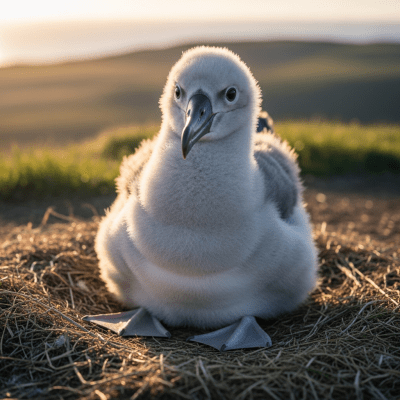
Albatrosses feed primarily on squid, fish, and crustaceans, using their keen eyesight and strong, hooked bills to capture prey near the ocean surface. They are expert scavengers and hunters, sometimes following ships for discarded food, and their feeding habits help regulate marine populations.
Albatrosses are notable for their slow reproductive cycle. Most species breed every one to two years, laying a single egg per clutch. Both parents share incubation and chick-rearing duties, with fledging taking up to a year. Lifespans often exceed 50 years, and pairs typically return to the same nesting sites, maintaining lifelong bonds.
Many albatross species are listed as threatened or endangered by the IUCN Red List, primarily due to bycatch in commercial fisheries, habitat degradation, and introduced predators at nesting sites. Conservation efforts focus on protecting breeding colonies and reducing accidental capture in fishing gear.
Albatrosses play a crucial ecological role as apex predators in marine environments, helping to control populations of squid, fish, and other sea life. While they have little direct economic value today due to international protection, their presence is vital for healthy ocean ecosystems and they serve as flagship species for marine conservation initiatives.
Albatrosses have never been domesticated and are exclusively wild birds. The family Diomedeidae comprises several genera and species, including the great albatrosses (Diomedea), mollymawks (Thalassarche), and goonie birds (Phoebastria). No breeds or subspecies have been developed through human intervention, though recognized subspecies exist within some genera.