Sea Buckthorn Berry
Sea buckthorn berry is a vivid orange, nutrient-rich fruit from Hippophae rhamnoides, prized for its exceptional vitamin C content, tart flavor, and resilience in harsh climates.
Sea buckthorn berry is a vivid orange, nutrient-rich fruit from Hippophae rhamnoides, prized for its exceptional vitamin C content, tart flavor, and resilience in harsh climates.
Native to temperate and subarctic regions of Eurasia, sea buckthorn has thrived from Western Europe across Central Asia into China for centuries. First described by Carl Linnaeus in 1753, this wild shrub has long been valued in traditional medicine and land management. Modern breeding in Russia, China, and Germany has produced cultivars with improved yield, berry size, and oil content, yet its true origins remain rooted in the wild landscapes of Eurasia.
Sea buckthorn berry belongs to the genus Hippophae, species Hippophae rhamnoides, within the broader berries taxonomy. While not a true berry botanically, it is grouped with soft fruits in culinary and agricultural contexts, reflecting its widespread use and recognition as a berry fruit across Eurasia.
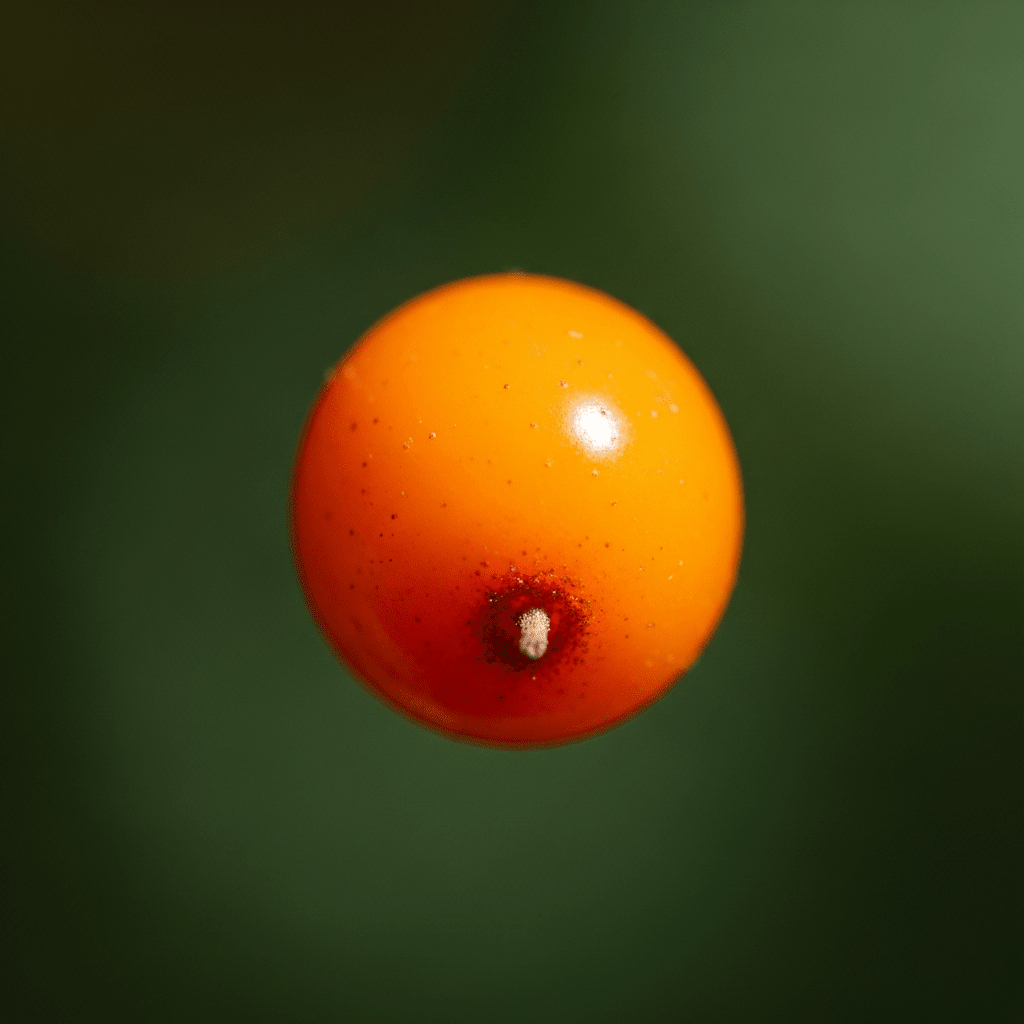
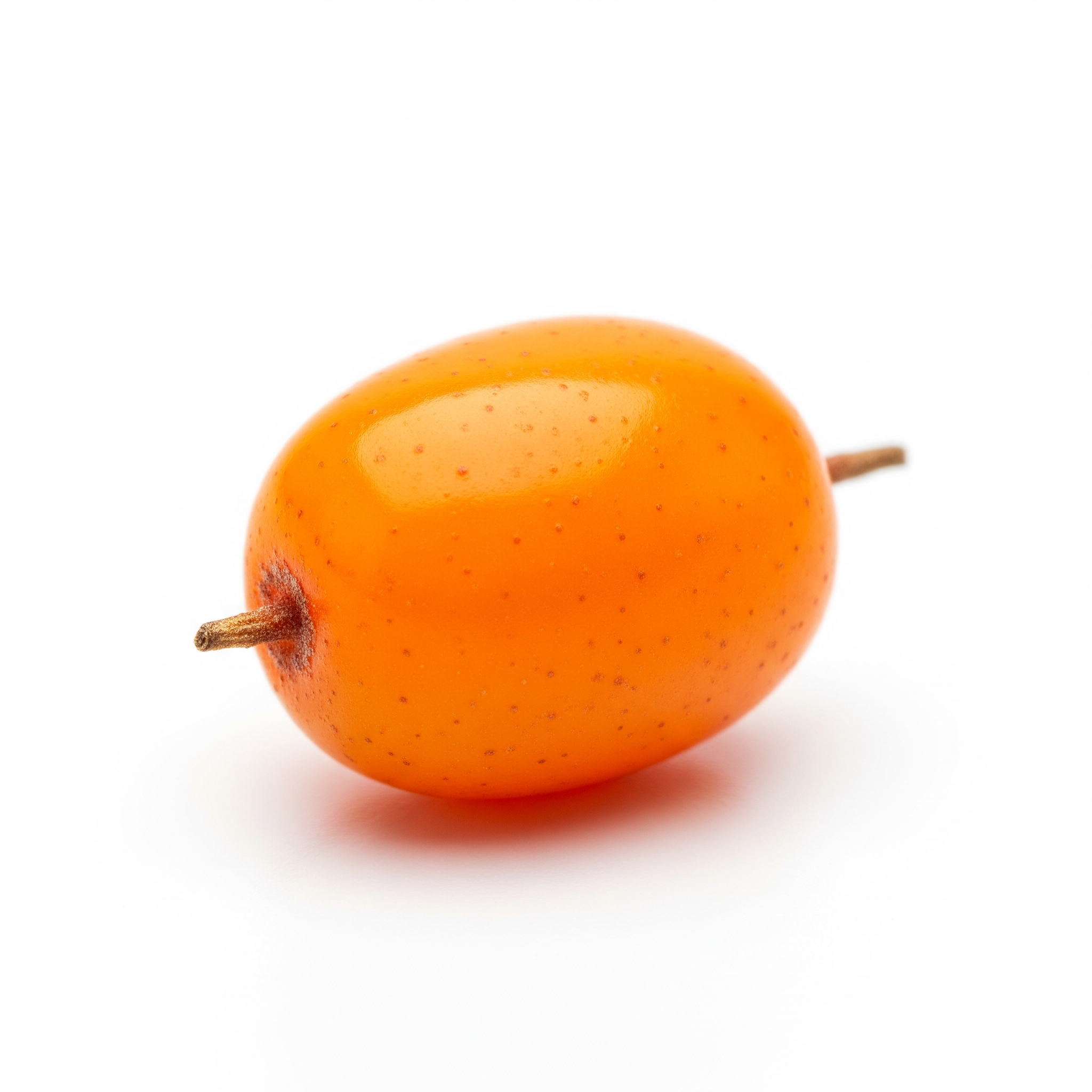
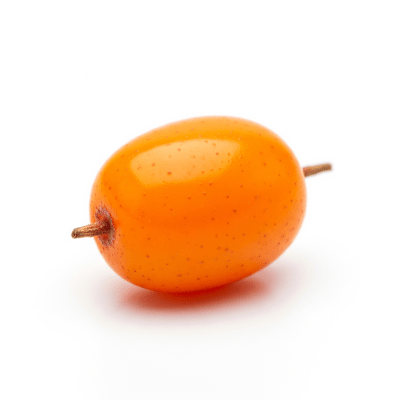
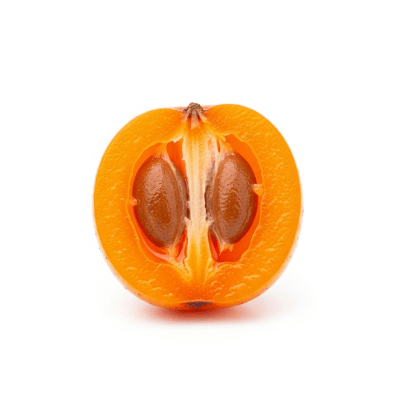
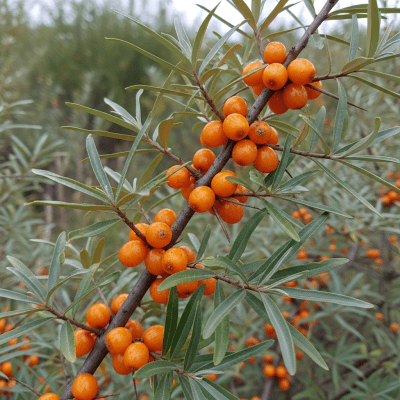
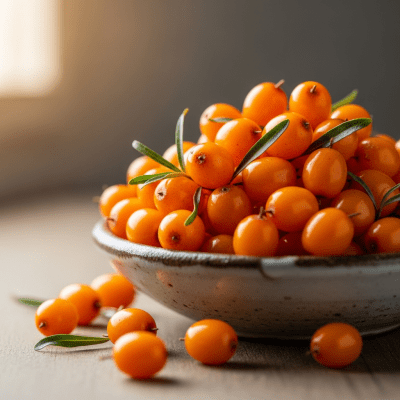
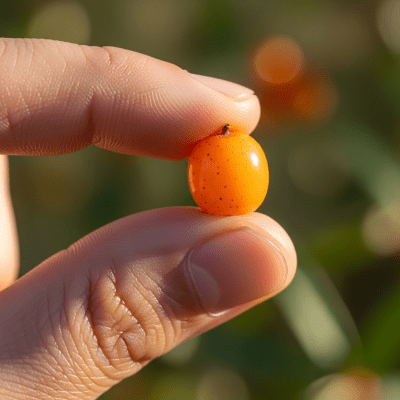
Sea buckthorn berries are small, oval to round, and strikingly bright orange when ripe, measuring 5–10 mm in diameter. They grow densely along thorny, silvery-green branches of a deciduous shrub that reaches 2–6 meters in height. The berries have thin skins and a juicy, tart interior, making them visually distinctive and challenging to harvest.
Highly resilient, sea buckthorn shrubs thrive in poor soils, drought, and extreme cold, often serving as natural agents for erosion control and land reclamation. The berries are valued for their nutritional profile and are used in juices, jams, syrups, wines, teas, and oil extraction. Their tartness means they are rarely eaten fresh, but their health benefits drive their popularity in processed forms and traditional remedies.
Bring this kind into your world illustrated posters, mugs, and shirts.
Archival print, museum-grade paper
Buy Poster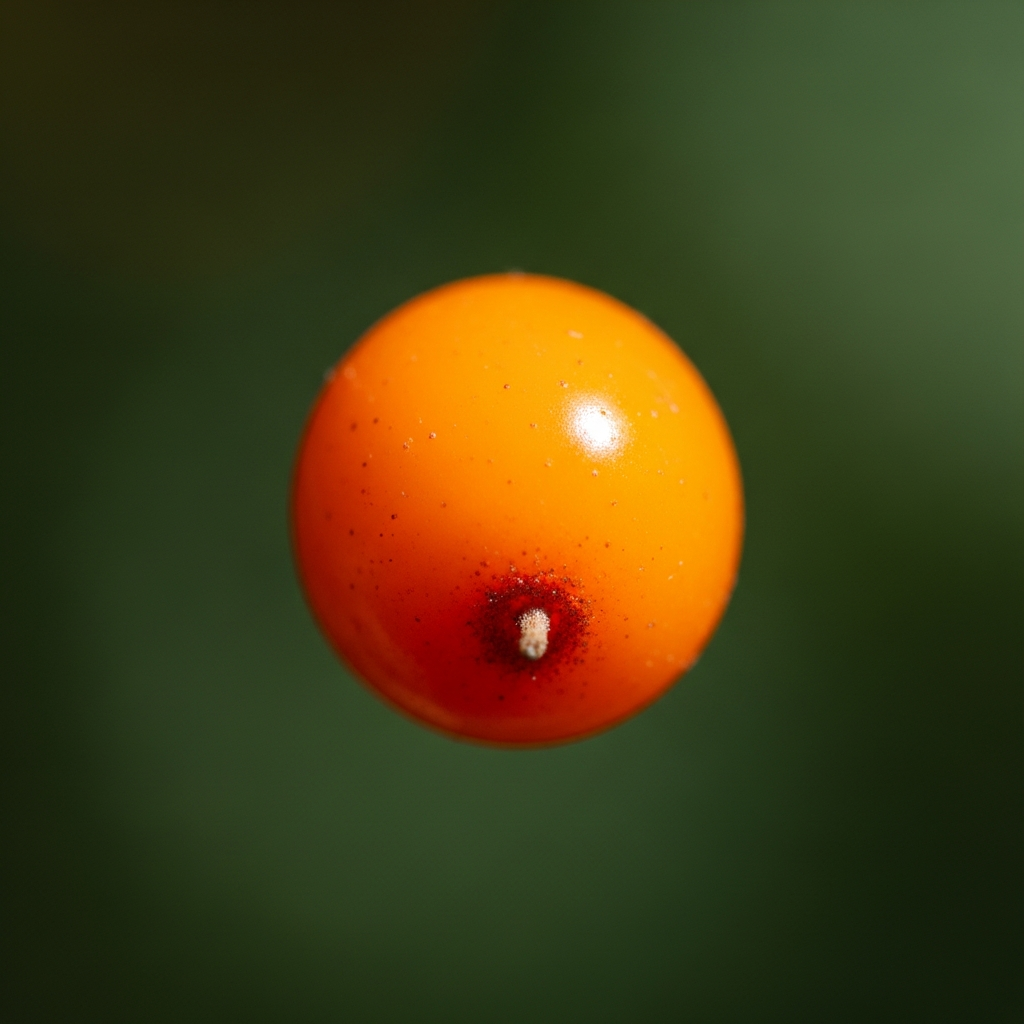
Stoneware mug, dishwasher safe
Buy Mug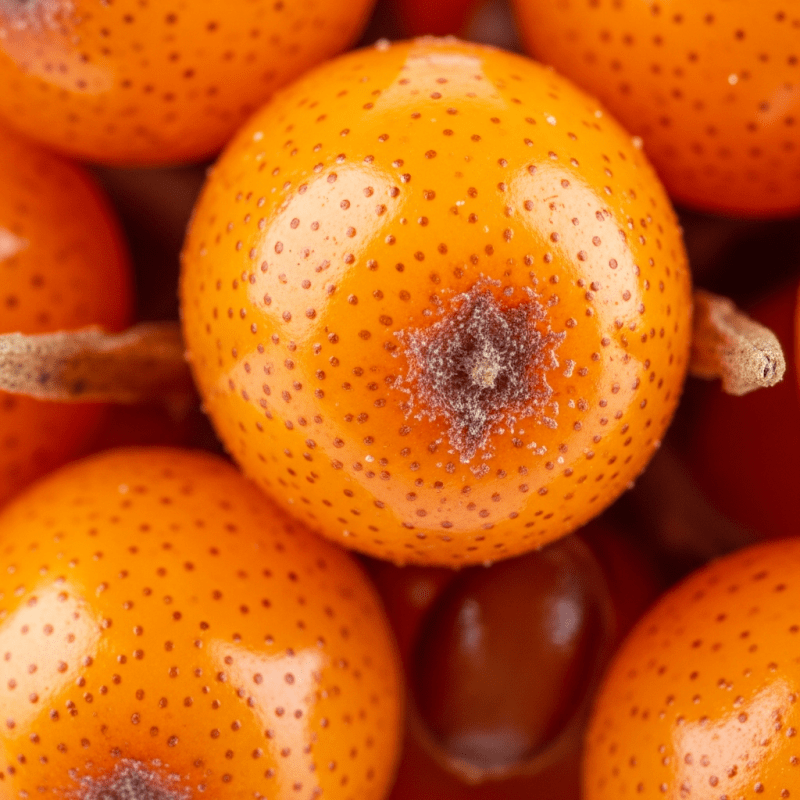
Soft cotton tee, unisex sizes
Buy ShirtSea buckthorn holds a revered place in Eurasian folklore and traditional medicine, especially in Siberia, Mongolia, and Tibet. Its berries and oil are celebrated for healing properties in ancient texts, and it features prominently in local cuisines and remedies. In modern times, it is marketed as a "superfruit" in Europe and North America, symbolizing natural vitality and wellness.
Sea buckthorn is a deciduous, thorny shrub with silvery-green, narrow leaves and dense branching. The berries are small (5–10 mm), oval to round, and bright orange when ripe. The species is dioecious, requiring both male and female plants for fruit set, and is notably tolerant of drought, poor soils, and extreme cold. Its rapid growth and dense root system make it ideal for stabilizing soil and reclaiming degraded land.

Sea buckthorn thrives in harsh climates and poor soils, making it suitable for marginal lands. Annual yields range from 5 to 20 kg per mature shrub, depending on cultivar and region. The plant requires both male and female specimens for fruiting, and berries are typically harvested by hand or branch-cutting due to their delicate nature. While generally resistant to pests, it can be susceptible to fungal diseases such as Verticillium wilt. Immediate processing is common, as the berries spoil rapidly post-harvest.
Sea buckthorn products are widely available in Russia, China, Mongolia, and Eastern Europe, and increasingly found in Scandinavian and Western European markets. The berry's reputation as a "superfruit" has spurred demand in health food sectors across North America and Europe. Commercially, it is marketed under various trade names, often highlighting its health-promoting properties and unique nutritional profile.
Sea buckthorn displays strong resistance to most pests but is vulnerable to fungal diseases like Verticillium wilt. The berries have a short shelf life, spoiling quickly after harvest, which necessitates immediate processing into juices, preserves, or oil to maintain quality and nutritional value.