Salmonberry
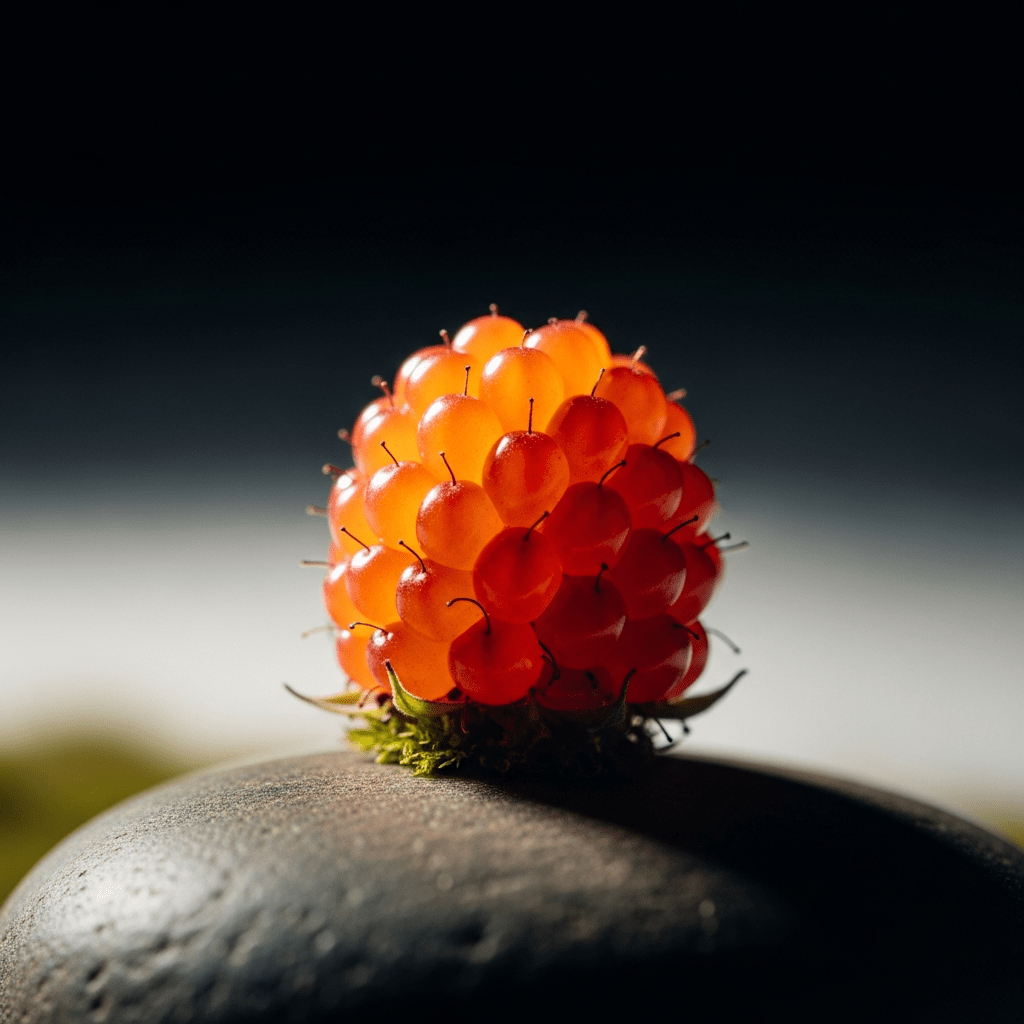
Salmonberry is a vibrant, edible berry native to the Pacific Northwest, celebrated for its striking orange-red fruits, tart-sweet flavor, and deep roots in local ecosystems and indigenous cultures.
Salmonberry is a vibrant, edible berry native to the Pacific Northwest, celebrated for its striking orange-red fruits, tart-sweet flavor, and deep roots in local ecosystems and indigenous cultures.
Originating along the west coast of North America—from Alaska through British Columbia to California—salmonberry (Rubus spectabilis) was first described by botanist Thomas Nuttall in 1818. This wild species thrives in moist, shaded habitats and has never undergone formal breeding or domestication, retaining natural diversity shaped by its environment and centuries of indigenous stewardship.
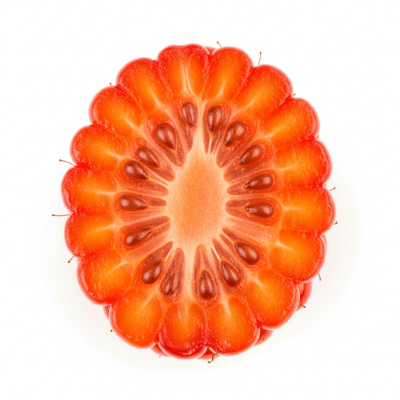
Salmonberry belongs to the genus Rubus within the rose family (Rosaceae). Botanically, its fruit is an aggregate of drupelets, not a true berry, yet it is widely recognized as a berry in culinary and cultural contexts. Its classification reflects the ambiguity between scientific and popular definitions of "berry."
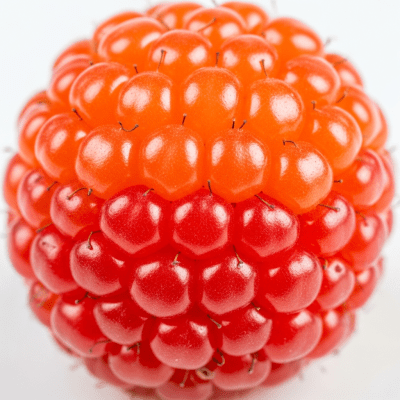
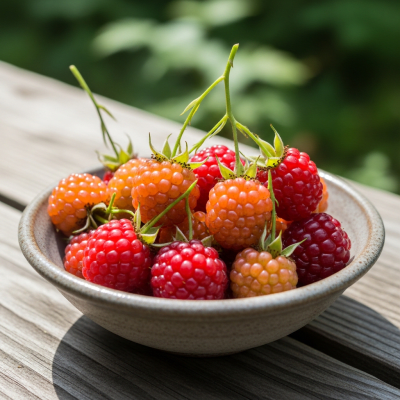
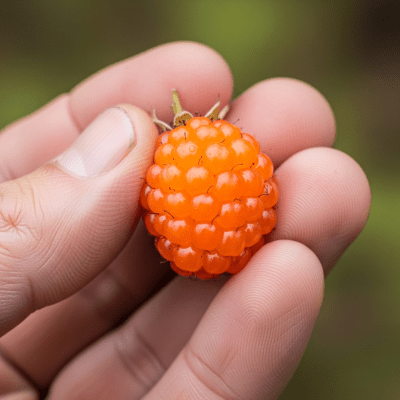
Salmonberry shrubs stand 1–4 meters tall, with upright, thorny stems and trifoliate leaves. In early spring, large pink to magenta flowers bloom before the leaves emerge. The berries themselves are soft clusters of tiny drupelets, ranging in color from yellow-orange to deep red, typically 1–2 cm in diameter, and are notably delicate and perishable.
Salmonberries are primarily foraged rather than farmed, serving as a seasonal treat for local communities and wildlife. Their early ripening makes them one of the first wild berries available each year. Humans enjoy them fresh or in homemade preserves, while birds and mammals rely on them as a vital food source in forested habitats.
Bring this kind into your world illustrated posters, mugs, and shirts.
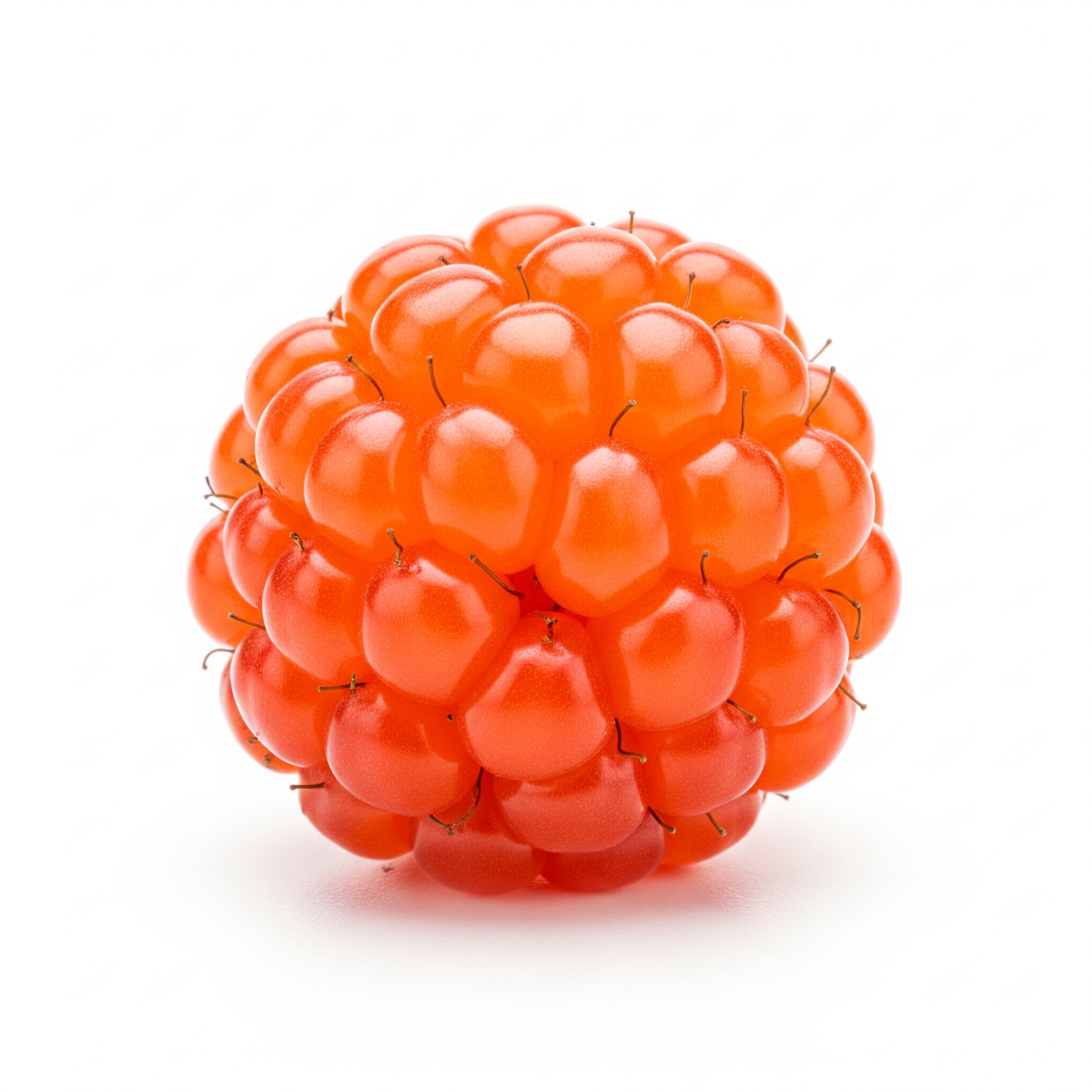
Archival print, museum-grade paper
Buy Poster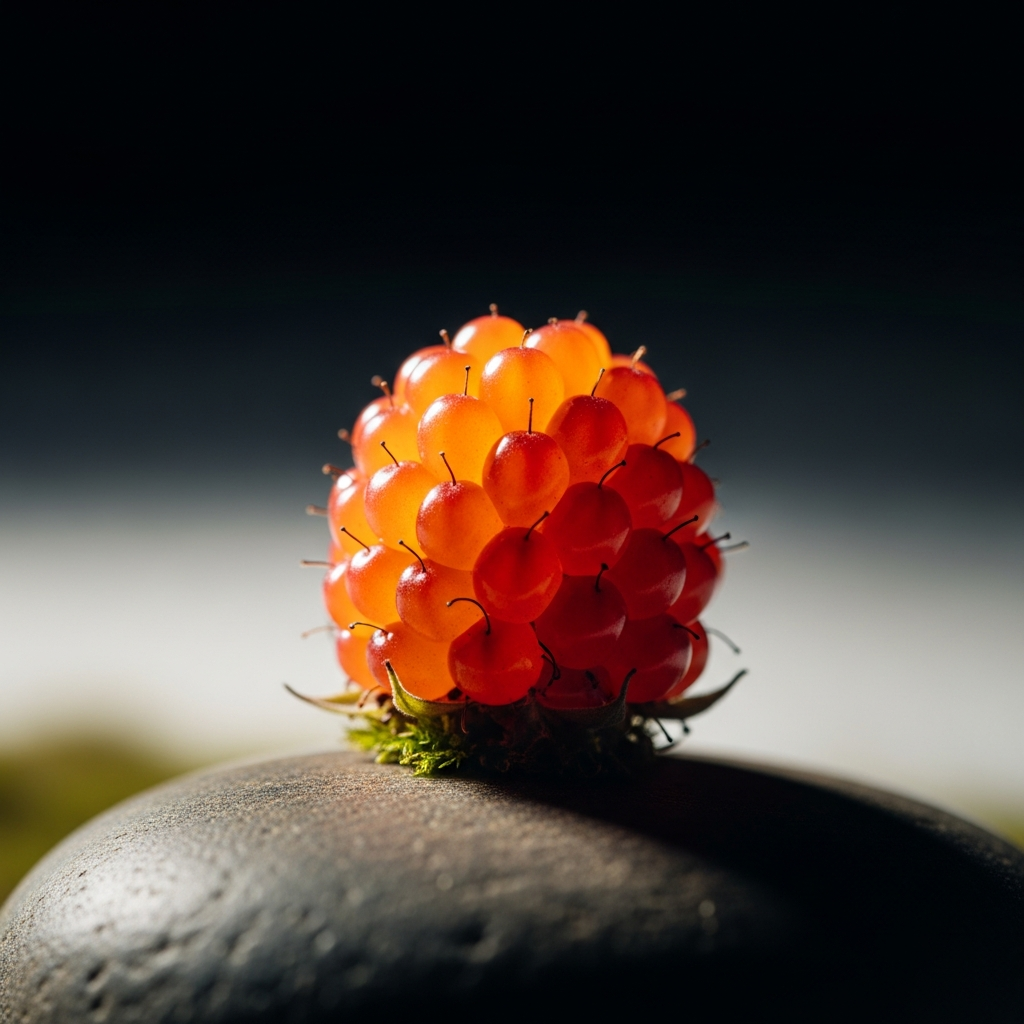
Stoneware mug, dishwasher safe
Buy Mug
Soft cotton tee, unisex sizes
Buy ShirtSalmonberry holds a special place in the traditions of indigenous peoples of the Pacific Northwest, where it features in seasonal feasts and folklore. The berry's name is linked to its pairing with salmon in traditional diets and its appearance in Chinook jargon as "stálmex." Its bright color and early arrival symbolize renewal and abundance in local cultures.
Salmonberry is a deciduous shrub with upright, thorny stems and trifoliate leaves. Its large, magenta-pink flowers bloom in early spring, often before leaf-out. The fruit is an aggregate of soft drupelets, 1–2 cm across, colored from yellow-orange to red. The plant thrives in moist, shaded environments and is tolerant of wet soils, with natural resistance to many pests and diseases.
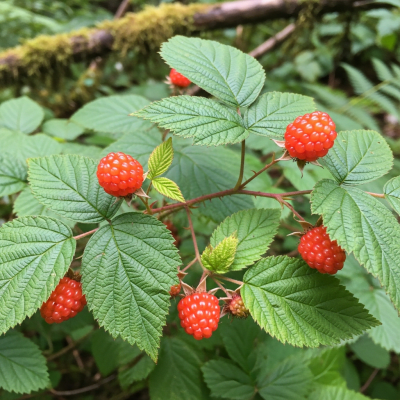
Salmonberry is almost exclusively found in the wild, favoring streambanks and forest edges with ample moisture and shade. Domesticated cultivation is rare, and yields vary depending on natural conditions. The species is generally resilient to local pests but can be susceptible to fungal infections in excessively wet environments. Due to its soft fruit and short shelf life, salmonberry is not widely grown for commercial purposes.
Salmonberries are enjoyed fresh, often straight from the bush, and are used in jams, jellies, syrups, and baked goods. Their high moisture and delicate texture limit their use in commercial products, but they are sometimes fermented into wine or incorporated into traditional indigenous dishes. The berry's tart-sweet flavor pairs well with other wild foods, including salmon.
Salmonberry has minimal commercial presence, with most harvests occurring through local foraging. The berry is rarely available in grocery stores and is not widely traded outside its native range. Its delicate nature and perishability make large-scale production and distribution impractical, preserving its status as a regional specialty.
No formal cultivars or bred varieties of salmonberry exist; all plants are wild, with natural variation in fruit color and size across different regions.
Salmonberry is naturally resistant to many local pests and diseases, though it can be affected by fungal infections in overly wet conditions. The berries are highly perishable, with a very limited shelf life and poor transportability, making them best consumed soon after harvest.