
Raspberry
The raspberry is a vibrant, sweet-tart aggregate fruit from the genus Rubus, cherished worldwide for its flavor, nutritional value, and versatility in culinary and cultural traditions.
The raspberry is a vibrant, sweet-tart aggregate fruit from the genus Rubus, cherished worldwide for its flavor, nutritional value, and versatility in culinary and cultural traditions.
Raspberries trace their roots to ancient Europe, northern Asia, and eastern North America. Red raspberries (Rubus idaeus) originated in Europe and Asia, while black raspberries (Rubus occidentalis) are native to North America. Cultivation began in antiquity, with mentions in Greek and Roman records, and evolved through centuries of selective breeding in the UK, Russia, and the United States. Modern raspberries result from crosses between wild species and cultivated varieties, shaped by global breeding programs to enhance yield, resilience, and fruit quality.
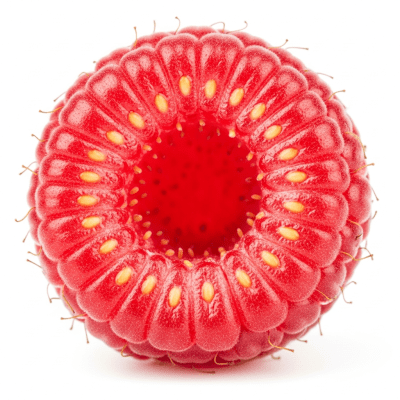
Although commonly called a berry, the raspberry is botanically classified as an aggregate fruit—clusters of tiny drupelets formed from multiple ovaries of a single flower. It belongs to the genus Rubus in the rose family (Rosaceae). In culinary and agricultural contexts, raspberries are grouped with other soft fruits and berries, reflecting their widespread use and popularity.
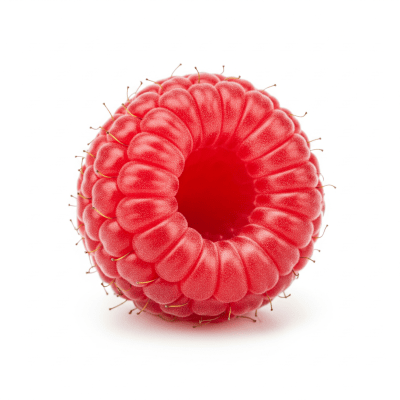
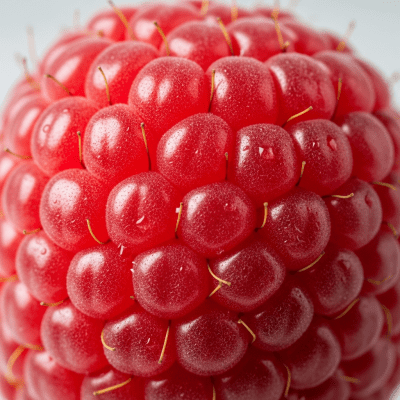
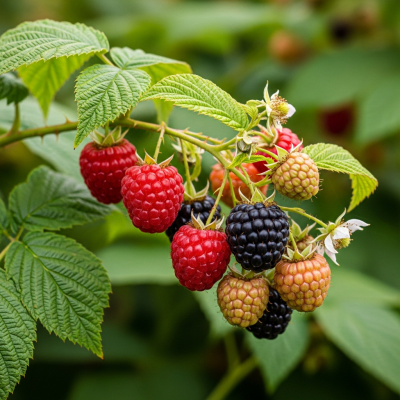
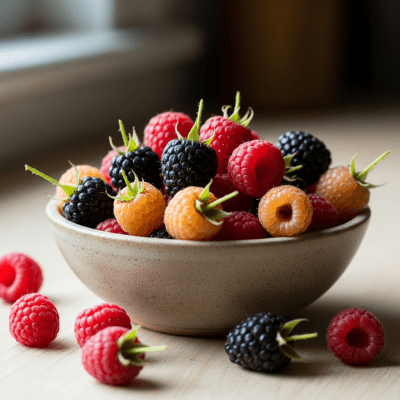
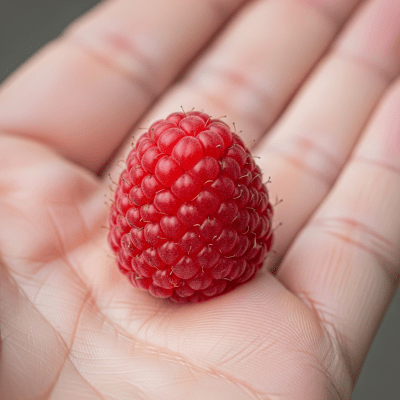
Raspberries are small, hollow fruits made up of delicate, bead-like drupelets. They range in color from vivid red and deep black to golden yellow and purple, typically measuring 1–2 cm in diameter. Their soft texture, gentle fuzz, and aromatic sweetness make them visually and sensorially appealing, whether fresh or processed.
Raspberries are highly valued for their versatility. They are enjoyed fresh, frozen, or processed into jams, jellies, juices, syrups, and baked goods. Their sweet-tart flavor and vibrant color enhance desserts, breakfast dishes, and beverages. In the environment, raspberry shrubs provide habitat and food for wildlife, while their cultivation supports diverse agricultural economies.
Bring this kind into your world illustrated posters, mugs, and shirts.
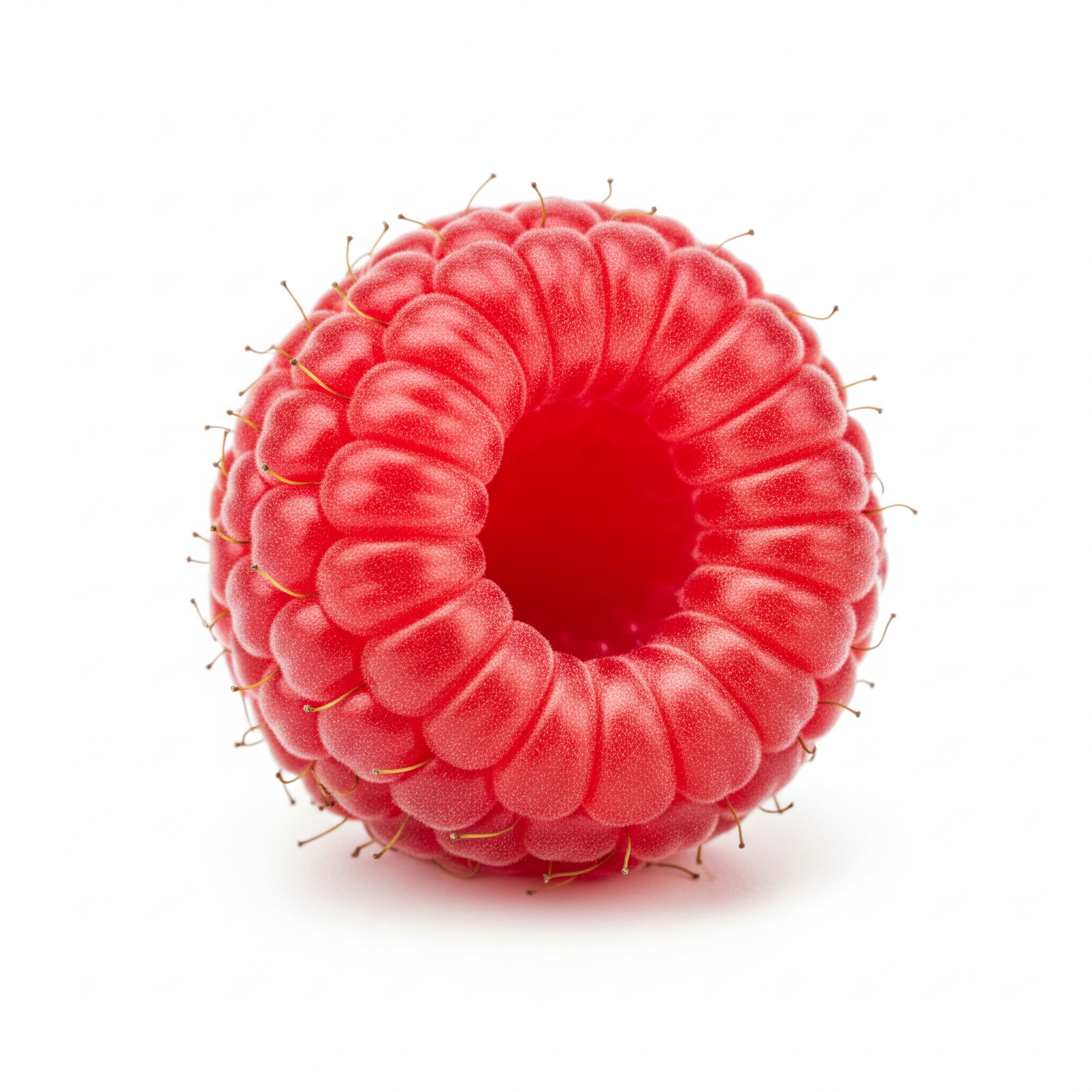
Archival print, museum-grade paper
Buy Poster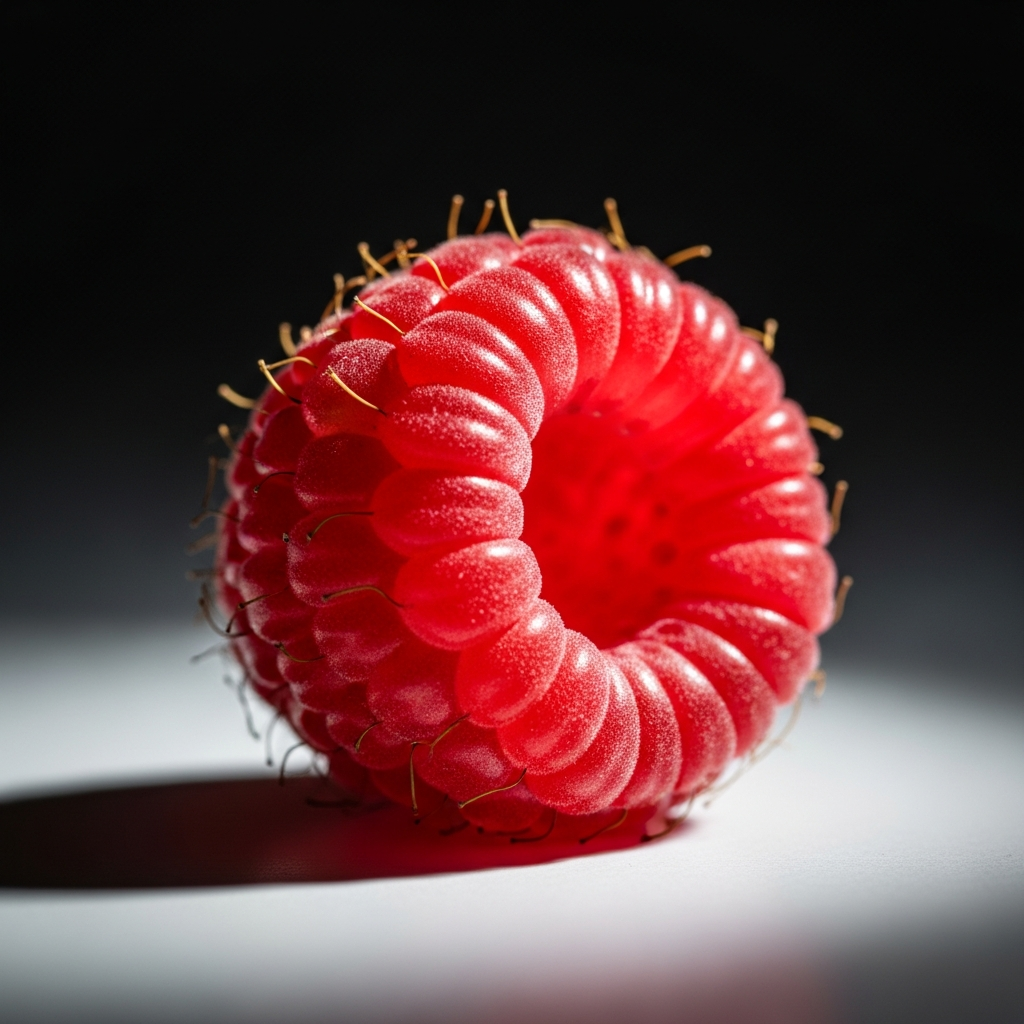
Stoneware mug, dishwasher safe
Buy Mug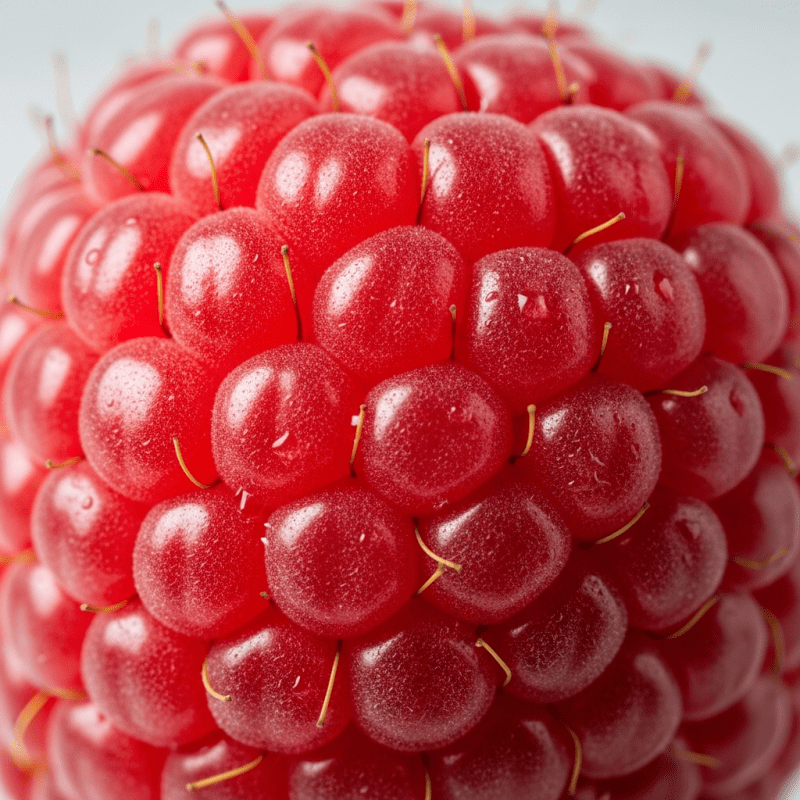
Soft cotton tee, unisex sizes
Buy ShirtRaspberries hold a special place in folklore, art, and cuisine. They feature in European and Russian traditions, such as summer puddings and tarts, and are celebrated in festivals and regional specialties like Scottish raspberries from Perthshire. The fruit’s symbolism—often associated with abundance and vitality—appears in literature and decorative motifs, while its French name, framboise, graces gourmet desserts and liqueurs.
Raspberry plants are perennial, deciduous shrubs with biennial canes—primocanes and floricanes—that bear fruit in their second year. The fruit is an aggregate of drupelets, each containing a tiny seed, and colors range from red and black to purple and golden-yellow. Plants grow 1–2.5 meters tall, with thorny or thornless canes depending on the cultivar. Their growth habit and fruit structure distinguish them from other berry species.
Raspberries prefer temperate climates and well-drained soils. They are sensitive to root rot and viral diseases, with yields varying from 5–20 tonnes per hectare depending on cultivar and region. Disease resistance and management practices differ among varieties, with some showing tolerance to Phytophthora root rot and resistance to raspberry bushy dwarf virus. Cultivation requires careful site selection, pruning, and pest management to ensure healthy plants and high-quality fruit.
Raspberries are among the top-selling berries globally, with major production centers in Russia, the United States, Serbia, Poland, and Mexico. They are marketed fresh, frozen, and as processed products, with specialty cultivars catering to niche and gourmet markets. The fruit’s short shelf life drives rapid supply chains and innovation in packaging and preservation.
Some raspberry cultivars offer tolerance to Phytophthora root rot and resistance to raspberry bushy dwarf virus (RBDV). However, the crop remains susceptible to cane blight, botrytis fruit rot, and pests like spotted wing drosophila. Due to their delicate structure, raspberries have a short post-harvest shelf life—typically 2–5 days under refrigeration—necessitating careful handling and rapid distribution.