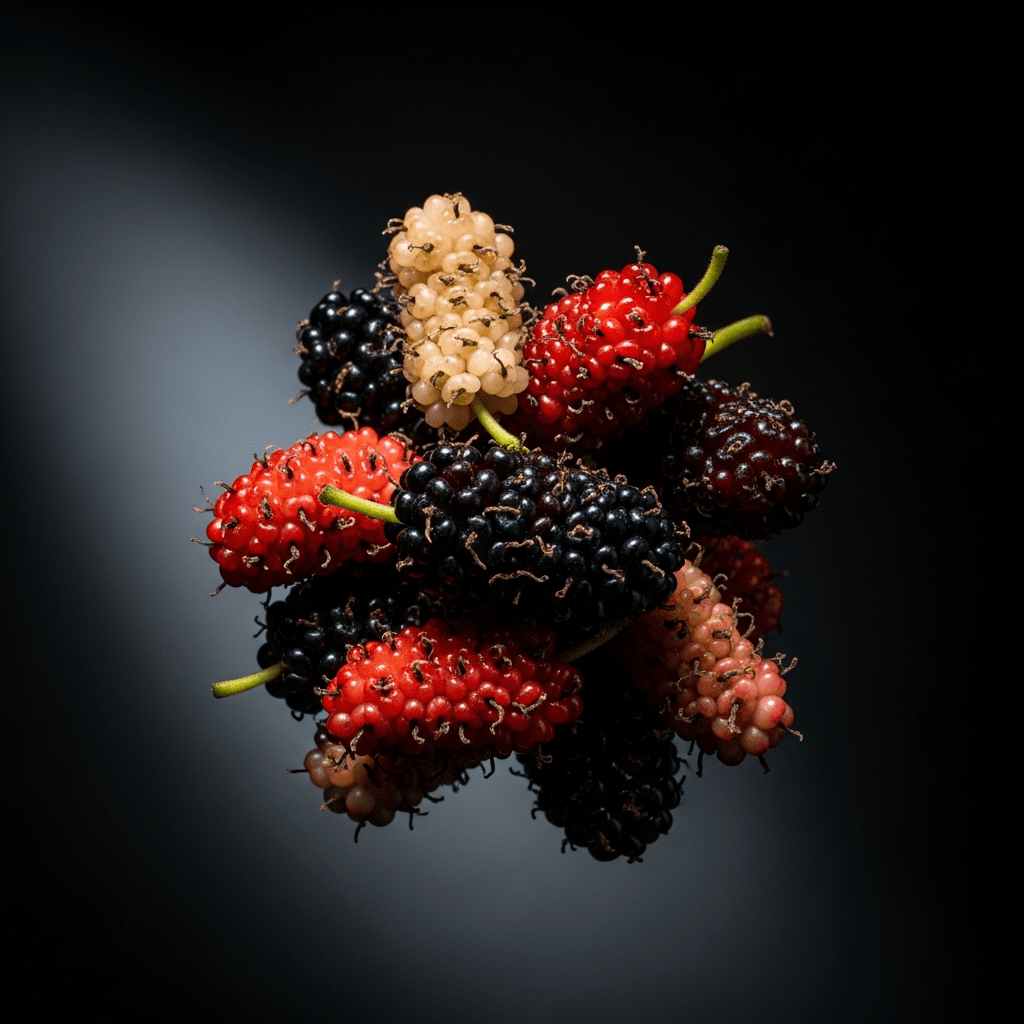
Mulberry
Mulberry refers to the sweet, edible fruit produced by several species in the genus Morus, prized for its versatile use in fresh, dried, and processed forms across cultures and cuisines.
Mulberry refers to the sweet, edible fruit produced by several species in the genus Morus, prized for its versatile use in fresh, dried, and processed forms across cultures and cuisines.
The story of mulberry begins over 4,000 years ago in China, where the white mulberry (Morus alba) was domesticated primarily to feed silkworms, catalyzing the ancient silk industry. Black mulberry (Morus nigra) traces its roots to western Asia, while red mulberry (Morus rubra) is native to eastern North America. With no single discoverer, mulberries have evolved through centuries of wild growth, local cultivation, and hybridization, resulting in a rich tapestry of varieties and global spread.
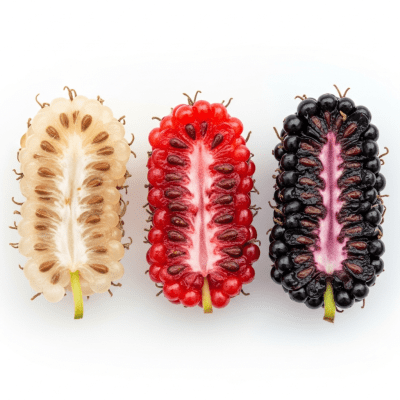
Mulberries belong to the genus Morus within the family Moraceae. Although their fruit is technically an aggregate of small drupes rather than a true botanical berry, mulberries are widely recognized as berries in culinary, agricultural, and cultural contexts. The most prominent species include Morus alba (white mulberry), Morus nigra (black mulberry), and Morus rubra (red mulberry).
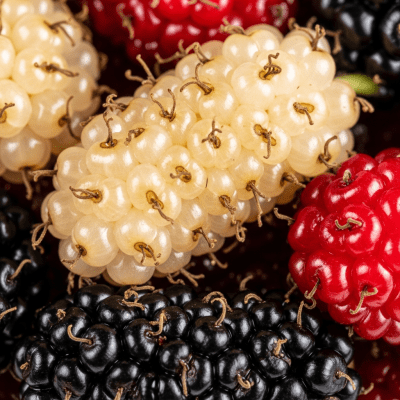
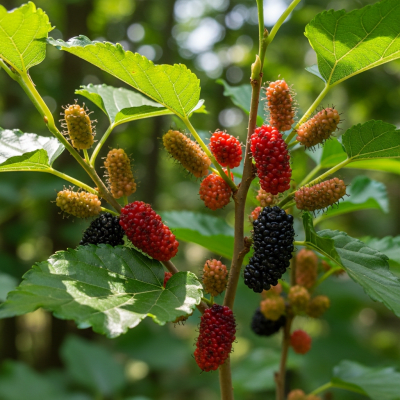
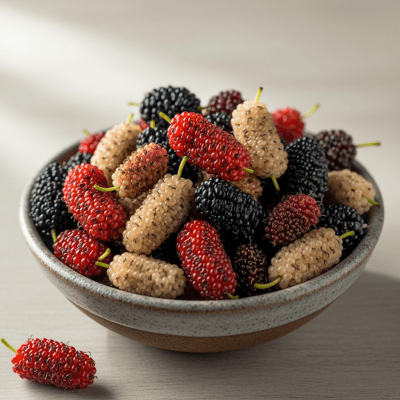
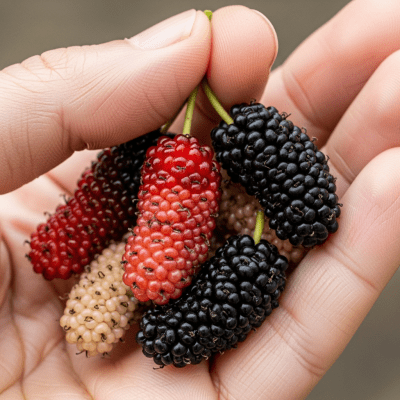
Mulberries are slender, cylindrical fruits typically 2–3 cm long, composed of clustered tiny drupes. Their color varies by species: white or pale pink for M. alba, vivid red for M. rubra, and deep purple-black for M. nigra. The texture is soft, juicy, and notably fragile, making them delicate to the touch and easily bruised. The trees themselves are medium-sized, deciduous, with broad, simple leaves and a spreading canopy.
Mulberries are enjoyed fresh, dried, or processed into jams, jellies, wines, syrups, and baked goods. Their sweet-tart flavor and nutritional value make them a popular snack, especially in dried form. Beyond fruit, mulberry leaves are essential for silkworm cultivation and are used in herbal teas. The wood of the mulberry tree is valued for furniture and musical instruments, reflecting its utility beyond the orchard.
Bring this kind into your world illustrated posters, mugs, and shirts.
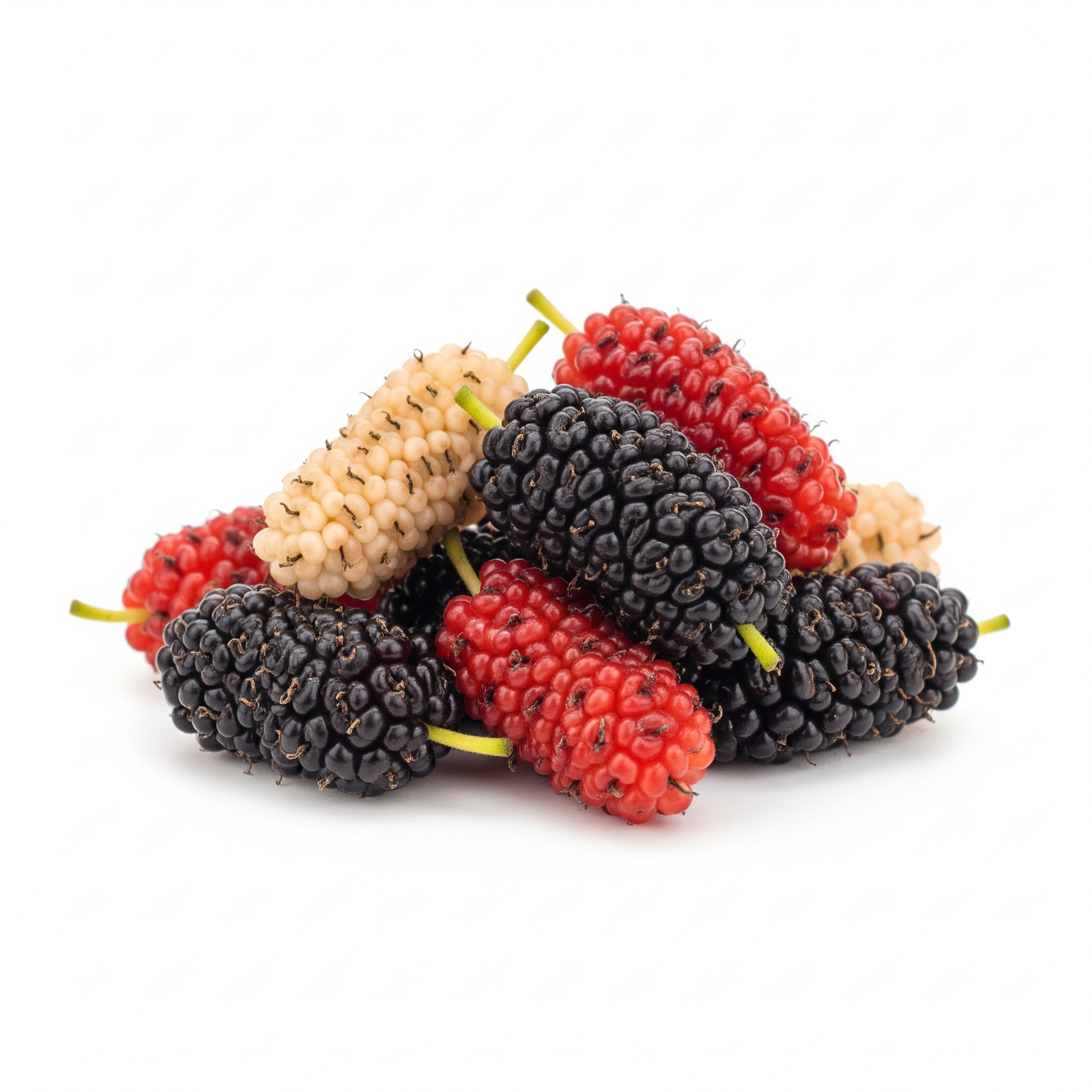
Archival print, museum-grade paper
Buy Poster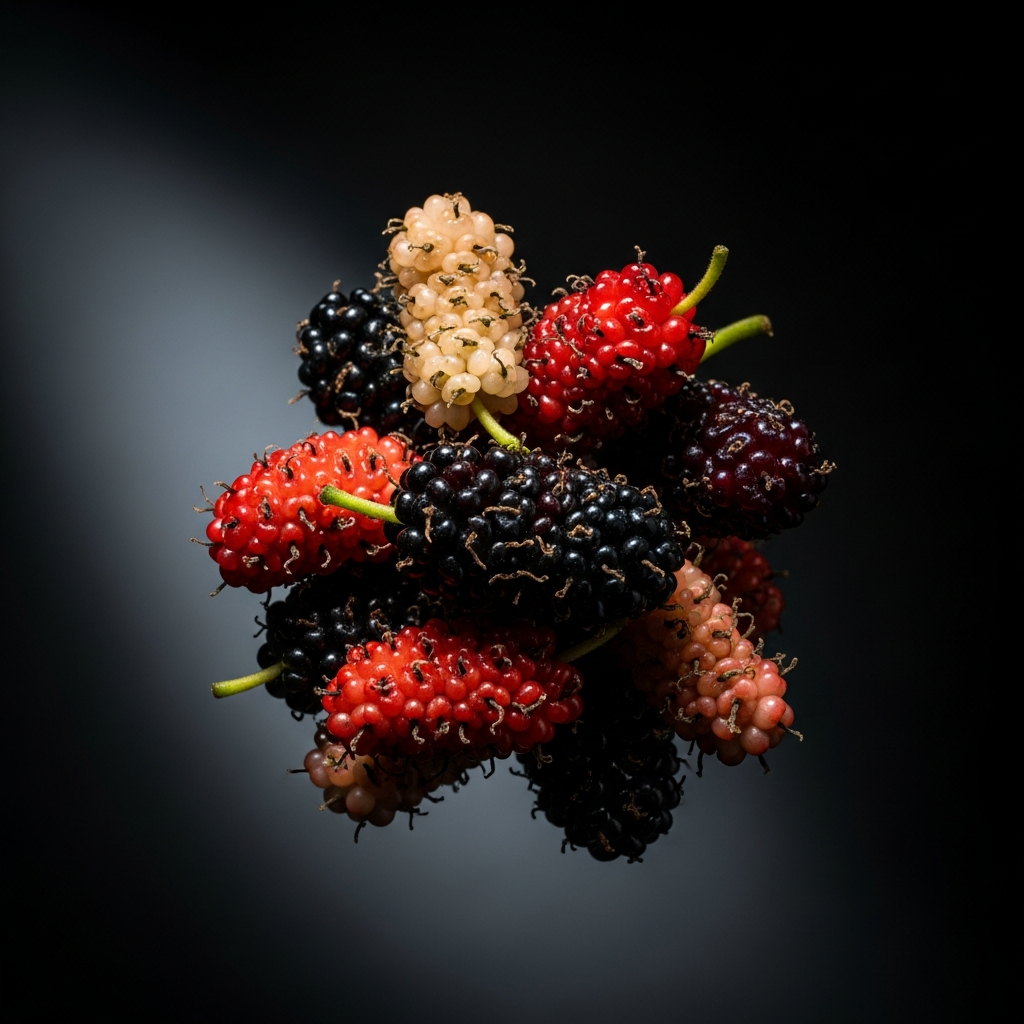
Stoneware mug, dishwasher safe
Buy Mug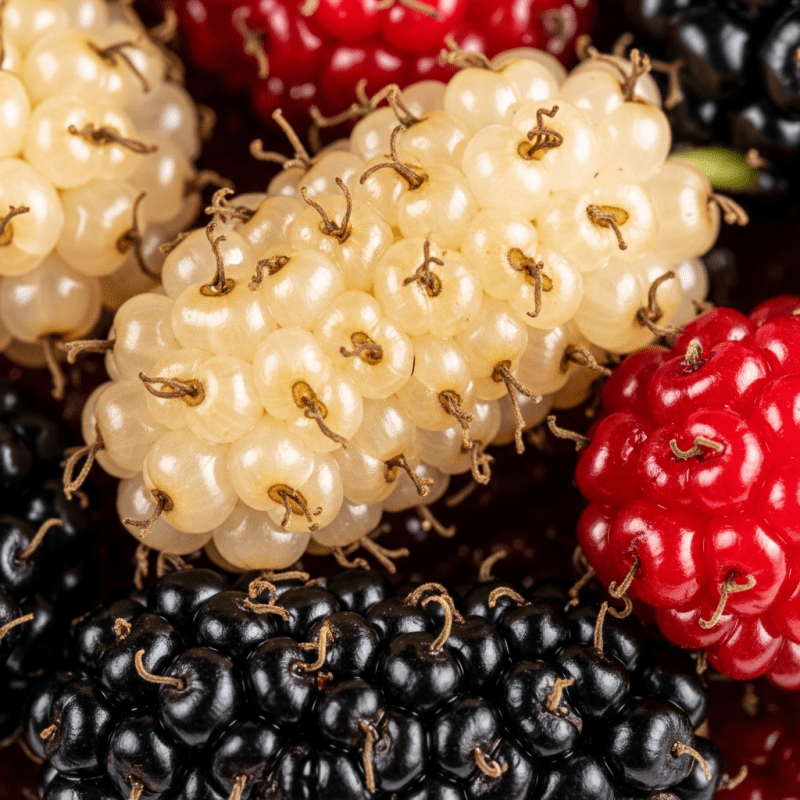
Soft cotton tee, unisex sizes
Buy ShirtMulberries hold a storied place in global culture. In China, the white mulberry is inseparable from the history of silk, symbolizing prosperity and transformation. In Persian and Turkish cultures, mulberries—known as shahtoot and tut—feature in traditional sweets and folk remedies. European folklore often associates mulberry trees with wisdom and longevity, while in North America, the red mulberry is woven into indigenous foodways. The fruit and tree appear in literature, myth, and art, celebrated for their beauty and bounty.
Mulberry trees are deciduous and medium-sized, reaching up to 15 meters in height. Their leaves are alternate and simple, supporting a spreading growth habit. The fruit is an aggregate of small drupes, measuring 2–3 cm, with colors ranging from white and pink to red and deep purple-black. Mulberries are fast-growing, drought-resistant, and tolerant of urban conditions, but their fruits are soft and fragile, limiting post-harvest longevity.

Mulberries thrive in a variety of soils and climates, from temperate to subtropical regions. They are fast-growing and moderately drought-resistant, making them suitable for diverse environments. Mature trees yield 10–30 kg of fruit annually, though the soft fruit is susceptible to fungal diseases and fruit drop. Post-harvest handling is challenging due to rapid spoilage, so drying or processing is often preferred to extend shelf life. Mulberries also tolerate urban pollution and moderate frost, adding to their resilience.
Mulberries are commercially grown in China, Turkey, Iran, and the United States. While fresh mulberries are mostly sold in local markets due to their perishability, dried mulberries are widely available internationally. The fruit's short shelf life limits large-scale export, but its processed forms—such as jams and dried snacks—have a growing market. Mulberry wood is also traded for furniture and instrument making, adding economic value beyond fruit production.
Mulberries are tolerant of urban pollution and moderate frost, but susceptible to fungal diseases and fruit drop, especially in humid conditions. Their fruits are extremely perishable, with limited storage life post-harvest. Drying or processing into jams, wines, or syrups is common to extend shelf life and reduce spoilage.