
Blackberry
The blackberry is a dark, aggregate fruit from the genus Rubus, celebrated for its sweet-tart flavor, nutritional richness, and versatility in both wild and cultivated forms.
The blackberry is a dark, aggregate fruit from the genus Rubus, celebrated for its sweet-tart flavor, nutritional richness, and versatility in both wild and cultivated forms.
Blackberries originated in temperate regions spanning Europe, North America, and parts of Asia. While wild blackberries have been foraged for centuries, formal cultivation began in the 19th century, with major breeding advancements in the United States and United Kingdom. Modern varieties often stem from crosses among several Rubus species, with notable contributions from institutions like the USDA Agricultural Research Service and the University of Arkansas, which introduced the first thornless blackberry cultivars in the late 20th century.
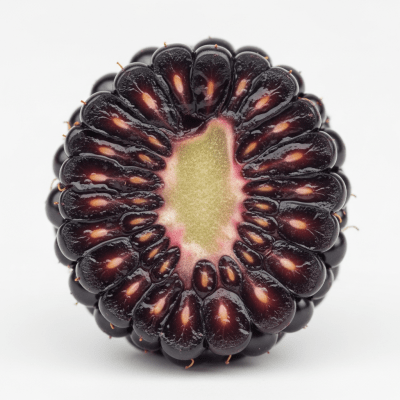
Botanically, the blackberry is classified as an aggregate fruit, not a true berry, because its fleshy fruit is formed from multiple ovaries of a single flower. It belongs to the genus Rubus within the Rosaceae family. Culinary traditions, however, group blackberries with other soft fruits commonly called berries, reflecting their shared usage and appearance rather than strict botanical criteria.
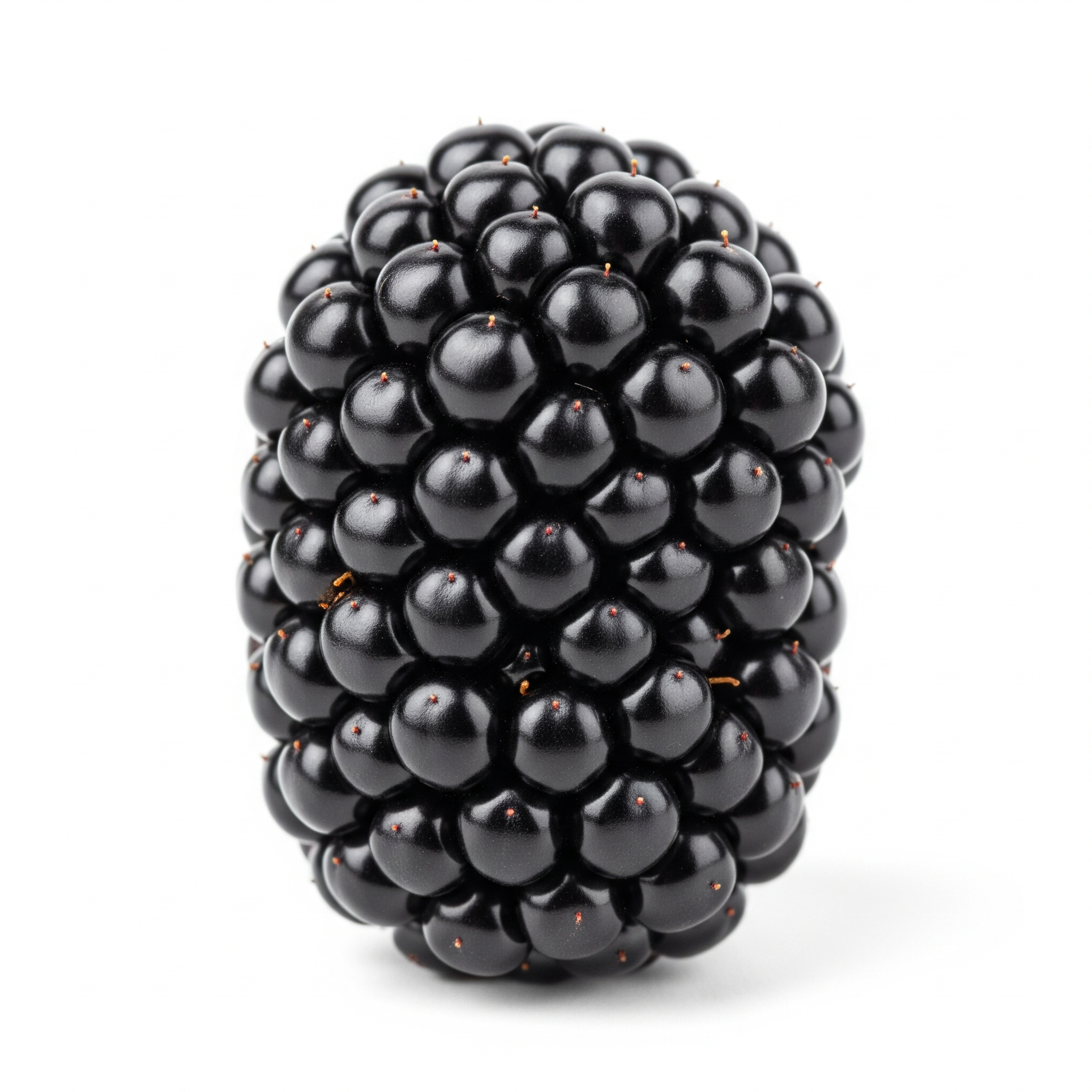
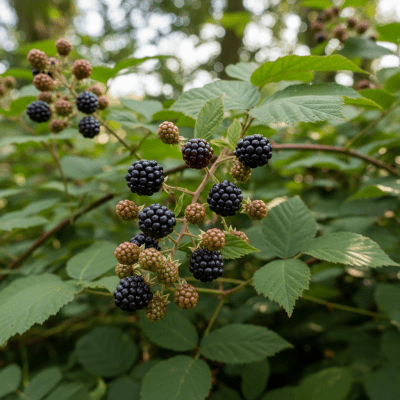
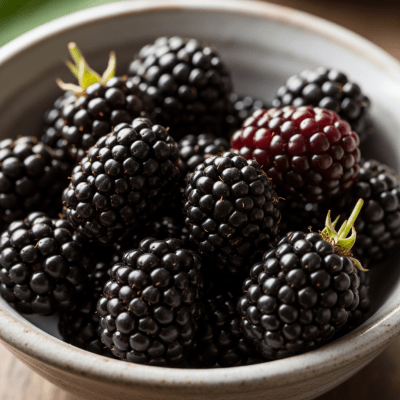
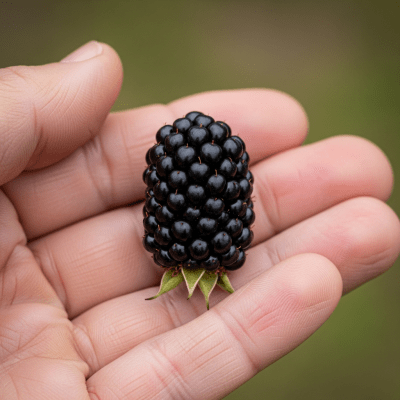
Blackberries present as clusters of glossy, deep black or purple drupelets, each about 1–3 cm in diameter. The berries are plump and juicy, with a slightly firm texture that yields to gentle pressure. Plants may feature arching or trailing canes, and depending on the cultivar, can be thorny or thornless. The compound leaves are typically composed of three to five leaflets, and the flowers are delicate, white or pink, and five-petaled.
Blackberries thrive in wild hedgerows and cultivated fields, adapting to a range of temperate climates. They are harvested for fresh consumption, processed into jams, jellies, baked goods, and beverages, and are also valued for their role in supporting pollinators and wildlife. Commercially, blackberries are available in supermarkets and farmers' markets, while wild berries are foraged and used in traditional recipes. Their high perishability necessitates gentle handling and prompt refrigeration.
Bring this kind into your world illustrated posters, mugs, and shirts.
Archival print, museum-grade paper
Buy Poster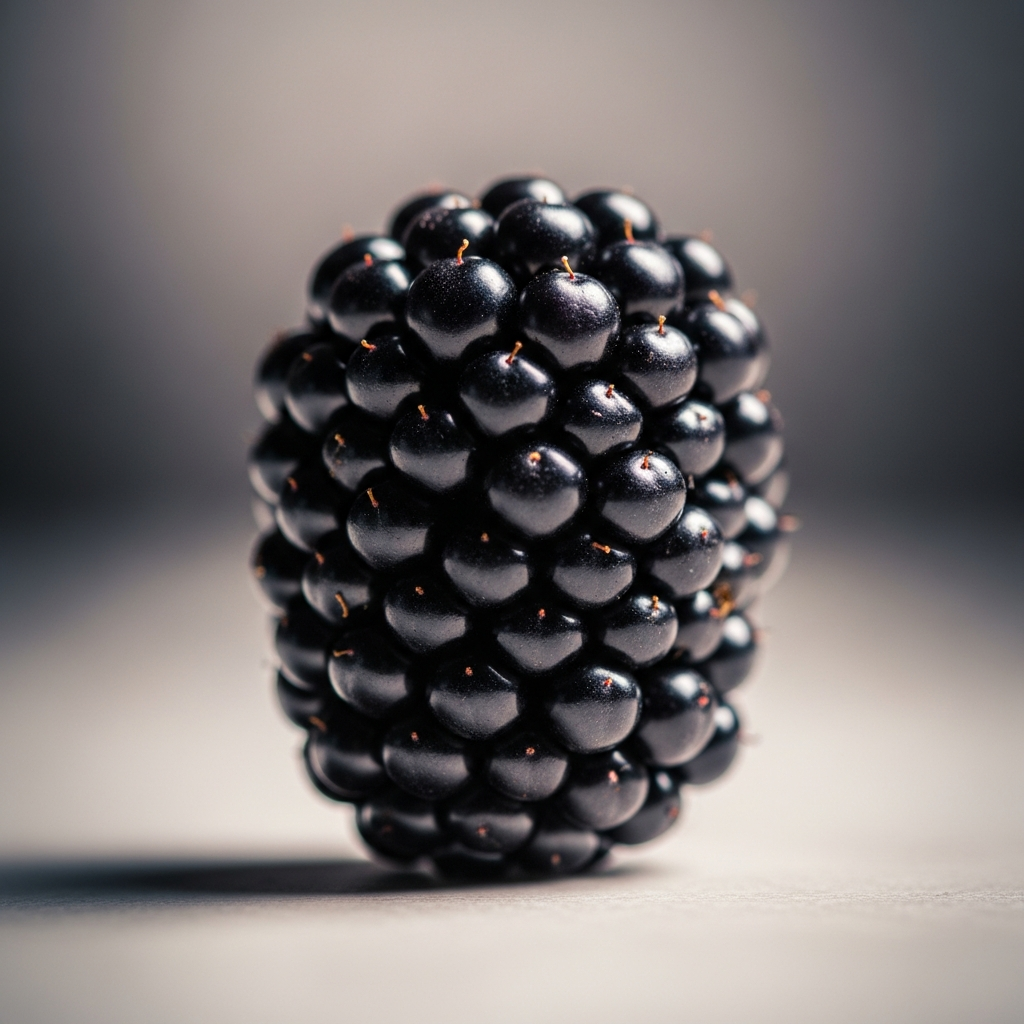
Stoneware mug, dishwasher safe
Buy Mug
Soft cotton tee, unisex sizes
Buy ShirtBlackberries hold a storied place in folklore, cuisine, and regional identity. In the UK and Ireland, the term "bramble" is synonymous with wild blackberry picking, a cherished seasonal tradition. The fruit appears in literature, art, and myth, often symbolizing abundance, resilience, or the wild countryside. Blackberry festivals, recipes, and even superstitions—such as not picking after Michaelmas—reflect its deep-rooted cultural resonance.
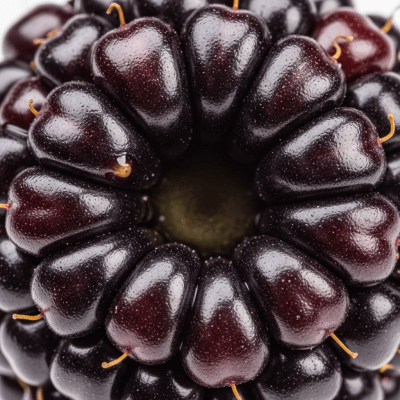
Blackberry plants are perennial, with arching or trailing canes and biennial stems known as primocanes and floricanes. Their compound leaves typically have three to five leaflets. The flowers are white or pink, five-petaled, and borne in clusters. The fruit is an aggregate of small drupelets, deep black or purple when ripe, and varies from 1–3 cm in diameter. Cultivars may be thorny or thornless, and the plants are adapted to a wide range of temperate environments.
Blackberries are grown in temperate climates, favoring well-drained soils and full sun. Commercial yields range from 3,000–10,000 kg per hectare, with modern breeding improving disease resistance and fruit quality. Plants require careful management to prevent fungal diseases such as anthracnose and cane blight. Due to their delicate nature, harvested berries must be refrigerated and handled gently to minimize spoilage. Thornless varieties have enhanced ease of harvest and marketability.
Blackberries are widely available in global markets, including supermarkets, farmers' markets, and pick-your-own farms. The United States and Europe are major producers, with commercial cultivation centered around improved thornless varieties. Wild blackberries remain popular for local foraging and artisanal products. Market trends favor fresh berries, but processed forms such as frozen, purees, and preserves are also significant.
Blackberries are susceptible to fungal diseases such as anthracnose and cane blight, though breeding has improved resistance in many cultivars. The berries are highly perishable, with a short storage life; refrigeration and gentle handling are essential to maintain quality and prevent spoilage.