Victorian
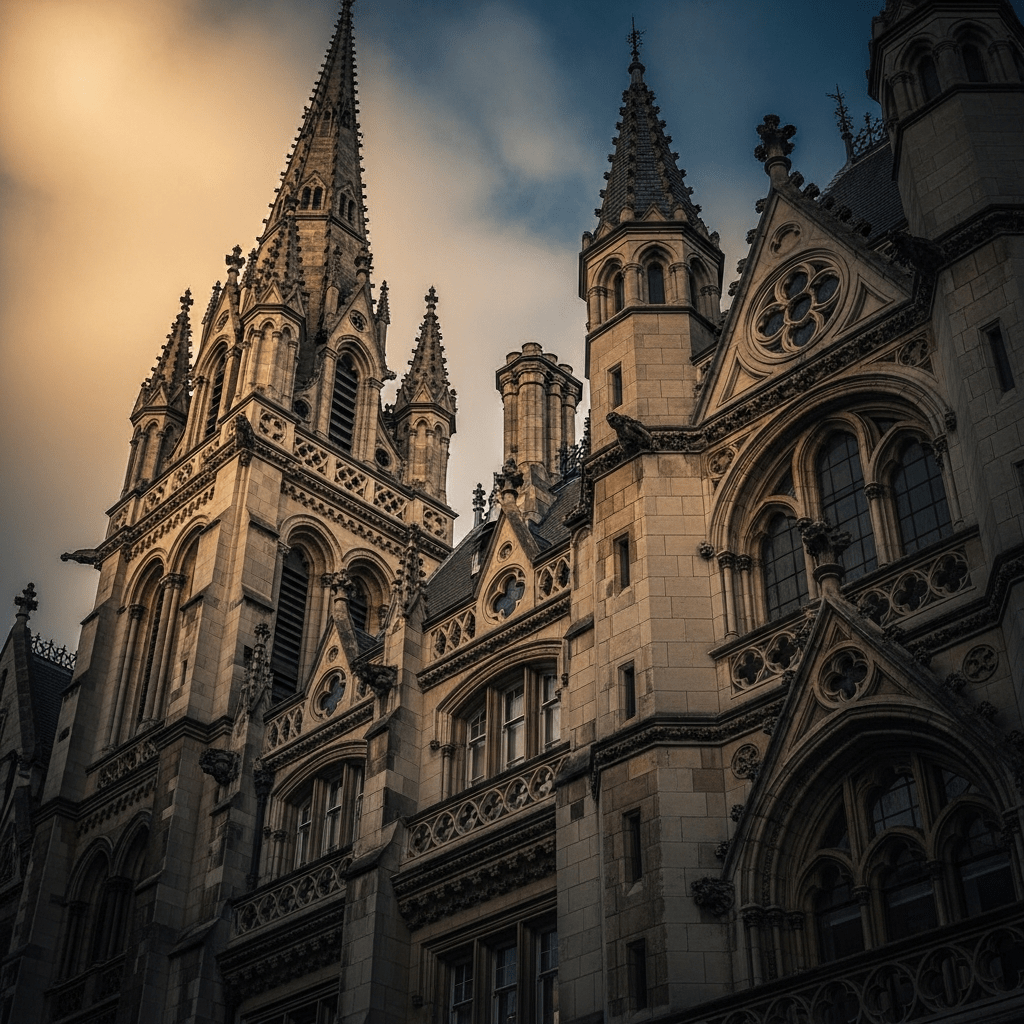
Victorian architecture is a richly eclectic style that flourished during Queen Victoria’s reign, celebrated for its ornate detailing, historical revival motifs, and innovative use of materials and technology.
Victorian architecture is a richly eclectic style that flourished during Queen Victoria’s reign, celebrated for its ornate detailing, historical revival motifs, and innovative use of materials and technology.
Victorian architecture originated in the United Kingdom between 1837 and 1901, coinciding with Queen Victoria’s rule. The era’s rapid industrialization and expanding British Empire fueled a building boom, blending historical influences with new construction techniques. As Britain’s reach extended globally, the style spread to colonies and the United States, adapting to local tastes and materials while reflecting the optimism and progress of the age.
Victorian architecture belongs to the Western/British architectural school and is defined by its umbrella of revivalist substyles, including Gothic Revival, Italianate, Queen Anne, Second Empire, Stick, Shingle, and Romanesque Revival. It is classified as a style that synthesizes and reinterprets earlier European traditions, often grouped by period and region within architectural history.
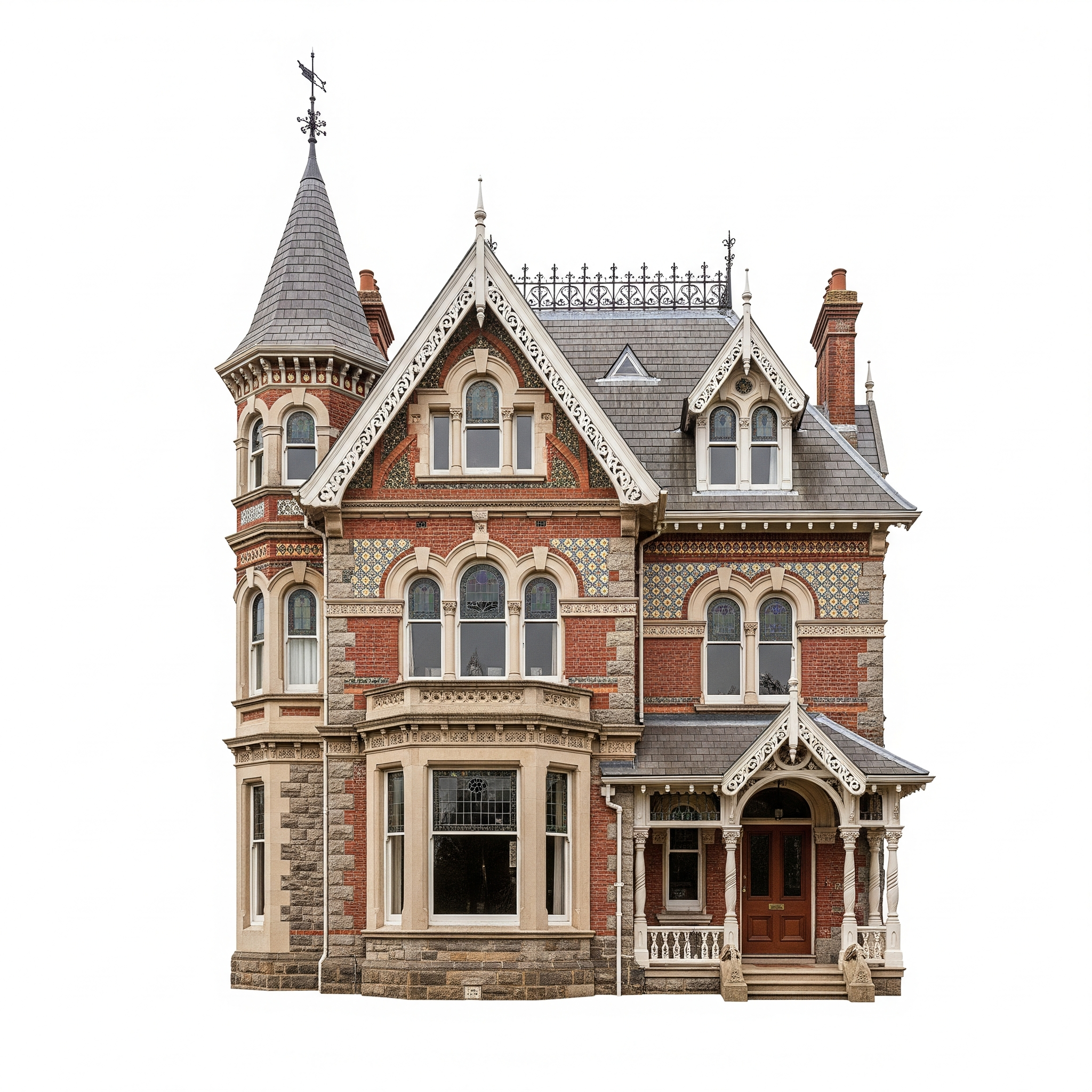
Victorian buildings are visually striking, marked by asymmetrical facades, steeply pitched roofs, towers, turrets, and elaborate porches. Decorative trim—often called "gingerbread"—adorns eaves and gables, while stained glass, patterned brickwork, and polychrome surfaces add vibrant detail. Interiors and exteriors alike showcase ornate brackets, spindles, and bay windows, creating a sense of grandeur and visual complexity that delights the eye.
Victorian architecture served a wide range of functions, from stately residential villas and terraced houses to public buildings such as railway stations, museums, churches, and town halls. The style’s adaptability allowed it to suit both private and institutional needs, with homes designed to display status and public buildings meant to symbolize civic pride and technological progress.
Bring this kind into your world illustrated posters, mugs, and shirts.
Archival print, museum-grade paper
Buy Poster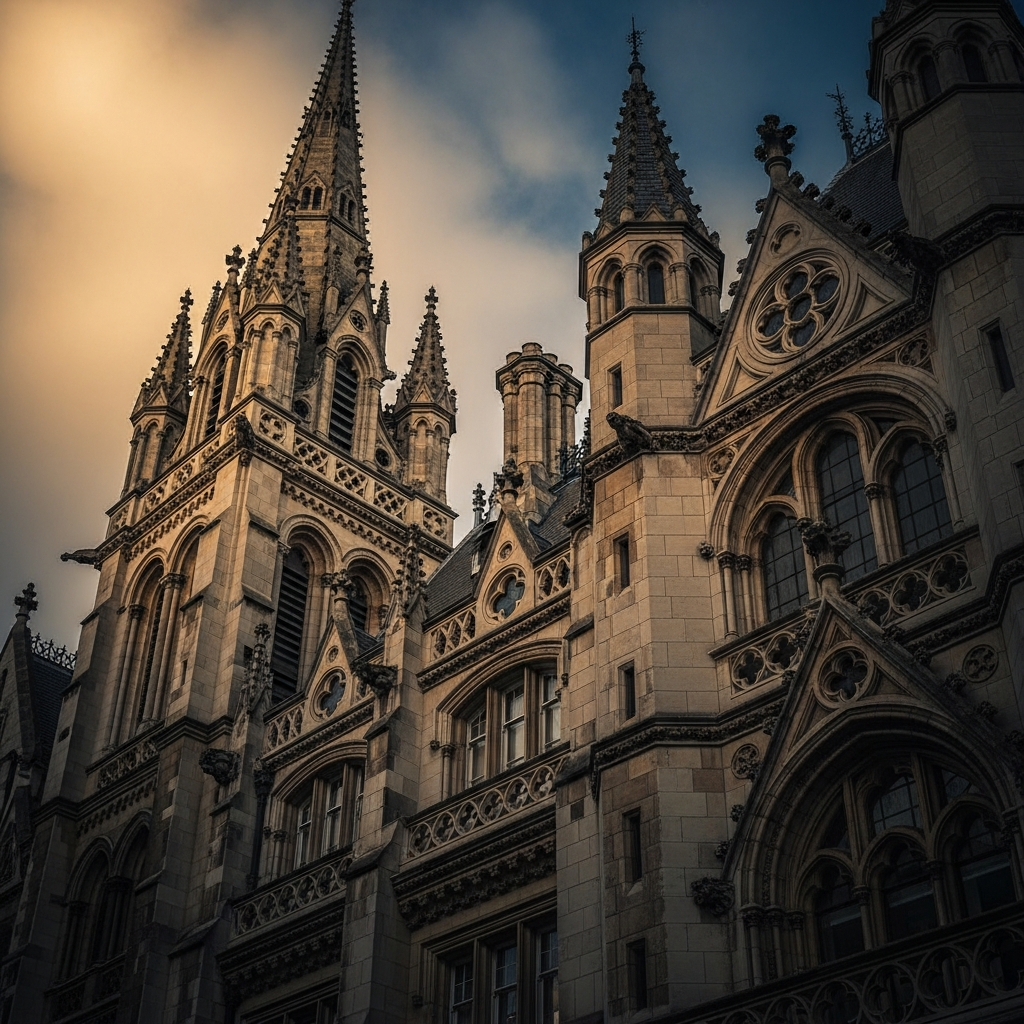
Stoneware mug, dishwasher safe
Buy Mug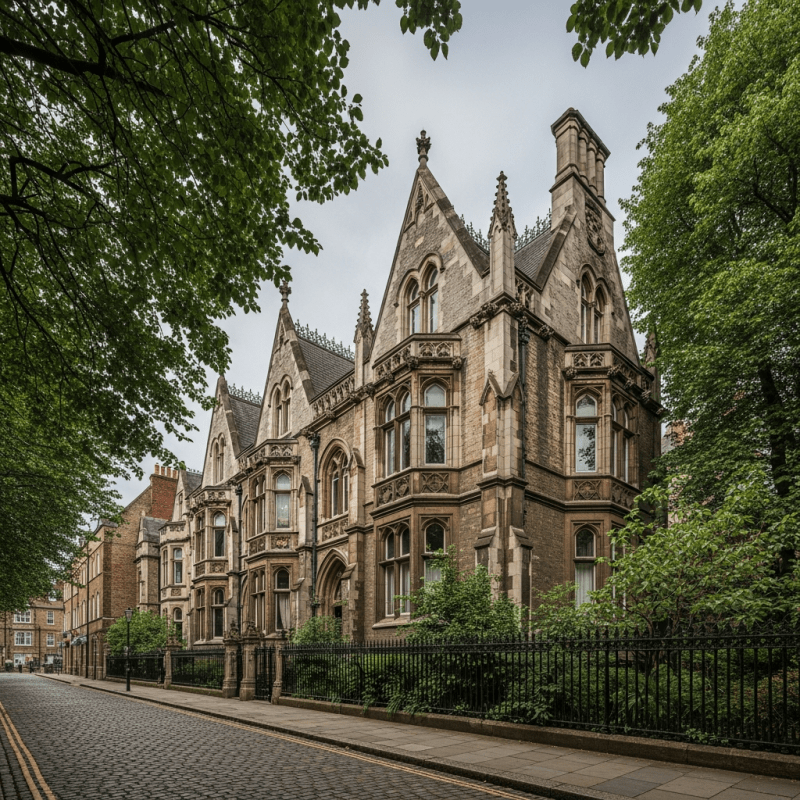
Soft cotton tee, unisex sizes
Buy ShirtVictorian architecture is a cultural emblem of the 19th century, reflecting the era’s fascination with history, progress, and display. Its buildings often feature in literature, film, and art as symbols of opulence, nostalgia, or even mystery. Many Victorian districts are cherished for their historical ambiance, and the style’s influence endures in restoration projects and heritage tourism worldwide.
Victorian architecture emerged during the reign of Queen Victoria, spanning 1837 to 1901, with some variants continuing into the early 20th century. Its origins are rooted in the United Kingdom, but the style quickly spread across the British Empire—including Australia, Canada, India, New Zealand, South Africa—and the United States, where it evolved into distinct local forms.
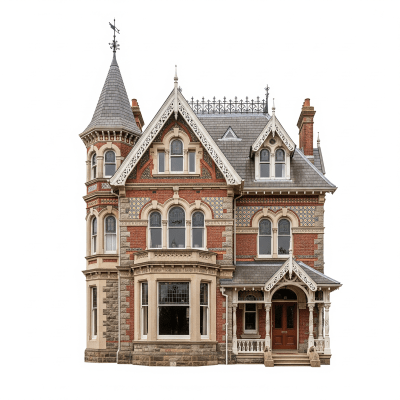
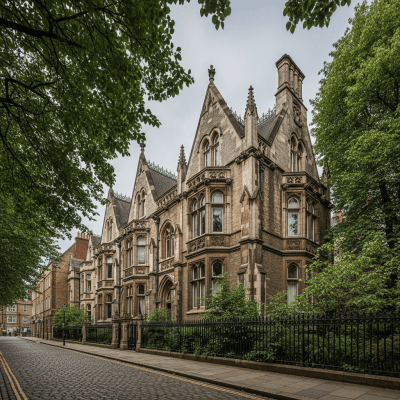

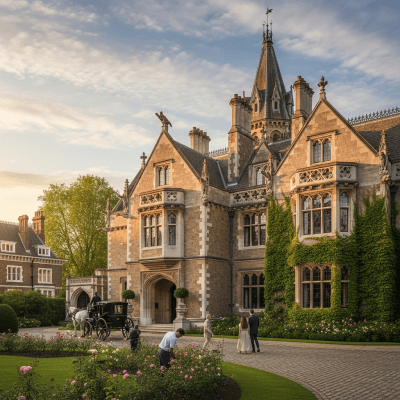

Victorian buildings typically employ brick, stone, timber, cast iron, terracotta, and, later, steel and glass. Construction techniques include prefabricated ironwork, decorative woodwork, balloon framing (especially in North America), and mass production of architectural elements. Advances in glazing enabled larger windows and stained glass, while intricate details were made possible by industrial manufacturing.
Victorian architecture draws heavily from Gothic, Renaissance, and Romanesque traditions, reinterpreted through 19th-century technology and sensibility. It influenced and was followed by the Arts and Crafts movement, Edwardian architecture, and early Modernism. Hybrid styles such as Indo-Saracenic (India) and Federation (Australia) showcase its adaptability and global reach.
Many Victorian buildings are officially recognized for their architectural and historical significance. In the UK, they may be Grade I or II listed; in the USA, included on the National Register of Historic Places. Some, like the Royal Exhibition Building in Melbourne, are UNESCO World Heritage sites. Preservation efforts protect Victorian districts and landmarks, ensuring their legacy endures for future generations.