
Vernacular
Vernacular architecture describes building traditions shaped by local materials, climate, and cultural practices, prioritizing community needs over formal design rules.
Vernacular architecture describes building traditions shaped by local materials, climate, and cultural practices, prioritizing community needs over formal design rules.
Emerging organically wherever people have built shelters, vernacular architecture has no single point of origin. Its roots stretch from prehistory to the present, evolving continuously as communities respond to local environments, available resources, and social customs. Every region of the world—from the mud-brick villages of Africa to the timber houses of northern Europe—has developed its own vernacular forms, often predating academic or formal architectural styles.
Vernacular architecture is a foundational category within the broader school of architecture. Unlike formal styles defined by architects or movements, it encompasses indigenous, folk, and traditional building practices unique to each locale. Its classification is inherently broad and context-dependent, with countless regional substyles such as adobe dwellings, timber-framed houses, and thatched cottages reflecting local adaptation.
Vernacular buildings are visually diverse, shaped by climate, available materials, and cultural customs. Forms range from the thick-walled adobe pueblos of the American Southwest to the steeply pitched thatched roofs of English cottages, airy stilt houses in Southeast Asia, and circular yurts on the Eurasian steppe. Ornamentation is typically minimal, with design focused on function and environmental harmony, though some structures feature symbolic motifs meaningful to local traditions.
Vernacular architecture serves essential functions—providing shelter, storage, communal gathering spaces, and places of worship—tailored to the specific needs of its inhabitants. Buildings are often constructed by local craftspeople or the community itself, using empirical knowledge passed down through generations. The architecture adapts to climate (thick walls for insulation, raised floors for flood protection), social organization (communal courtyards), and available technology, resulting in spaces that foster daily life and cultural continuity.
Bring this kind into your world illustrated posters, mugs, and shirts.

Archival print, museum-grade paper
Buy Poster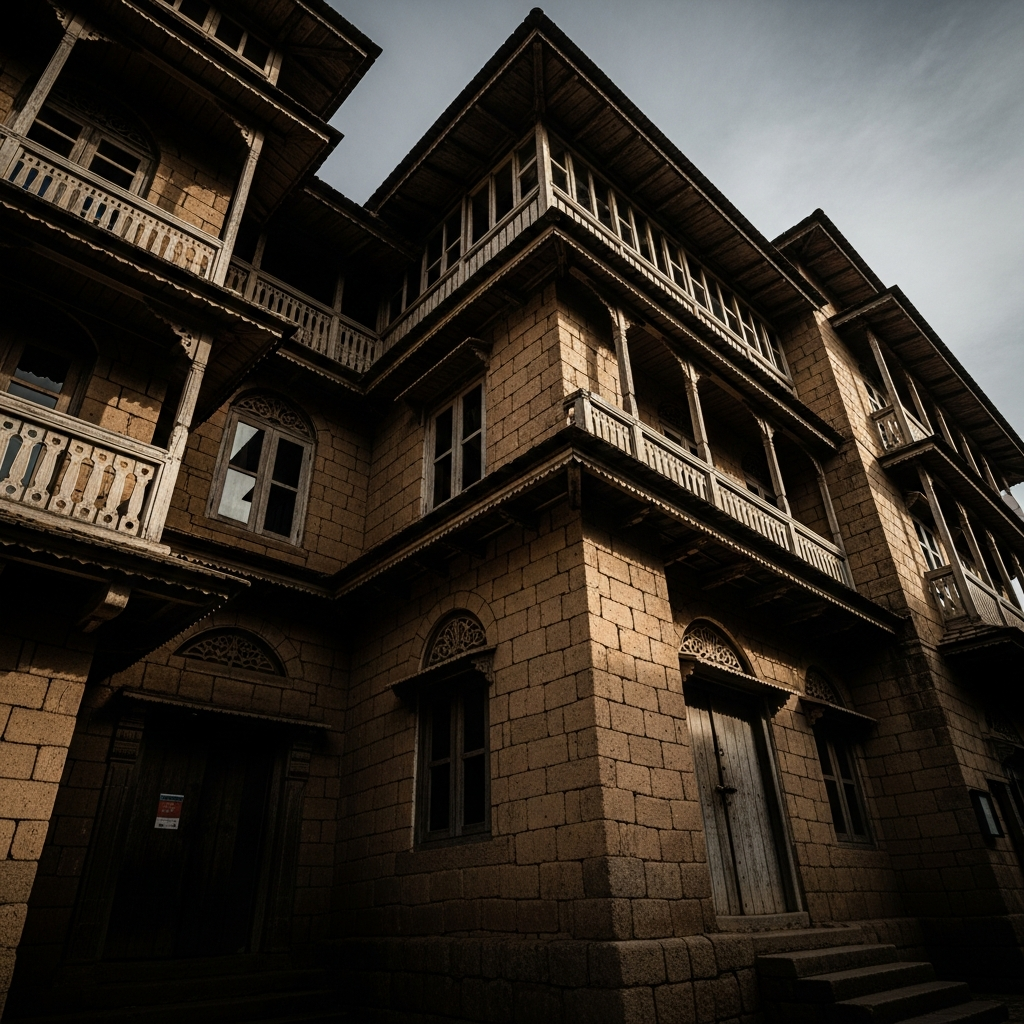
Stoneware mug, dishwasher safe
Buy Mug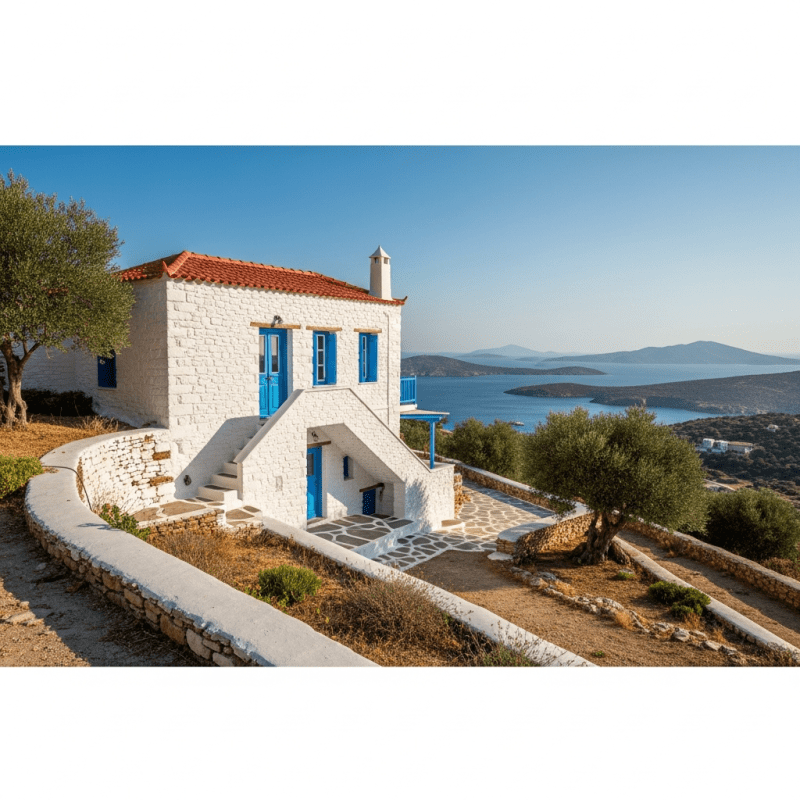
Soft cotton tee, unisex sizes
Buy ShirtVernacular architecture is deeply intertwined with cultural identity, representing the lived experience and ingenuity of local communities. It appears in folklore, art, and heritage preservation efforts, often celebrated as a symbol of sustainability and resilience. Many vernacular sites are protected as UNESCO World Heritage, and their forms inspire contemporary movements seeking authenticity and ecological harmony.
Vernacular architecture spans from prehistoric times to the present, with traditions found globally—from Europe and Africa to Asia, the Americas, Oceania, and the Arctic. Its continuous evolution means every region has developed distinct forms suited to its climate and culture.
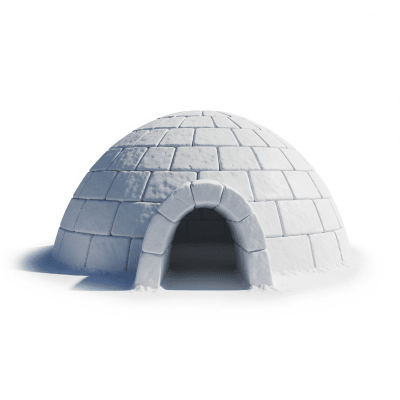
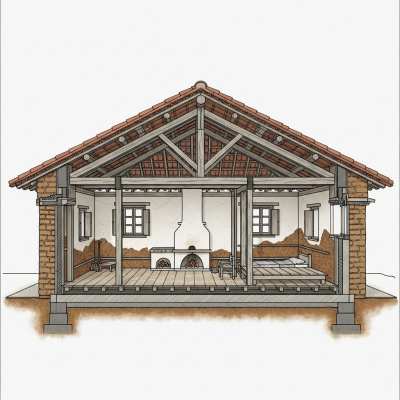
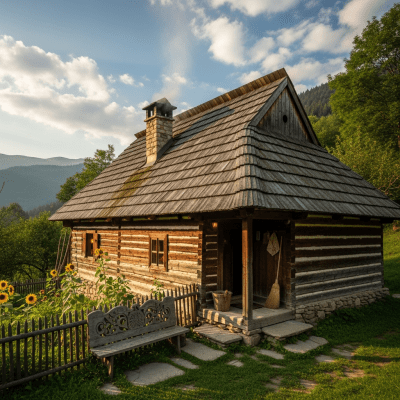
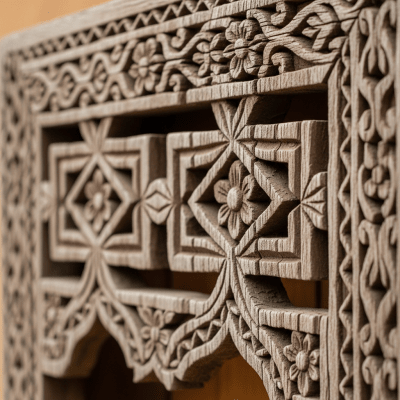
Vernacular buildings employ traditional techniques such as wattle and daub, rammed earth, dry stone walling, and timber framing. Materials are locally sourced—stone, earth, clay, bamboo, thatch, and reeds—chosen for their availability and suitability to local conditions. Construction methods are passed down through generations, relying on empirical knowledge and practical experience rather than formal engineering.
Vernacular architecture is typically anonymous, created by local communities or master builders rather than individual architects. Its legacy is preserved through the collective skills and traditions of generations.
Vernacular architecture is directly shaped by local climate, geography, and cultural practices. It has influenced formal movements such as Arts and Crafts, Regionalism, Critical Regionalism, and Eco-architecture, which seek to revive or reinterpret traditional building methods. Related styles include indigenous architecture and sustainable design approaches that draw inspiration from vernacular principles.
Local adaptations abound: timber vernacular in forested regions, Mediterranean vernacular with stone and clay, African mud-brick traditions, and countless others. Each variant reflects the interplay of environment, materials, and cultural heritage, resulting in a rich diversity of forms across the globe.
Many vernacular sites are recognized for their cultural and historical value, with UNESCO World Heritage listings such as the Vigan Historic Town (Philippines), Old Town of Gjirokastra (Albania), and Bamileke architecture (Cameroon). Preservation efforts vary, but vernacular traditions are increasingly valued for their role in sustaining cultural identity and ecological balance.