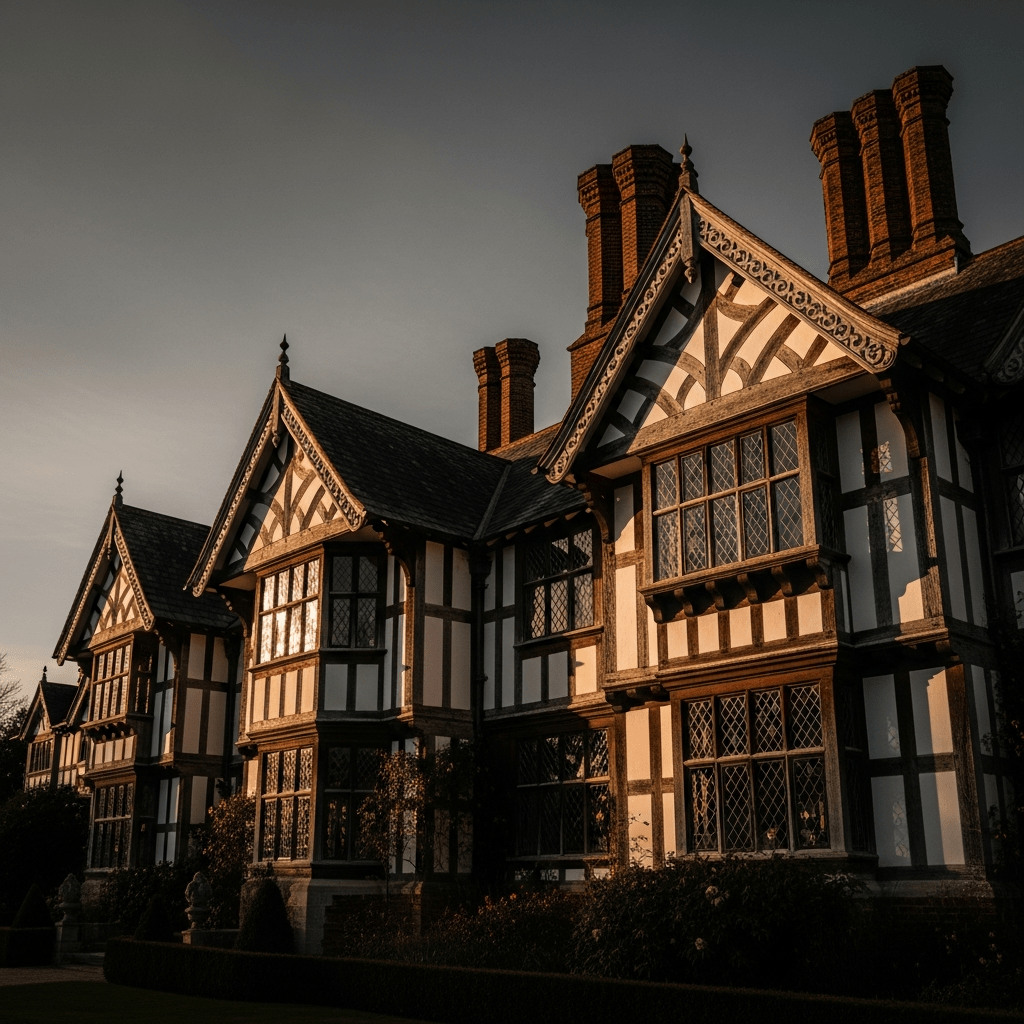
Tudor
Tudor architecture is a distinctive English building style from the late 15th to early 17th centuries, celebrated for its timber framing, steep roofs, and decorative half-timbering.
Tudor architecture is a distinctive English building style from the late 15th to early 17th centuries, celebrated for its timber framing, steep roofs, and decorative half-timbering.
Tudor architecture emerged in England during the reign of the Tudor monarchs (1485–1603), a period marked by social transformation and the waning of medieval traditions. As England shifted from fortified medieval castles to more comfortable and expressive homes, the style evolved, blending native building techniques with influences from continental Europe. The Tudor dynasty’s prosperity and patronage fostered a climate where domestic, civic, and collegiate buildings flourished, setting the stage for a new architectural identity.
Tudor is classified within the English Vernacular / Historicist school of architecture. It sits between the late Gothic (Perpendicular) and early Renaissance periods, and is often subdivided into Early and Late Tudor, as well as Domestic and Ecclesiastical substyles. Its legacy includes both original Tudor and later Tudor Revival interpretations.
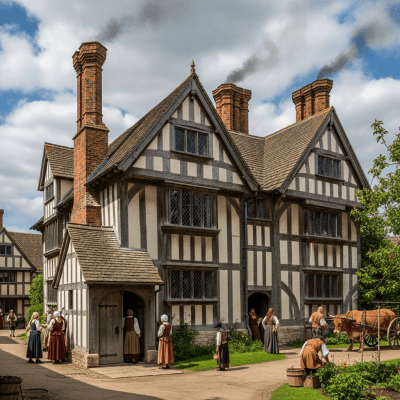
Tudor buildings are instantly recognizable for their exposed oak timber frames, decorative half-timbering, and steeply pitched gable roofs. Many feature jettied upper stories, tall ornate brick chimneys, and large mullioned windows with leaded glass. The facades often display quatrefoil and diamond brickwork patterns, carved wooden doorways, oriel and bay windows, and elaborate door hoods, creating a picturesque and irregular silhouette that feels both historic and inviting.
Originally, Tudor architecture served a broad range of functions: manor houses for the gentry, farmhouses, townhouses, guildhalls, colleges, and even some churches. The style marked a shift from defensive, fortress-like buildings to homes focused on comfort and status. Its open layouts, generous windows, and decorative details reflected a desire for hospitality and display, making it a preferred choice for both domestic and civic settings.
Bring this kind into your world illustrated posters, mugs, and shirts.
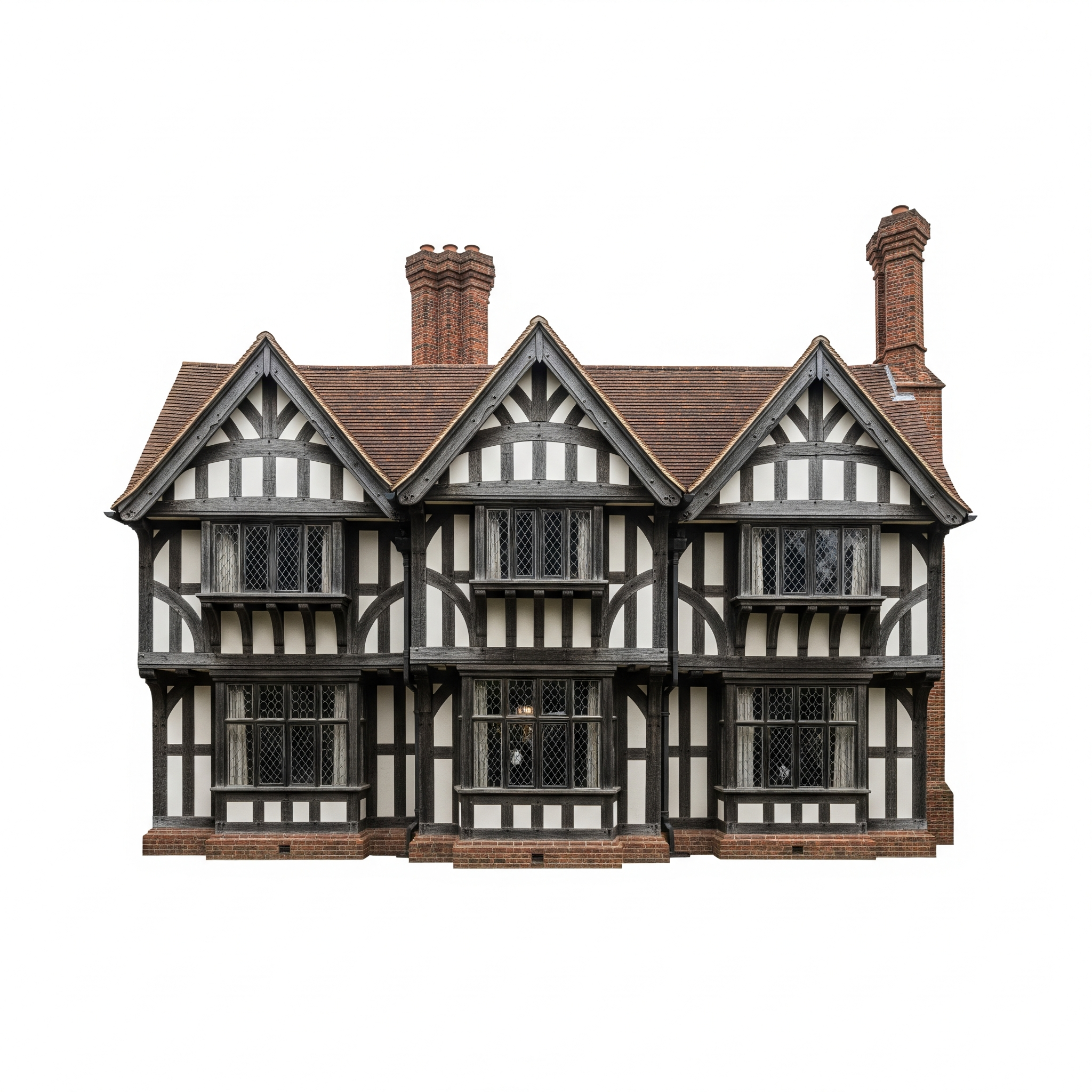
Archival print, museum-grade paper
Buy Poster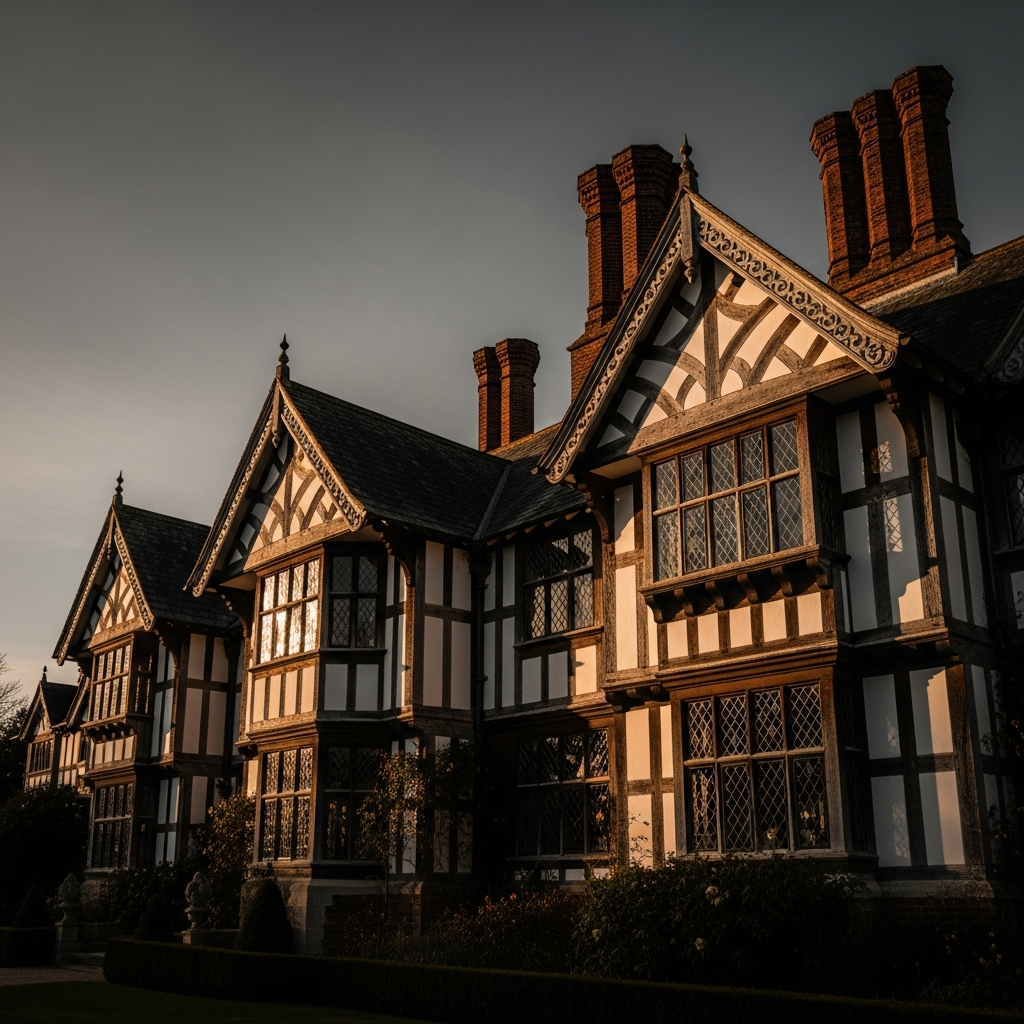
Stoneware mug, dishwasher safe
Buy Mug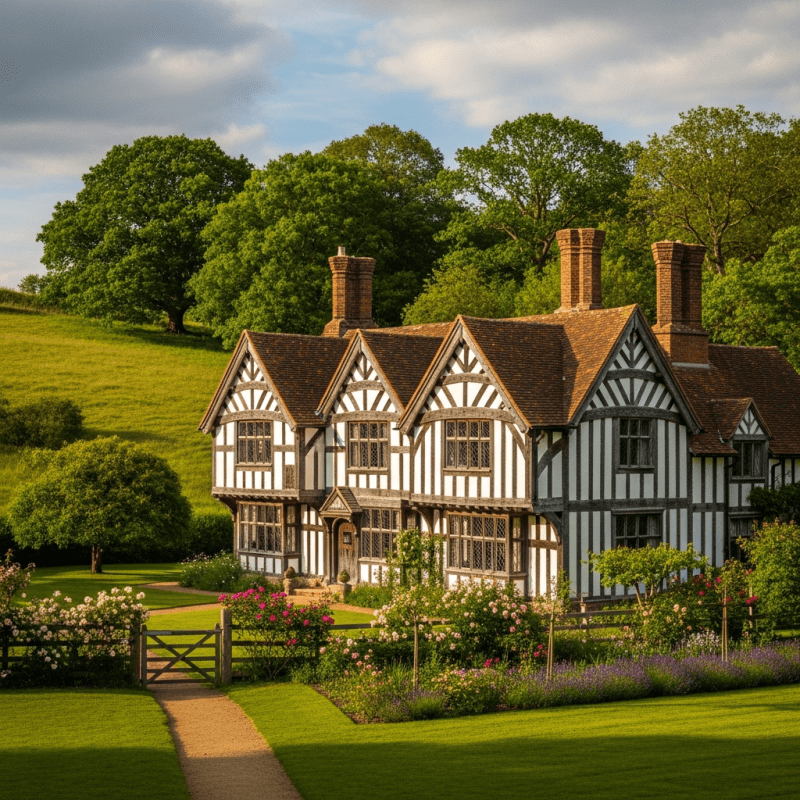
Soft cotton tee, unisex sizes
Buy ShirtTudor architecture is deeply woven into England’s cultural fabric, symbolizing the transition from medieval to modern life. It features prominently in literature, art, and popular imagination—think Shakespeare’s Stratford or the stately homes of the English countryside. Its motifs have been revived in later centuries, inspiring the Tudor Revival movement in Britain and abroad, and lending a sense of nostalgia and authenticity to countless buildings.
Period: c. 1485–1603, spanning the Tudor dynasty from Henry VII to Elizabeth I.
Region of Origin: England, with notable adaptations in Wales, Ireland, and Scotland. The style’s influence later spread internationally through Tudor Revival.
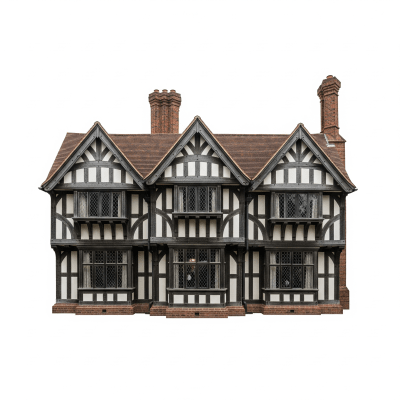
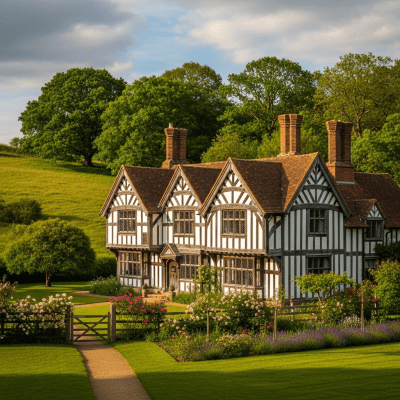
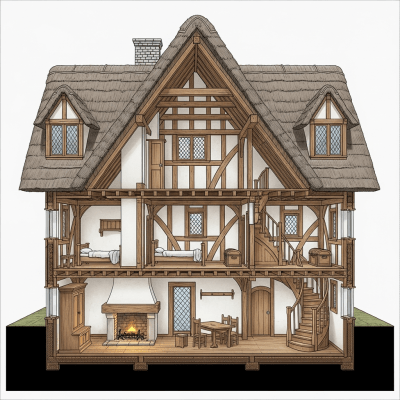
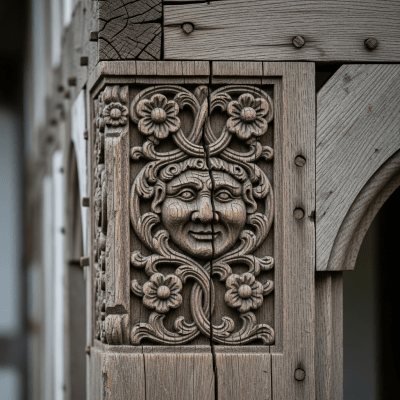
Tudor buildings typically use oak timber for their frames, with infill panels of wattle and daub, brick, or stone. Later examples feature more extensive brickwork, especially in grander homes. Construction methods include mortise-and-tenon joints for timber framing, English and Flemish brick bonds, and the hammerbeam roof in large halls. Locally sourced materials were favored, reflecting regional availability and vernacular traditions.
Tudor architecture draws on late Gothic (Perpendicular) traditions and early Renaissance motifs, blending verticality and decorative detail with new ideas of comfort and status. It is closely related to Elizabethan and Jacobean styles, which further embraced Renaissance forms. The Tudor Revival movement reinterpreted these motifs in the 19th and 20th centuries, while the Arts and Crafts movement found inspiration in Tudor vernacular forms.
Many Tudor buildings are protected as Grade I or II* listed structures in the UK, reflecting their architectural and historical significance. Hampton Court Palace and select sites have UNESCO World Heritage status. The style is officially recognized by bodies such as RIBA and the Getty Vocabulary Program, and ongoing conservation efforts ensure its preservation for future generations.