
Swiss Chalet
The Swiss Chalet is a picturesque architectural style from the Alpine regions of Switzerland, instantly recognizable for its broad, overhanging eaves, timber construction, and intricate wooden detailing.
The Swiss Chalet is a picturesque architectural style from the Alpine regions of Switzerland, instantly recognizable for its broad, overhanging eaves, timber construction, and intricate wooden detailing.
Rooted in the rural traditions of the Swiss Alps, the Swiss Chalet style emerged from medieval vernacular building practices, designed to withstand harsh mountain climates. Its international popularity soared in the 19th century, when Romantic and Victorian tastes embraced its rustic charm and harmonious relationship with the Alpine landscape, leading to widespread adoption in resort towns and mountain retreats across Europe and North America.
Belonging to the school of Vernacular Architecture, the Swiss Chalet is a distinct style shaped by local needs, materials, and climate. While it originated as a practical rural dwelling, its evocative form became a model for picturesque architecture in mountain and resort settings worldwide. Unlike more formal architectural movements, it is defined by regional tradition rather than a single architect or manifesto.
Swiss Chalets are celebrated for their low-pitched, wide-gabled roofs with deep overhanging eaves, which shed snow efficiently. Exposed timber beams and rafters frame multi-story structures, often with upper floors projecting beyond the ground level. Balconies and galleries feature elaborate wooden balustrades, and decorative carvings adorn brackets and railings, sometimes enhanced by painted folk motifs. The overall impression is one of warmth, craftsmanship, and seamless integration with the mountainous terrain.
Originally built as rural homes, farmhouses, and barns, Swiss Chalets were later adapted for villas, hotels, railway stations, and resort buildings. Their design prioritizes shelter from snow and rain, with deep eaves and stone foundations for moisture protection. Today, the style is used both for authentic Alpine dwellings and as an evocative motif in mountain resorts and scenic getaways around the world.
Bring this kind into your world illustrated posters, mugs, and shirts.

Archival print, museum-grade paper
Buy Poster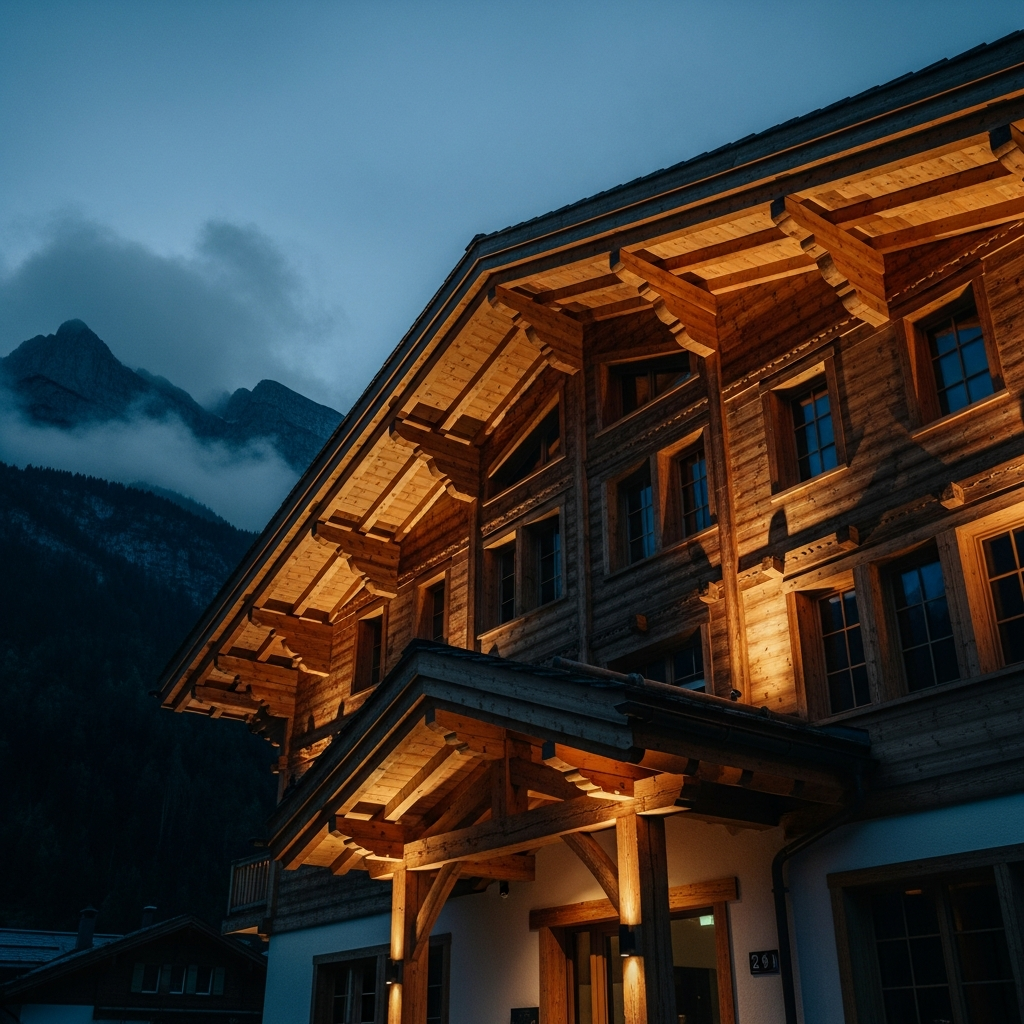
Stoneware mug, dishwasher safe
Buy Mug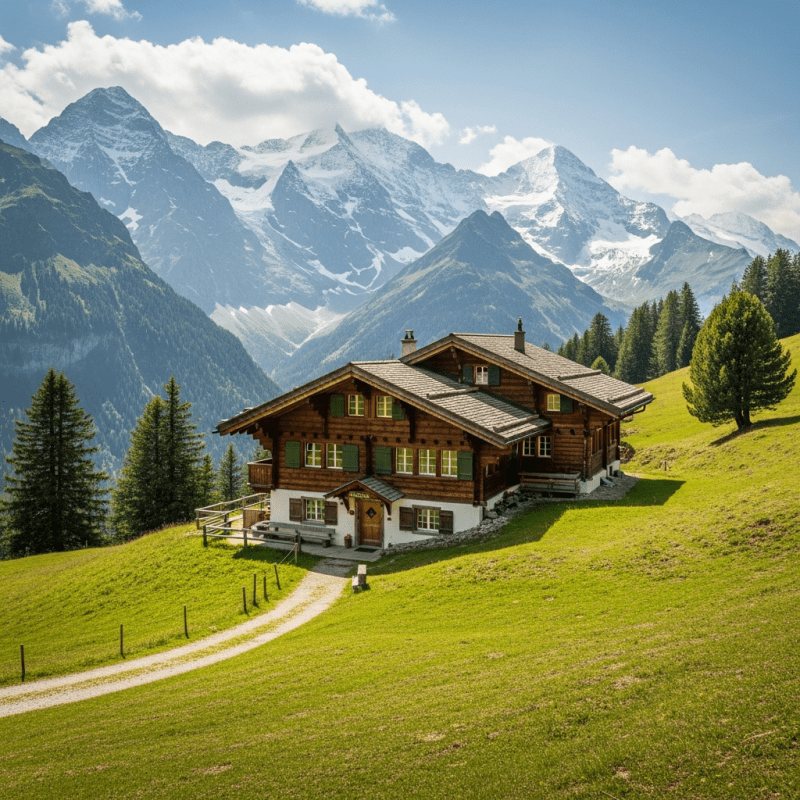
Soft cotton tee, unisex sizes
Buy ShirtThe Swiss Chalet is more than a building style—it is a national symbol of Switzerland and the Alpine way of life. Its romantic image has inspired artists, writers, and travelers, becoming synonymous with mountain hospitality and scenic beauty. In the 19th century, it embodied the "cult of the Alps," influencing resort architecture and the picturesque movement across Europe and North America.
Swiss Chalet architecture traces its roots to the medieval rural buildings of the Swiss Alps. Its international popularity peaked from around 1800 to 1900, during the Romantic and Victorian eras, and it spread to Austria, Germany, France, Italy, the United Kingdom, the United States, and Scandinavia.
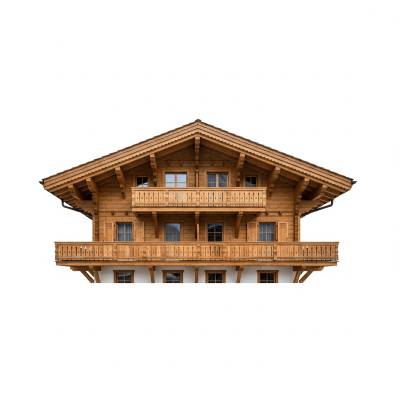
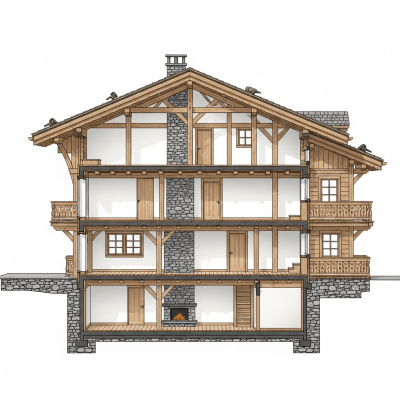
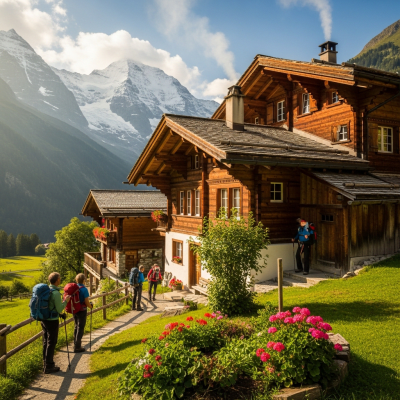
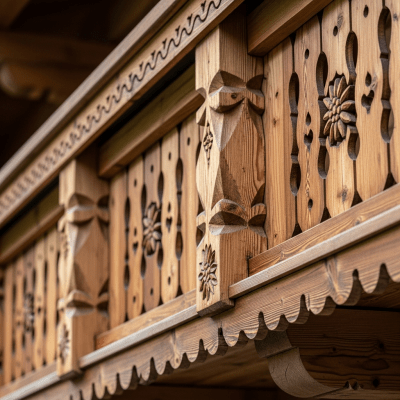
Swiss Chalets are primarily constructed from timber, such as spruce or fir, sourced locally in Alpine regions. Stone foundations or basements protect against moisture. Traditional techniques include timber framing, log or plank walls, and steeply pitched roofs designed for snow management. Decorative elements are hand-carved, often reflecting local folklore and craftsmanship.
As a vernacular tradition, the Swiss Chalet style is not tied to a single architect. However, figures such as Heinrich von Ferstel in Austria and various resort architects in the UK and US contributed to its international adaptations and revival.
The Swiss Chalet style is deeply rooted in traditional Alpine vernacular architecture, shaped by local customs, climate, and materials. It influenced and was influenced by the Picturesque and Romantic movements of the 19th century. Related styles include Carpenter Gothic and Stick Style in North America, both of which share a love of exposed timber and decorative woodwork, as well as occasional hybridization with Queen Anne architecture in Victorian resort buildings.
Many Swiss Alpine villages with traditional chalets are part of UNESCO World Heritage Sites, such as the Jungfrau-Aletsch region. Numerous chalets are protected as heritage buildings in Switzerland and neighboring countries, with ongoing restoration and preservation efforts. The style is widely recognized as an emblem of Alpine culture and mountain architecture.