Romanesque
Romanesque architecture is a monumental medieval European style defined by its massive stone construction, rounded arches, and robust, fortress-like forms.
Romanesque architecture is a monumental medieval European style defined by its massive stone construction, rounded arches, and robust, fortress-like forms.
Romanesque architecture emerged in Western Europe around the mid-10th century, flourishing until the early 13th century. It arose from the need for grand, durable buildings to serve expanding monastic communities and pilgrimage routes, drawing inspiration from Roman imperial and early Christian structures. The style’s development was shaped by the revival of stone construction and a desire to evoke spiritual awe, with principal centers in France, Italy, Germany, England, and the Iberian Peninsula.
Romanesque is classified within the Medieval European Architecture school, representing the first pan-European architectural style since antiquity. It sits between the earlier Carolingian and Ottonian styles and the later Gothic movement, with regional substyles such as Norman, Lombard, Rhenish, and Mozarabic reflecting local traditions.
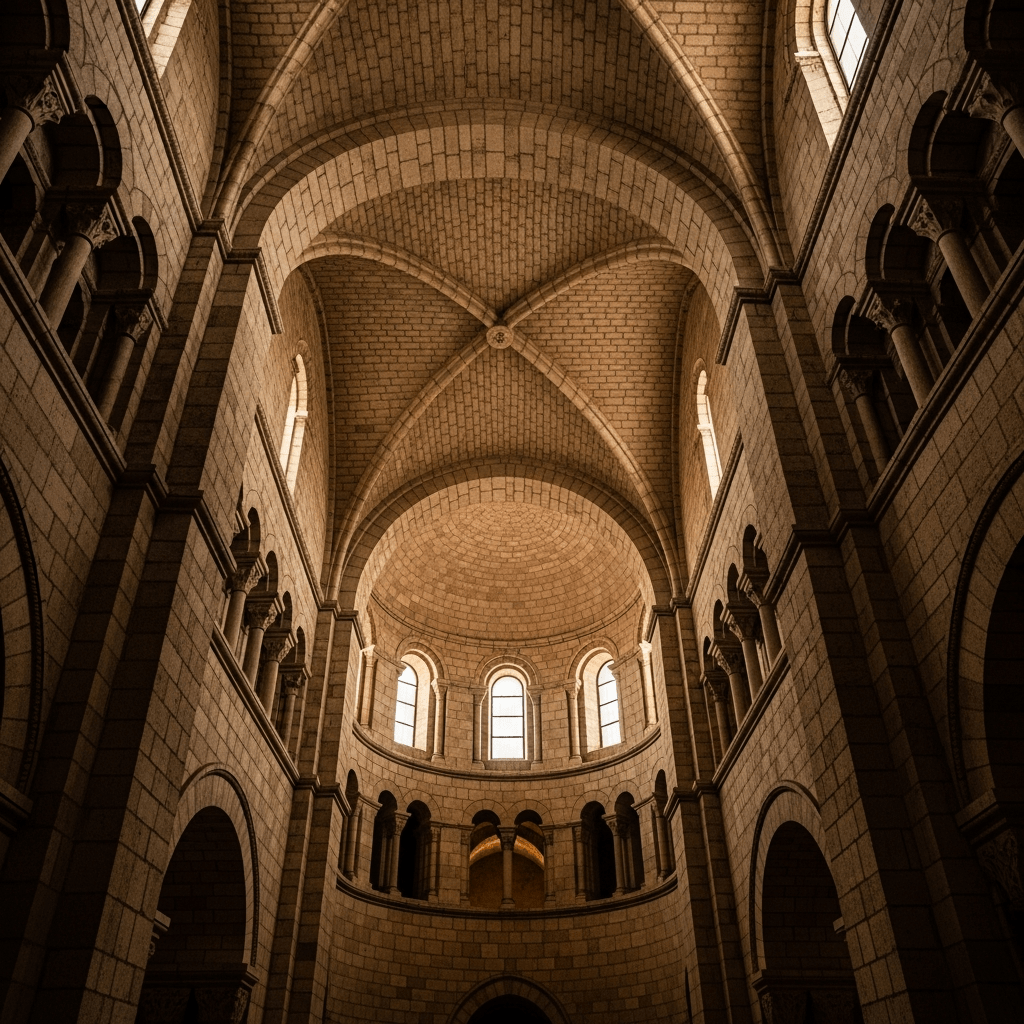
Romanesque buildings are instantly recognizable by their thick stone walls, semi-circular arches, and heavy piers. Exteriors often feature large towers and rhythmic arcading, while interiors are dimly lit, with barrel or groin vaults spanning the nave and aisles. Decorative elements include blind arches, sculpted capitals, and elaborate portal sculptures, typically depicting biblical scenes or symbolic motifs. The overall impression is one of solidity, compactness, and enduring strength.
Romanesque architecture primarily served ecclesiastical purposes, housing churches, abbeys, and cathedrals designed for worship, pilgrimage, and monastic life. The style also extended to castles, fortifications, and monastic complexes, emphasizing protection and spiritual authority. Buildings were constructed to accommodate large congregations and processions, with layouts facilitating movement and gathering while reinforcing the power of religious institutions.
Bring this kind into your world illustrated posters, mugs, and shirts.
Archival print, museum-grade paper
Buy Poster
Stoneware mug, dishwasher safe
Buy Mug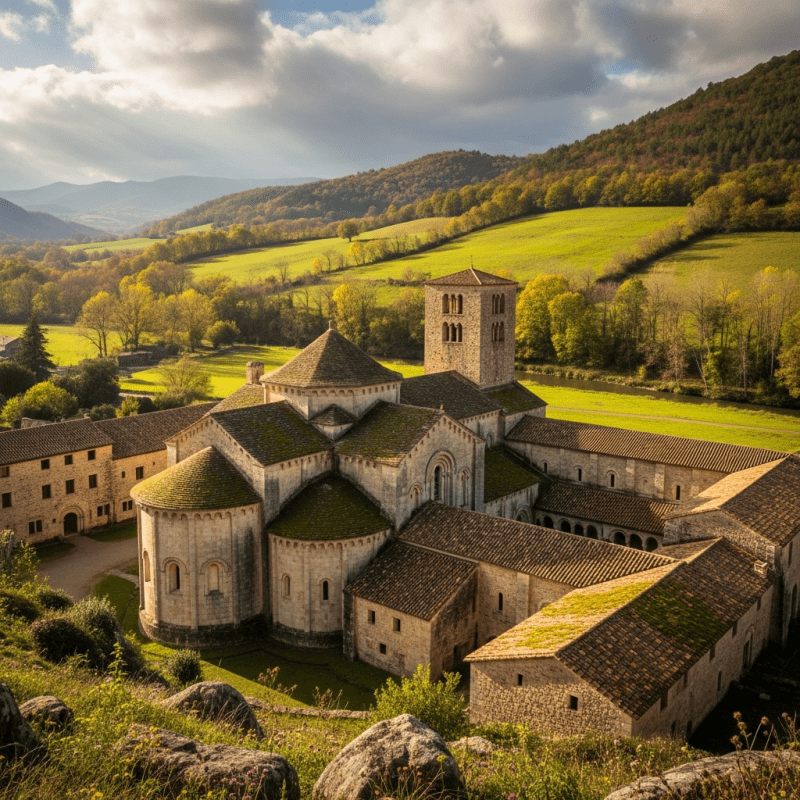
Soft cotton tee, unisex sizes
Buy ShirtRomanesque architecture represents a foundational chapter in European cultural history, symbolizing the unity and expansion of Christendom during the Middle Ages. Its monumental churches became centers of pilgrimage, artistic expression, and community life. The style’s sculptural decoration often conveyed religious narratives, reinforcing faith and doctrine. Today, Romanesque buildings are celebrated as heritage sites and continue to inspire artists, architects, and historians.
Romanesque architecture flourished from circa 950 to 1200 CE, with some regional persistence into the mid-13th century. Its origins lie in Western Europe, notably in France, Italy, Germany, England, and the Iberian Peninsula, where it became the dominant style for religious and monumental buildings.
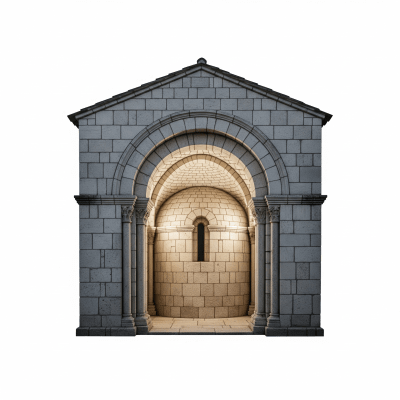
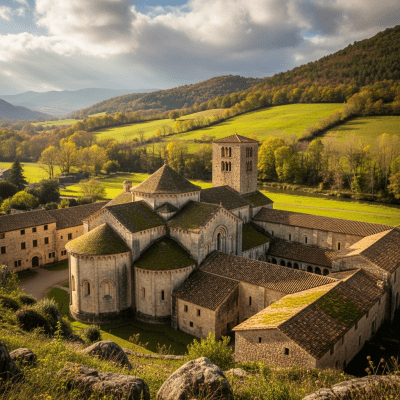
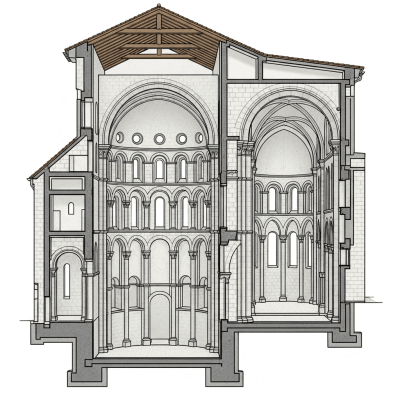
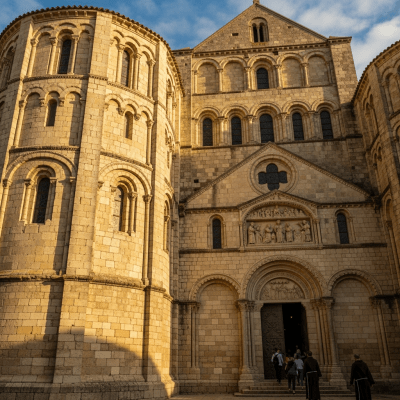
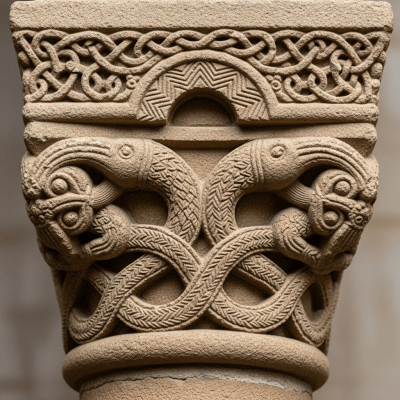
Romanesque buildings are constructed primarily from stone masonry, with regional variations in stone type and craftsmanship. Barrel and groin vaulting are used to span large interior spaces, while buttressing is typically internal. Skilled carving adorns capitals and portals, and construction methods emphasize durability and monumental scale.
Most Romanesque buildings were designed and built by anonymous master masons and craftsmen. Among the few recorded figures, Abbot Suger stands out as a transitional figure, influential in the shift from Romanesque to Gothic architecture.
Romanesque architecture was directly inspired by Roman imperial design, incorporating elements from Byzantine, Carolingian, and Ottonian traditions. It was succeeded by the Gothic style, which introduced pointed arches and greater verticality. Regional syncretism led to hybrid forms, especially in Spain (Mozarabic) and Italy (Lombard), and the style’s legacy is reflected in later revivals and adaptations.
Romanesque architecture is widely recognized for its historical and cultural value, with numerous buildings inscribed as UNESCO World Heritage Sites, including Speyer Cathedral and the Churches of the Vall de Boí. Many structures are protected at national and international levels, and ongoing preservation efforts safeguard their legacy for future generations.