Rococo
Rococo is an ornate 18th-century architectural style, celebrated for its exuberant decoration, pastel hues, and playful elegance, originating in France and spreading across Europe’s palaces, salons, and churches.
Rococo is an ornate 18th-century architectural style, celebrated for its exuberant decoration, pastel hues, and playful elegance, originating in France and spreading across Europe’s palaces, salons, and churches.
Emerging in France around 1720, Rococo developed as a reaction to the grandeur and solemnity of Baroque architecture. It flourished under the reign of Louis XV, reflecting the tastes of the aristocracy in the Ancien Régime. The style quickly captivated Europe, influencing interiors and buildings in Germany, Austria, Italy, and beyond, especially in regions where courtly life and artistic patronage thrived.
Rococo is classified as a distinct style within the European Baroque school, often referred to as Late Baroque or Rocaille. While Baroque emphasized drama and monumentality, Rococo shifted focus toward intimacy, asymmetry, and elaborate ornamentation, especially in interior spaces. Its substyles include French, German, Austrian, and Italian Rococo, each reflecting local traditions and preferences.
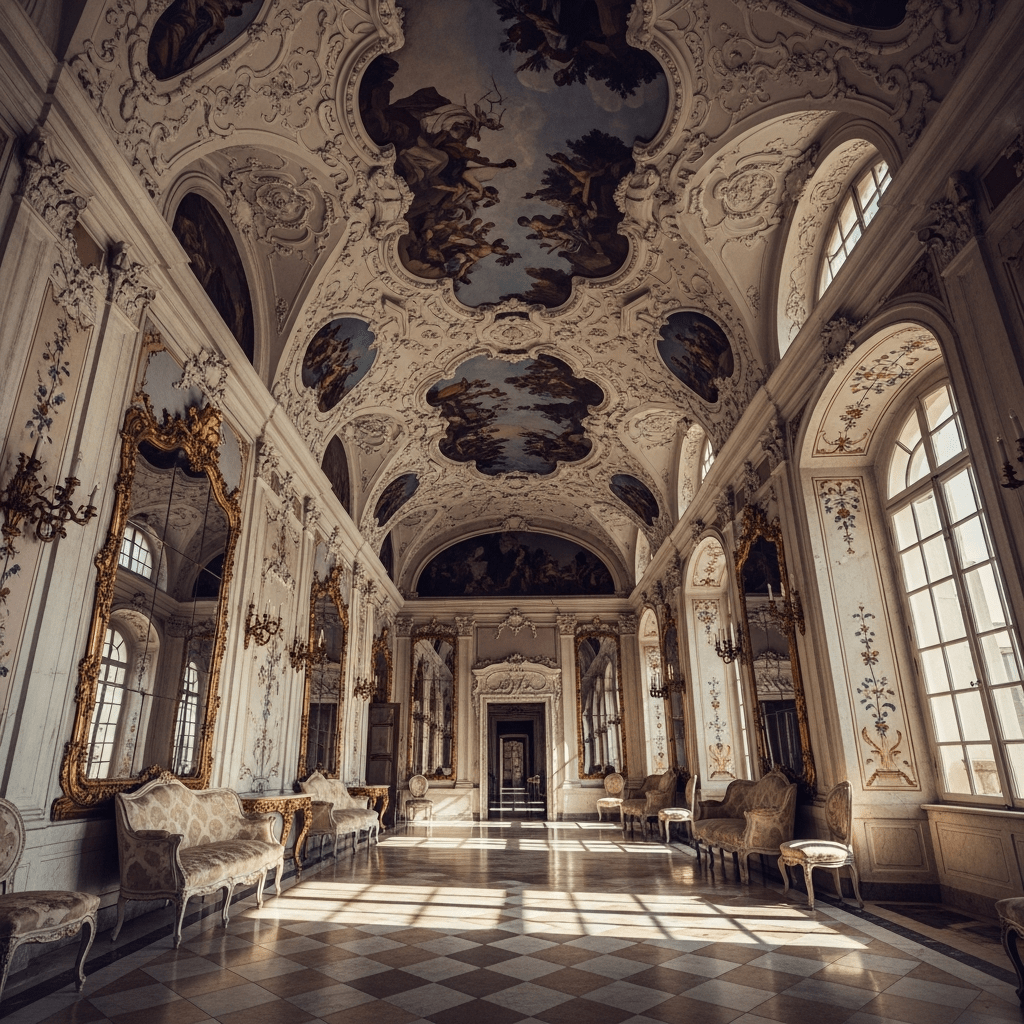
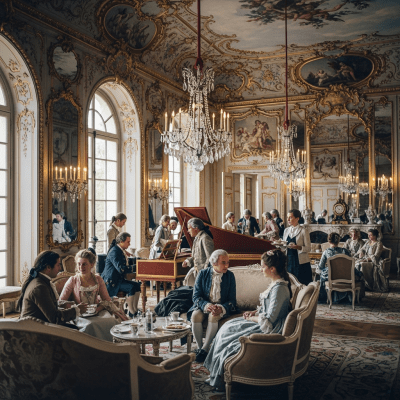
Rococo architecture dazzles with its light, airy spaces and intricate detailing. Interiors feature asymmetrical curves, shell and scroll motifs, arabesques, cartouches, and abundant floral patterns. Pastel color palettes, gilded surfaces, mirrors, and trompe-l'œil paintings create a sense of movement and delight. The overall effect is one of elegance, comfort, and visual playfulness, inviting viewers into a world of refined pleasure.
Designed to impress and delight, Rococo architecture was primarily used for aristocratic residences, palaces, salons, and churches. Its intimate scale and decorative richness fostered social gatherings, conversation, and leisure, reflecting the priorities of the elite. In religious settings, Rococo brought exuberance and lightness to altars and chapels, while civic or utilitarian buildings rarely adopted its ornate vocabulary.
Bring this kind into your world illustrated posters, mugs, and shirts.

Archival print, museum-grade paper
Buy Poster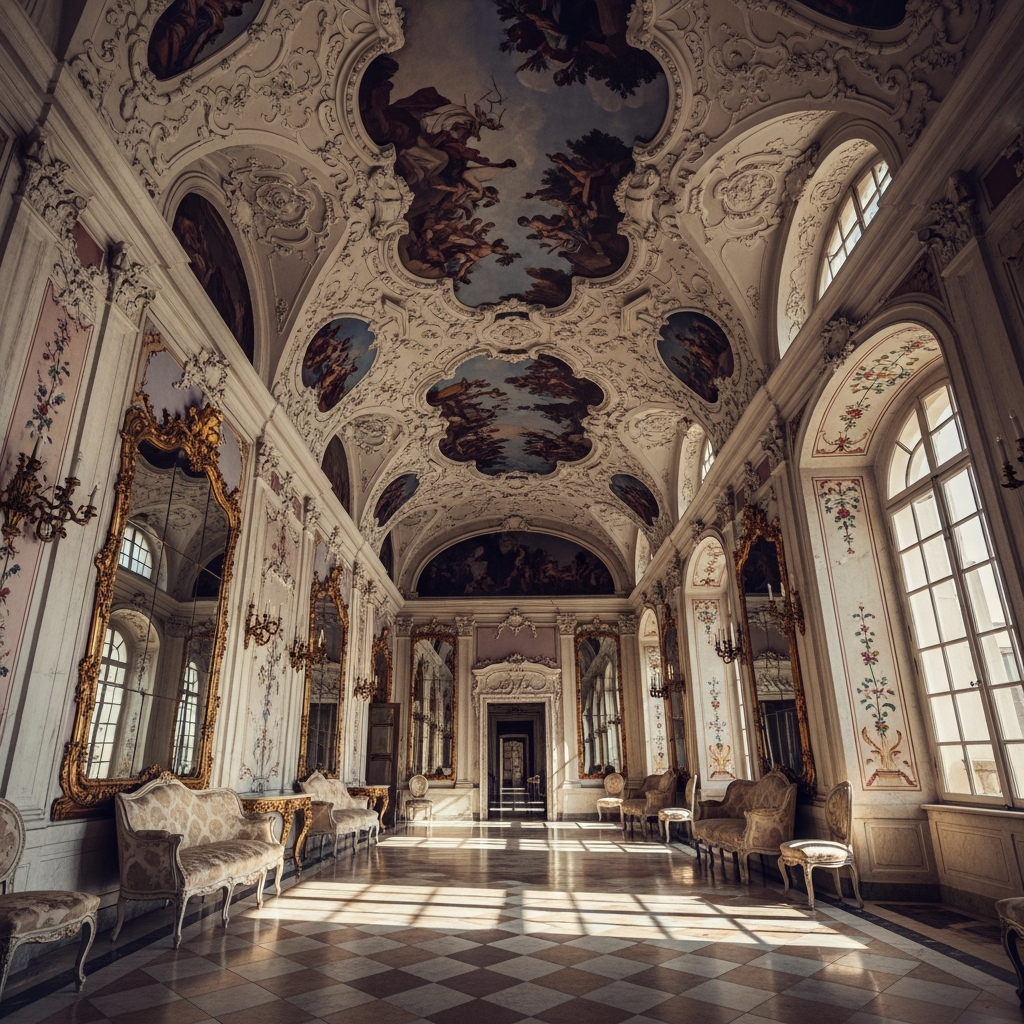
Stoneware mug, dishwasher safe
Buy Mug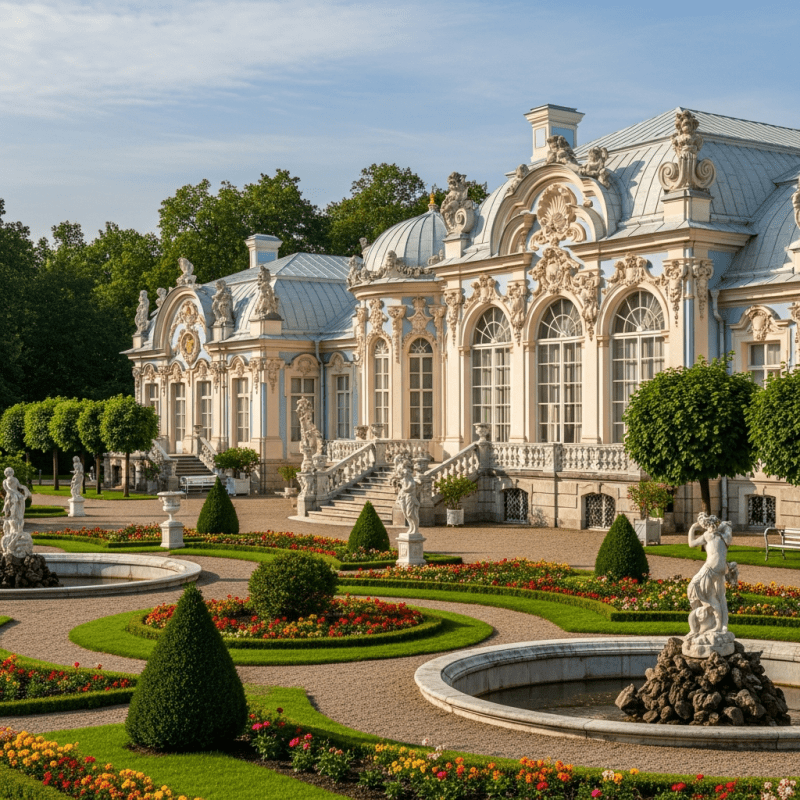
Soft cotton tee, unisex sizes
Buy ShirtRococo stands as a symbol of aristocratic culture and the artistic achievements of the Ancien Régime. Its interiors and buildings are celebrated for their technical mastery and imaginative decoration, influencing decorative arts, painting, and furniture design. Today, Rococo is studied for its role in European cultural history and its lasting impact on art, design, and heritage preservation.
Rococo flourished from circa 1720 to 1780, originating in France and spreading to Germany, Austria, Italy, and other parts of Central Europe. Its greatest influence was felt in regions with vibrant aristocratic and courtly cultures.
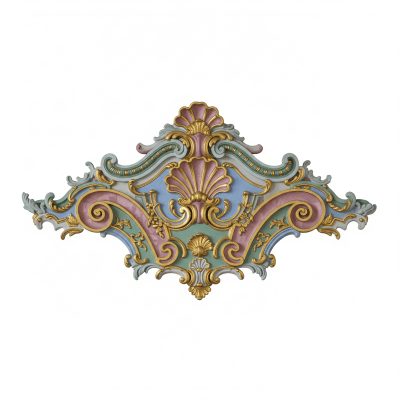
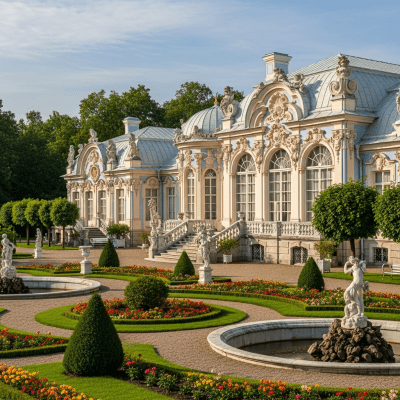
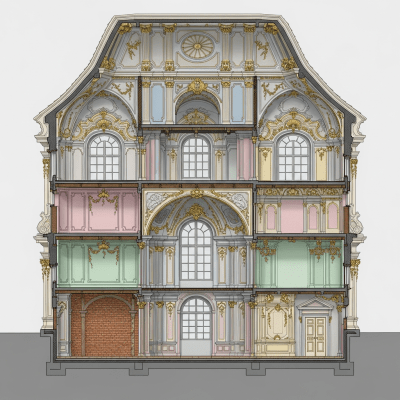
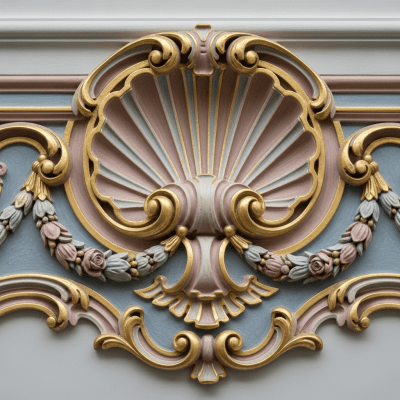
Rococo architects and artisans employed stucco, gilded wood, plaster, marble, mirrors, porcelain, and pastel-colored paints. Advanced stuccowork, gilding, fresco painting, and the seamless integration of decorative arts were hallmarks of the style’s construction techniques.
Rococo evolved from the Baroque, especially its lighter and more decorative late phase. It often incorporated motifs from Chinoiserie, reflecting European fascination with Asian art. Rococo was eventually replaced by Neoclassicism, which favored restraint and rationality over exuberance and ornament.
Many Rococo buildings are protected as national monuments and heritage sites. Notably, the Wieskirche in Germany and parts of Versailles in France are UNESCO World Heritage Sites, reflecting the style’s enduring cultural and artistic significance.