Renaissance
Renaissance architecture is a style defined by the revival of classical Greco-Roman forms, symmetry, and harmonious proportion, emerging in 15th-century Italy and profoundly shaping the built environment across Europe.
Renaissance architecture is a style defined by the revival of classical Greco-Roman forms, symmetry, and harmonious proportion, emerging in 15th-century Italy and profoundly shaping the built environment across Europe.
Renaissance architecture originated in Florence, Italy, around 1400 CE, during a period of renewed interest in the art and science of antiquity. Inspired by the rediscovery of ancient Roman and Greek texts, architects sought to break from the ornate verticality of the Gothic era. This movement paralleled sweeping changes in art, literature, and philosophy, reflecting the broader Renaissance spirit of humanism and rational inquiry. From its Italian epicenter, the style spread throughout Europe, adapting to local traditions and tastes.
Renaissance architecture is classified within the Western/European school of architectural styles. It stands as a distinct style, further divided into substyles: Early Renaissance (Quattrocento), High Renaissance, and Late Renaissance (Mannerism). This tradition replaced Gothic as the dominant architectural language of its time and provided the foundation for later movements such as Baroque and Neoclassicism.
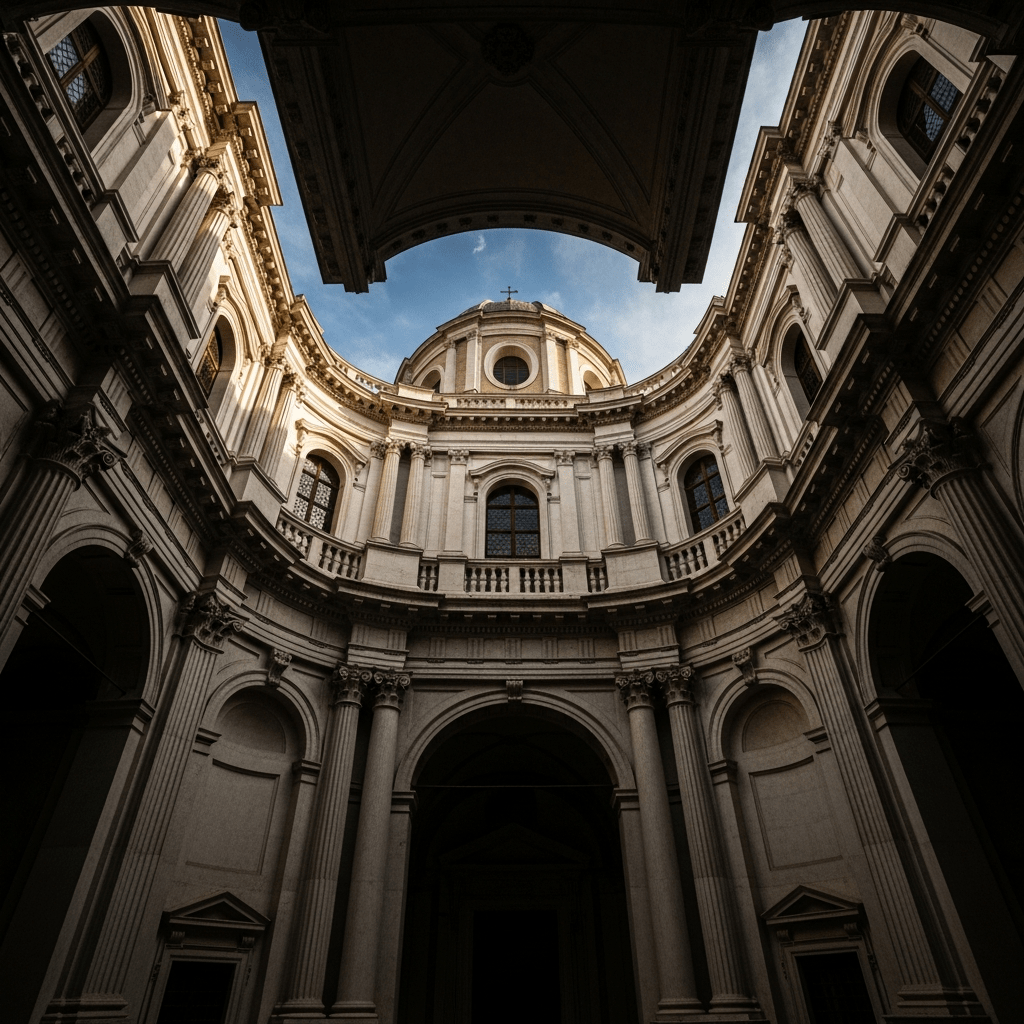
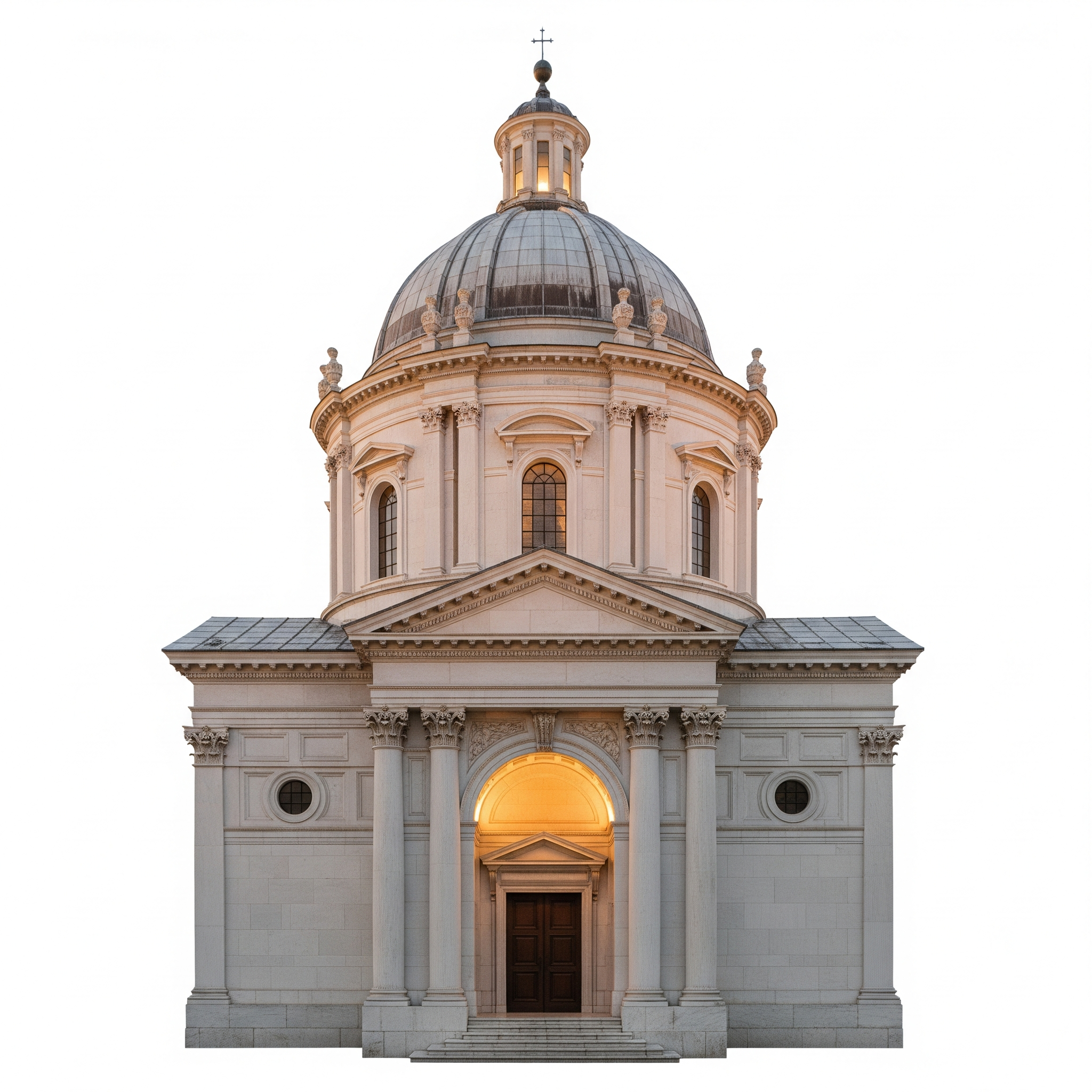
Renaissance buildings are instantly recognizable for their balanced, geometric forms and clear articulation of structure. Facades feature symmetrical arrangements, classical columns and pilasters, rounded arches, and hemispherical domes. Ornamentation draws from ancient motifs—egg-and-dart moldings, acanthus leaves, festoons, and decorative friezes. Interiors often boast coffered ceilings, barrel vaults, and harmonious spatial proportions, creating a sense of order and grandeur.
Renaissance architecture served both civic and religious functions, shaping churches, palaces (palazzi), villas, and public squares (piazzas). These buildings were designed not only for utility but also as expressions of cultural prestige and intellectual achievement. The style fostered urban development, with orderly streets and open plazas, and integrated painting and sculpture into architectural spaces, reflecting the era’s holistic approach to the arts.
Bring this kind into your world illustrated posters, mugs, and shirts.
Archival print, museum-grade paper
Buy Poster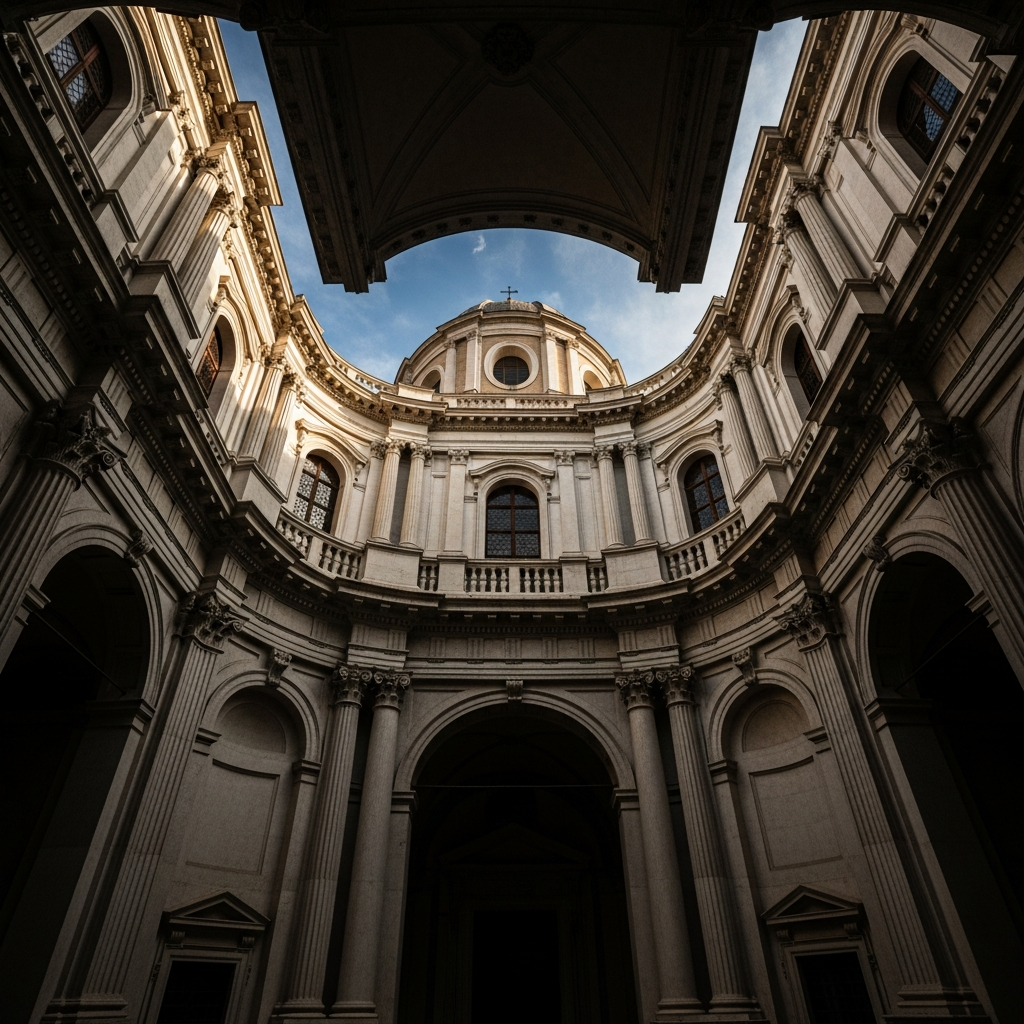
Stoneware mug, dishwasher safe
Buy Mug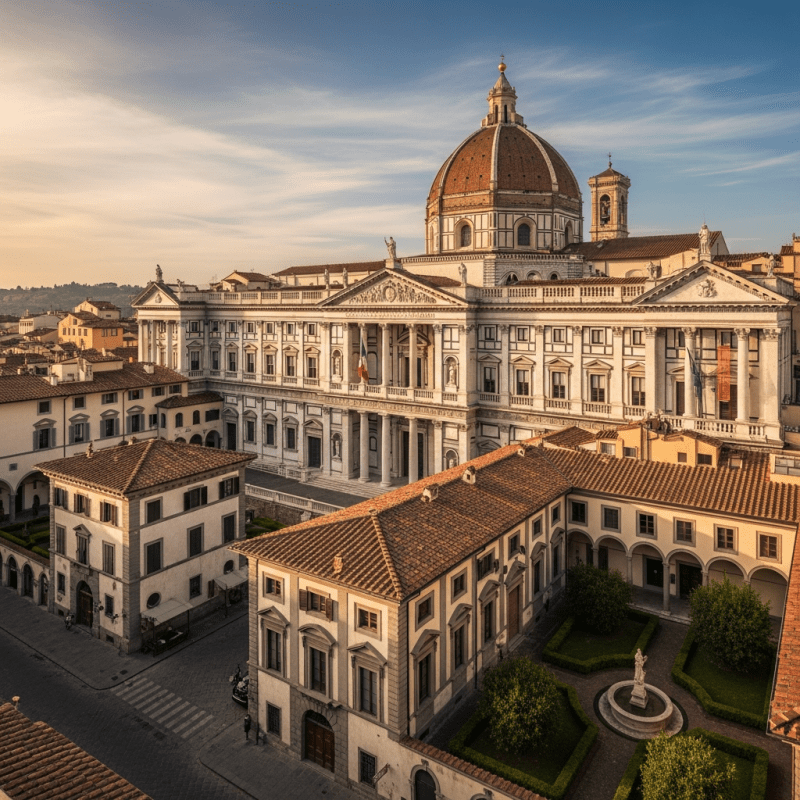
Soft cotton tee, unisex sizes
Buy ShirtRenaissance architecture symbolizes the rebirth of classical ideals and the triumph of humanist thought. Its influence extended beyond construction, shaping the visual language of art, literature, and science. Iconic structures like Florence Cathedral’s dome and St. Peter’s Basilica became touchstones of Western civilization, inspiring generations of architects and artists. Today, Renaissance buildings are celebrated as masterpieces of design and are central to the cultural heritage of Europe.
Renaissance architecture flourished from circa 1400 to 1600 CE, with regional adaptations extending into the early 17th century. Its birthplace was Italy—especially Florence—but the style soon spread to France, England, Germany, Spain, Portugal, and Central and Eastern Europe, each region developing its own distinctive interpretation.
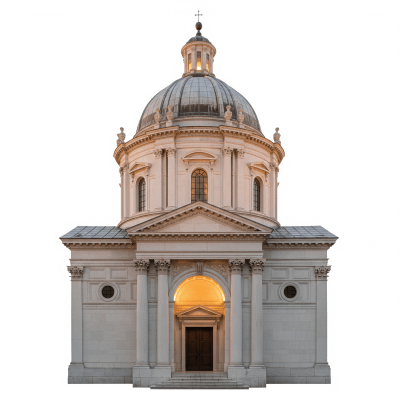
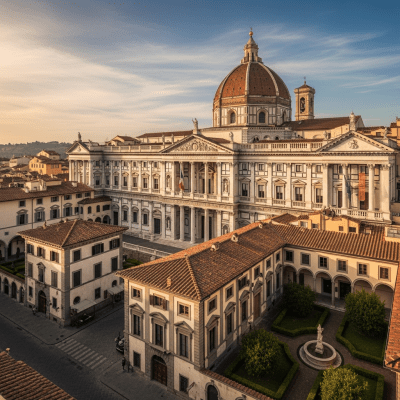

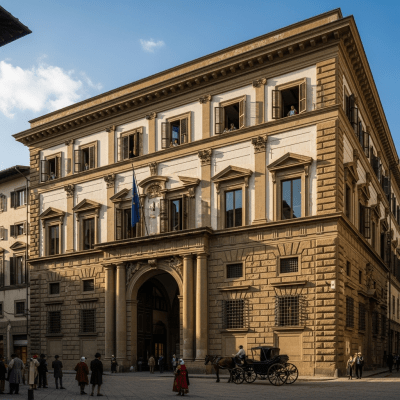
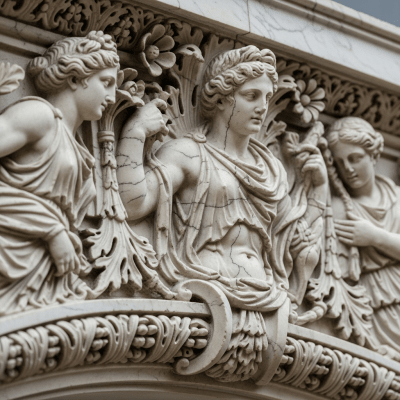
Key features of Renaissance architecture include a focus on symmetry, proportion, and geometry; the use of classical orders (Doric, Ionic, Corinthian, Composite, Tuscan); rounded arches and domes; barrel vaults; coffered ceilings; and rectangular plans. Buildings are marked by harmonious order, clear articulation of structural elements, and a conscious departure from the complexity of Gothic forms.
Typical materials include stone, brick, stucco, and marble for both structure and ornamentation, with terracotta used in some regions. Renaissance architects mastered masonry, pioneered new dome construction (notably Brunelleschi’s techniques), and employed perspective in spatial design. The integration of architecture with painting and sculpture was a hallmark of the period.
Renaissance architecture was directly inspired by Ancient Roman and Greek precedents, especially through the study of Vitruvius. Byzantine domes also influenced certain designs. The style succeeded Gothic architecture and paved the way for Baroque and Neoclassicism. Later, Renaissance Revival and regional hybrids emerged, blending classical principles with local traditions.
Many Renaissance structures and urban ensembles are protected as UNESCO World Heritage Sites, including the Historic Centre of Florence, Vatican City, and Château de Chambord. International organizations such as the UIA, RIBA, and AIA recognize Renaissance architecture as a foundational epoch, and ongoing conservation efforts ensure its preservation as a vital part of global cultural heritage.