Queen Anne
Queen Anne architecture is a visually eclectic and highly decorative style that flourished in the late Victorian era, celebrated for its asymmetrical forms, ornate woodwork, and picturesque silhouettes in residential and public buildings.
Queen Anne architecture is a visually eclectic and highly decorative style that flourished in the late Victorian era, celebrated for its asymmetrical forms, ornate woodwork, and picturesque silhouettes in residential and public buildings.
Emerging in the United Kingdom around 1868 and rapidly spreading to the United States, Australia, and Canada, Queen Anne architecture arose during a period of cultural optimism and technological innovation. Its name is a misnomer, as the style draws more from medieval and early Renaissance English domestic traditions than from the actual reign of Queen Anne. The movement was propelled by architects such as Richard Norman Shaw, who sought to break free from the rigid symmetry of earlier Victorian styles, embracing individuality and visual variety. In America, the style gained momentum after the Philadelphia Centennial Exposition of 1876, evolving with local materials and construction techniques.
Queen Anne is classified within the broader Victorian Architecture school, representing one of its most distinctive and influential styles. It encompasses several substyles, including Anglo-American Queen Anne, Free Classic Queen Anne (a U.S. variant), and the closely related Shingle Style. While primarily residential, Queen Anne principles also appear in civic buildings, marking it as a versatile and enduring architectural movement.
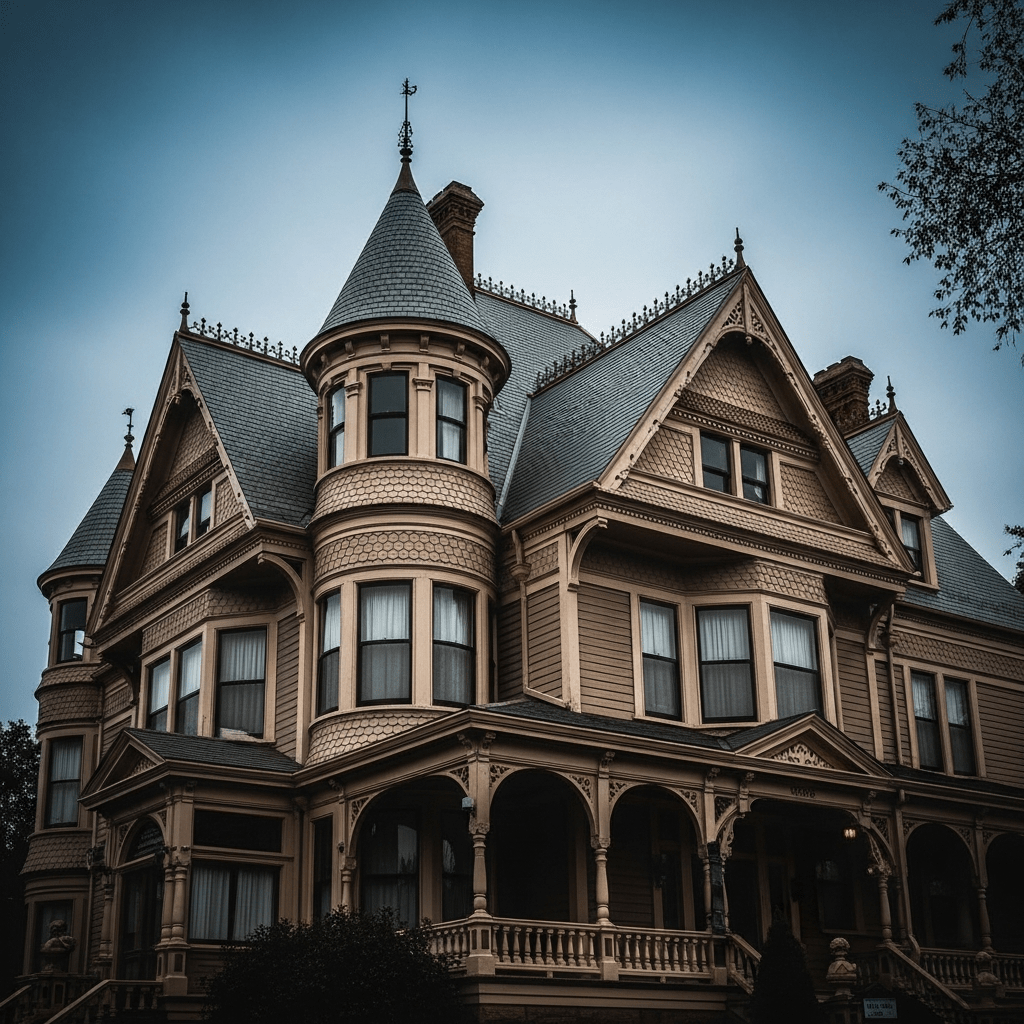
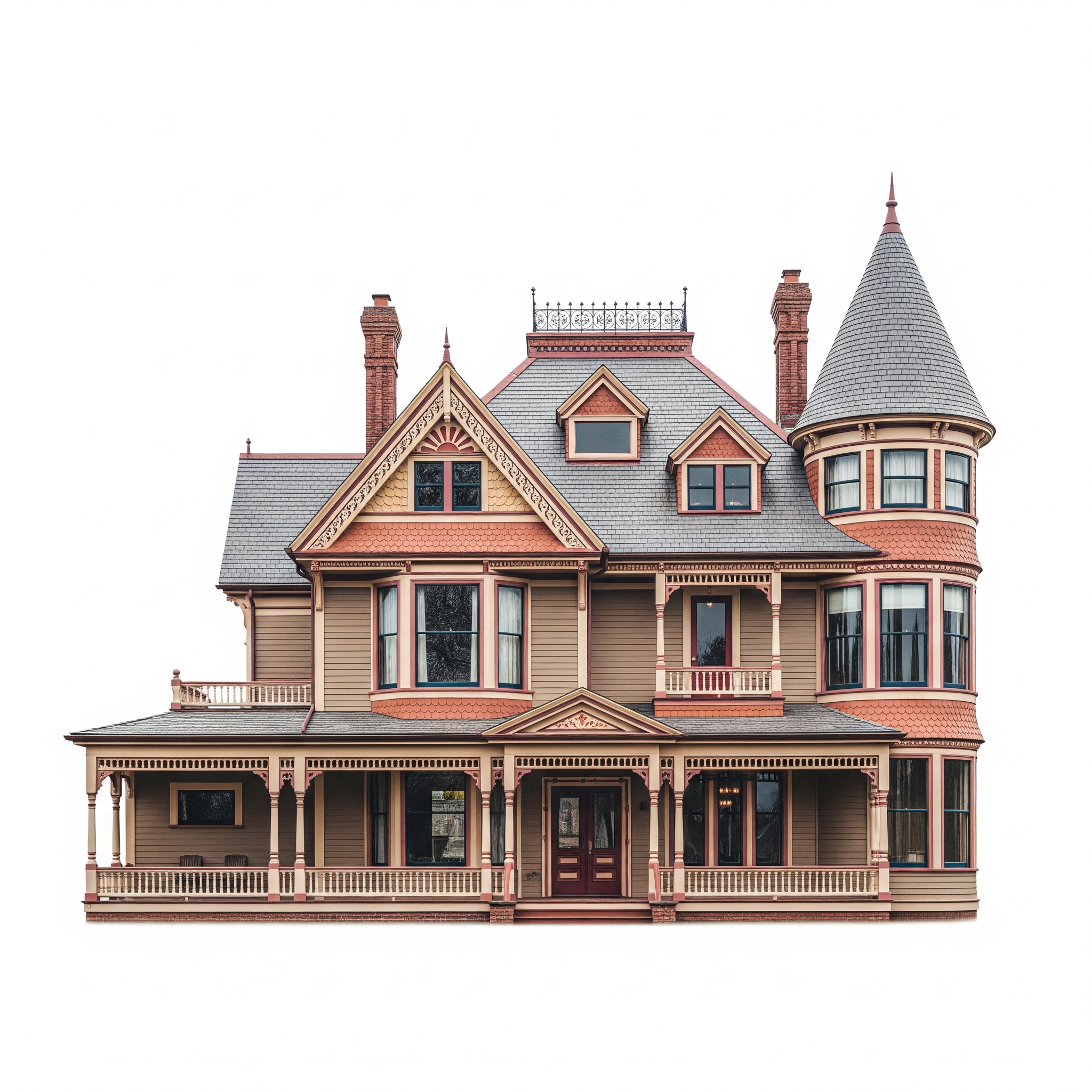
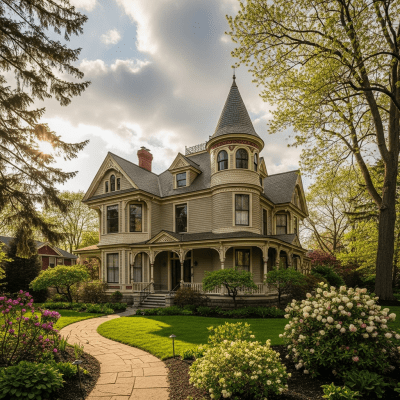
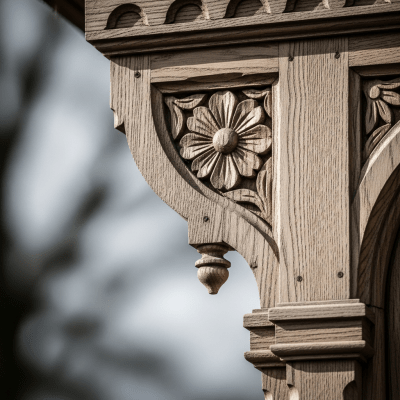
Queen Anne buildings captivate with their asymmetrical facades, steeply pitched and complex rooflines, prominent gables, and decorative towers or turrets. Visual richness is achieved through a mix of brick, stone, wood, terracotta, and slate, often combined in patterned masonry. Ornamental spindles, brackets, balustrades, stained glass, and elaborate porches add layers of detail, while bay windows and overhanging eaves create dynamic silhouettes. The overall effect is one of lively variety and picturesque charm.
Queen Anne architecture is most commonly associated with residential use—detached houses, townhouses, and grand mansions—though its influence extends to public buildings like schools and libraries. The style invites interaction through expansive porches and intricate entryways, fostering a sense of domestic pride and community presence. In historic districts, Queen Anne homes often serve as visual anchors and symbols of local heritage.
Bring this kind into your world illustrated posters, mugs, and shirts.
Archival print, museum-grade paper
Buy Poster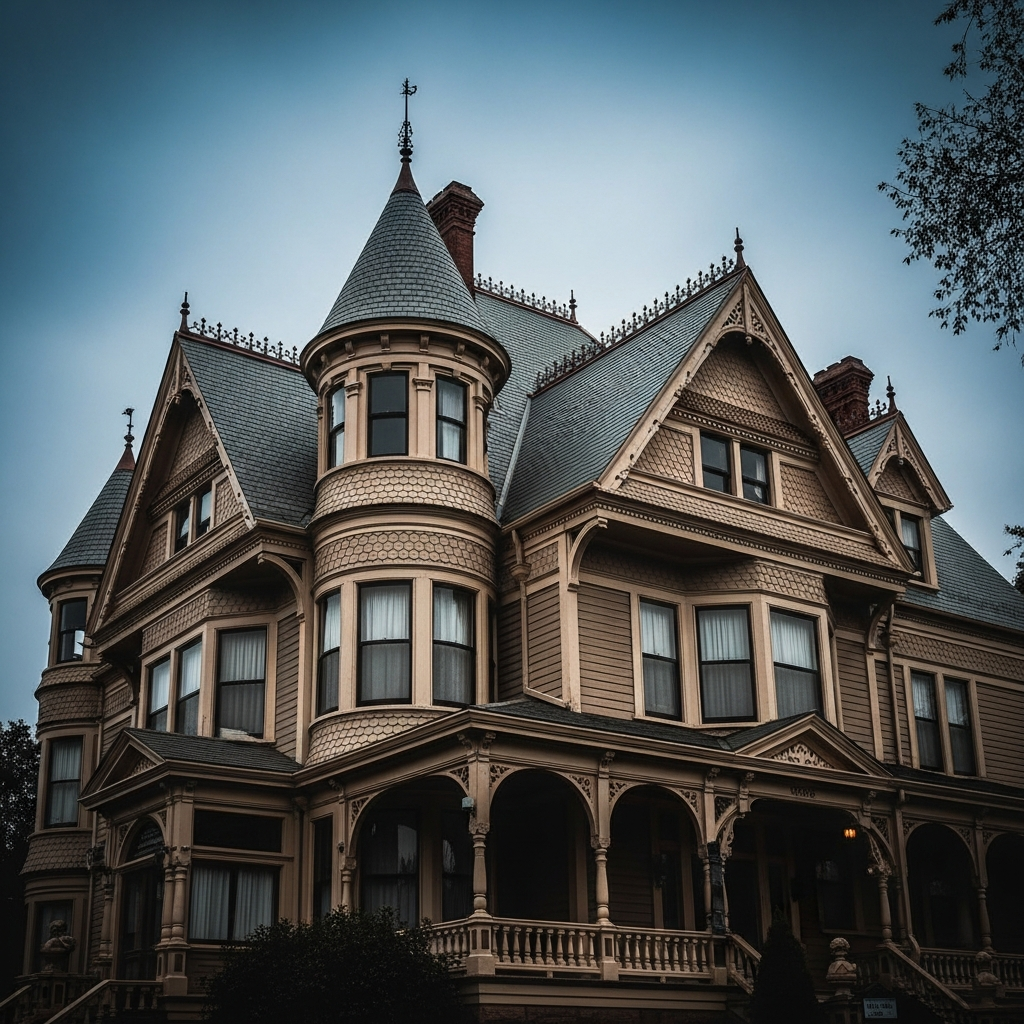
Stoneware mug, dishwasher safe
Buy Mug
Soft cotton tee, unisex sizes
Buy ShirtQueen Anne architecture is emblematic of late Victorian domestic life, frequently featured in literature, film, and popular culture as the quintessential 'painted lady' or grand old house. Its exuberant ornamentation and romantic silhouettes evoke nostalgia and charm, making it a favorite in historic preservation and tourism. The style’s adaptability and visual appeal have ensured its continued recognition and protection in both the UK and the US, often serving as a touchstone for neighborhood identity and architectural heritage.
Queen Anne architecture flourished between circa 1870 and 1910, with its earliest examples appearing in the United Kingdom (c. 1868–1901) and quickly spreading to the United States (c. 1880–1910), Australia, and Canada. The style is most prevalent in these regions, where local adaptations contributed to its enduring popularity.
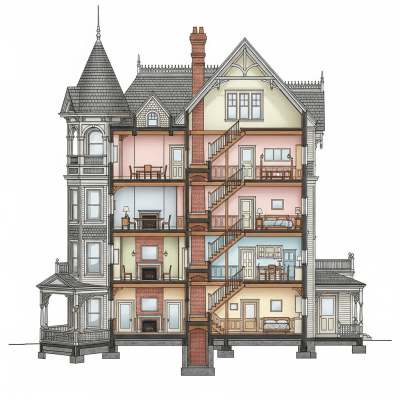

Queen Anne buildings employ a rich palette of materials: brick, stone, wood, terracotta, slate, and patterned masonry. In the United States, wood-frame construction with decorative shingles and clapboard is typical, enabled by balloon framing and prefabricated ornamental elements. In the UK, load-bearing masonry prevails, often accented with terracotta and stained glass. The use of mass-produced components allowed for widespread ornamentation and customization.
Queen Anne architecture draws inspiration from medieval English domestic buildings, early Renaissance motifs, and Dutch and Flemish details. It is closely related to the Stick Style (a precursor in the US), the Shingle Style (a contemporary and derivative), and influenced the later Arts and Crafts Movement and Edwardian Baroque. These connections highlight Queen Anne’s role as a bridge between historic revivalism and emerging modern trends.
Regional adaptations of Queen Anne are abundant. In the United States, the style is marked by extensive woodwork, ornate spindlework, and vibrant color schemes, thanks to balloon framing and mass-produced decorative elements. Australian and Canadian variants incorporate local materials and climate considerations, resulting in unique interpretations. In heritage listings, Queen Anne is sometimes grouped under broader categories like 'Victorian' or 'Late Victorian.'
While Queen Anne architecture does not have style-wide UNESCO World Heritage designation, many individual buildings are protected by national heritage bodies such as Historic England and the US National Register of Historic Places. The style is celebrated in historic districts, with ongoing conservation efforts preserving its distinctive character and cultural legacy. Queen Anne remains a touchstone for architectural heritage and neighborhood identity in regions where it flourished.