Prairie School
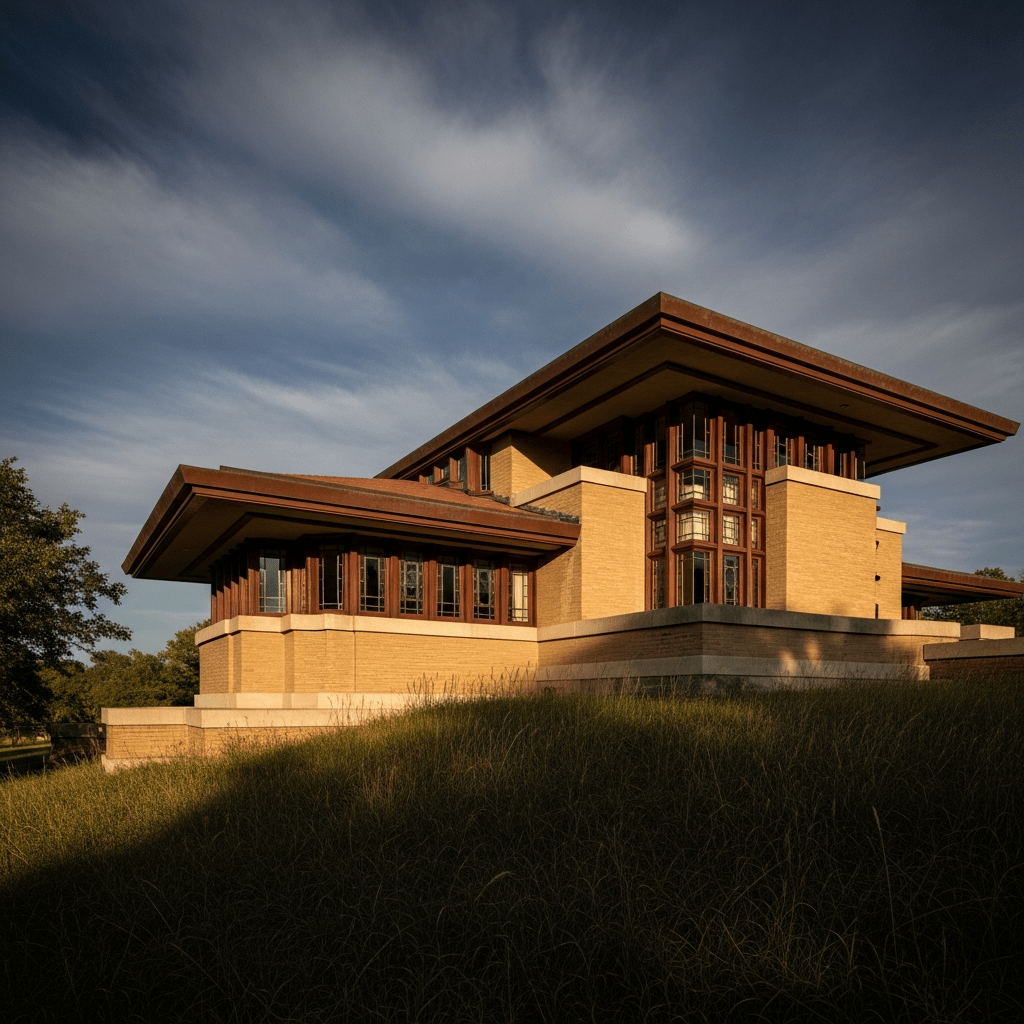
The Prairie School is an influential American architectural movement defined by its harmonious integration with the landscape, bold horizontal lines, and innovative open-plan interiors.
The Prairie School is an influential American architectural movement defined by its harmonious integration with the landscape, bold horizontal lines, and innovative open-plan interiors.
Emerging in the late 19th and early 20th centuries, the Prairie School arose in the American Midwest—especially Illinois, Wisconsin, Minnesota, and Iowa—as a response to the ornate historicist styles then dominating architecture. Its practitioners, led by Frank Lloyd Wright, sought to craft a distinctly American design language that reflected the vast, flat prairies of the region. The movement's ideals were shaped by the cultural optimism of a growing nation and a desire to break free from European traditions, resulting in buildings that celebrated simplicity, craftsmanship, and the spirit of the Midwest.
The Prairie School is classified as an early modernist architectural movement within the broader Modern school. It stands apart from revivalist and historicist styles by emphasizing originality and a forward-looking philosophy. While primarily recognized as a style, it is also regarded as a movement due to its cohesive design principles and influential practitioners. The Prairie School has few formal substyles, but regional variants exist, most notably in the Midwest and California.
Prairie School buildings are instantly recognizable for their strong horizontal lines, low-pitched or flat roofs, and broad overhanging eaves that echo the flatness of the prairie landscape. Bands of windows, open terraces, and geometric ornamentation—often integrated into the structure itself—create a sense of unity between the building and its environment. Interiors are typically open and flowing, with custom woodwork, art glass windows, and built-in furniture contributing to a sense of spaciousness and understated elegance.
Prairie School architecture is most commonly found in residential homes, where open floor plans foster social interaction and a connection to nature. The style also appears in schools, churches, and small commercial buildings, each designed to serve their function while maintaining harmony with the surroundings. The use of terraces, planters, and expansive windows encourages occupants to engage with the landscape, reflecting the movement's ethos of blending indoor and outdoor spaces.
Bring this kind into your world illustrated posters, mugs, and shirts.
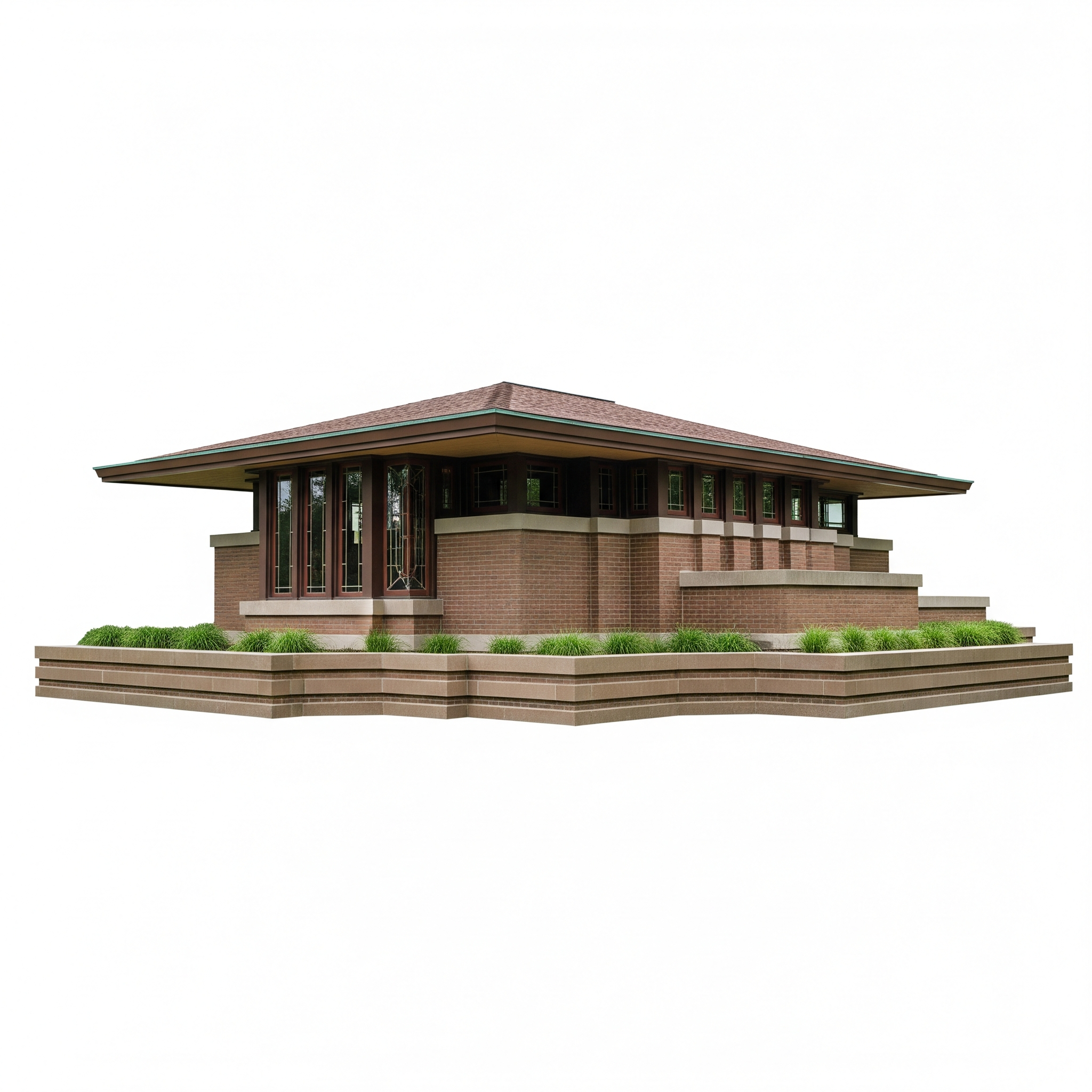
Archival print, museum-grade paper
Buy Poster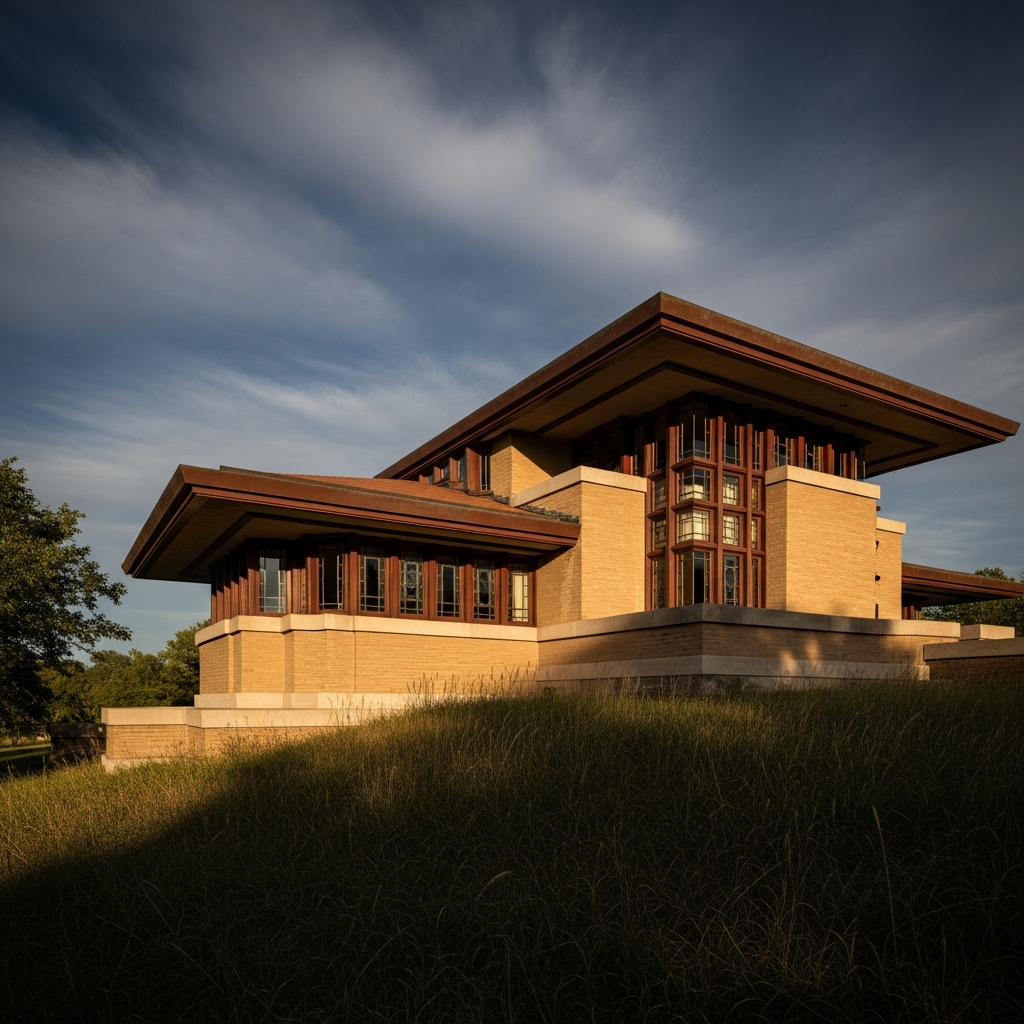
Stoneware mug, dishwasher safe
Buy Mug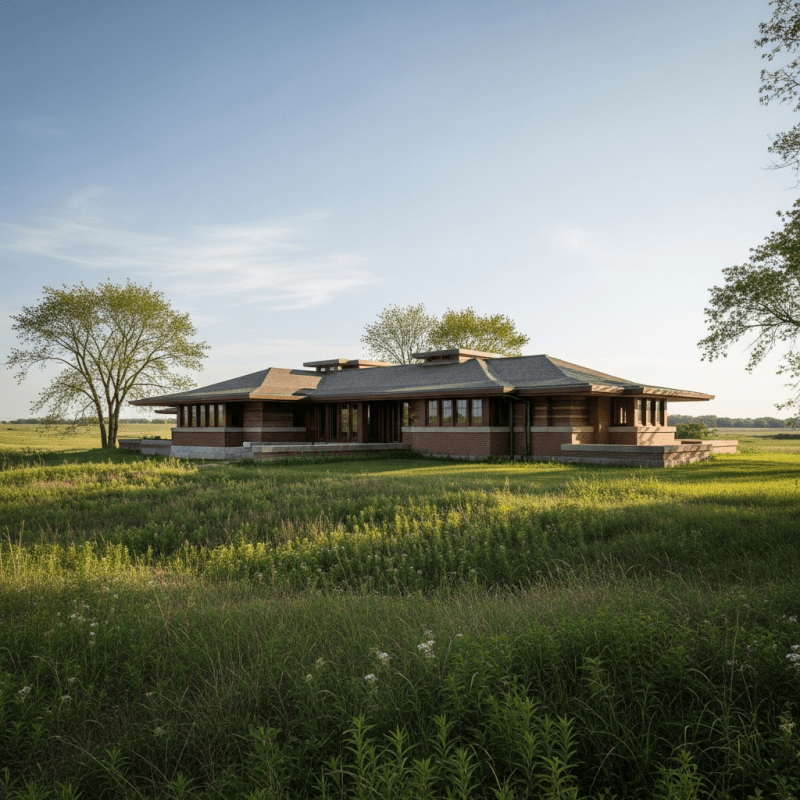
Soft cotton tee, unisex sizes
Buy ShirtWidely regarded as the first uniquely American architectural style, the Prairie School has had a lasting impact on the development of modern architecture. Its rejection of European historicism and embrace of democratic, regionally inspired design helped shape the identity of American architecture in the 20th century. Works by Frank Lloyd Wright and his contemporaries are celebrated in museums, heritage listings, and popular culture, and the style continues to inspire architects seeking to balance innovation with environmental sensitivity.
The Prairie School flourished from circa 1890 to 1920, with its roots and greatest concentration in the American Midwest. Key cities include Chicago, Oak Park, and Minneapolis, though the style later appeared in California and other regions through adaptations and revivals.
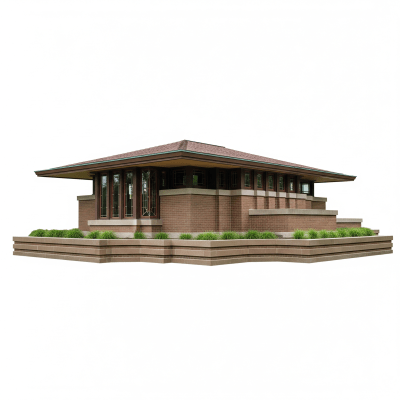
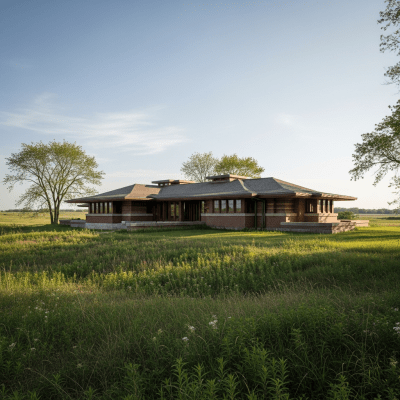

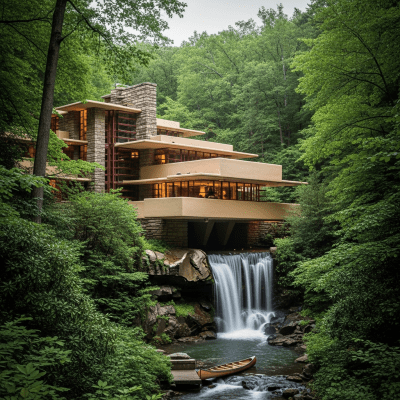

Prairie School buildings typically employ brick, stucco, wood, and natural stone, often sourced locally to reinforce the connection to place. Construction techniques include cantilevered roofs, open floor plans, and built-in furnishings. Decorative motifs are geometric and stylized, with art glass windows and custom woodwork integrated into the architecture itself.
The Prairie School drew inspiration from the Arts and Crafts Movement's focus on craftsmanship and honest materials, as well as Japanese architecture's emphasis on spatial harmony. Related styles include Early Modernism, Organic Architecture, and Usonian (Wright's later work). There is notable overlap with Craftsman and Bungalow styles, particularly in residential design, and the movement shares philosophical roots with the Chicago School.
While the Prairie School is most closely associated with the Midwest, regional adaptations appeared in California, notably through the work of Irving Gill. These variants often reflect local climate and materials but retain the core principles of horizontality, open plans, and landscape integration. Midwest adaptations remain the most iconic, with subtle differences in ornamentation and layout reflecting local traditions.
Prairie School architecture is officially recognized through multiple heritage listings. Several works by Frank Lloyd Wright, including Robie House and Unity Temple, are inscribed as UNESCO World Heritage Sites. Numerous buildings are listed on the U.S. National Register of Historic Places and designated as National Historic Landmarks. The style's legacy is celebrated by professional bodies such as the Getty Vocabulary Program and the American Institute of Architects, underscoring its enduring significance in American cultural and architectural history.