
Neo-Classical
Neo-Classical architecture is a revivalist style that draws inspiration from the forms, proportions, and motifs of ancient Greek and Roman buildings, emphasizing symmetry, simplicity, and grandeur.
Neo-Classical architecture is a revivalist style that draws inspiration from the forms, proportions, and motifs of ancient Greek and Roman buildings, emphasizing symmetry, simplicity, and grandeur.
Emerging in mid-18th century Europe, Neo-Classical architecture arose as a reaction against the ornate excesses of Baroque and Rococo. Fueled by Enlightenment ideals and archaeological discoveries at Herculaneum and Pompeii, architects sought to revive the clarity, order, and civic symbolism of classical antiquity. The movement quickly spread from Britain, France, Germany, and Italy to the United States, Russia, and Latin America, becoming a defining style for public and monumental buildings.
Neo-Classical belongs to the Classical Revival school of architecture, characterized by its deliberate return to ancient Greek and Roman principles. It encompasses several substyles, including Greek Revival, Federal, Regency, Empire, and Biedermeier, each reflecting local adaptations of the core classical vocabulary.
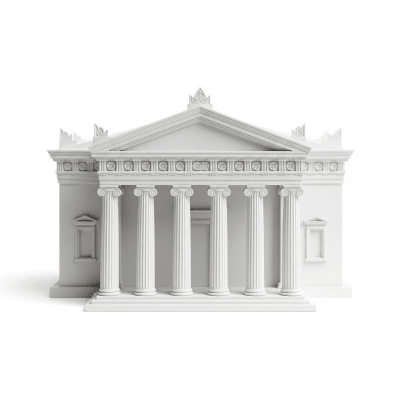
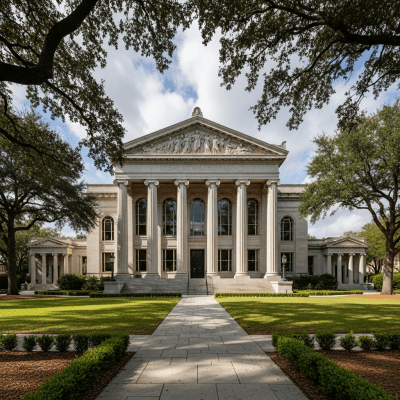
Neo-Classical buildings are marked by strict symmetry, geometric clarity, and rectilinear forms. Signature features include grand porticos with pediments, domes and rotundas, and the use of classical orders—Doric, Ionic, and Corinthian columns. Surfaces are typically smooth and unadorned, with restrained ornamentation such as friezes, pilasters, and laurel wreaths, creating an impression of dignified simplicity and timeless elegance.
Designed to embody ideals of rationality and civic virtue, Neo-Classical architecture is most often found in government buildings, museums, banks, theaters, churches, and elite residences. Its monumental scale and formal order communicate stability, authority, and cultural continuity, shaping the identity of cities and nations.
Bring this kind into your world illustrated posters, mugs, and shirts.

Archival print, museum-grade paper
Buy Poster
Stoneware mug, dishwasher safe
Buy Mug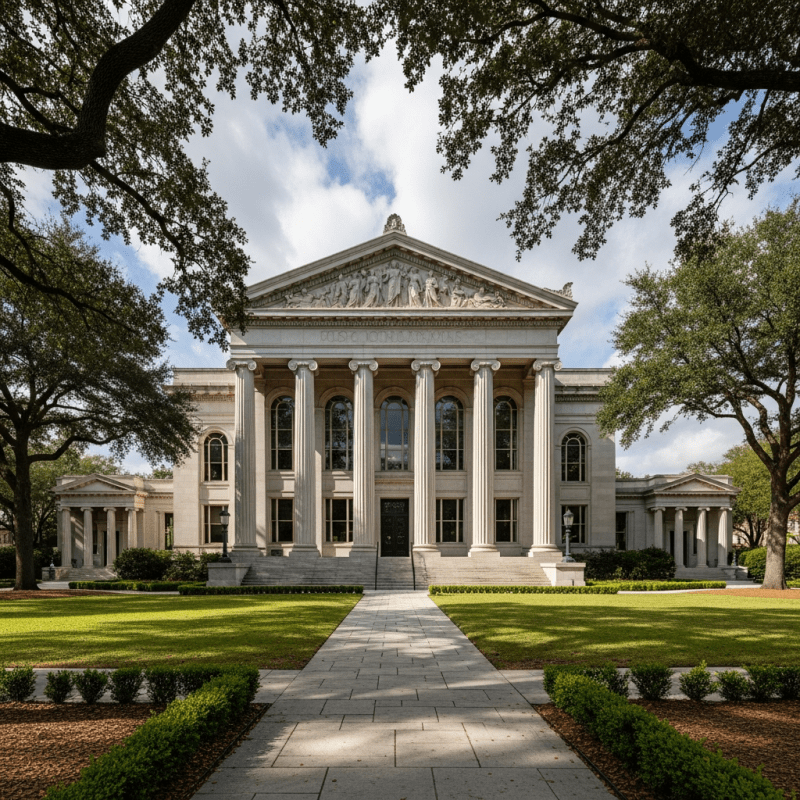
Soft cotton tee, unisex sizes
Buy ShirtNeo-Classical architecture became a powerful symbol of Enlightenment values, democracy, and national identity. Its adoption for public institutions and monuments reflected aspirations toward universal ideals and cultural continuity, and its influence remains visible in the civic landscapes of Europe, the Americas, and beyond.
Neo-Classical architecture flourished from circa 1750 to 1850, with regional continuations into the late 19th and early 20th centuries. It originated in Europe—especially Britain, France, Germany, and Italy—and spread to the United States, Russia, and Latin America.
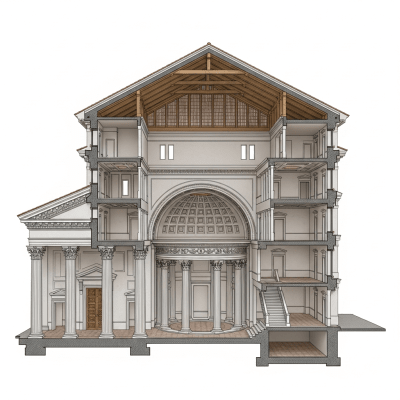
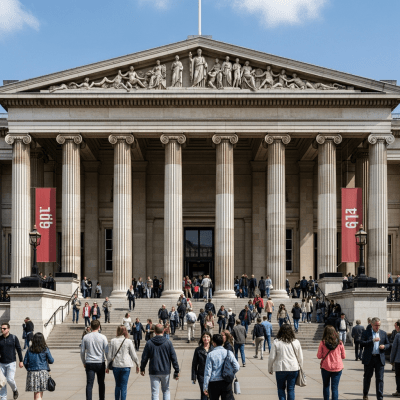

Neo-Classical buildings typically use stone, stucco, and brick with smooth finishes, and marble for monumental works. Construction relies on load-bearing masonry, with iron reinforcement appearing in later examples. Designs adhere to classical proportions and modularity, reflecting both aesthetic and structural discipline.
Neo-Classical architecture was directly inspired by ancient Greek and Roman precedents, as well as the archaeological discoveries at Herculaneum and Pompeii. Palladianism served as a precursor, emphasizing classical purity. The style stands in contrast to Baroque and Rococo, and influenced later movements such as Beaux-Arts and 20th-century Classicism. Hybridizations with local traditions are evident in various regions.
Numerous Neo-Classical buildings are recognized as UNESCO World Heritage Sites or protected as national monuments, such as the Brandenburg Gate and the historic center of St. Petersburg. The style is celebrated for its embodiment of Enlightenment ideals and is subject to ongoing preservation efforts, though some structures remain at risk due to urban development or neglect.