
Mughal
Mughal architecture is a celebrated Indo-Islamic style, distinguished by its grand scale, harmonious symmetry, and intricate ornamentation, which flourished across the Indian subcontinent from the 16th to 18th centuries.
Mughal architecture is a celebrated Indo-Islamic style, distinguished by its grand scale, harmonious symmetry, and intricate ornamentation, which flourished across the Indian subcontinent from the 16th to 18th centuries.
Mughal architecture emerged with the founding of the Mughal Empire by Babur in 1526, evolving from the fusion of Persian, Central Asian, and indigenous Indian building traditions. Its golden age spanned the reigns of Akbar, Jahangir, Shah Jahan, and Aurangzeb, reaching artistic and technical heights in cities such as Agra, Delhi, and Lahore. The style’s development was closely tied to imperial patronage, with monumental commissions marking each emperor’s legacy.
Mughal architecture is classified within the Indo-Islamic school, representing a distinct style that bridges Persian Timurid influences with local South Asian forms. It is recognized as a major tradition in global architectural history, with substyles such as Early, Classical, and Late Mughal reflecting shifts in design across different reigns and regions.
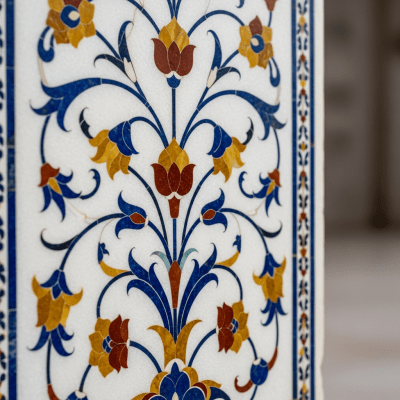
Mughal buildings captivate with their monumental domes—often double-shelled—slender minarets flanking corners, and vast gateways leading into spacious courtyards. Surfaces shimmer with white marble and red sandstone, inlaid with semi-precious stones in vibrant floral and geometric patterns. Delicate jali screens filter light, while chhatris (dome-shaped pavilions) crown rooftops. The overall effect is one of serene symmetry, lush gardens, and ornate detail, inviting both awe and contemplation.
Functionally, Mughal architecture served imperial, religious, and civic purposes. Its mosques, tombs, palaces, forts, and gardens were designed for worship, commemoration, governance, and leisure. The charbagh garden layout symbolized paradise, while advanced water engineering provided cooling fountains and reflective pools. These spaces fostered both public gatherings and private reflection, embodying the Mughal vision of order and beauty.
Bring this kind into your world illustrated posters, mugs, and shirts.
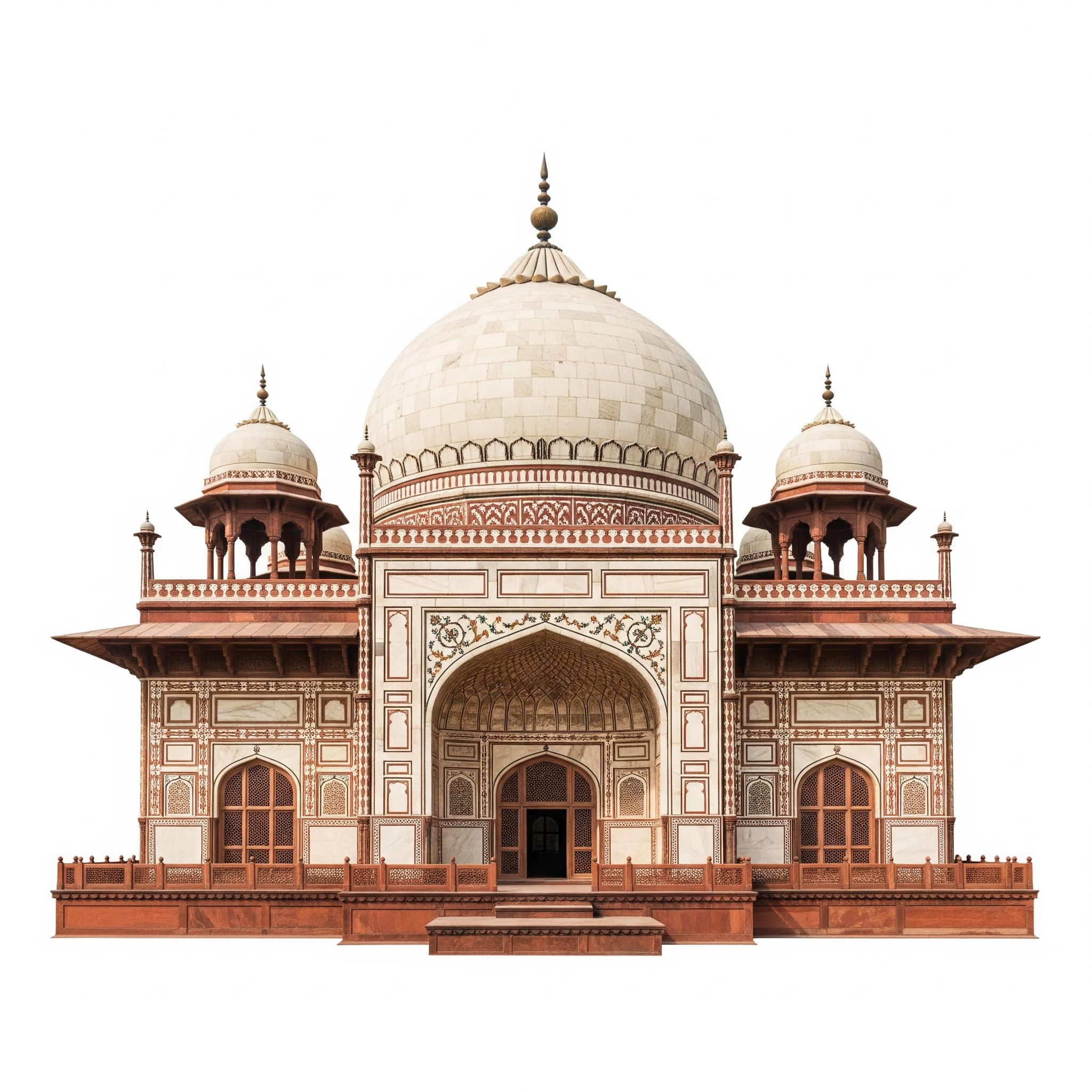
Archival print, museum-grade paper
Buy Poster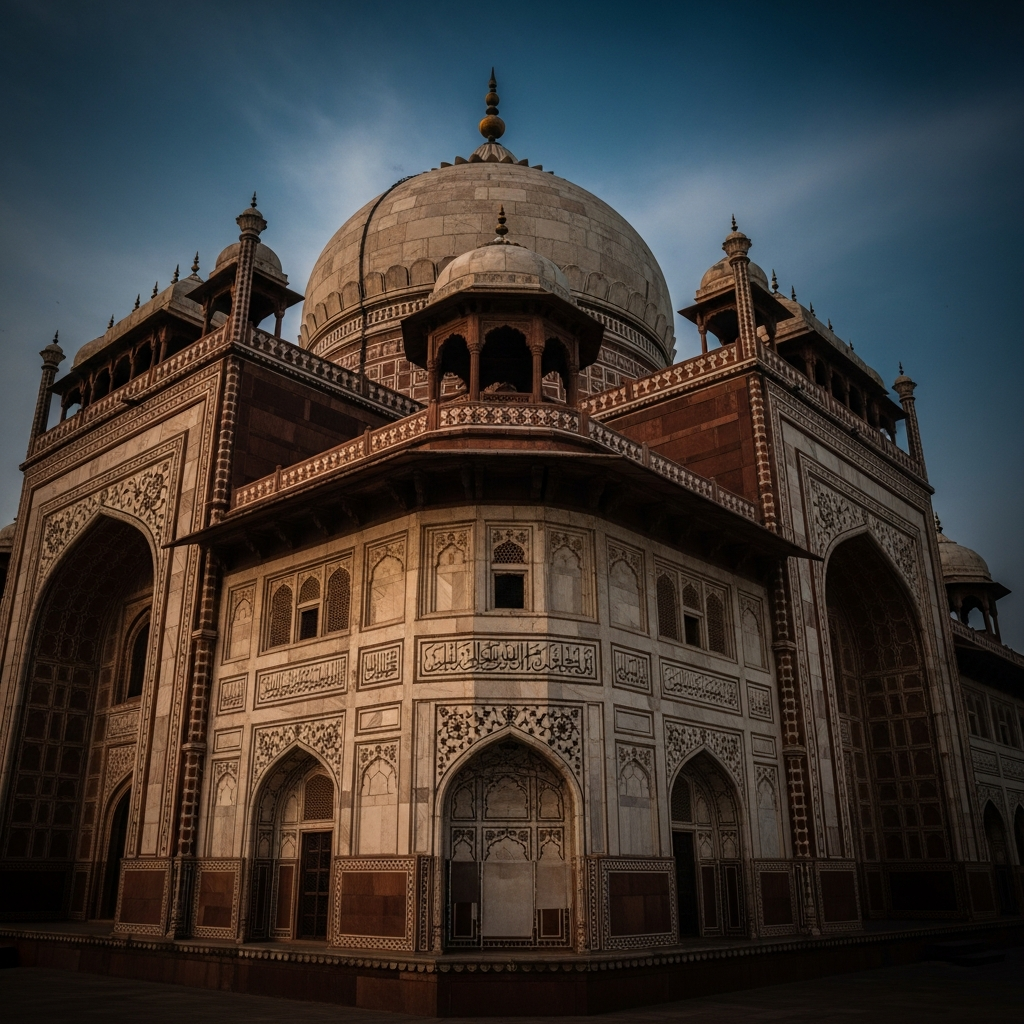
Stoneware mug, dishwasher safe
Buy Mug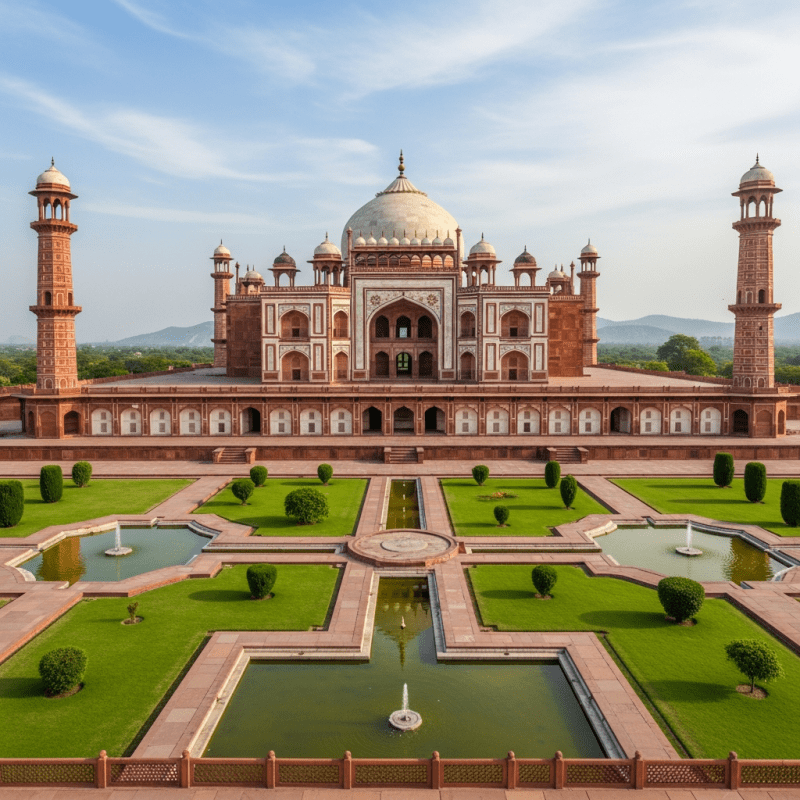
Soft cotton tee, unisex sizes
Buy ShirtMughal architecture stands as a cultural and artistic pinnacle of South Asian heritage, immortalized in art, literature, and global consciousness. The Taj Mahal, in particular, has become a universal symbol of love and architectural perfection. Mughal monuments continue to inspire contemporary design and are central to the identity of cities like Delhi and Agra, drawing millions of visitors and scholars each year.
Mughal architecture flourished from circa 1526 to 1857 CE, with its zenith between 1556 and 1707. Originating in the Indian subcontinent, its reach extended across present-day India, Pakistan, Bangladesh, and parts of Afghanistan, leaving a lasting imprint on the region’s built environment.
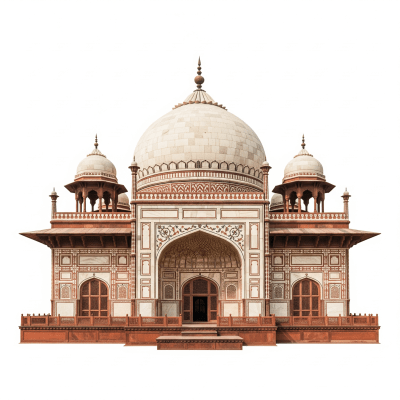
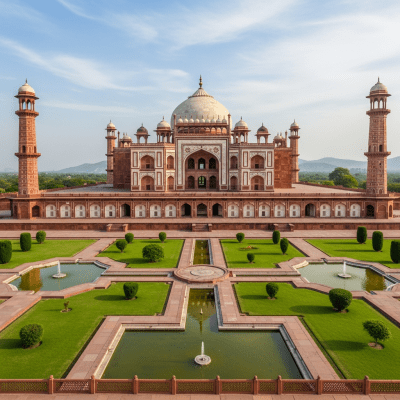
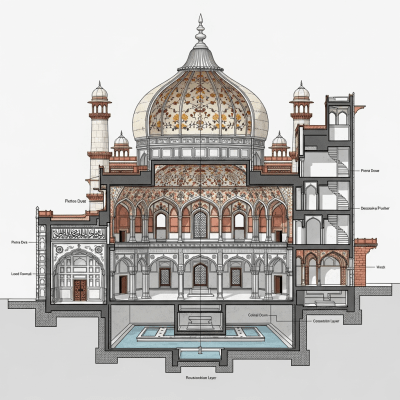
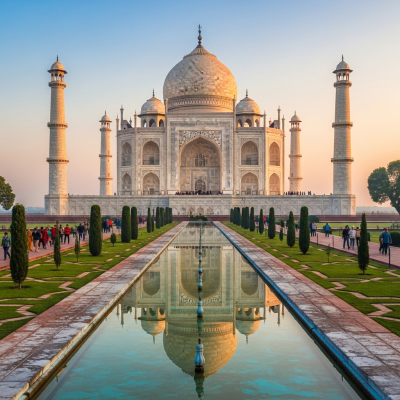
Signature features include grand domes, slender minarets, massive gateways, and expansive courtyards. The style emphasizes symmetry, axial planning, and charbagh gardens. Decorative elements abound: geometric and floral motifs, Quranic calligraphy, jali screens, and chhatris. Advanced engineering enabled true arches, double domes, and elaborate waterworks, setting Mughal architecture apart from its predecessors.
Mughal builders favored red sandstone and white marble, often enhanced with pietra dura (inlaid semi-precious stones). Brick and stucco appeared in some regional variants. Construction techniques included true arches, double-shelled domes, iwans (vaulted halls), and sophisticated water engineering for gardens and fountains. Ornamentation was achieved through carving, inlay, and latticework, creating spaces that were both durable and visually stunning.
Mughal architecture was deeply influenced by Persian Timurid traditions, indigenous Hindu and Jain forms, and Central Asian Islamic motifs. It paved the way for related styles such as Indo-Saracenic (a British colonial hybrid), Rajput architecture (which sometimes blended Mughal features), and built upon earlier Sultanate architecture. Later regional adaptations introduced new motifs and construction methods, especially in Bengal and the Deccan.
Distinct regional variants include Deccan Mughal (Hyderabad, Aurangabad), Bengal Mughal (Dhaka, Murshidabad), and the Lahore School. These adaptations reflect local materials, climate, and artistic traditions, resulting in unique interpretations of the Mughal style while maintaining its core principles of symmetry and ornamentation.
Mughal architecture is honored through numerous UNESCO World Heritage Site designations, including the Taj Mahal, Red Fort, Humayun’s Tomb, Fatehpur Sikri, and Shalimar Gardens. It is formally recognized by international authorities such as the Getty AAT and the International Union of Architects. Ongoing preservation and restoration efforts by organizations like UNESCO and the Archaeological Survey of India underscore its enduring cultural and historical significance.