Mission Revival
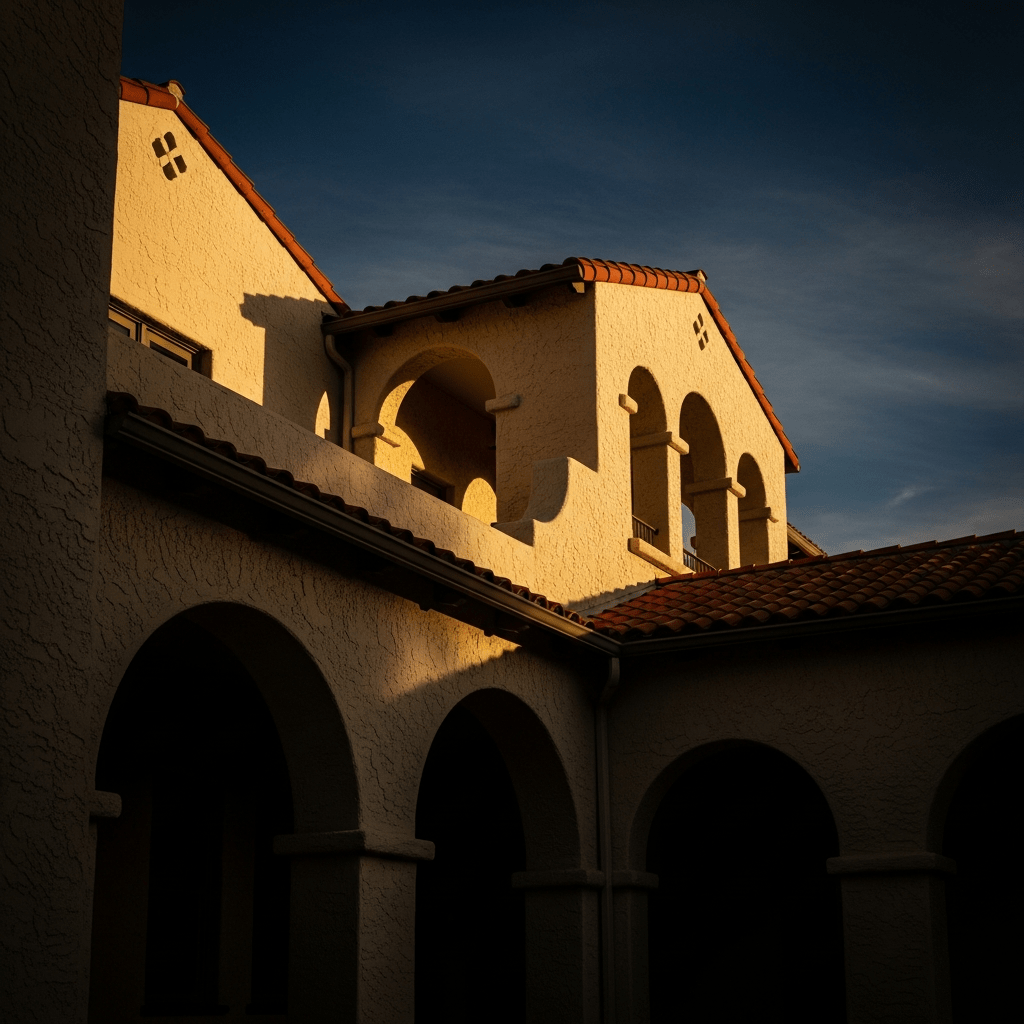
Mission Revival is an American architectural style inspired by the Spanish colonial missions of California, known for its stucco walls, red clay tile roofs, arches, and bell towers.
Mission Revival is an American architectural style inspired by the Spanish colonial missions of California, known for its stucco walls, red clay tile roofs, arches, and bell towers.
Mission Revival originated in California in the late 19th century, emerging as architects and builders sought to evoke the romance and regional identity of the historic Franciscan missions established between 1769 and 1823. Its rise coincided with a broader interest in Revivalist architecture, and the style quickly spread throughout the US Southwest, finding favor in civic, residential, and institutional projects. The 1893 World’s Columbian Exposition in Chicago, featuring Arthur Page Brown’s California Building, played a pivotal role in popularizing the style nationwide.
Mission Revival belongs to the Revivalism school of architecture, which reinterprets historic styles for contemporary use. It is closely associated with American architectural movements that draw on earlier traditions, and is often grouped with related styles such as Spanish Colonial Revival and Pueblo Revival.
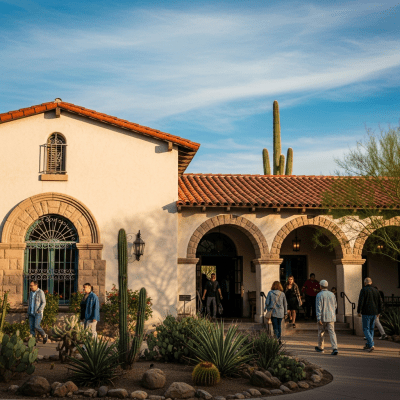
Mission Revival buildings are instantly recognizable for their smooth, light-colored stucco exteriors, low-pitched red clay tile roofs, and prominent arches. Other hallmarks include bell towers or campanarios, arcaded walkways, curved gables (espadañas), deep-set windows, and ornamental ironwork. Courtyards and gardens often complement the architecture, echoing the layout of original mission complexes and enhancing the sense of tranquility and regional charm.
Designed to suit the climate and landscape of the American Southwest, Mission Revival structures are functional and adaptable. They have been used for a wide variety of purposes, including homes, railway stations, schools, hotels, civic buildings, and churches. The style’s thick walls and shaded arcades provide comfort in hot, dry environments, while its evocative forms foster a sense of place and historical continuity.
Bring this kind into your world illustrated posters, mugs, and shirts.
Archival print, museum-grade paper
Buy Poster
Stoneware mug, dishwasher safe
Buy Mug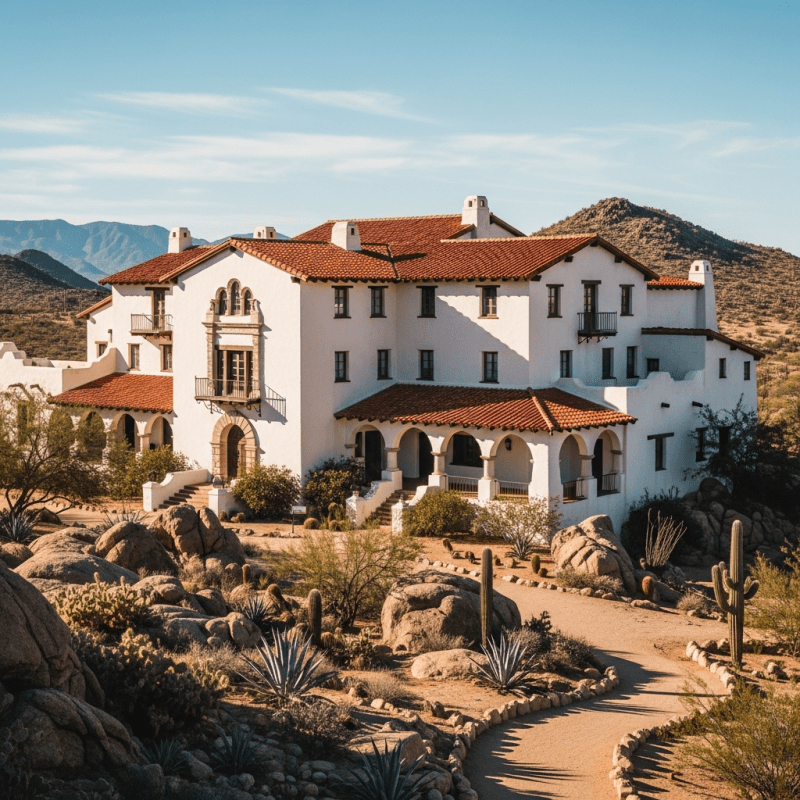
Soft cotton tee, unisex sizes
Buy ShirtMission Revival holds a special place in California’s cultural identity, symbolizing both the romanticized legacy of Spanish colonialism and the region’s unique architectural heritage. The style is celebrated in art, literature, and tourism, and many of its buildings are preserved as historic landmarks. Its influence extends into popular culture, where it is often associated with the idyllic landscapes and history of the American West.
Mission Revival flourished from approximately 1890 to 1920, with continued influence into the mid-20th century. It originated in California and the broader US Southwest, and remains most prevalent in these regions, though examples can be found throughout the United States.
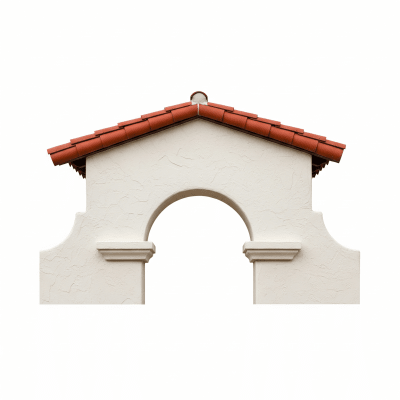
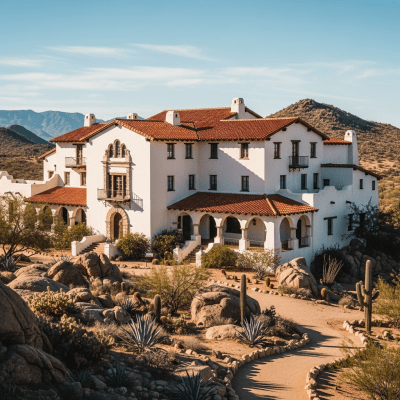
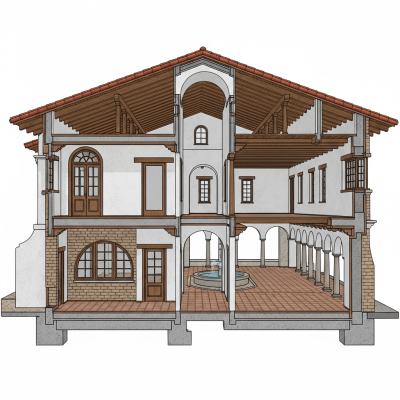
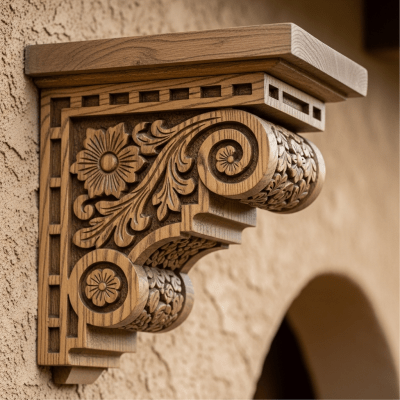
Mission Revival buildings typically use stucco for exterior walls, red clay tiles for roofing, and wood and wrought iron for structural and decorative elements. Masonry and timber framing are common, with adaptations for modern structural stability. Decorative tilework and exposed beams add visual interest, while adobe is occasionally used in regional variants.
Mission Revival draws direct inspiration from Spanish Colonial architecture, particularly the Franciscan missions of California. It also incorporates elements from Mexican and Mediterranean vernacular traditions. Related styles include Spanish Colonial Revival (more ornate and eclectic), Pueblo Revival (regional adaptation with indigenous influences), and Mediterranean Revival (sharing materials and motifs). Union Station in Los Angeles exemplifies hybridization between Mission Revival and Spanish Colonial Revival.
While Mission Revival is most closely associated with California, it has been adapted throughout the US Southwest, especially in Arizona and New Mexico. Regional variants include Spanish Colonial Revival, which is more decorative and widespread, and Pueblo Revival, which incorporates indigenous forms and materials. These styles often overlap, reflecting local traditions and climatic needs.
Many Mission Revival buildings are protected as historic landmarks, with listings on the US National Register of Historic Places and local or state registers. The style is recognized by the Getty Art & Architecture Thesaurus and is celebrated for its contribution to regional identity and architectural heritage. Although no Mission Revival buildings are directly listed as UNESCO World Heritage sites, the original California missions that inspired the style are recognized for their historical significance, and ongoing preservation efforts ensure the style’s legacy endures.