
Japanese Architecture
Japanese architecture is a tradition of building design from Japan, celebrated for its wooden construction, modular layouts, and harmonious integration with nature.
Japanese architecture is a tradition of building design from Japan, celebrated for its wooden construction, modular layouts, and harmonious integration with nature.
Japanese architecture traces its roots to the ancient Jōmon period (c. 10,000 BCE), evolving through centuries of indigenous innovation and selective foreign influence. The style matured from early ritual structures and vernacular dwellings, absorbing Buddhist and Chinese architectural elements from the 6th century CE onward. Major classical forms emerged during the Asuka, Nara, and Heian periods, while subsequent eras—Kamakura, Muromachi, Edo, and beyond—shaped its distinct identity. The Meiji Restoration and postwar periods introduced Western techniques and modernist philosophies, creating a dynamic blend of tradition and innovation that continues today.
Japanese architecture belongs to the broader school of East Asian Architecture, distinguished as a unique style within this family. It encompasses a wide range of substyles, from ancient Jōmon and Yayoi forms to contemporary minimalist expressions. Its classification is based on characteristic materials, structural techniques, and a philosophy that emphasizes harmony with the environment.
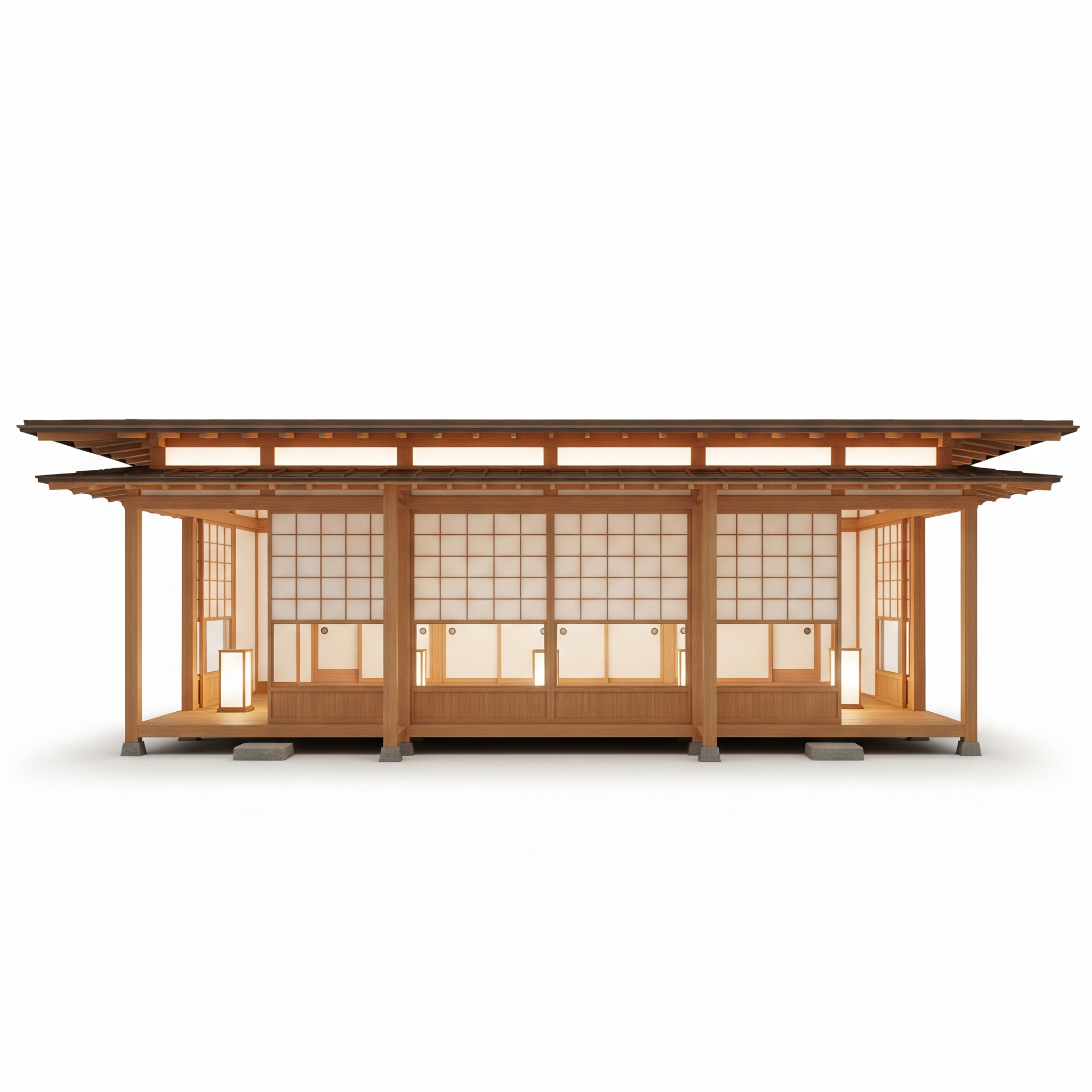
Japanese buildings are instantly recognizable for their elegant timber frames, gently sloping tiled or thatched roofs, and deep, overhanging eaves. Interiors feature open plans, modular tatami mat layouts, and sliding doors (shoji, fusuma) that create fluid transitions between spaces. Verandas (engawa) connect indoors and outdoors, while asymmetrical layouts and integration with gardens evoke a sense of tranquility. Decorative elements include elaborate bracketing (tokyō), painted screens, and natural motifs, all executed with refined craftsmanship.
Japanese architecture serves a diverse array of functions, from sacred Shinto shrines and Buddhist temples to castles, palaces, tea houses, and urban dwellings. Its modular spaces adapt to changing needs, promoting flexibility and spatial fluidity. Traditional buildings are designed to foster a close relationship with nature, using verandas and open layouts to blur the boundaries between inside and outside. Contemporary forms continue this legacy, prioritizing simplicity, adaptability, and environmental harmony.
Bring this kind into your world illustrated posters, mugs, and shirts.
Archival print, museum-grade paper
Buy Poster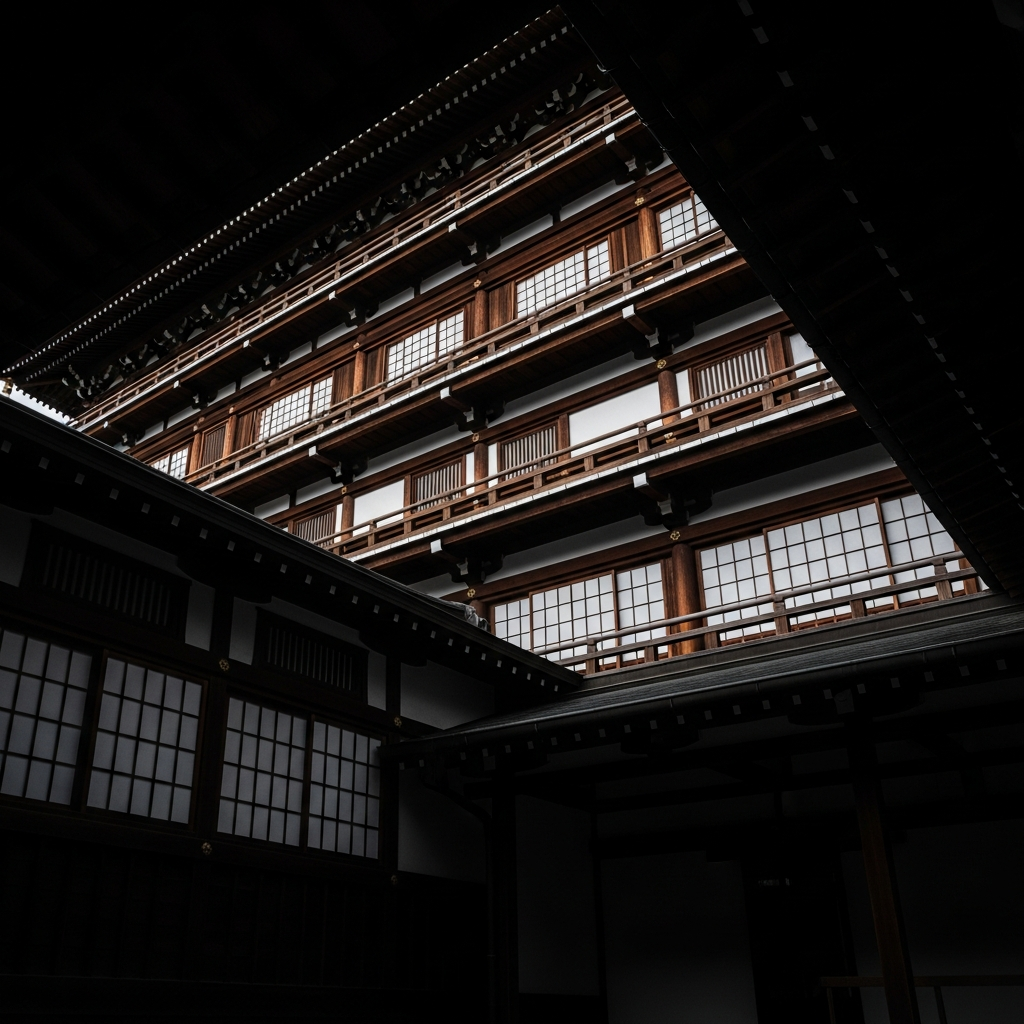
Stoneware mug, dishwasher safe
Buy Mug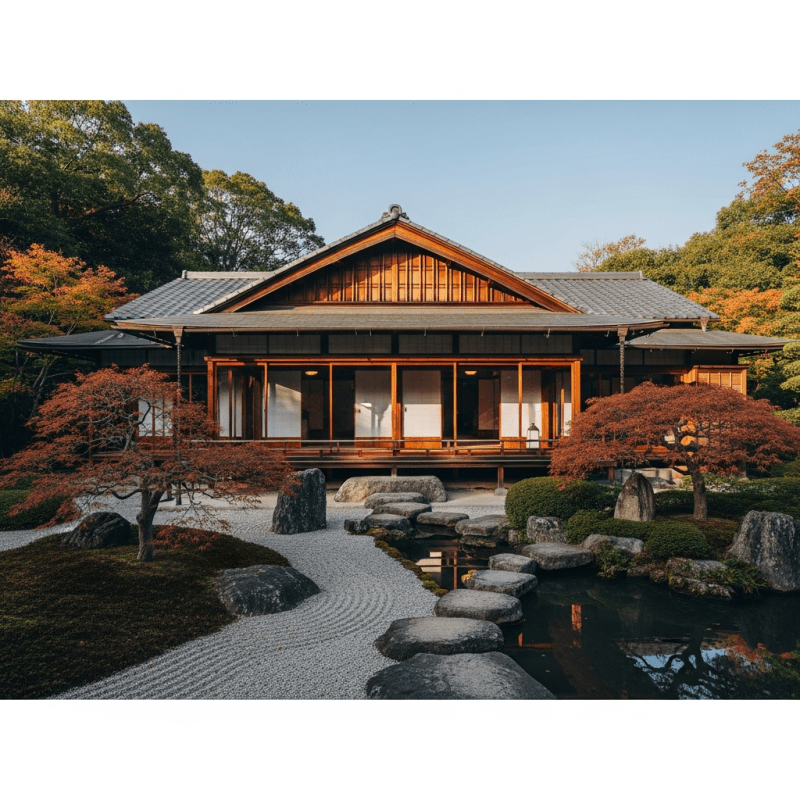
Soft cotton tee, unisex sizes
Buy ShirtJapanese architecture is deeply woven into the nation’s cultural identity, reflecting philosophical concepts like wabi-sabi (impermanence and simplicity) and the spiritual influence of Shinto and Buddhism. Its forms and motifs appear in art, literature, and film, symbolizing tranquility, craftsmanship, and a reverence for nature. Iconic structures such as Ise Jingū and Himeji Castle are celebrated as national treasures and UNESCO World Heritage sites, while modern works by architects like Kenzō Tange and Tadao Ando continue to shape global architectural discourse.
Japanese architecture originated in Japan, with its earliest forms dating back to the Jōmon period (c. 10,000 BCE). Major classical styles emerged from the 6th century CE onward, evolving through distinct historical eras—Nara, Heian, Edo, Meiji, and into the present. Regional variants can be found in Okinawa (Ryūkyūan architecture) and Hokkaido (Ainu architecture), each reflecting local materials and traditions.
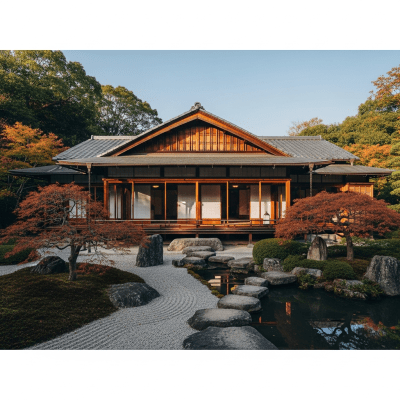
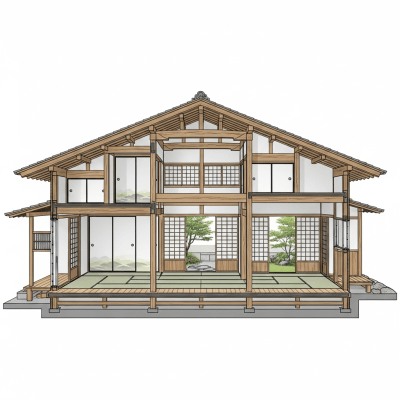
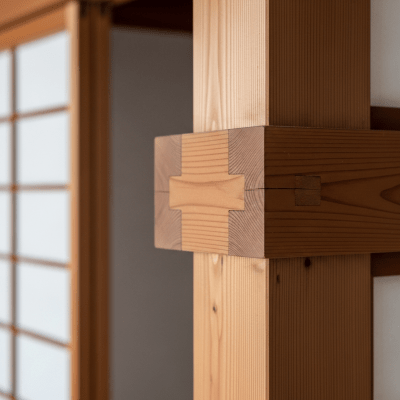
Traditional Japanese architecture employs timber—especially hinoki cypress, cedar, and pine—for structural elements, with stone used mainly for foundations and garden features. Paper (shoji screens), bamboo, thatch, and clay tiles are common in walls and roofs. Construction relies on post-and-lintel frameworks, mortise-and-tenon joinery, and modular design based on tatami mats. Deep eaves and raised floors protect against weather, while craftsmanship emphasizes precision and durability.
Japanese architecture was shaped by early Chinese and Korean traditions, especially in the adoption of Buddhism and roof forms. Indigenous Jōmon and Yayoi practices laid the foundation for local techniques. During the Meiji Restoration and postwar periods, Western styles and modernist movements like Metabolism influenced new directions. Related styles include East Asian (Chinese, Korean), International Style, and Minimalism, while hybridizations such as giyōfū blend Western and Japanese elements.
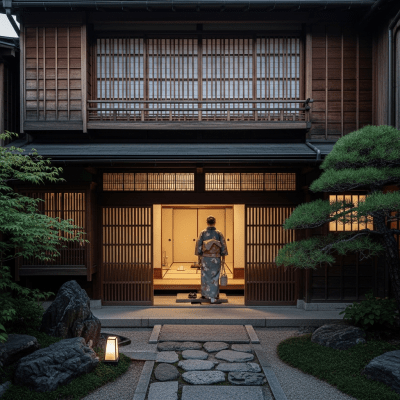
Distinct regional forms enrich Japanese architecture. Ryūkyūan architecture in Okinawa features coral limestone and red-tiled roofs, reflecting subtropical influences. Ainu architecture in Hokkaido employs local timber and reed, adapted to cold climates. Urban machiya townhouses in Kyoto and Kanazawa showcase narrow facades and deep plots, while rural minka farmhouses use steep thatched roofs for snowy regions. Each variant embodies local materials, climate, and cultural practices.
Japanese architecture is widely celebrated and protected. UNESCO World Heritage status has been awarded to sites like Hōryū-ji, Himeji Castle, and the Historic Monuments of Ancient Kyoto. Many buildings and techniques are designated as Important Cultural Properties or National Treasures by the Japanese government. International organizations such as the UIA and DOCOMOMO recognize Japan’s contributions to global architectural heritage, ensuring ongoing preservation and appreciation.