Gothic Revival
Gothic Revival is a 19th-century architectural movement that reimagines medieval Gothic forms for modern buildings, blending pointed arches, ribbed vaults, and ornate tracery with new materials and ideals.
Gothic Revival is a 19th-century architectural movement that reimagines medieval Gothic forms for modern buildings, blending pointed arches, ribbed vaults, and ornate tracery with new materials and ideals.
The Gothic Revival originated in England around the mid-18th century, reaching its height between the 1830s and 1870s. It emerged as a reaction against the rationality of Neoclassicism and the rapid industrialization of the era, fueled by Romanticism and religious reform movements such as the Oxford Movement. Architects and thinkers sought to revive the spiritual and moral values they associated with medieval Gothic architecture, adapting its forms for churches, civic buildings, and homes across Britain and, soon after, much of Europe, North America, and the British Empire.
Gothic Revival belongs to the Historicist Architecture school and is classified as a Revivalist style. It deliberately references and adapts medieval Gothic architecture (12th–16th centuries), often through substyles like High Victorian Gothic, Ecclesiological Gothic, Collegiate Gothic, and Carpenter Gothic. Its historicist approach sets it apart from both the original Gothic and other revival movements such as Romanesque Revival and Tudor Revival.
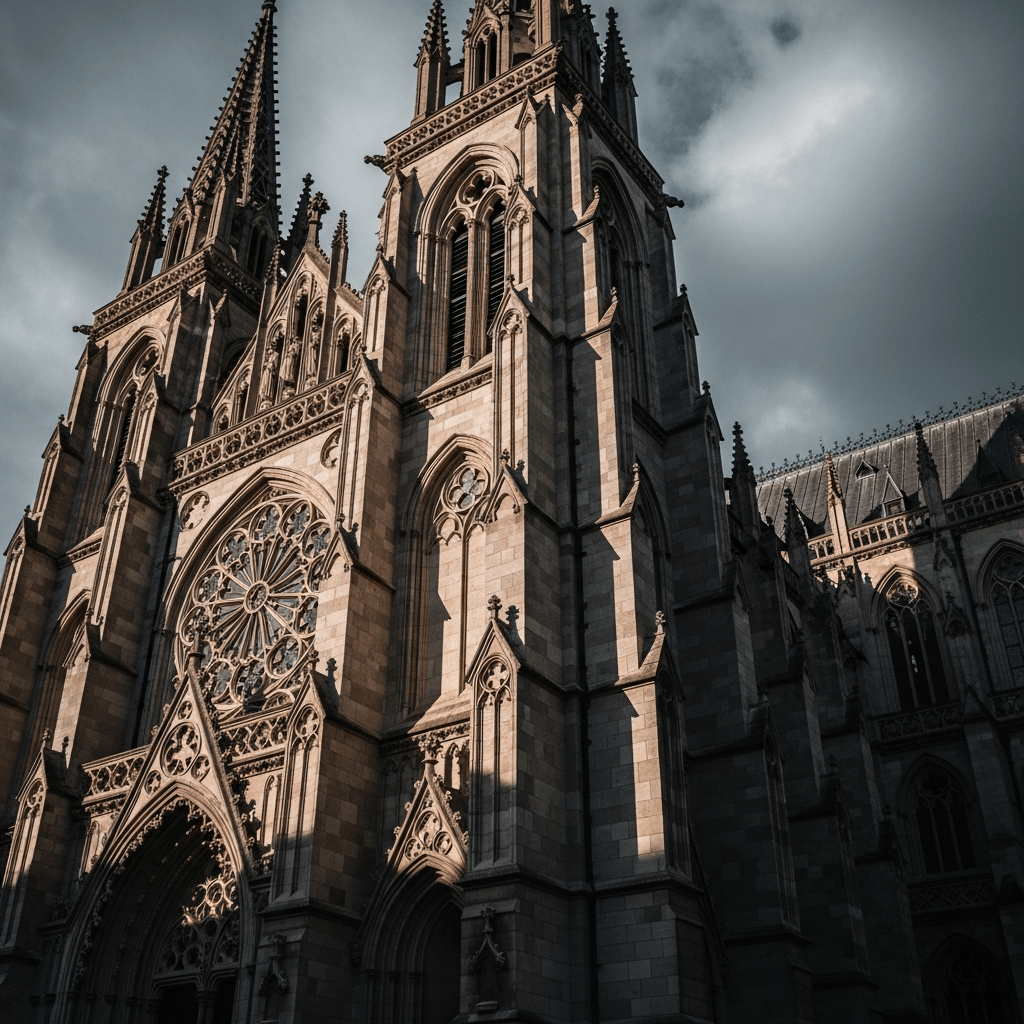
Gothic Revival buildings are visually striking, marked by soaring vertical lines, pointed arches, ribbed vaults, and dramatic spires or towers. Facades are often richly decorated with ornate tracery, finials, crockets, and pinnacles, while windows feature elaborate stained glass and iconography. Steeply pitched roofs and flying buttresses evoke the grandeur of medieval cathedrals, and polychromatic masonry or timberwork (in Carpenter Gothic) adds depth and color. The style’s emphasis on verticality and intricate ornamentation creates a sense of awe and spiritual aspiration.
Gothic Revival architecture was primarily used for churches, cathedrals, and university buildings, reflecting its spiritual and educational ideals. Civic structures, railway stations, and even residential and commercial buildings adopted the style, often to convey prestige or moral seriousness. Its forms encouraged interaction with light and space, using stained glass and vaulted ceilings to inspire contemplation and communal gathering. Later phases saw the integration of industrial materials, making the style adaptable to new building types and technologies.
Bring this kind into your world illustrated posters, mugs, and shirts.
Archival print, museum-grade paper
Buy Poster
Stoneware mug, dishwasher safe
Buy Mug
Soft cotton tee, unisex sizes
Buy ShirtGothic Revival holds a unique place in cultural history, symbolizing a romantic yearning for the past and a belief in architecture’s power to shape moral and spiritual values. It became a visual language for religious reform, national identity, and civic pride, influencing literature, art, and even political movements. Iconic buildings like the Palace of Westminster and St. Patrick’s Cathedral remain enduring emblems of the style’s grandeur and cultural resonance, while its motifs continue to inspire contemporary design and popular media.
Gothic Revival flourished from circa 1740 to 1900, with its peak between the 1830s and 1870s. It began in the United Kingdom (England) and quickly spread to continental Europe, North America, Australia, Canada, India, South Africa, and beyond, adapting to local contexts and needs.

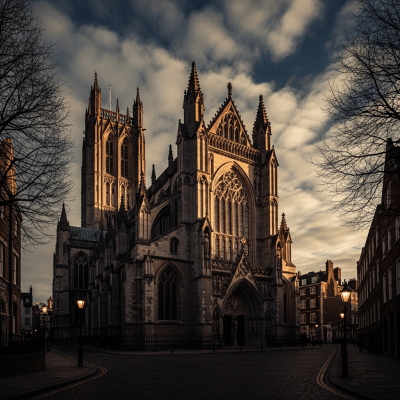
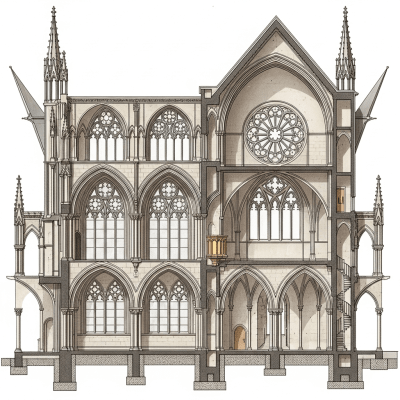
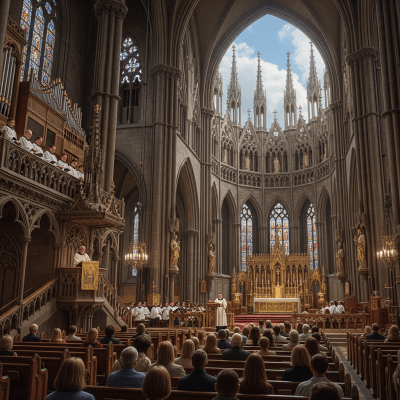

Gothic Revival buildings were initially constructed with stone and brick, later incorporating polychromatic masonry, cast iron, and timber—especially in Carpenter Gothic variants. Construction techniques emphasized verticality and structural clarity, with ribbed vaults and flying buttresses providing both support and aesthetic drama. Prefabrication and industrial materials became more common in the style’s later phases, allowing for greater scale and complexity.
Gothic Revival drew direct inspiration from medieval Gothic architecture and was shaped by Romanticism, the Ecclesiological movement, and, in later phases, the Arts and Crafts movement. Related styles include Romanesque Revival, Tudor Revival, Arts and Crafts, and Victorian Eclecticism. The style also hybridized with industrial materials and overlapped with Victorian and Edwardian idioms, reflecting the evolving tastes and technologies of the 19th century.
Many Gothic Revival buildings are recognized as UNESCO World Heritage Sites, such as the Palace of Westminster and Cologne Cathedral. The style is protected through national monument listings in the UK, USA, and other countries, and is acknowledged by organizations like DOCOMOMO International for its architectural and cultural significance. Gothic Revival remains a central subject in architectural education, conservation, and heritage practice worldwide.