Origin Story

Emerging in England between 1558 and 1603, Elizabethan architecture arose during a period of national confidence and cultural transformation under Queen Elizabeth I. Wealthy courtiers and gentry commissioned impressive country houses—known as "prodigy houses"—reflecting both the influence of continental Renaissance ideas and the enduring legacy of English medieval forms. The style marked a transition from the earlier Tudor period, setting the stage for the Jacobean era that followed.

Classification

Elizabethan architecture is classified as the English expression of the Renaissance school, positioned between the Tudor and Jacobean styles. It is recognized as a distinct architectural style within the broader English Renaissance, often referenced as part of the "prodigy house" phenomenon and sometimes grouped with late Tudor or early Jacobean substyles.

Appearance or Form

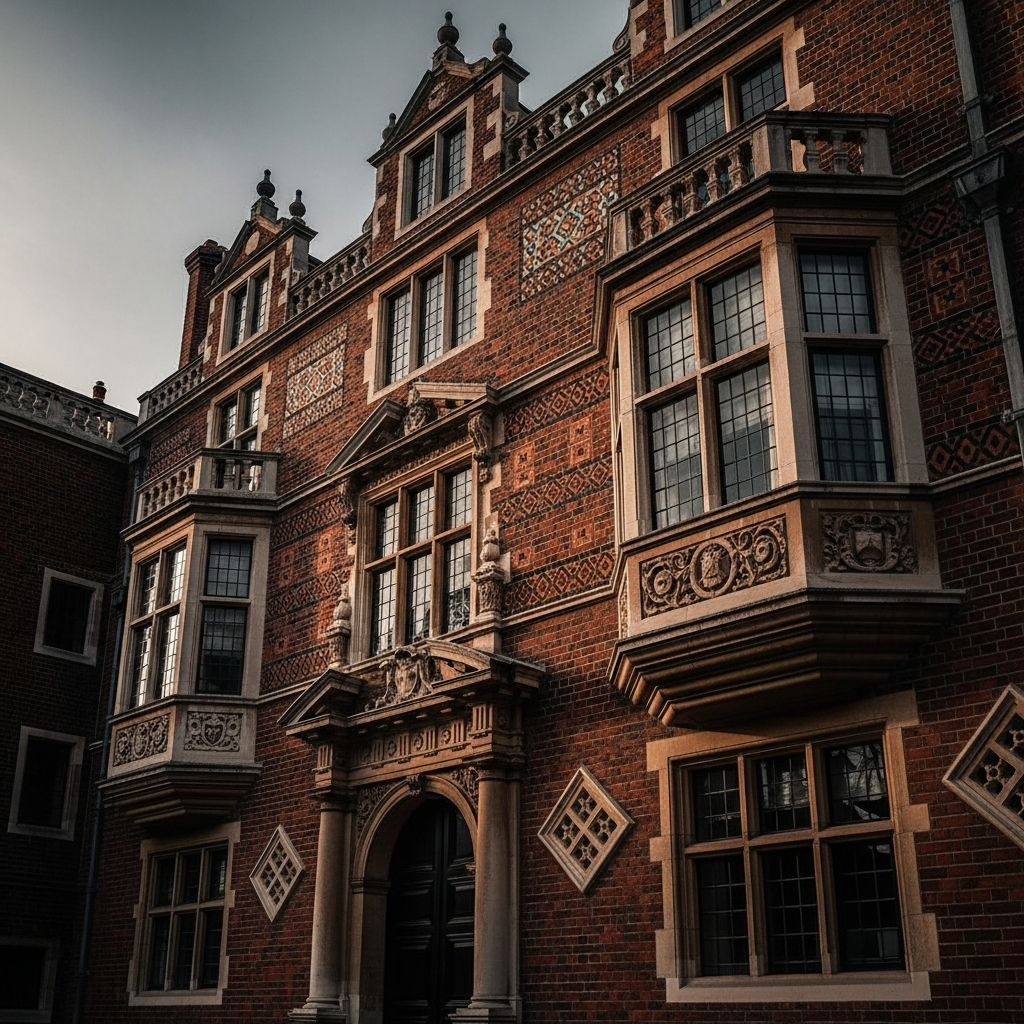
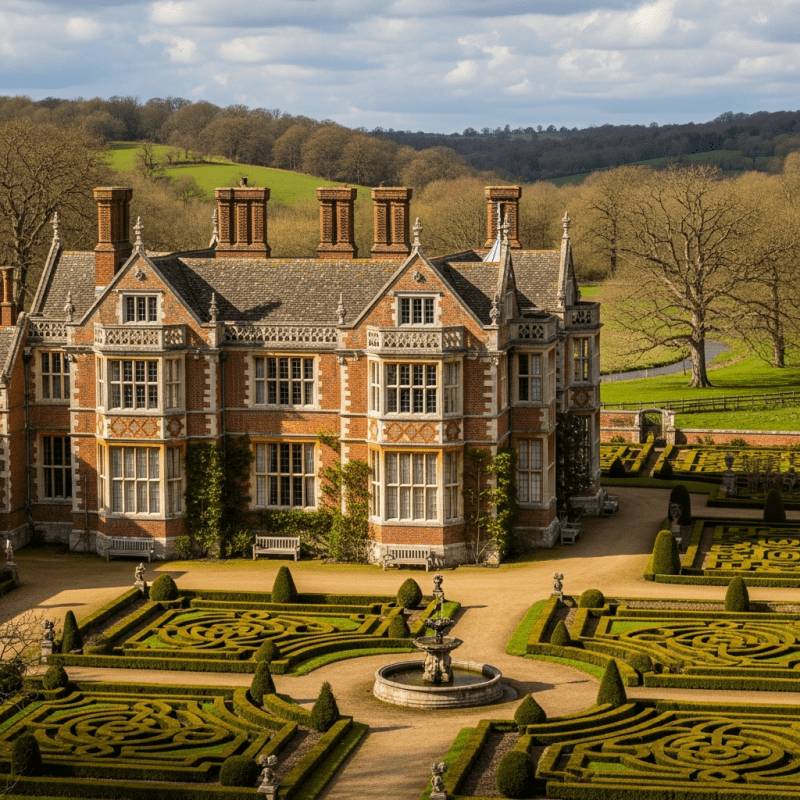
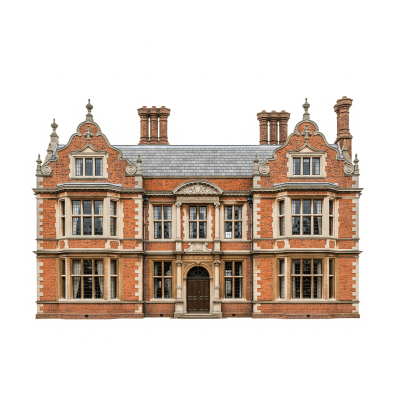
Elizabethan buildings are visually striking, featuring large, symmetrical facades, E- or H-shaped ground plans, and prominent gables. Projecting bays and tall, ornate chimneys punctuate the rooflines, while expansive mullioned and transomed windows flood interiors with light. Decorative strapwork, classical pilasters, heraldic motifs, and parapets add layers of visual richness, creating an architecture of display and status.

Behavior or Usage

Designed primarily for grand country living, Elizabethan architecture served as a stage for social gatherings, political events, and the assertion of wealth. Prodigy houses and manor homes offered comfort and luxury, featuring long galleries, great halls, and ornate staircases. While ecclesiastical architecture was less prominent, some urban buildings adopted the style, reflecting its adaptability and prestige.

Merchandise & Prints

Bring this kind into your world � illustrated posters, mugs, and shirts.

Elizabethan Elizabethan Poster

Elizabethan Poster

Archival print, museum-grade paper

Elizabethan Elizabethan Mug

Elizabethan Mug

Stoneware mug, dishwasher safe

Elizabethan Elizabethan Shirt

Elizabethan Shirt

Soft cotton tee, unisex sizes

Attributes & Insights

Taxon-Specific Insights

🌍Cultural Significance

Elizabethan architecture symbolizes the English Renaissance and the rise of the country house as a cultural icon. These buildings not only showcased technological and artistic advancements but also became enduring symbols of power, sophistication, and national pride. Today, many Elizabethan structures are preserved as heritage sites and museums, celebrated for their historical and aesthetic value.

📌Notable Facts

  • Elizabethan houses introduced unprecedented amounts of glass, making interiors brighter and more inviting.
  • The style often used E-shaped floor plans, said to honor Queen Elizabeth I.
  • Many principal examples, such as Hardwick Hall and Longleat House, remain remarkably well-preserved and open to the public.
  • Architect Robert Smythson is credited with shaping the look of the era’s most iconic buildings.

🗺️Period And Region

Elizabethan architecture flourished in England from 1558 to 1603, with notable presence in Wales and Ireland. The style is intimately tied to the reign of Elizabeth I, reflecting the cultural and political aspirations of the era’s elite.

Visual Variations

High quality, studio-style photograph of a single Elizabethan from the architecture taxonomy
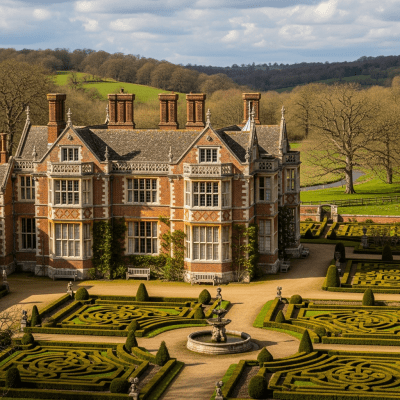
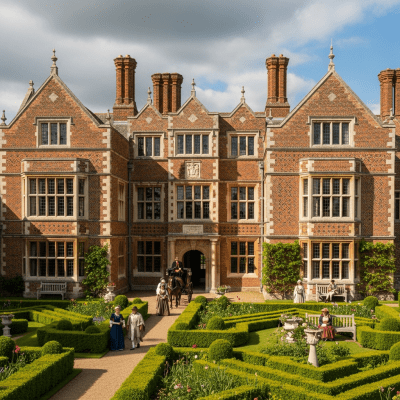
A wide-angle photograph of Elizabethan, a type of architecture, situated in its typical environment or setting
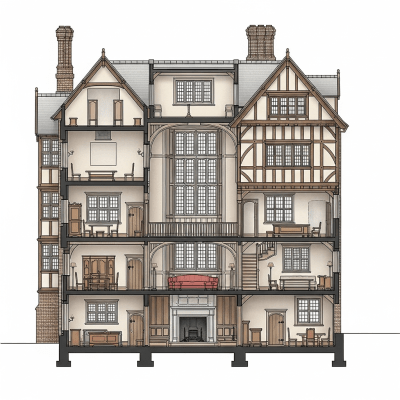
Detailed cross-sectional illustration or cutaway view showing the internal layout and key structural elements of the Elizabethan (architecture)
Photograph depicting Elizabethan, an example of architecture, in active use or cultural context—such as being inhabited, visited, or used for its intended purpose—while keeping focus on the structure itself
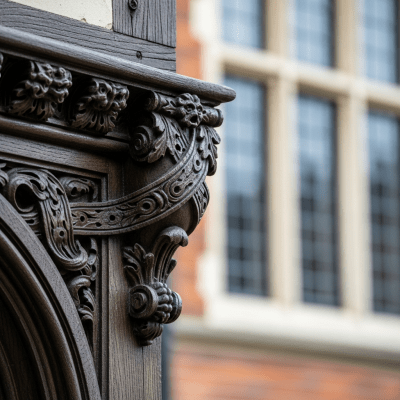
Close-up detail shot of a distinctive feature or ornamentation from the Elizabethan (architecture), showing material texture, craftsmanship, or unique design elements

Composition & Context

Taxon-Specific Insights

✨Key Characteristics

  • Synthesis of late Gothic and early Renaissance influences
  • Elaborate ornamentation and decorative motifs
  • Large mullioned and transomed windows
  • Symmetrical facades with E- or H-shaped ground plans
  • Prominent gables, projecting bays, and tall chimneys
  • Emphasis on display, comfort, and status

🧱Materials And Techniques

Elizabethan buildings were constructed primarily from brick and stone, with half-timbered elements in less grand structures. Brickwork, often combined with stone dressings, became fashionable, while construction techniques blended Renaissance innovations with traditional English practices. Interiors featured ornate plasterwork, strapwork, and wood paneling, and the use of long galleries and great halls was common.

🏛️Notable Works

  • Hardwick Hall (Derbyshire)
  • Longleat House (Wiltshire)
  • Burghley House (Lincolnshire)
  • Wollaton Hall (Nottingham)
  • Hatfield House (Hertfordshire; transitional Elizabethan/Jacobean)

👷‍♂️Notable Practitioners

  • Robert Smythson – principal architect of the period
  • Sir William Cecil – influential patron
  • Bess of Hardwick – notable patron and builder

🔗Influences And Related Styles

Elizabethan architecture was shaped by Italian and Flemish Renaissance models, interpreted through pattern books and skilled immigrant craftsmen. It retains elements of late Gothic (Perpendicular) English traditions and indigenous vernacular forms. The style bridges the gap between Tudor (its predecessor) and Jacobean (its successor), with related influences from French and Dutch Renaissance architecture. Transitional buildings often blend Elizabethan and Jacobean features, sometimes foreshadowing early Baroque.

🌍Regional Variants

Regional adaptations of Elizabethan architecture are evident in material choices and stylistic details. In northern England, timber framing was more prevalent, while southern regions favored stone construction. The style also overlaps with late Tudor and early Jacobean forms, creating local variants that reflect available resources and traditions.

🏅Heritage And Recognition

Many Elizabethan buildings are protected as Grade I or II* listed properties in the UK, with some recognized as UNESCO World Heritage Sites. Organizations such as English Heritage and the National Trust oversee the conservation of these architectural treasures, ensuring their continued appreciation and study. The style is celebrated as a defining chapter in British architectural history and remains a source of national pride.

Faq

  • What are the main features of Elizabethan architecture?
    Elaborate ornamentation, large windows, symmetrical facades, and decorative gables are hallmarks of the style.
  • Where can I see Elizabethan buildings?
    Notable examples include Hardwick Hall, Longleat House, and Burghley House, all located in England.
  • How does Elizabethan differ from Tudor or Jacobean architecture?
    Elizabethan bridges Gothic and Renaissance influences, with more symmetry and display than Tudor, and less classical rigor than Jacobean.