
Constructivism
Constructivism is a revolutionary architectural movement that arose in early Soviet Russia, defined by its bold use of industrial materials, geometric forms, and a commitment to functionalism and social purpose.
Constructivism is a revolutionary architectural movement that arose in early Soviet Russia, defined by its bold use of industrial materials, geometric forms, and a commitment to functionalism and social purpose.
Constructivism originated in Russia during the turbulent years following the 1917 Revolution, flourishing between circa 1915 and 1935. It was conceived as both an artistic and architectural response to the new socialist order, seeking to embody the ideals of collectivism, industrial progress, and technological innovation in the built environment. Architects and artists collaborated to create structures that reflected the optimism and radical change of the era, using architecture as a means to shape society itself.
Constructivism is classified within the broader Modernism school of architecture. It stands as a distinct style, primarily represented by Russian Constructivism, but its influence extended internationally through avant-garde movements in Eastern and Western Europe. The style is recognized for its experimental approach and its foundational role in the development of later modernist and functionalist architecture.
Constructivist buildings are instantly recognizable for their geometric abstraction, dynamic compositions, and the honest display of structural elements. Expect bold, angular forms, intersecting planes, and asymmetrical layouts. Materials such as steel, glass, and reinforced concrete are often left exposed, creating a sense of industrial vigor and transparency. Ornamentation is rejected in favor of utility, resulting in a strikingly modern and purposeful aesthetic.
Designed to serve the collective needs of a new society, Constructivist architecture prioritized function above all. Buildings were conceived for communal living, work, and social interaction—factories, workers’ clubs, communal housing, and exhibition pavilions were common typologies. The movement also embraced modularity and prefabrication, enabling efficient mass production and rapid construction to support the demands of industrialization.
Bring this kind into your world illustrated posters, mugs, and shirts.
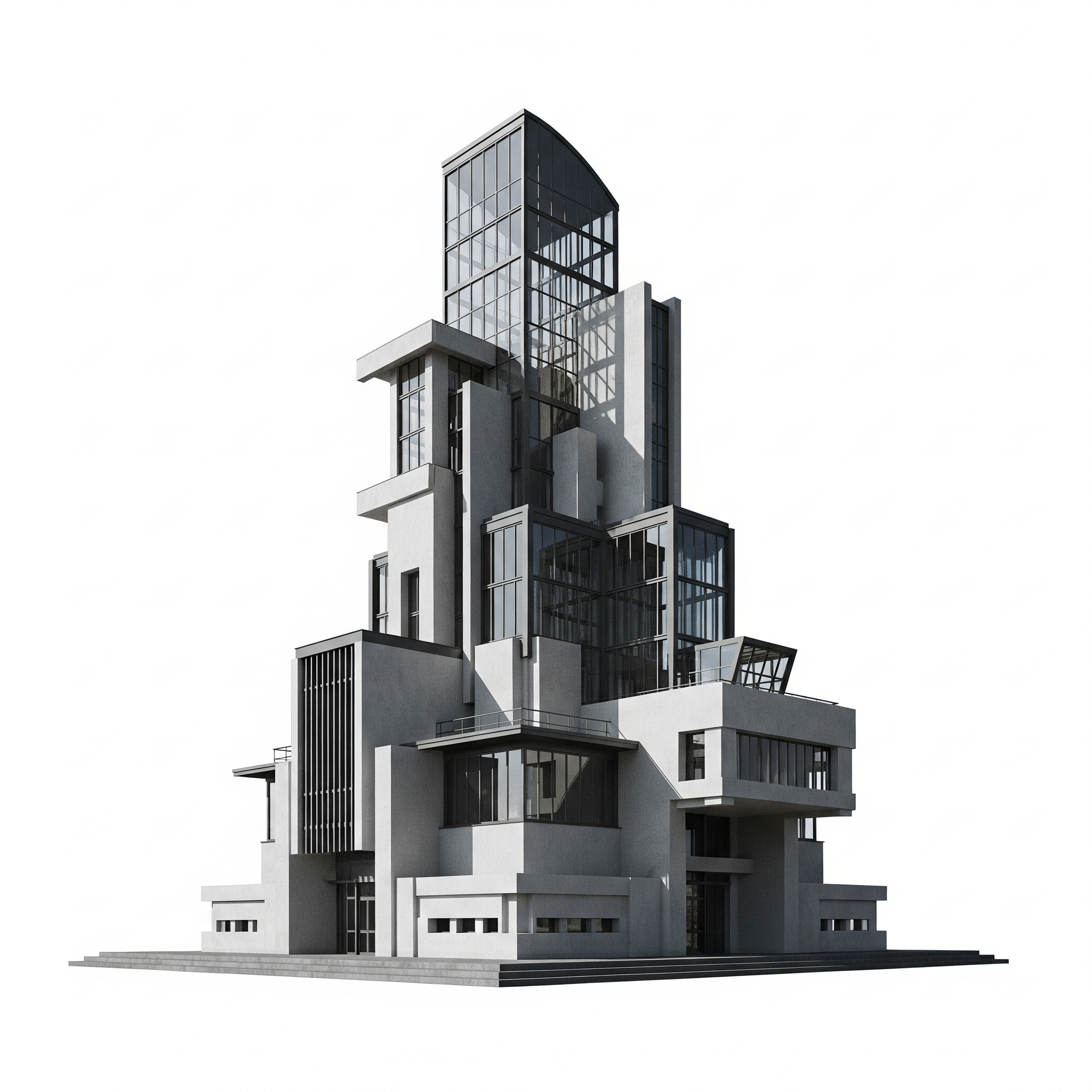
Archival print, museum-grade paper
Buy Poster
Stoneware mug, dishwasher safe
Buy Mug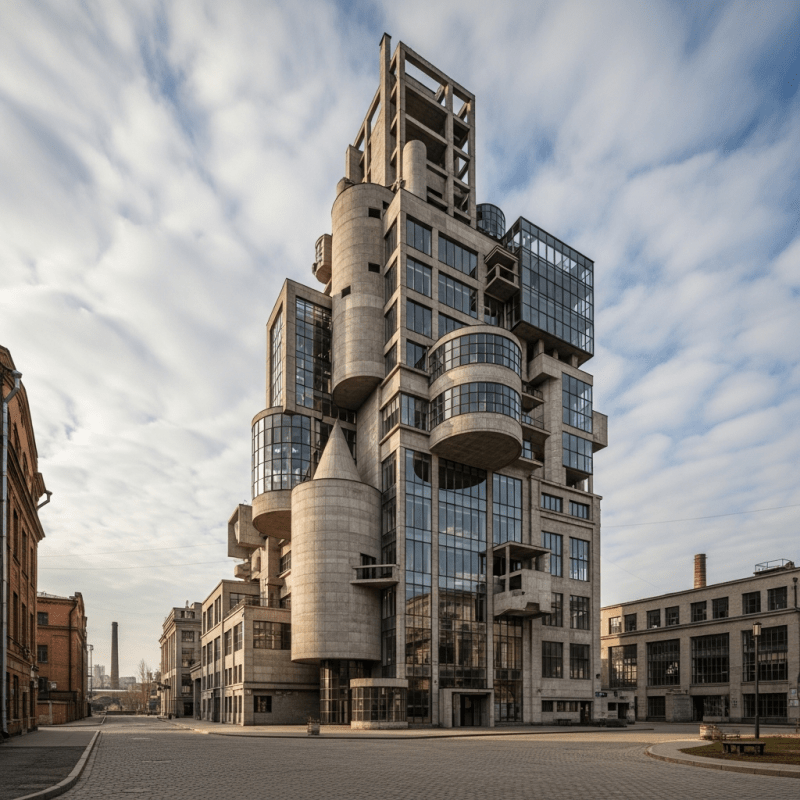
Soft cotton tee, unisex sizes
Buy ShirtConstructivism holds a pivotal place in architectural and artistic history, symbolizing the avant-garde spirit of post-revolutionary Russia. It merged art, engineering, and social ideology, influencing not only architecture but graphic design, theater, and visual arts. The movement’s legacy is seen in its impact on later modernist styles and its continued relevance in discussions of architecture’s role in shaping society.
Constructivism flourished from approximately 1915 to 1935, with its peak between 1920 and 1932. It originated in Russia (then the Soviet Union), and its influence spread to Eastern and Western Europe, although it remained most prominent within its homeland.
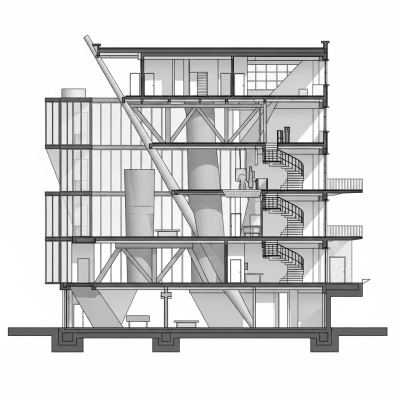


Constructivist architects favored steel, glass, reinforced concrete, and brick, often employing prefabrication and modularity. Innovative structural systems, such as cantilevers and diagonal supports, were used to achieve dynamic forms and efficient construction, reflecting the movement’s embrace of industrial advances.
Constructivism was shaped by Russian Futurism, Suprematism, Cubism, and the technological optimism of the early 20th century. It shares philosophical and aesthetic ground with Bauhaus, International Style, and De Stijl, and its focus on material honesty and structural expression foreshadowed Brutalism. Elements of Constructivism continued to influence Soviet architecture and global modernist movements.
While Constructivism’s core developed in Russia, its ideas resonated with avant-garde architects in Czechia, Poland, and Germany, giving rise to International Constructivism. However, outside the USSR, it rarely emerged as a distinct architectural movement, often blending with local modernist and artistic traditions.
Constructivist architecture is officially recognized in the Getty Art & Architecture Thesaurus and acknowledged by international organizations such as the UIA and DOCOMOMO. Although no major Constructivist buildings are individually listed as UNESCO World Heritage Sites, several are protected by national heritage registers in Russia. Preservation efforts continue, as many structures face threats from neglect and redevelopment, underscoring their importance in the global architectural heritage.