Origin Story

Emerging during the Qin Dynasty (221 BCE) and evolving through successive dynasties until the Qing (1912 CE), Chinese Imperial architecture was shaped in the heart of China’s imperial capitals—Chang’an, Luoyang, and Beijing. Its origins lie in ancient timber construction and cosmological beliefs, with each dynasty refining the style to express imperial authority and cosmic harmony.

Classification

Chinese Imperial architecture is a substyle within the broader school of East Asian architecture, specifically the Traditional Chinese style. It stands apart through its ceremonial function, scale, and the use of imperial motifs, influencing palatial architecture throughout East Asia.

Appearance or Form

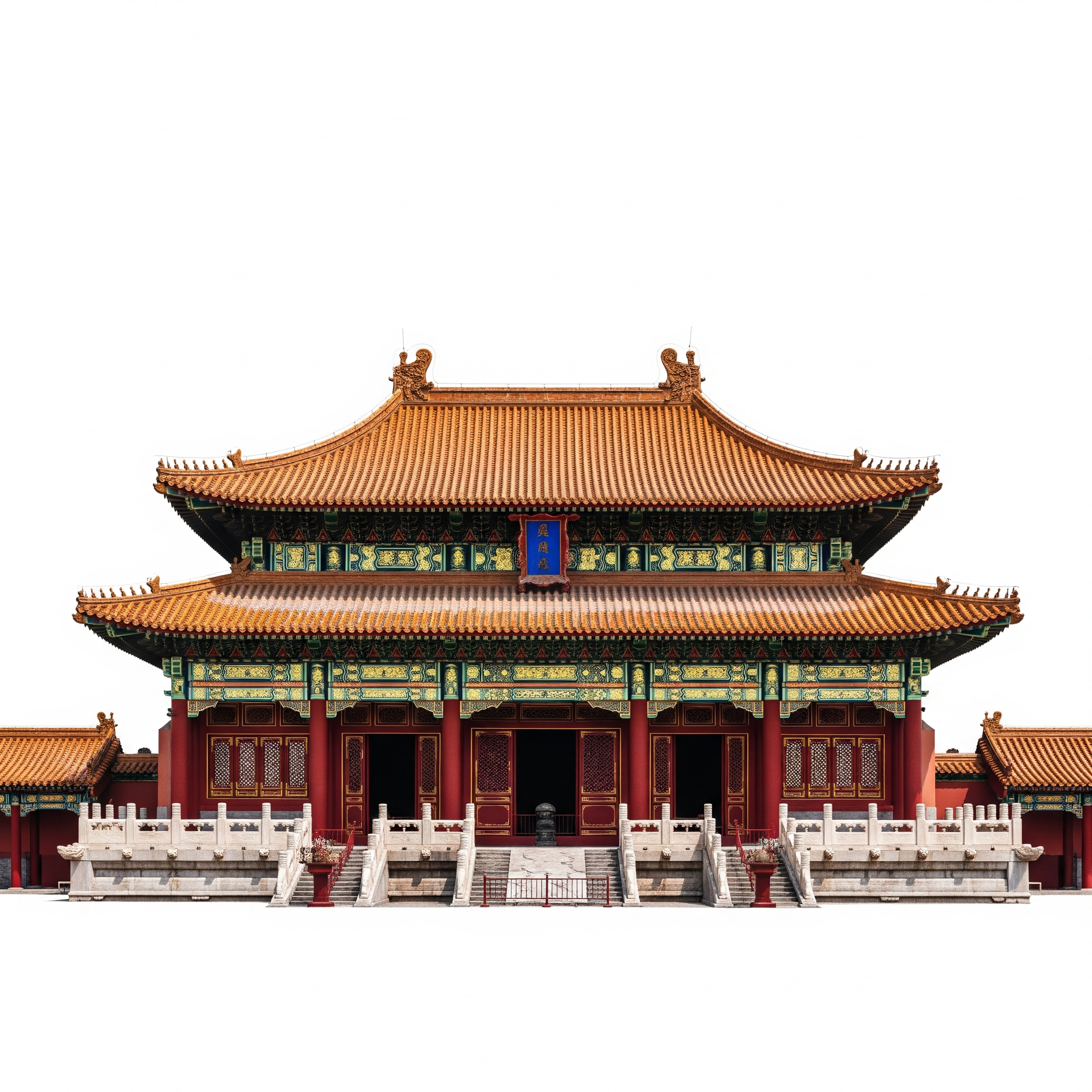
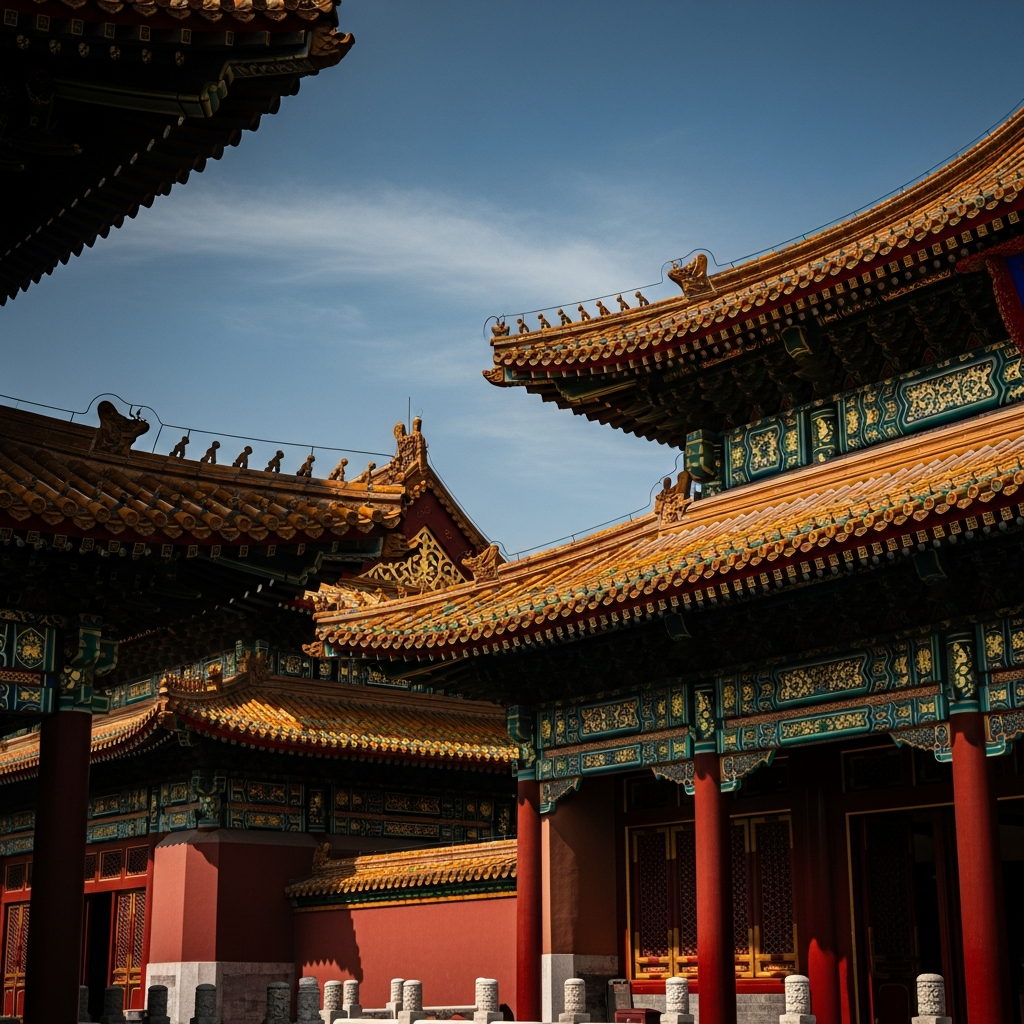
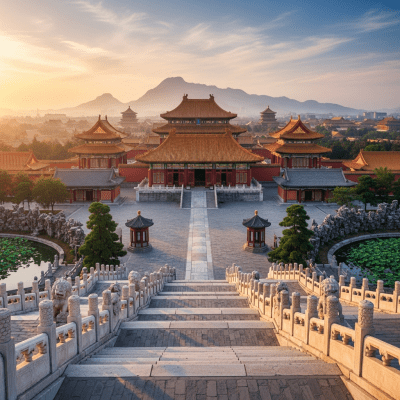
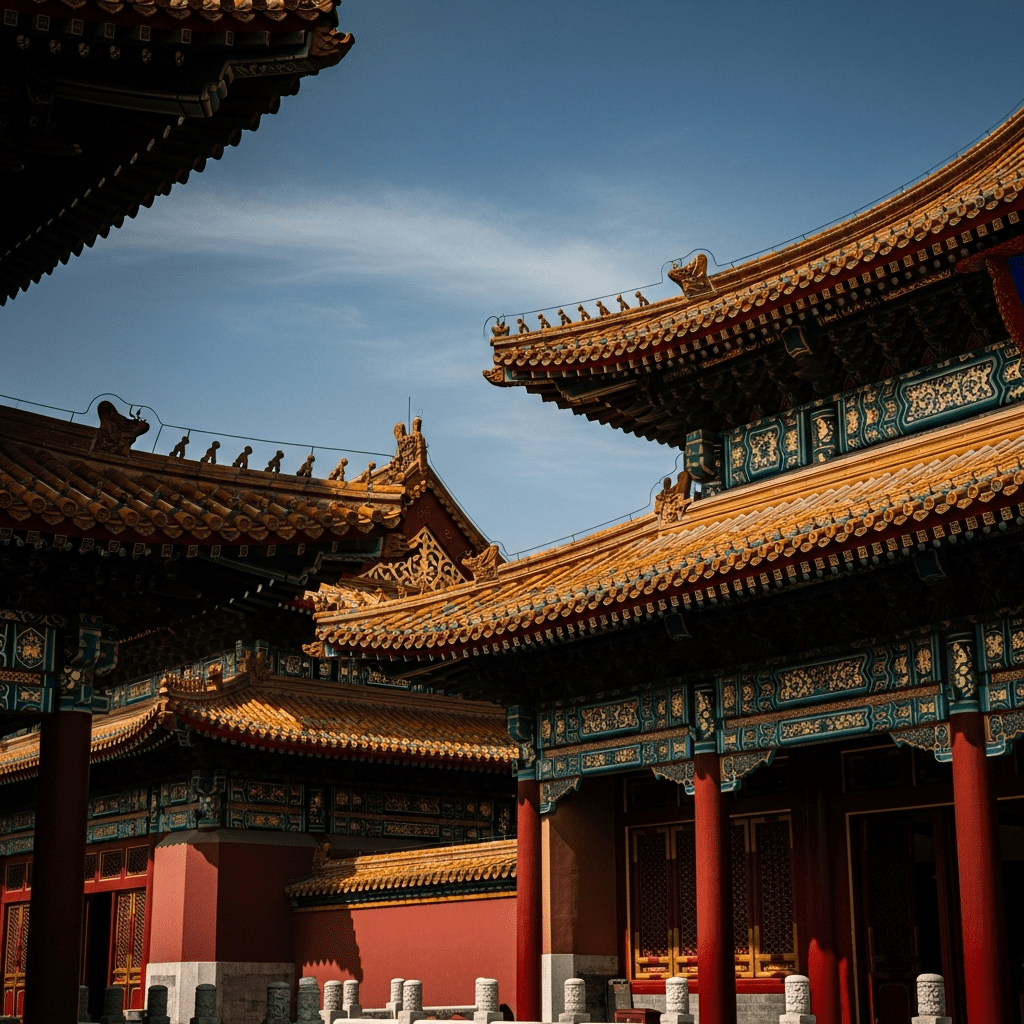
Visually, Chinese Imperial buildings are instantly recognizable by their sweeping curved roofs with upturned eaves, vibrant glazed tiles (often yellow for the emperor), and intricate wooden bracket systems (dougong). Structures are arranged in symmetrical, rectilinear layouts along a central axis, elevated on stone platforms, and adorned with dragons, phoenixes, and auspicious symbols in rich polychrome painting. The overall effect is both majestic and harmonious, reflecting cosmic order and imperial dignity.

Behavior or Usage

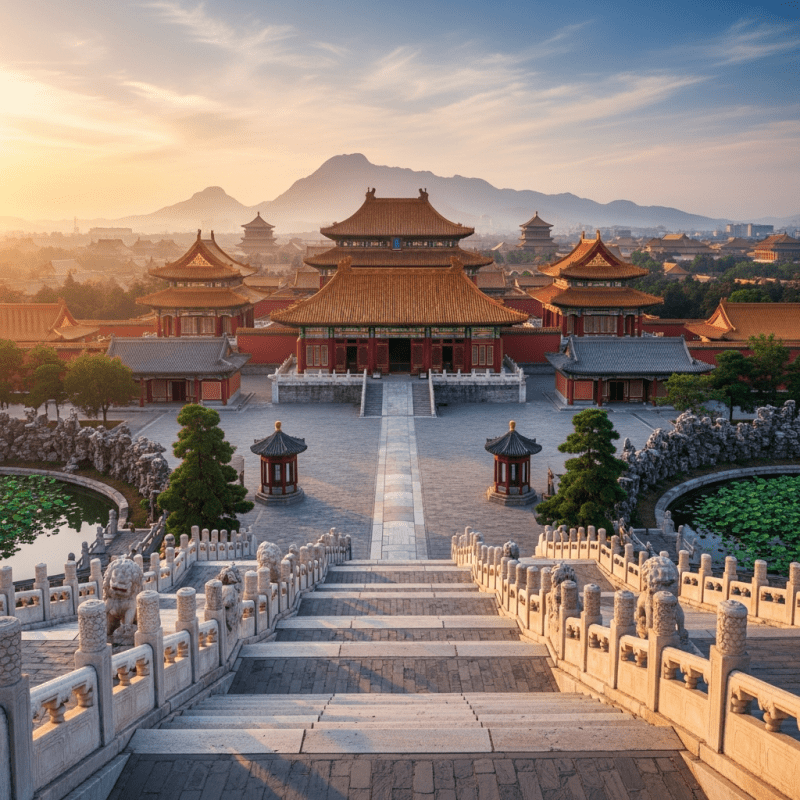
These architectural masterpieces functioned as palaces, ceremonial halls, ancestral temples, imperial gardens, city gates, and mausoleums. Their design dictated movement and ritual, reinforcing social hierarchy and imperial authority. The spatial organization not only facilitated grand processions and state ceremonies but also embodied Confucian and feng shui principles, guiding the daily lives of those within.

Merchandise & Prints

Bring this kind into your world � illustrated posters, mugs, and shirts.

Chinese Imperial Chinese Imperial Poster

Chinese Imperial Poster

Archival print, museum-grade paper

Chinese Imperial Chinese Imperial Mug

Chinese Imperial Mug

Stoneware mug, dishwasher safe

Chinese Imperial Chinese Imperial Shirt

Chinese Imperial Shirt

Soft cotton tee, unisex sizes

Attributes & Insights

Taxon-Specific Insights

🌍Cultural Significance

Chinese Imperial architecture is a powerful symbol of Chinese civilization, imperial power, and continuity. It appears prominently in art, literature, and film, and serves as a touchstone for national identity. The style’s influence extends beyond China, shaping palatial architecture in Korea, Japan, and Vietnam, and inspiring international scholarship and preservation efforts.

📌Notable Facts

  • The Forbidden City in Beijing is the world’s largest and most complete imperial palace complex.
  • Yellow glazed roof tiles were reserved exclusively for imperial buildings, signifying the emperor’s role as the Son of Heaven.
  • The intricate dougong bracket system allows for large timber structures without nails, showcasing advanced engineering.
  • Many imperial sites are UNESCO World Heritage Sites, recognized for their universal cultural value.

🗺️Period And Region

Chinese Imperial architecture flourished from the Qin Dynasty (221 BCE) to the Qing Dynasty (1912 CE), with its roots in earlier traditions. It originated in China’s imperial heartlands and radiated outward, leaving its mark on East Asia’s built environment.

Visual Variations

High quality, studio-style photograph of a single Chinese Imperial from the architecture taxonomy
A wide-angle photograph of Chinese Imperial, a type of architecture, situated in its typical environment or setting
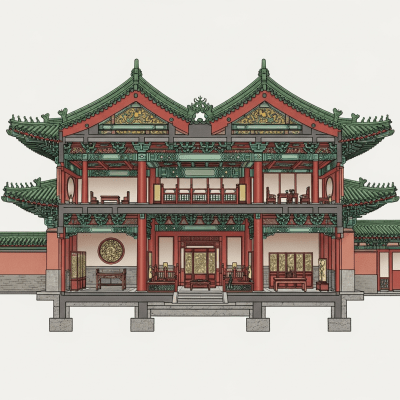
Detailed cross-sectional illustration or cutaway view showing the internal layout and key structural elements of the Chinese Imperial (architecture)
Photograph depicting Chinese Imperial, an example of architecture, in active use or cultural context—such as being inhabited, visited, or used for its intended purpose—while keeping focus on the structure itself
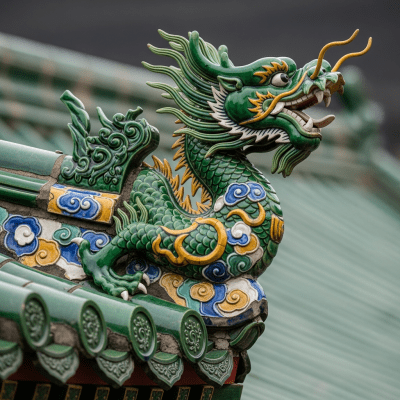
Close-up detail shot of a distinctive feature or ornamentation from the Chinese Imperial (architecture), showing material texture, craftsmanship, or unique design elements

Composition & Context

Taxon-Specific Insights

✨Key Characteristics

  • Monumental scale and axial symmetry
  • Sweeping curved roofs with upturned eaves
  • Timber frame construction with dougong brackets
  • Elaborate ornamentation and imperial motifs
  • Color symbolism (yellow, red)
  • Spatial organization reflecting Confucian hierarchy and cosmic order

🧱Materials And Techniques

Typical materials include massive timber frames, brick and stone for platforms and walls, and glazed ceramic roof tiles—yellow reserved for imperial use. Construction techniques feature the ingenious dougong bracket system, raised stone platforms, and rectilinear, axial layouts, all assembled with masterful craftsmanship and without nails.

🏛️Notable Works

  • The Forbidden City (Beijing): The largest imperial palace complex, UNESCO World Heritage Site.
  • Temple of Heaven (Beijing): Ceremonial site for imperial rites.
  • Summer Palace (Beijing): Imperial garden and retreat.
  • Ming Tombs (Beijing region): Mausoleums of Ming emperors.
  • Imperial City of Xi'an and Old Summer Palace (Yuanmingyuan): Other significant imperial sites.

👷‍♂️Notable Practitioners

While individual architects were rarely recorded, construction was overseen by imperial court officials and master craftsmen, whose expertise and artistry shaped the enduring legacy of Chinese Imperial architecture.

🔗Influences And Related Styles

Chinese Imperial architecture draws from ancient timber construction traditions and is deeply influenced by Confucian, Daoist, and Buddhist philosophies. It shares lineage with Zhou and Han dynasty precedents and relates to vernacular Chinese courtyard houses, Buddhist temple architecture, and East Asian palatial styles. Later periods, especially the Qing Dynasty, saw hybridization with Manchu, Mongol, and Western elements.

🌍Regional Variants

Local adaptations of Chinese Imperial architecture are found in Korea (e.g., Gyeongbokgung Palace), Japan (Nara and Heian palaces), and Vietnam, each incorporating indigenous materials, motifs, and spatial arrangements while retaining the core principles of symmetry and hierarchy.

🏅Heritage And Recognition

Major imperial sites such as the Forbidden City, Temple of Heaven, Summer Palace, and Ming Tombs are UNESCO World Heritage Sites, celebrated for their outstanding universal value. These monuments are protected by national and international preservation efforts, ensuring the survival and appreciation of Chinese Imperial architectural traditions for future generations.

Faq

  • What buildings best represent Chinese Imperial architecture?
    The Forbidden City, Temple of Heaven, and Summer Palace in Beijing are iconic examples.
  • Why are roofs in imperial buildings often yellow?
    Yellow symbolizes the emperor and the center of the cosmos, reserved for imperial use.
  • Did Chinese Imperial architecture influence other countries?
    Yes, its principles and forms shaped palace architecture in Korea, Japan, and Vietnam.