Origin Story

Emerging from the crossroads of ancient Rome and early Christianity, Byzantine architecture arose with the founding of Constantinople in 330 CE. As the capital of the Eastern Roman Empire, the city became the epicenter for a new architectural language that fused classical engineering with Christian symbolism. Over more than a millennium, Byzantine builders developed distinct forms and techniques, responding to imperial ambition, religious devotion, and the diverse cultures of the empire and its neighbors.

Classification

Byzantine architecture belongs to the Late Antique and Early Christian school, forming a bridge between the classical traditions of Rome and the medieval styles of Christendom. Its core style—Byzantine—is further divided into substyles such as Early, Middle, and Late Byzantine, as well as regional adaptations like Macedonian Renaissance and Italo-Byzantine. It stands as a foundational influence on later architectural movements across Europe, Russia, and the Islamic world.

Appearance or Form

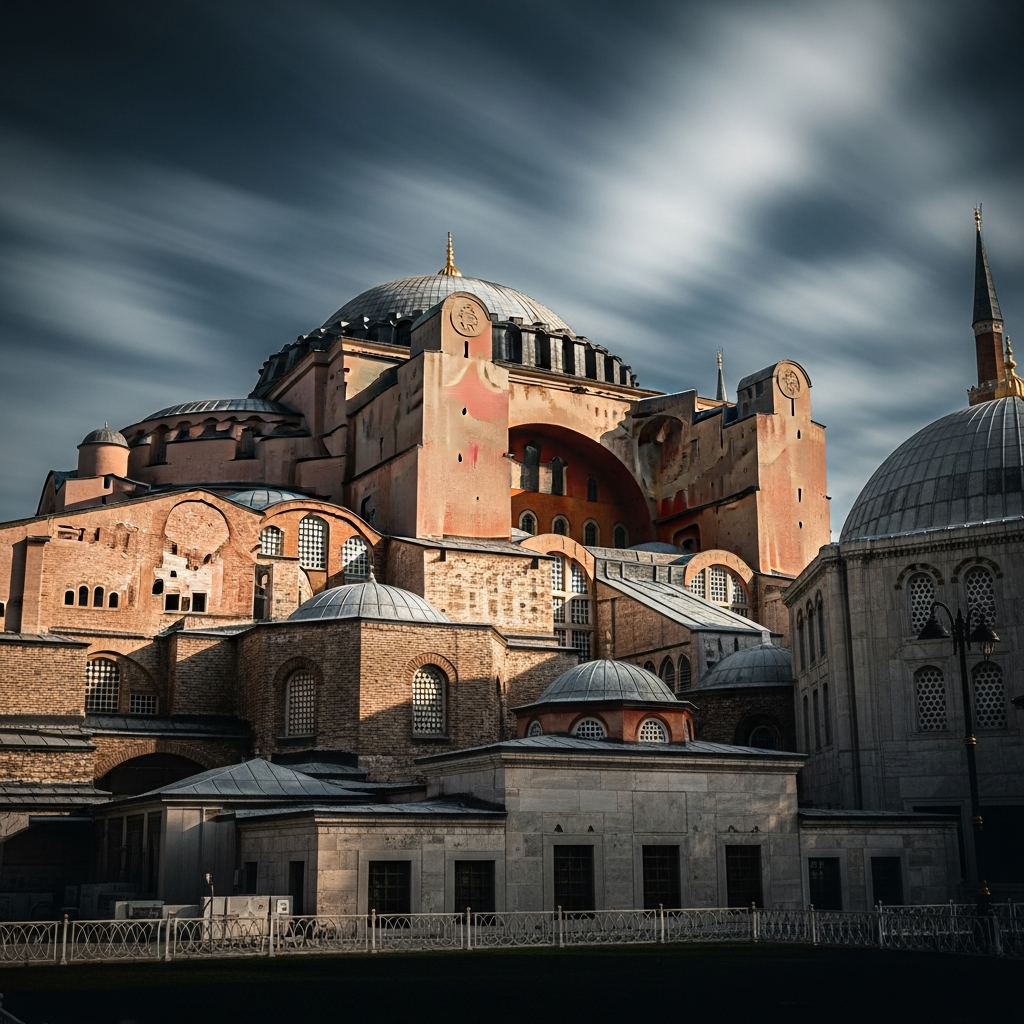
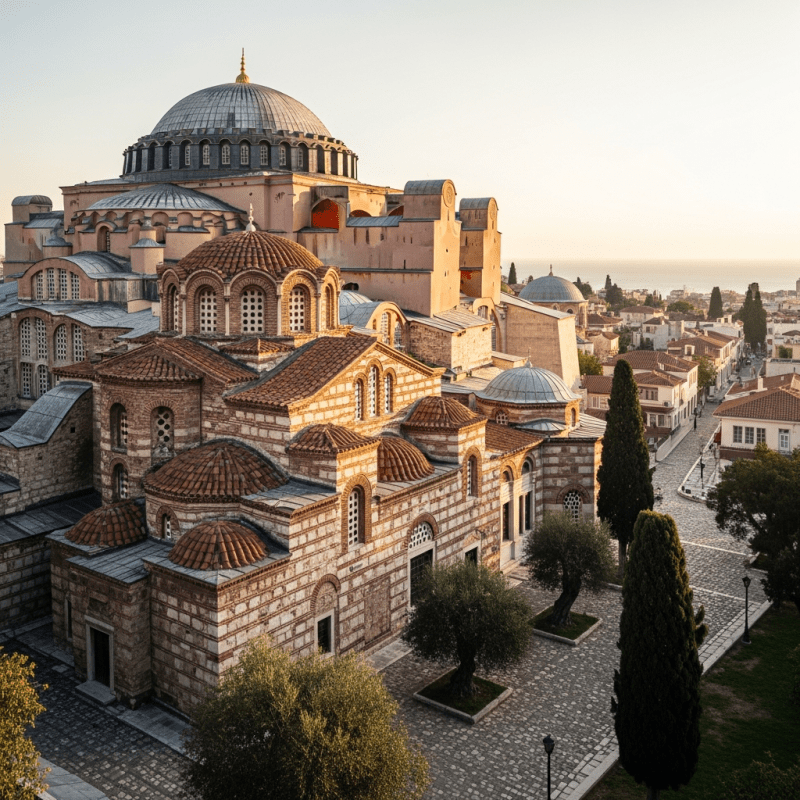
Visually, Byzantine buildings are defined by their soaring domes, especially the revolutionary pendentive dome that creates vast, open interiors bathed in light. Interiors shimmer with mosaics set against gold backgrounds, depicting sacred figures and intricate geometric or floral patterns. Marble revetments, ornate capitals, and restrained exteriors further distinguish the style. The overall effect is one of transcendence and order, designed to evoke divine presence and imperial grandeur.

Behavior or Usage

Byzantine architecture primarily served ecclesiastical functions, with churches and baptisteries at its heart, but also included palaces, fortifications, and civic structures. These buildings were designed for communal worship, imperial ceremony, and urban defense. The spatial arrangements—centralized plans, galleries, and narthexes—facilitated liturgical processions and created immersive, contemplative environments for the faithful.

Merchandise & Prints

Bring this kind into your world � illustrated posters, mugs, and shirts.

Byzantine Byzantine Poster

Byzantine Poster

Archival print, museum-grade paper

Byzantine Byzantine Mug

Byzantine Mug

Stoneware mug, dishwasher safe

Byzantine Byzantine Shirt

Byzantine Shirt

Soft cotton tee, unisex sizes

Attributes & Insights

Taxon-Specific Insights

🌍Cultural Significance

As the architectural expression of the Byzantine Empire, this style became a visual language of Christian theology and imperial authority. Its mosaics and spatial forms influenced religious art, iconography, and ritual across Orthodox Christianity and beyond. The legacy of Byzantine architecture is visible in the domes of Russian churches, the ornamentation of Venetian basilicas, and the structural innovations of Ottoman mosques, underscoring its enduring cultural resonance.

📌Notable Facts

  • Hagia Sophia’s dome was a technical marvel, appearing to float above the nave and inspiring centuries of architects.
  • Byzantine mosaics used real gold leaf, creating luminous interiors that changed with the light.
  • The cross-in-square church plan became a template for Orthodox architecture across Eastern Europe and Russia.
  • Byzantine techniques, like pendentives and squinches, enabled the construction of massive domes on square bases.
  • Many Byzantine monuments are UNESCO World Heritage Sites, recognized for their global cultural importance.

🗺️Period And Region

Byzantine architecture flourished from the foundation of Constantinople in 330 CE until the city’s fall in 1453 CE, with regional survivals and revivals continuing into the modern era. Its heartland was the Eastern Roman Empire, but its influence spread to Greece, the Balkans, Russia, the Caucasus, Italy, the Levant, and even Western Europe through Venice and Slavic regions.

Visual Variations

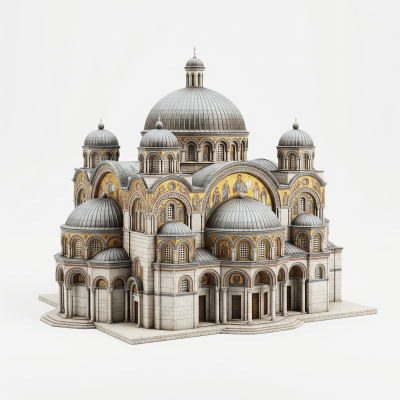
High quality, studio-style photograph of a single Byzantine from the architecture taxonomy
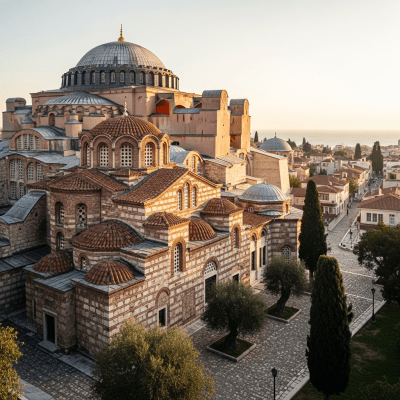
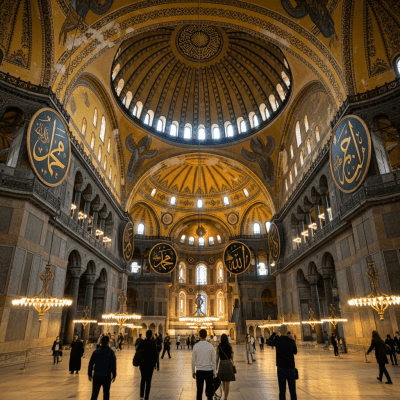
A wide-angle photograph of Byzantine, a type of architecture, situated in its typical environment or setting
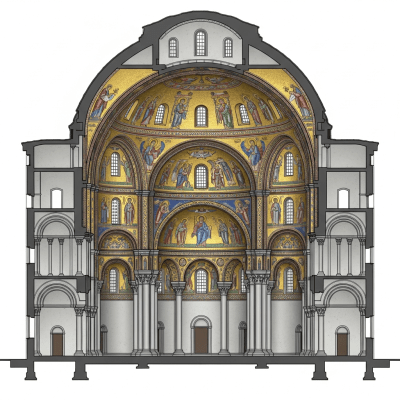
Detailed cross-sectional illustration or cutaway view showing the internal layout and key structural elements of the Byzantine (architecture)
Photograph depicting Byzantine, an example of architecture, in active use or cultural context—such as being inhabited, visited, or used for its intended purpose—while keeping focus on the structure itself
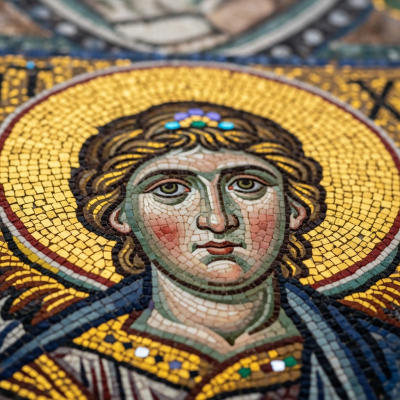
Close-up detail shot of a distinctive feature or ornamentation from the Byzantine (architecture), showing material texture, craftsmanship, or unique design elements

Composition & Context

Taxon-Specific Insights

✨Key Characteristics

  • Innovative domes, especially the pendentive dome
  • Centralized and cross-in-square church plans
  • Rich interior decoration with gold mosaics
  • Restrained exterior ornamentation
  • Iconographic and geometric motifs
  • Basket and impost capitals
  • Emphasis on light and transcendence
  • Complex spatial arrangements with galleries and narthexes

🧱Materials And Techniques

Byzantine builders used brick and mortar for walls, often anchored by stone foundations. Interiors featured marble revetments and floors, while mosaics incorporated gold, glass, and colored stone. Construction techniques included the use of pendentives and squinches to support domes, vaults, and semi-domes, creating dynamic and spacious interiors. Later periods saw the addition of frescoes and more elaborate spatial arrangements.

🏛️Notable Works

  • Hagia Sophia, Istanbul: The iconic masterpiece of Byzantine architecture.
  • Church of San Vitale, Ravenna: Celebrated for its octagonal plan and mosaics.
  • Hosios Loukas Monastery, Greece: Exemplifies the cross-in-square plan of the Middle Byzantine period.
  • St. Mark’s Basilica, Venice: A Western adaptation with strong Byzantine influence.
  • Monastery of Daphni, Chora Church, and Nea Moni: Other UNESCO-listed exemplars of the style.

👷‍♂️Notable Practitioners

  • Anthemios of Tralles: Co-designer of Hagia Sophia, renowned for his engineering prowess.
  • Isidoros of Miletus: Co-designer of Hagia Sophia, contributed to the development of the pendentive dome.

🔗Influences And Related Styles

Byzantine architecture drew upon Roman Imperial and Early Christian traditions, especially in its use of basilicas and vaulting. It profoundly influenced Romanesque architecture in Western Europe, Islamic architecture (notably Ottoman domes), Russian Orthodox churches, and Armenian and Georgian medieval styles. Later revivals, such as Neo-Byzantine, and syncretic forms in Venice and Slavic regions, attest to its lasting impact.

🌍Regional Variants

Distinct regional variants include the Macedonian Renaissance, Komnenian, and Palaiologan styles, each reflecting local artistic and structural innovations. In southern Italy, Italo-Byzantine architecture blended Byzantine forms with Western elements, while the Neo-Byzantine revival of the 19th–20th centuries reinterpreted the tradition for modern contexts. Russian, Slavic, and Venetian adaptations further enriched the style’s diversity.

🏅Heritage And Recognition

Many Byzantine monuments are protected as UNESCO World Heritage Sites, including Hagia Sophia, San Vitale, Hosios Loukas, Monastery of Daphni, and Nea Moni. The style is recognized by leading architectural authorities such as the International Union of Architects and Getty AAT. Active conservation efforts safeguard these sites due to their outstanding cultural and historical significance.

Faq

  • What is the most famous example of Byzantine architecture?
    Hagia Sophia in Istanbul is the archetype, renowned for its massive dome and stunning mosaics.
  • Where did Byzantine architecture originate?
    It originated in the Eastern Roman Empire, centered on Constantinople (modern Istanbul, Turkey).
  • What are the key features of Byzantine buildings?
    Innovative domes, centralized church plans, lavish mosaics, and restrained exteriors are hallmarks of the style.