
Baroque
Baroque architecture is a lavish and theatrical style that flourished in 17th-century Europe, renowned for its dramatic spatial effects, bold forms, and exuberant ornamentation.
Baroque architecture is a lavish and theatrical style that flourished in 17th-century Europe, renowned for its dramatic spatial effects, bold forms, and exuberant ornamentation.
Baroque architecture originated in late 16th-century Rome, Italy, emerging as a powerful visual language for the Catholic Church during the Counter-Reformation. Its development was closely tied to the ambitions of religious and royal patrons who sought to inspire awe and reinforce authority through monumental buildings. The style quickly spread across Europe and into colonial territories, adapting to local cultures and materials as it evolved.
Baroque belongs to the Western/European school of architecture and is classified as a distinct style within this tradition. It encompasses several substyles, including Early Baroque, High Baroque, and Late Baroque (often referred to as Rococo), each reflecting shifts in taste and technique over its period of prominence.
Baroque buildings captivate with their dynamic compositions—curved and undulating facades, grand staircases, and sweeping oval or elliptical plans. Monumental domes, broken pediments, and Solomonic (spiral) columns are signature features. Interiors dazzle with gilded wood, polychrome decoration, frescoed ceilings, and sculptural groupings, all orchestrated to create dramatic contrasts of light and shadow (chiaroscuro) and a sense of movement and emotional intensity.
Baroque architecture was designed to impress and persuade. Its grand churches, palaces, urban squares, and civic buildings served as stages for religious ceremonies, royal pageantry, and public gatherings. The style’s theatricality and spatial drama were intended to evoke wonder, reinforce social hierarchies, and communicate the power of its patrons.
Bring this kind into your world illustrated posters, mugs, and shirts.

Archival print, museum-grade paper
Buy Poster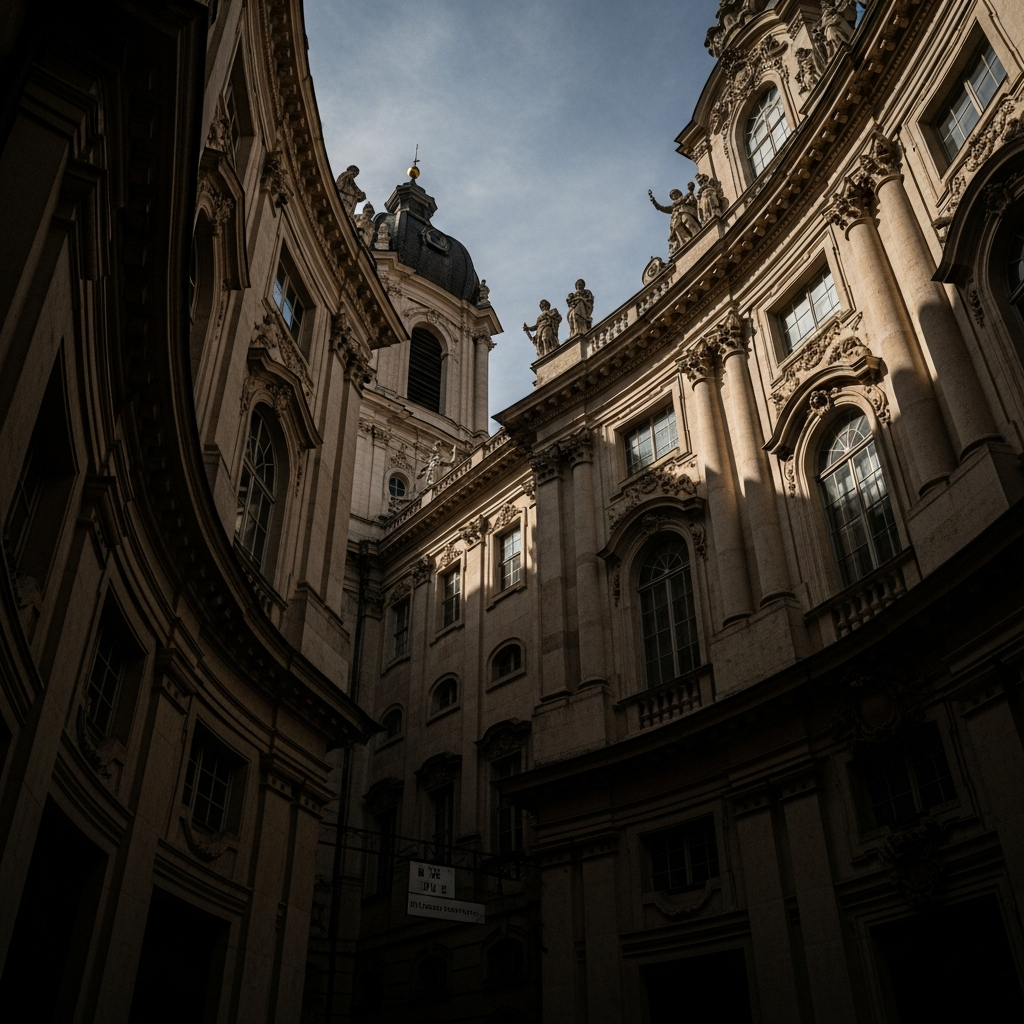
Stoneware mug, dishwasher safe
Buy Mug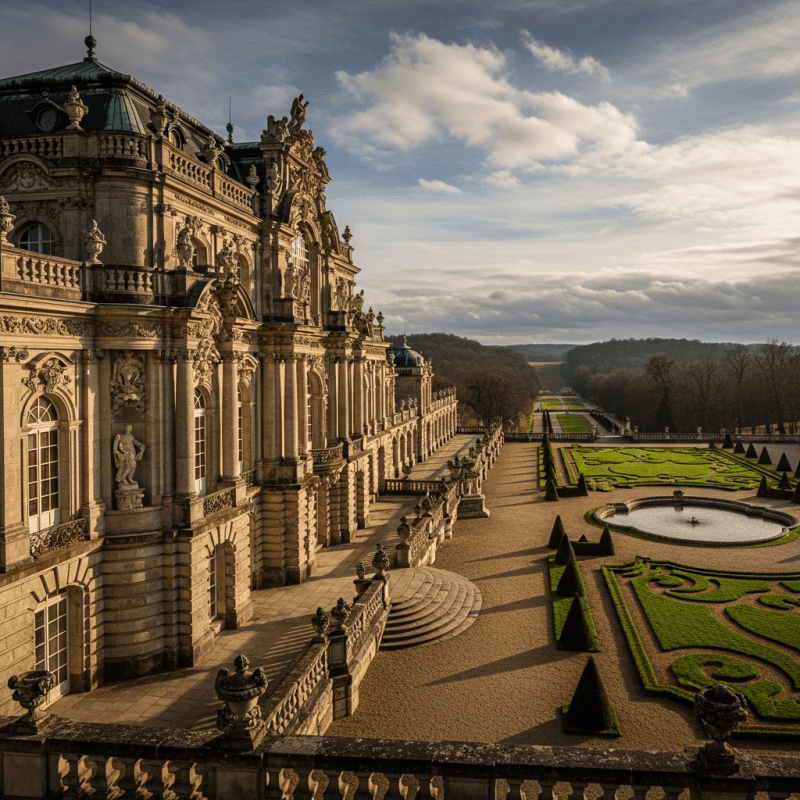
Soft cotton tee, unisex sizes
Buy ShirtBaroque architecture is deeply intertwined with the cultural and political currents of its era. It became a visual emblem of the Catholic Church’s resurgence and the grandeur of absolute monarchies. The style’s influence extended far beyond Europe, shaping colonial cities in Latin America and the Philippines. Today, Baroque buildings are celebrated as masterpieces of artistic synthesis, blending architecture, sculpture, and painting into immersive environments that continue to inspire awe.
Baroque architecture flourished from circa 1580 to 1750 CE, originating in Rome, Italy. Its influence radiated across France, Spain, Portugal, Central and Eastern Europe, Russia, Latin America, and the Philippines, with regional adaptations extending into the late 18th century.



Baroque architects employed stone, stucco, marble, gilded wood, and polychrome decoration, often enhanced with frescoes and painted ceilings. Advanced engineering enabled the construction of large domes and vaults, while the use of perspective and optical illusions heightened spatial drama and visual impact.
Baroque architecture drew inspiration from Renaissance and Mannerist traditions, shaped by the religious aims of the Counter-Reformation. It evolved into Rococo, a lighter and more playful variant, and later gave way to Neoclassicism, which reacted against Baroque exuberance. Regional elaborations such as Churrigueresque in Spain and Colonial Baroque in Latin America reflect its adaptability and enduring legacy.
Baroque architecture is honored globally, with many of its masterpieces designated as UNESCO World Heritage Sites, including the Historic Centre of Rome, Palace and Park of Versailles, Historic Centre of Salvador de Bahia, and the Churches of the Philippines. Ongoing preservation and restoration efforts underscore its enduring cultural and historical significance.