
Art Nouveau
Art Nouveau is an influential architectural style from the late 19th and early 20th centuries, celebrated for its organic forms, flowing lines, and nature-inspired ornamentation that seamlessly unite structure and decorative arts.
Art Nouveau is an influential architectural style from the late 19th and early 20th centuries, celebrated for its organic forms, flowing lines, and nature-inspired ornamentation that seamlessly unite structure and decorative arts.
Art Nouveau originated in Belgium and France around 1890, emerging as a radical response to the historicist and academic traditions that dominated European architecture. Inspired by the desire to create a new, modern aesthetic, architects and designers drew from nature, integrating botanical motifs and curvilinear forms. The movement quickly spread across Europe—especially to Germany, Austria, Spain, Italy, Russia, and the UK—and later to North America, adapting to local cultures and artistic sensibilities.
Art Nouveau belongs to the Modern Architecture school, representing one of the earliest modernist styles. It is distinguished from earlier revivalist traditions by its rejection of classical and historic motifs, instead favoring innovation and unity between art and craft. Within its broad umbrella, regional substyles such as Jugendstil, Secession, Modernisme, Stile Liberty, and Tiffany Style reflect local adaptations and interpretations.
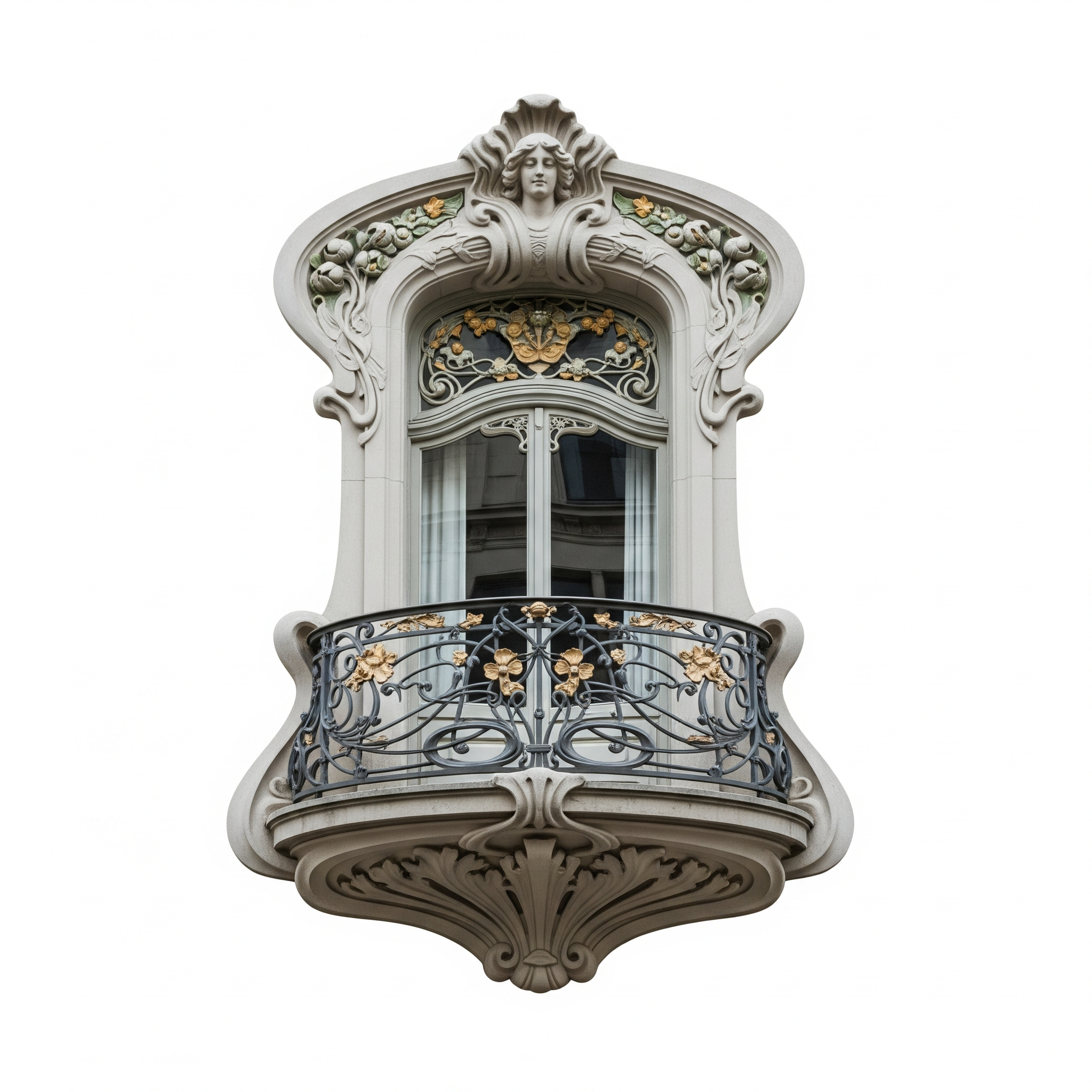
Art Nouveau buildings captivate the senses with their sinuous, asymmetrical lines and whiplash curves. Facades often feature stylized botanical motifs—vines, flowers, dragonflies, and peacocks—rendered in ironwork, stained glass, and mosaic. Structural elements like columns and beams are frequently exposed and transformed into decorative features, creating a sense of movement and organic unity. Interiors are equally lush, with flowing forms and intricate details that evoke the beauty of the natural world.
Art Nouveau architecture was applied to a wide range of building types, including urban townhouses, apartment blocks, commercial spaces, civic buildings, and lavish interiors. Its emphasis on Gesamtkunstwerk—the total work of art—meant that architects often designed every aspect of a project, from the facade to the furnishings and lighting. These spaces were intended to immerse occupants in a harmonious environment where art and function were inseparable.
Bring this kind into your world illustrated posters, mugs, and shirts.
Archival print, museum-grade paper
Buy Poster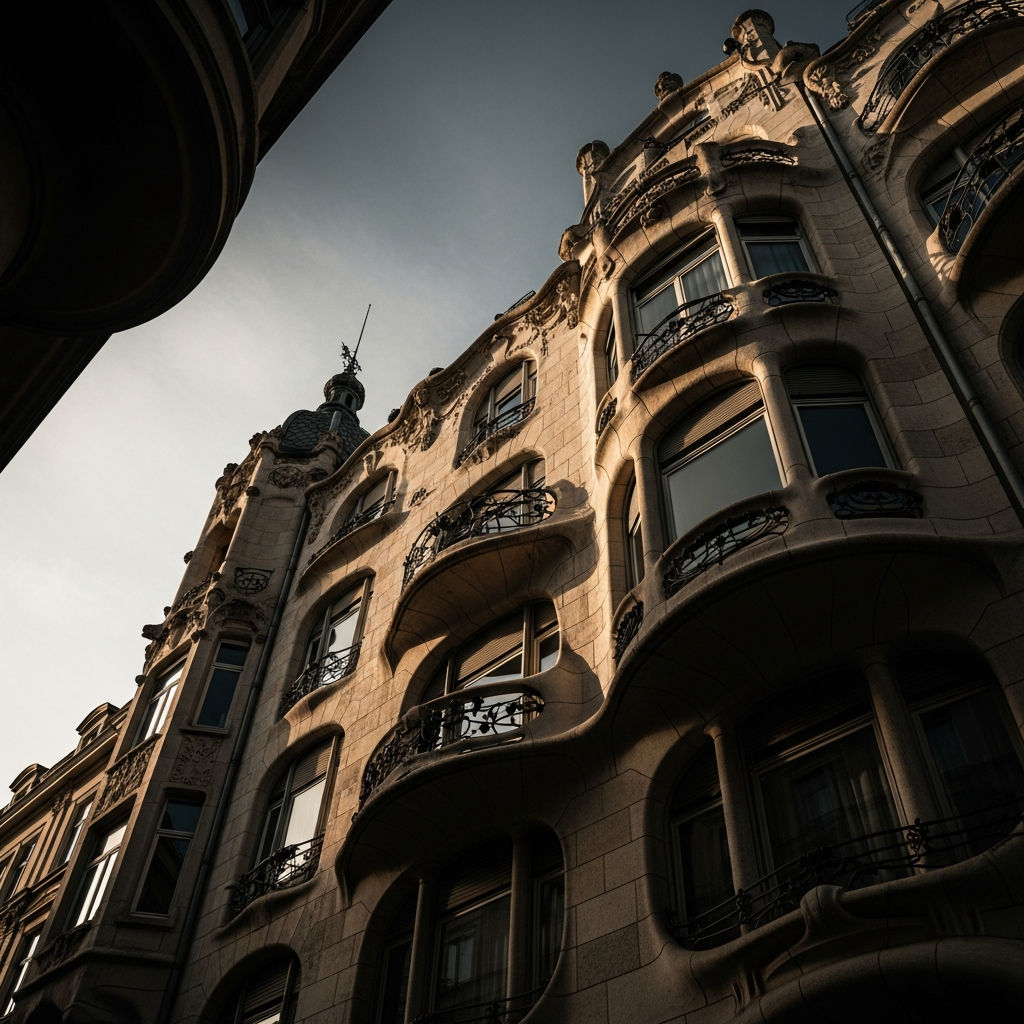
Stoneware mug, dishwasher safe
Buy Mug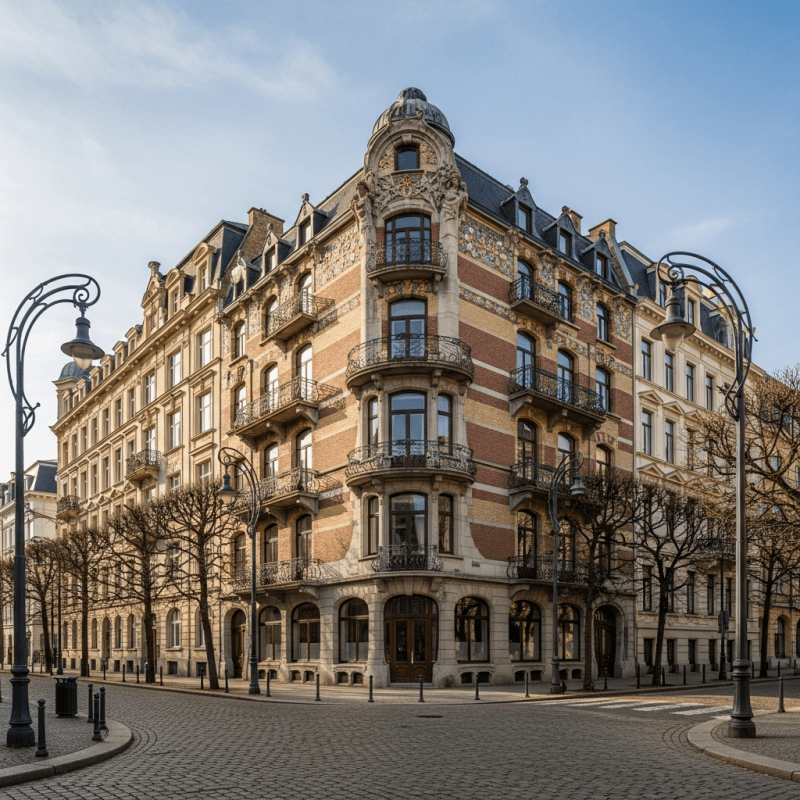
Soft cotton tee, unisex sizes
Buy ShirtArt Nouveau marked a pivotal moment in architectural history, bridging the gap between 19th-century revivalism and the emergence of 20th-century modernism. Its influence extended beyond architecture to graphic design, furniture, glasswork, and textiles, shaping the visual culture of the Belle Époque. Today, Art Nouveau is celebrated for its artistic ambition, craftsmanship, and its role in redefining the relationship between nature, art, and the built environment.
Art Nouveau flourished from circa 1890 to 1914, originating in Belgium and France before spreading rapidly across Europe and North America. Its reach extended to Germany, Austria, Spain, Italy, Russia, the United Kingdom, and the United States, with each region developing distinctive local variants.
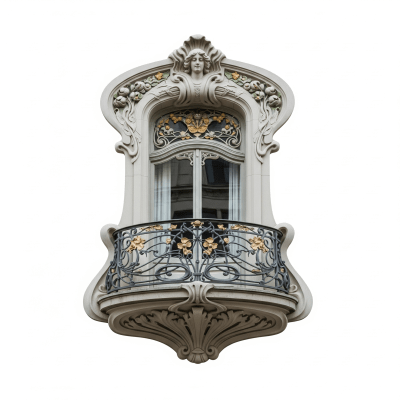
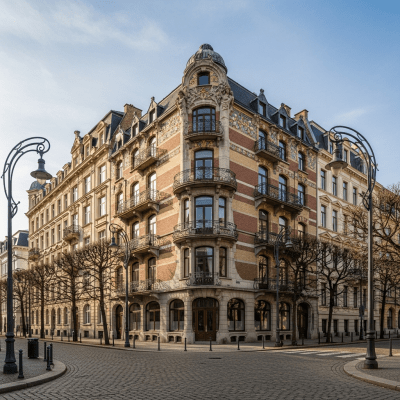

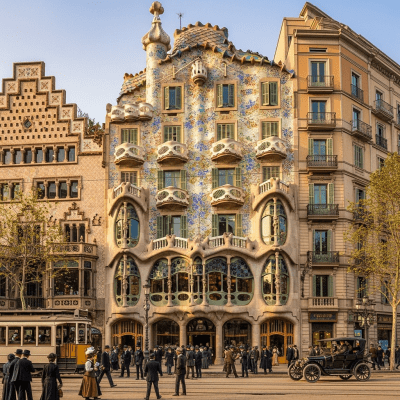
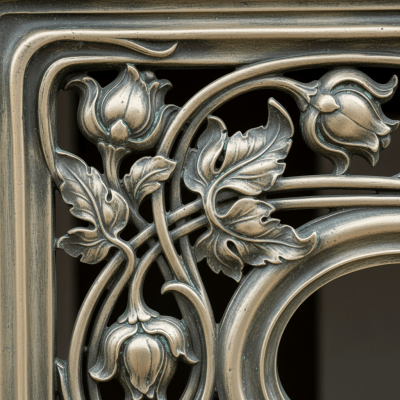
Art Nouveau architects pioneered the use of iron, glass, ceramics, polychrome tiles, and reinforced concrete, often exposing these materials as decorative elements. Techniques included elaborate wrought ironwork, stained glass panels, mosaic facades, and sculptural ornamentation. The innovative application of these materials enabled the creation of fluid forms and intricate details that define the style.
Art Nouveau drew inspiration from the Arts and Crafts Movement, Pre-Raphaelite art, and Japanese prints (Japonisme). It paved the way for Early Modernism and directly influenced successor styles such as Art Deco, Vienna Secession, and Expressionism. The movement’s emphasis on craftsmanship and artistic unity continues to resonate in contemporary design.
Art Nouveau’s legacy is safeguarded through numerous heritage listings and preservation efforts. UNESCO recognizes the Works of Antoni Gaudí in Barcelona, Stoclet Palace in Brussels, and the Art Nouveau district in Riga as World Heritage Sites. Many buildings are protected by national registers, and cities like Brussels and Barcelona have dedicated conservation programs to maintain and celebrate their Art Nouveau heritage.