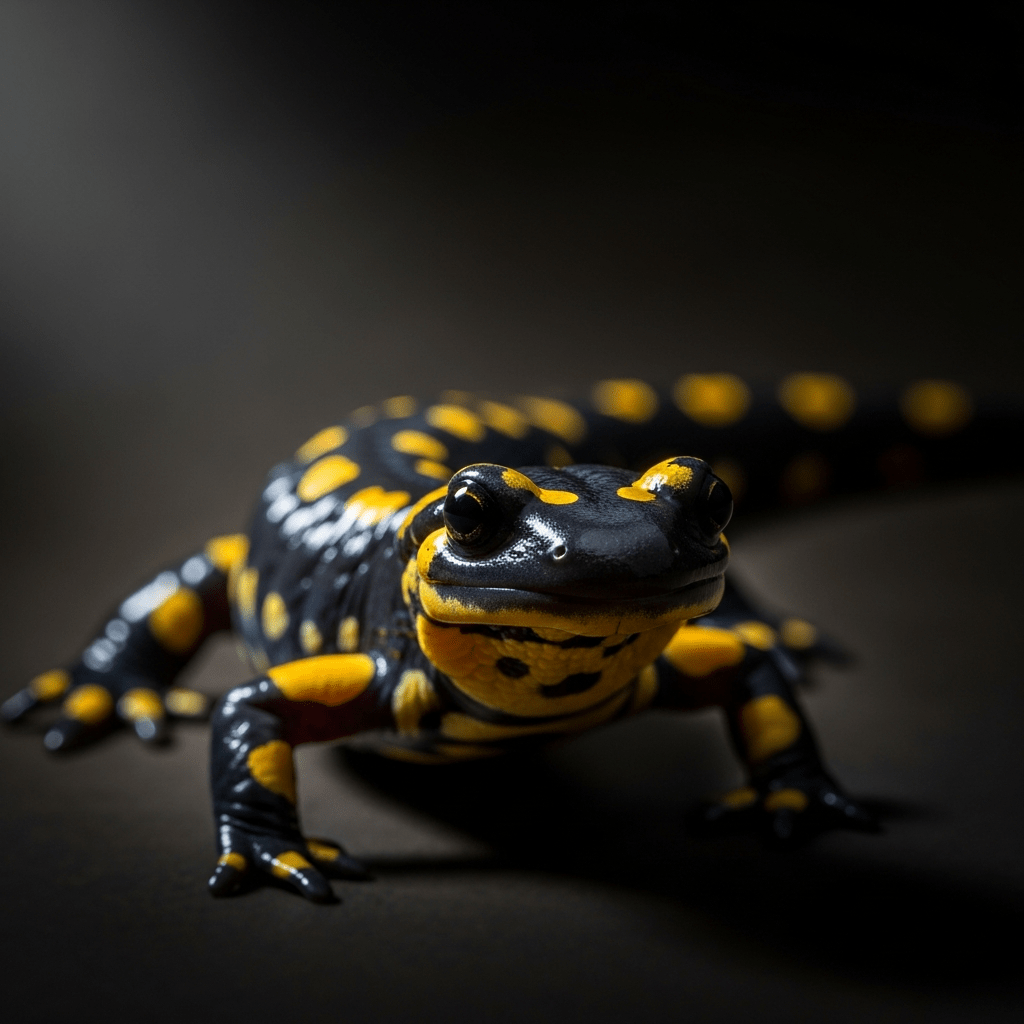
Tiger Salamander
The Tiger Salamander (Ambystoma tigrinum) is a large, boldly patterned amphibian native to North America, renowned for its adaptability and complex life cycle.
The Tiger Salamander (Ambystoma tigrinum) is a large, boldly patterned amphibian native to North America, renowned for its adaptability and complex life cycle.
First described by Green in 1825, the Tiger Salamander traces its roots to the family Ambystomatidae, a lineage of mole salamanders indigenous to North America. Its native range spans the United States, southern Canada, and northern Mexico, with several subspecies and regional variants reflecting its evolutionary history and broad distribution.
The Tiger Salamander belongs to the class Amphibia, order Caudata (salamanders and newts), and family Ambystomatidae. Its scientific name is Ambystoma tigrinum, and it is part of a group known for terrestrial adults and aquatic larvae. This species is a key representative of mole salamanders, which are distinguished by their burrowing habits and robust forms.
Adult Tiger Salamanders are robust and typically measure 15–25 cm in length. They feature broad heads, prominent costal grooves, and striking yellow, olive, or cream blotches or bars set against a dark brown or black background. Patterning varies by region and subspecies. Larvae are aquatic, sporting external gills and streamlined bodies, while adults are adapted for burrowing with strong limbs and a preference for loose, moist soils.
Tiger Salamanders are primarily nocturnal and fossorial, spending much of their lives burrowed underground. They emerge during wet conditions to breed in temporary or permanent water bodies. Their adaptability allows them to thrive in diverse habitats, and they play a crucial role as both predator and prey in local food webs. While not commonly used by humans, they are valued in scientific research and occasionally kept as pets.
Bring this kind into your world illustrated posters, mugs, and shirts.
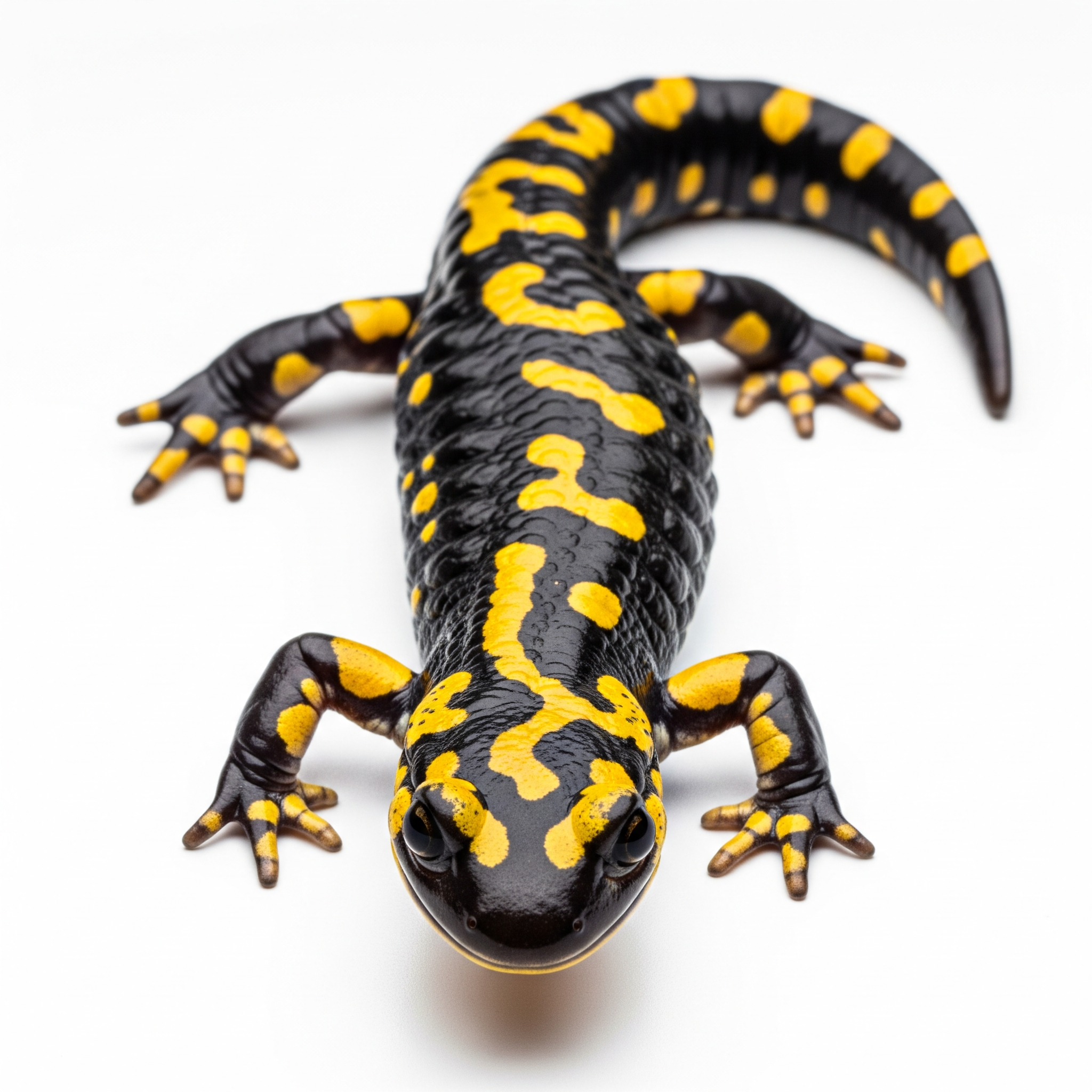
Archival print, museum-grade paper
Buy Poster
Stoneware mug, dishwasher safe
Buy Mug
Soft cotton tee, unisex sizes
Buy ShirtThough not as prominent in folklore as frogs or toads, Tiger Salamanders hold symbolic value as indicators of environmental health and resilience. Their striking appearance and secretive habits have inspired curiosity in naturalists and educators, making them a subject of fascination in field guides and classroom studies. In some regions, they are emblematic of healthy wetlands and prairies.
Tiger Salamanders are widely distributed throughout the United States, southern Canada, and northern Mexico. They occupy diverse habitats including grasslands, forests, agricultural areas, and prairies, but always require access to loose, moist soils for burrowing and water bodies for breeding. Their adaptability allows them to persist in both natural and modified landscapes.
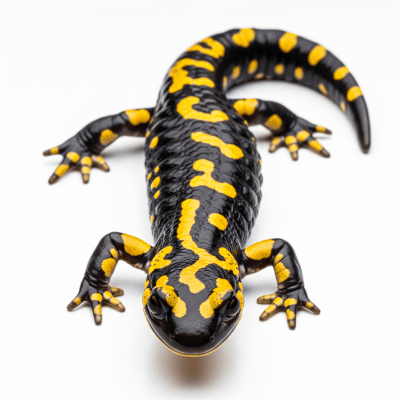
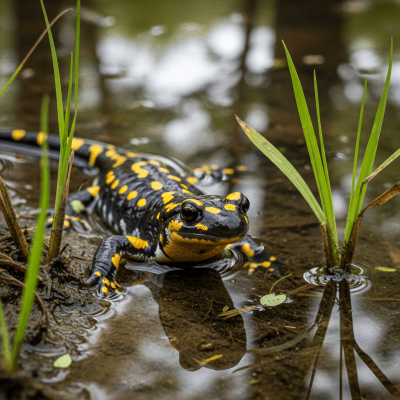

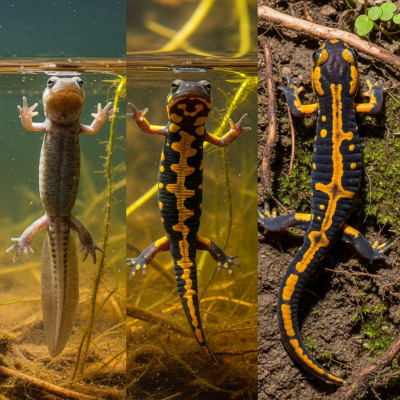

The Tiger Salamander has a biphasic life cycle: eggs are laid in water, where aquatic larvae with external gills hatch and grow. After metamorphosis, juveniles migrate to land and become terrestrial adults. Remarkably, some populations exhibit neoteny, retaining larval traits and remaining aquatic throughout life. Breeding typically occurs in spring, triggered by rainfall and seasonal water availability.
Carnivorous by nature, Tiger Salamanders feed on insects, worms, and small invertebrates, occasionally consuming small vertebrates. Larvae focus on aquatic invertebrates and other larvae. Their nocturnal foraging and opportunistic feeding habits help regulate populations of soil and water-dwelling organisms.
Tiger Salamanders are integral to local ecosystems, serving as both predator and prey. They help control insect and invertebrate populations and are a food source for birds, mammals, and larger reptiles. Their sensitivity to environmental changes makes them valuable bioindicators for ecosystem health.
While Tiger Salamanders remain widespread and locally abundant, they are vulnerable to habitat loss, water pollution, and fragmentation. Conservation efforts focus on protecting breeding sites and maintaining healthy wetlands. Their status is monitored by organizations such as the IUCN, which highlights the importance of safeguarding their habitats.
Tiger Salamanders are highly adaptable to environmental fluctuations but are sensitive to habitat destruction, water pollution, and changes in land use. Their resilience is evident in their ability to inhabit diverse environments, yet populations can decline rapidly if breeding sites are disturbed or contaminated.
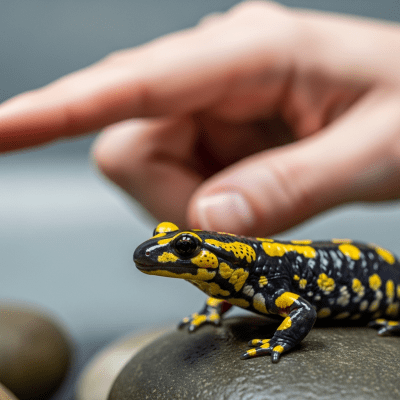
Direct human use of Tiger Salamanders is limited; they are not used for food and have little market value. However, they are occasionally kept as pets and play a significant role in scientific research, particularly in studies of development and regeneration. Their presence in educational settings helps foster appreciation for amphibian diversity and conservation.
Tiger Salamanders are not considered invasive in their native range and have no notable regulatory restrictions. However, care should be taken to avoid introducing them to non-native habitats, as this could disrupt local ecosystems.