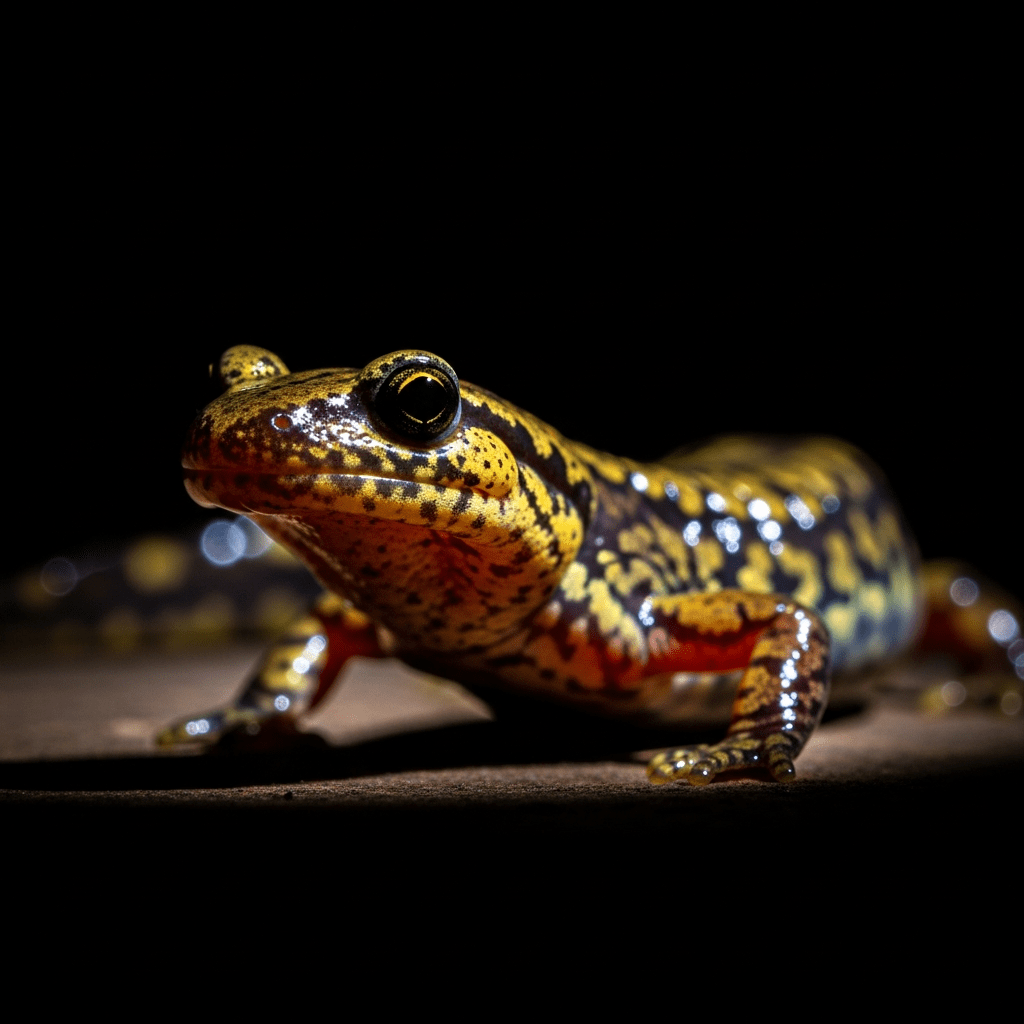
Siberian Salamander
The Siberian Salamander (Salamandrella keyserlingii) is a cold-adapted amphibian renowned for its extraordinary ability to survive freezing temperatures, making it a unique inhabitant of northern Asia's boreal forests.
The Siberian Salamander (Salamandrella keyserlingii) is a cold-adapted amphibian renowned for its extraordinary ability to survive freezing temperatures, making it a unique inhabitant of northern Asia's boreal forests.
Native to the vast reaches of northern Asia—including Siberia, the Russian Far East, northeastern China, Mongolia, and northern Korea—the Siberian Salamander was first formally described by Benedykt Dybowski in 1870. Its evolutionary lineage traces back to the family Hynobiidae, and it has remained distinct without recognized subspecies or hybridization. The species' emergence in these frigid environments reflects a remarkable adaptation to seasonal extremes, thriving where few amphibians can.
Belonging to the class Amphibia, the Siberian Salamander is classified within the order Caudata (Urodela), family Hynobiidae, and genus Salamandrella. As a representative of Asian salamanders, it shares its order with other salamanders and newts, yet stands out for its cold tolerance and terrestrial habits. Its scientific name, Salamandrella keyserlingii, reflects its formal description and taxonomic authority.
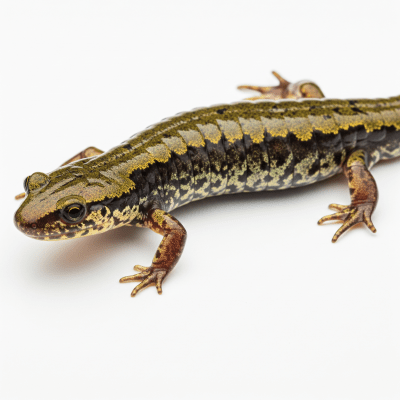
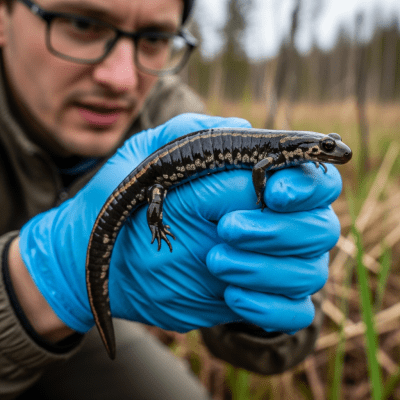
The Siberian Salamander is medium-sized, typically measuring 7–13 cm in length. Its body is slender and elongated, covered in smooth, moist skin that ranges from brown to olive-grey, with lighter shades on the underside. Short, robust limbs support terrestrial movement, and its overall form is both delicate and resilient—built for life on land but closely tied to water during breeding seasons.
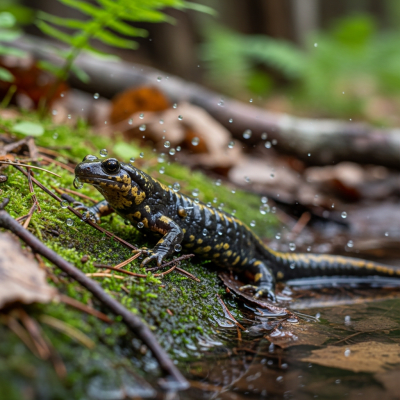
This salamander leads a largely terrestrial life, venturing to shallow water bodies only in spring for breeding. It is a solitary predator of small invertebrates, actively foraging in moist woodlands and taiga. Its most notable behavior is its ability to survive being frozen solid, remaining viable after thawing—a feat unmatched among amphibians. The species is not used for food, trade, or agriculture, but is highly valued in scientific research for its freeze tolerance and adaptation strategies.
Bring this kind into your world illustrated posters, mugs, and shirts.
Archival print, museum-grade paper
Buy Poster
Stoneware mug, dishwasher safe
Buy Mug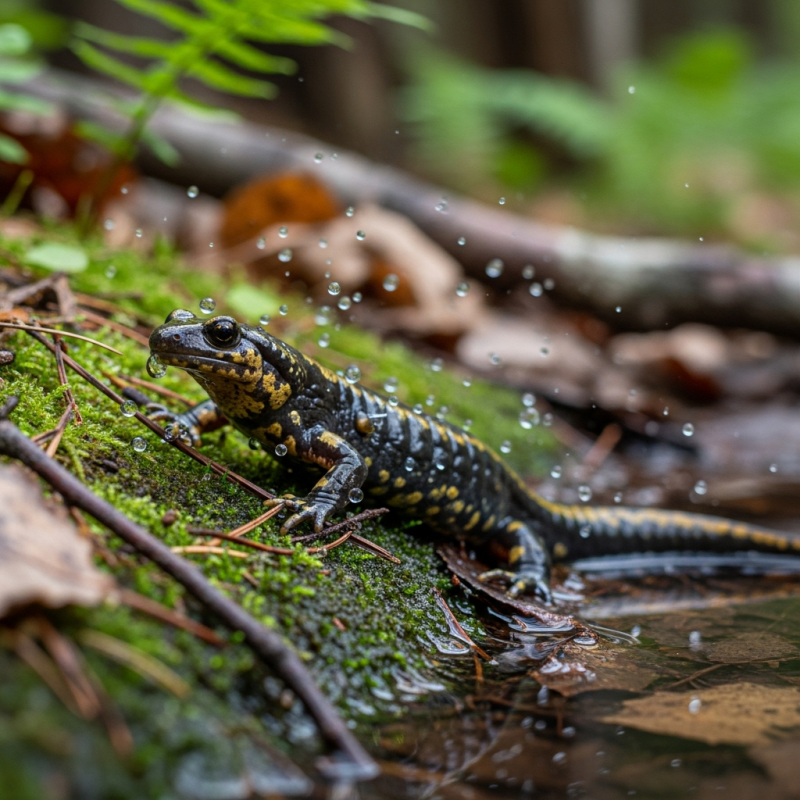
Soft cotton tee, unisex sizes
Buy ShirtWhile the Siberian Salamander does not feature prominently in folklore or art, its reputation for surviving extreme cold has made it a subject of fascination in scientific circles. In Russia and neighboring regions, it is known as "Сибирская саламандра," and is sometimes referenced in discussions of nature’s resilience. Its role in research has elevated its status as a symbol of adaptation and survival in harsh climates.
The Siberian Salamander is widely distributed across boreal forests, taiga, moist woodlands, and tundra of northern Asia. It prefers terrestrial habitats but relies on shallow water bodies for breeding. Its range encompasses Siberia, the Russian Far East, parts of northeastern China, Mongolia, and northern Korea, making it one of the most northerly amphibians globally.
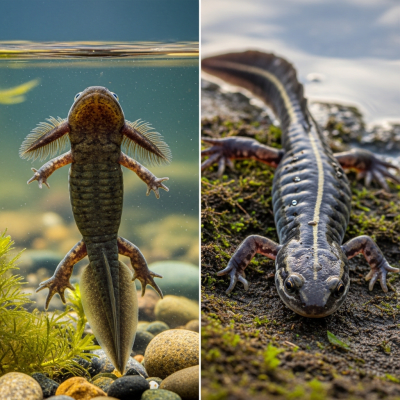

Growth and activity are highly seasonal for this species. Breeding occurs in spring as the ice thaws, with adults migrating to shallow waters to lay eggs in gelatinous strings. The aquatic larvae develop in these water bodies before undergoing metamorphosis into terrestrial adults. This dual aquatic-terrestrial life cycle is typical for many amphibians but is shaped by the extreme climate of its habitat.
The Siberian Salamander feeds on small invertebrates, including insects, worms, and arthropods. It forages actively in soil and leaf litter, playing an important role in controlling populations of these organisms within its ecosystem.
As a key predator of soil invertebrates, the Siberian Salamander helps regulate ecosystem dynamics in boreal forests. Its presence indicates healthy, moist woodland environments, and its remarkable freeze tolerance makes it a subject of scientific interest in studies of adaptation to cold. The species is an important ecological link between aquatic and terrestrial habitats.
The Siberian Salamander is not currently considered threatened, owing to its broad distribution and adaptability to harsh climates. Regional conservation assessments note stable populations, though localized habitat disturbances could pose future risks. Ongoing monitoring ensures its continued ecological health.
Environmental threats include habitat loss from deforestation and changes in hydrology, but the species’ resilience to extreme cold and seasonal fluctuations offers significant protection. Its ability to survive freezing and thawing cycles is a unique adaptation, making it less vulnerable to temperature extremes than most amphibians.
Humans primarily interact with the Siberian Salamander through scientific research, especially in the field of cryobiology and adaptation to cold. There is no evidence of its use in food, medicine, or trade. Its ecological and scientific value far outweighs any commercial interest.
The Siberian Salamander is not considered invasive in any part of its range, and there are no known populations outside its native northern Asian habitats that require regulation.