Hellbender
The Hellbender (Cryptobranchus alleganiensis) is North America's largest fully aquatic salamander, known for its flattened body, loose wrinkled skin, and vital role in clean, fast-flowing streams.
The Hellbender (Cryptobranchus alleganiensis) is North America's largest fully aquatic salamander, known for its flattened body, loose wrinkled skin, and vital role in clean, fast-flowing streams.
First described in 1803 by François Marie Daudin, the Hellbender is native to the eastern United States, inhabiting clear rivers and streams where it has thrived for centuries as a unique member of North American aquatic fauna.
The Hellbender belongs to the class Amphibia, order Caudata (salamanders), and family Cryptobranchidae. Within this family, it is classified under the genus Cryptobranchus and species alleganiensis, with recognized subspecies including the Eastern Hellbender and the Ozark Hellbender.
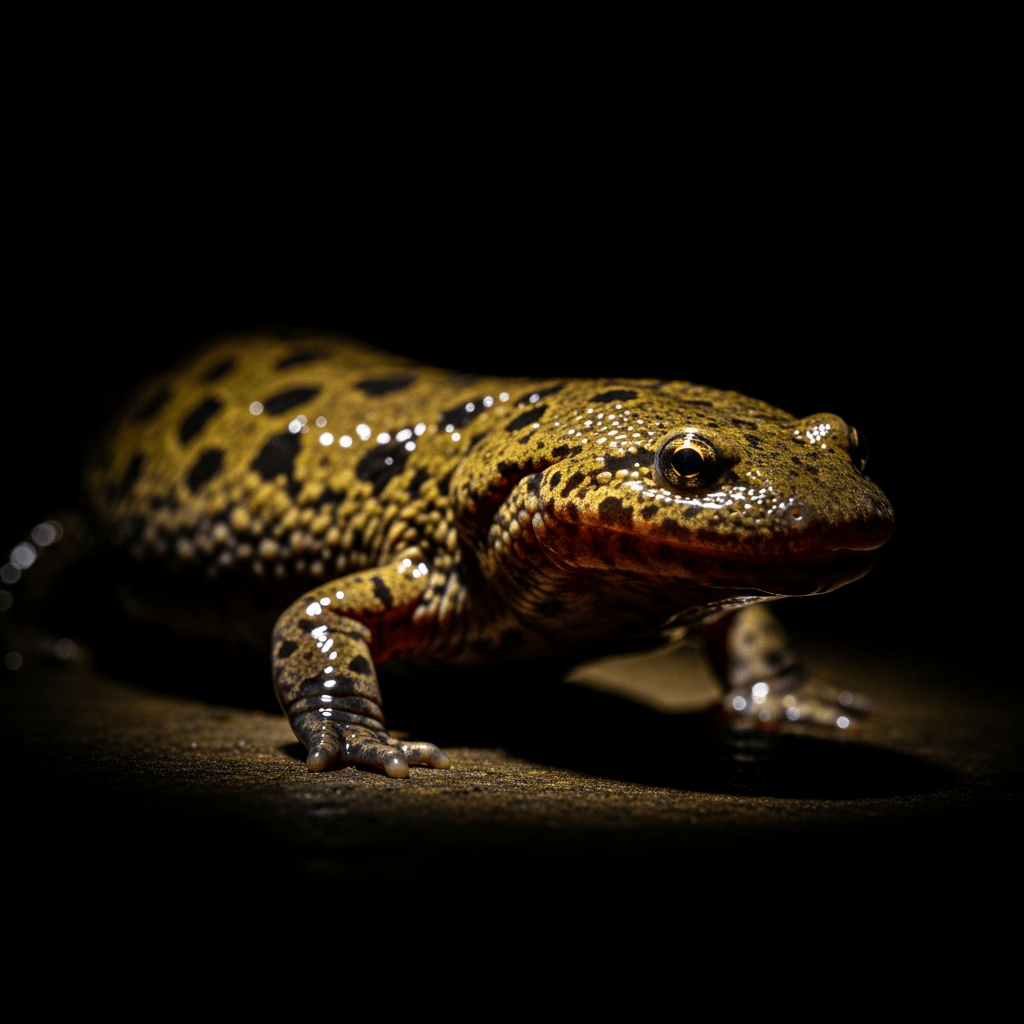
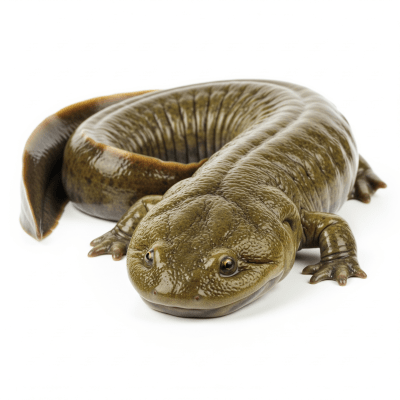
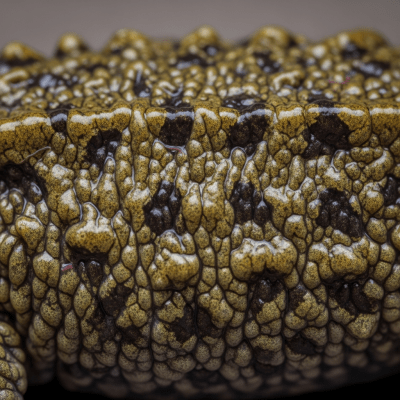
Robust and impressively large, Hellbenders measure between 29 and 74 centimeters in length. Their bodies are dorsoventrally flattened with loose, folded skin along the sides, enhancing their ability to breathe through their skin. Their coloration varies from brown to gray or olive, often mottled with darker spots. They have short, strong limbs with four toes on the front legs and five on the hind legs, contributing to their distinctive, rugged appearance.
Hellbenders are fully aquatic and nocturnal, spending daylight hours hidden beneath rocks in fast-flowing, oxygen-rich streams. Their behavior centers on a secretive lifestyle, relying on their flattened bodies to navigate rocky substrates and avoid predators. While they have no direct human utility, they serve as important indicators of freshwater ecosystem health.
Bring this kind into your world illustrated posters, mugs, and shirts.
Archival print, museum-grade paper
Buy Poster
Stoneware mug, dishwasher safe
Buy Mug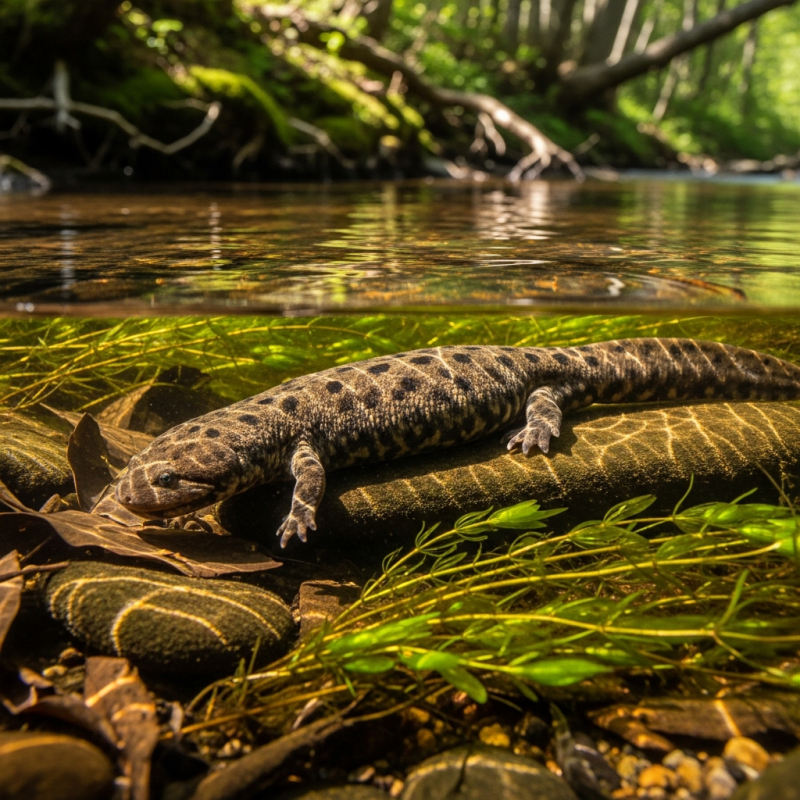
Soft cotton tee, unisex sizes
Buy ShirtKnown regionally by colorful nicknames such as "snot otter," "water dog," and "Allegheny alligator," the Hellbender holds a place in local folklore and cultural identity in parts of the eastern U.S. Though not widely featured in art or mythology, its unique appearance and ecological importance have made it a symbol of clean waterways and conservation efforts.
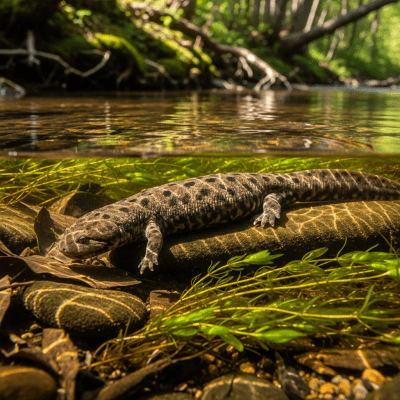
Hellbenders are found primarily in the eastern United States, favoring clear, well-oxygenated streams and rivers with rocky bottoms. Their habitat requires clean, unpolluted water with ample cover from rocks and debris, making them sensitive to environmental changes and habitat degradation.

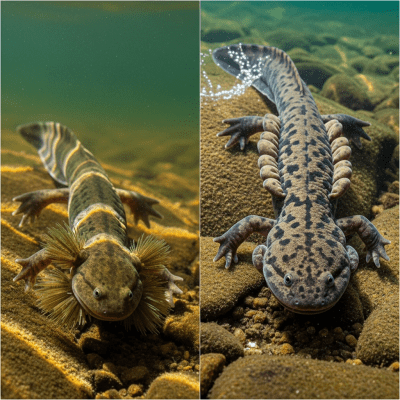

Hellbenders are fully aquatic throughout their life cycle. They are nocturnal and spend days sheltering under rocks. While detailed reproductive behaviors are not fully documented here, they lay eggs in underwater nests, with males often guarding the clutch until hatching.
Though specific diet details are limited here, Hellbenders typically feed on aquatic invertebrates, small fish, and other small aquatic animals, capturing prey with their strong jaws while navigating the streambed.
As a top aquatic predator in their habitats, Hellbenders help maintain balanced freshwater ecosystems. Their sensitivity to pollution makes them valuable bioindicators, signaling the health of streams and rivers where they live.
Hellbenders face population declines due to habitat loss and water pollution. Conservation efforts focus on protecting clean waterways and monitoring populations to prevent further decline, recognizing their importance as ecological sentinels.
Hellbenders are vulnerable to water pollution, siltation, and habitat disturbance due to their permeable skin and aquatic lifestyle. They are also susceptible to pathogens like chytrid fungus. Their resilience is limited, making habitat protection critical for their survival.
Humans primarily interact with Hellbenders through scientific research and conservation programs. They have no recognized culinary or commercial use, and their presence helps raise awareness about freshwater ecosystem health.
There are no known invasive populations of Hellbenders, and they are not considered invasive in any region. Their distribution remains native and restricted to parts of the eastern United States.