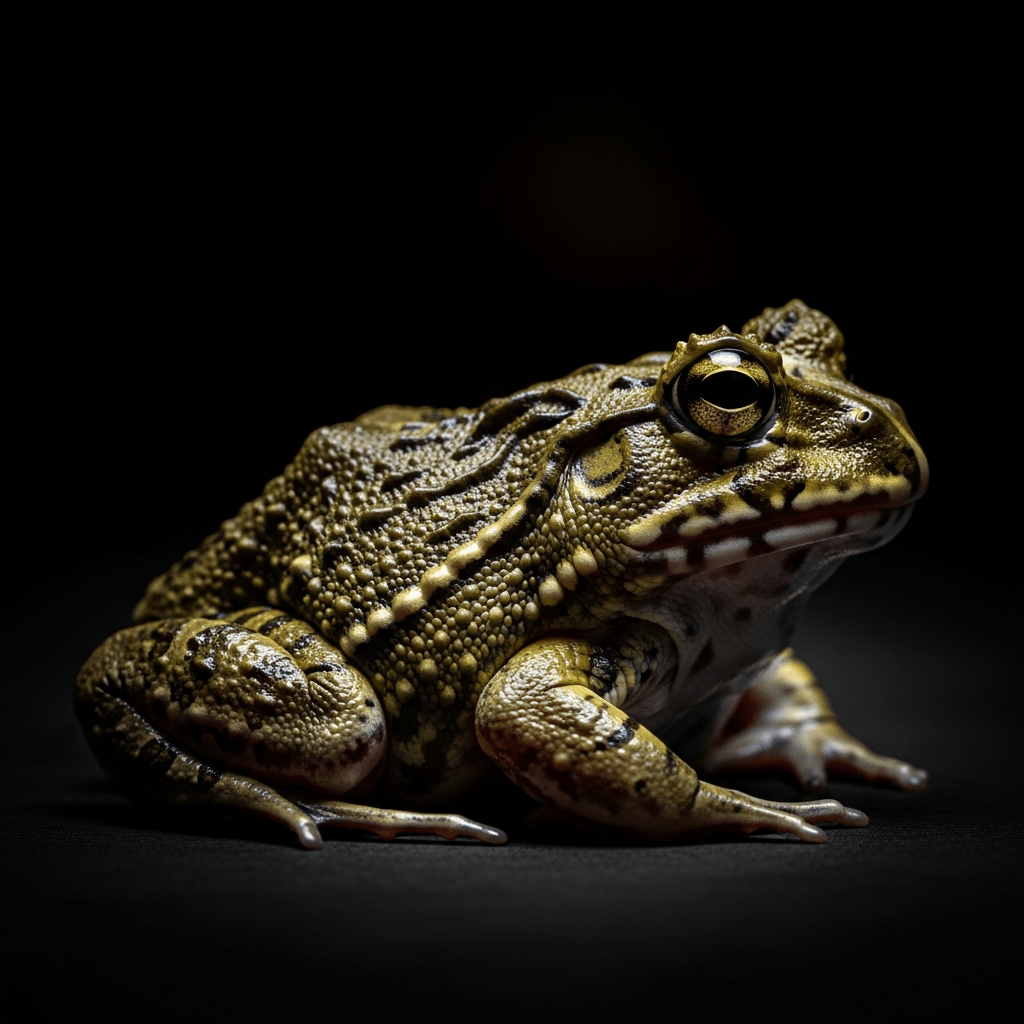
Goliath Frog
The Goliath Frog (Conraua goliath) is the largest living frog species, renowned for its immense size and vital role in Central African river ecosystems.
The Goliath Frog (Conraua goliath) is the largest living frog species, renowned for its immense size and vital role in Central African river ecosystems.
Native to the fast-flowing rivers of southwestern Cameroon and adjacent Equatorial Guinea, the Goliath Frog was first described in 1906 by George Albert Boulenger. Its discovery highlighted the extraordinary biodiversity of Central Africa's rainforests, where this species has evolved to thrive in rocky, oxygen-rich waterways.
The Goliath Frog belongs to the class Amphibia, order Anura (frogs and toads), and family Conrauidae. Its scientific name is Conraua goliath, and it stands apart as the largest member of its genus and family. This classification places it among the true frogs, with close evolutionary ties to other African riverine amphibians.
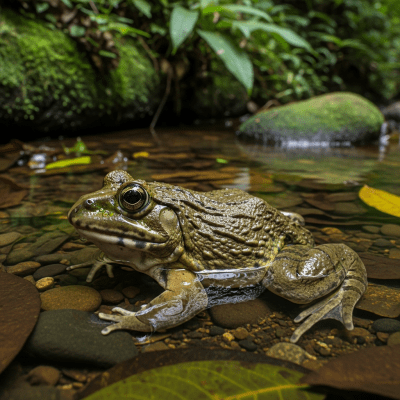
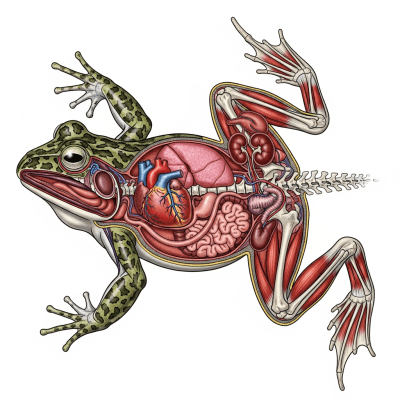
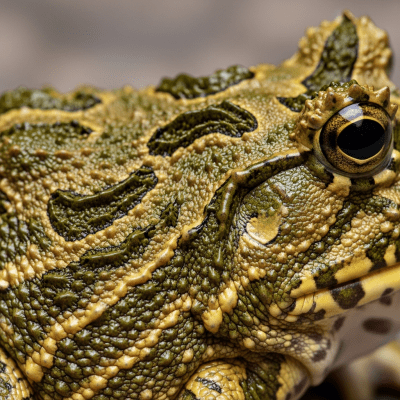
Impressively robust, the Goliath Frog can reach up to 32 cm in length and weigh over 3.3 kg. Its muscular limbs and broad head are designed for powerful swimming and leaping, while its coloration ranges from olive green to brown with lighter underparts. The frog's sturdy body and textured skin are well suited for life among river rocks and swift currents.
Primarily nocturnal, Goliath Frogs are agile jumpers and swimmers, navigating turbulent river habitats with ease. They are semi-terrestrial, often found perched on rocks near water. While not widely used by humans, they are sometimes harvested locally for food or the pet trade, though such practices are increasingly restricted due to conservation concerns.
Bring this kind into your world illustrated posters, mugs, and shirts.
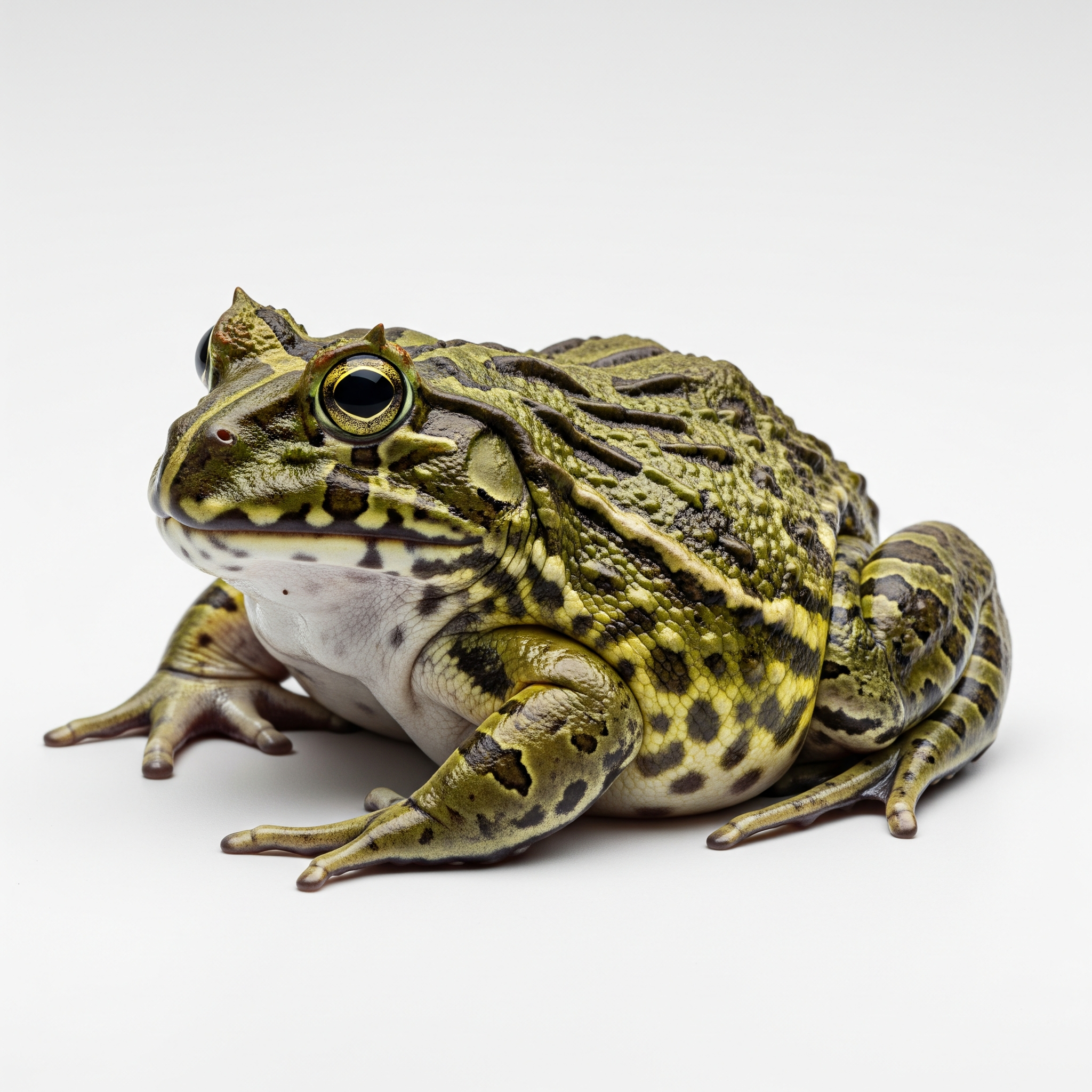
Archival print, museum-grade paper
Buy Poster
Stoneware mug, dishwasher safe
Buy Mug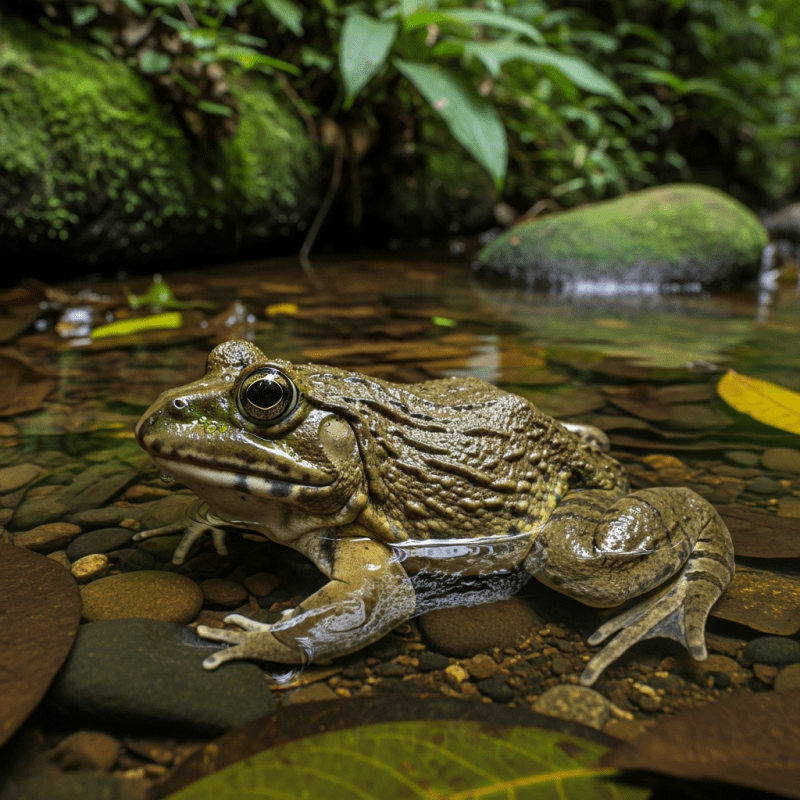
Soft cotton tee, unisex sizes
Buy ShirtIn indigenous communities, the Goliath Frog is locally known as "Mbig" and sometimes features in regional folklore as a symbol of strength and resilience. Globally, its remarkable size has made it an icon for amphibian conservation, drawing attention to the threats faced by riverine wildlife in Central Africa.
The Goliath Frog is restricted to fast-flowing, oxygen-rich rivers with rocky substrates in the rainforests of southwestern Cameroon and adjacent Equatorial Guinea. Its highly specialized habitat makes it sensitive to environmental changes and limits its distribution to a small geographic area.
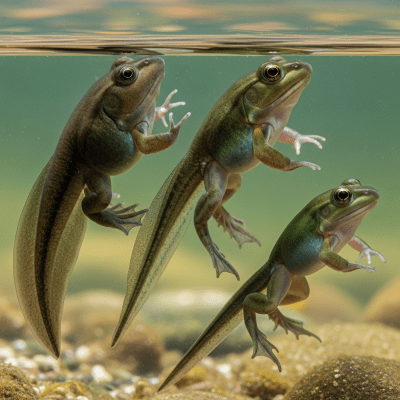
Goliath Frogs undergo a typical amphibian life cycle, beginning as aquatic larvae (tadpoles) before metamorphosing into terrestrial adults. They are primarily nocturnal and exhibit strong jumping abilities. Reproduction occurs in riverine environments, where eggs are laid among rocks and aquatic vegetation.
As opportunistic predators, Goliath Frogs feed on a variety of prey including insects, crustaceans, fish, and other small animals. Their size allows them to consume larger prey than most frogs, and they hunt primarily at night along riverbanks and in shallow waters.
The Goliath Frog serves as a flagship species for amphibian conservation in Central Africa. Its presence indicates healthy river ecosystems, and it plays a crucial role as both predator and prey, helping maintain ecological balance. The species is highly sensitive to habitat disturbance and pollution, making it an important bioindicator for environmental health.
Goliath Frog populations are declining due to habitat loss, overharvesting, and pollution. Conservation measures include legal protection, habitat preservation, and restrictions on commercial exploitation. The species is recognized as threatened, with ongoing efforts to monitor and safeguard its remaining populations.
Major threats to the Goliath Frog include habitat destruction from deforestation, river pollution, overharvesting for food and the pet trade, and susceptibility to chytrid fungus. The species has little resilience to these pressures, with no known resistance to disease and limited ability to adapt to rapid environmental change.
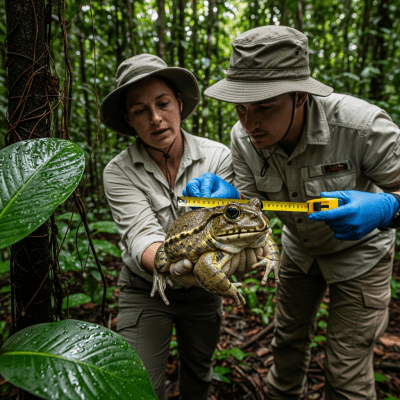
Humans interact with the Goliath Frog primarily through local consumption and, to a lesser extent, the pet trade. Due to its rarity and conservation status, commercial use is restricted or illegal in many regions. The frog is also studied for its unique size and ecological role, contributing to scientific understanding and conservation advocacy.
The Goliath Frog is not known to be invasive outside its native range. Its populations are declining and are protected within Cameroon and Equatorial Guinea, with no evidence of regulatory concern in other regions.