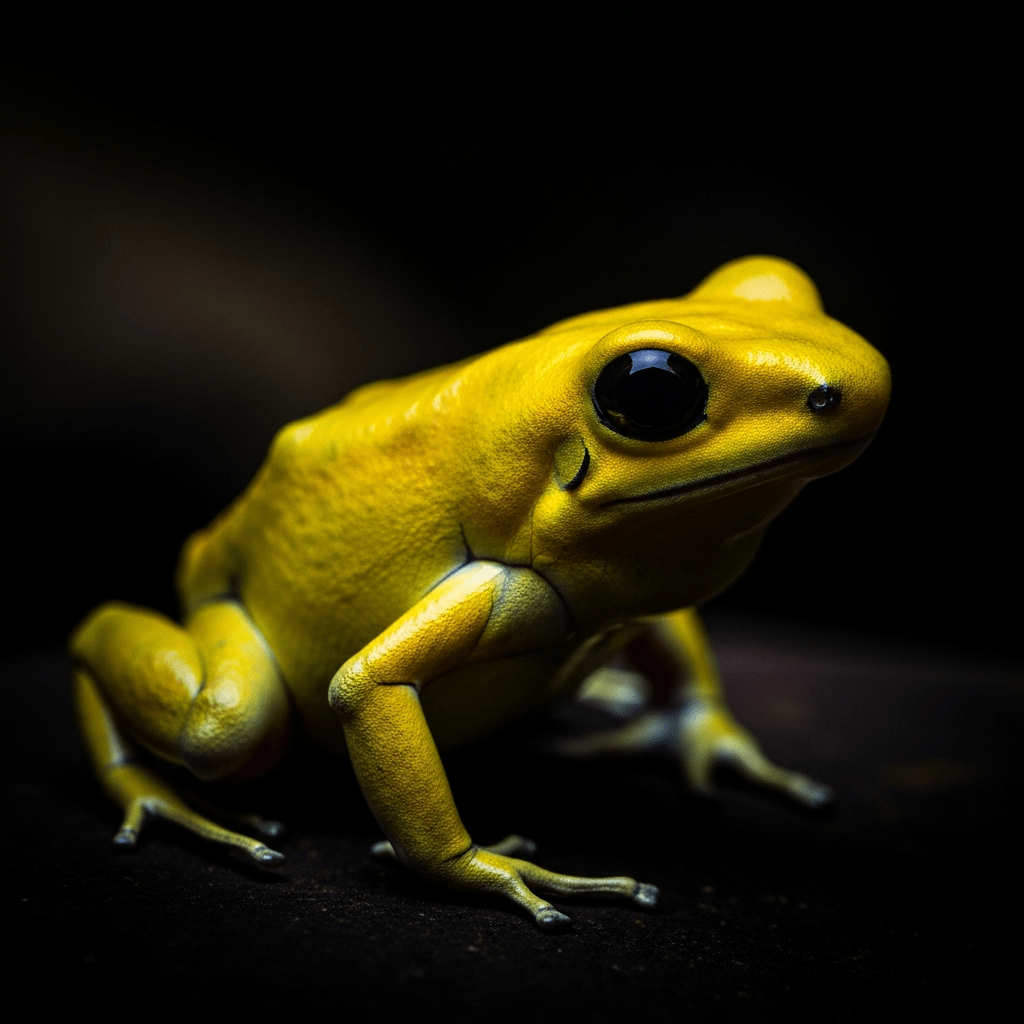
Golden Poison Dart Frog
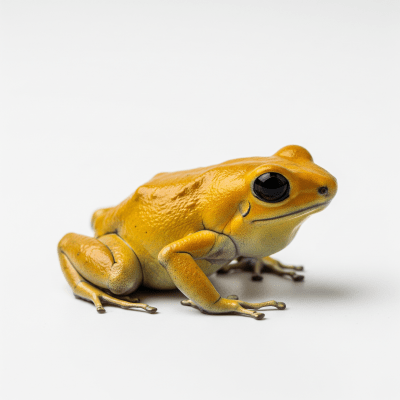
The Golden Poison Dart Frog (Phyllobates terribilis) is a strikingly colored amphibian renowned as the most toxic frog in the world, native to Colombia’s Pacific rainforests.
The Golden Poison Dart Frog (Phyllobates terribilis) is a strikingly colored amphibian renowned as the most toxic frog in the world, native to Colombia’s Pacific rainforests.
Discovered in the lush, humid forests of western Colombia’s Cauca Department, the Golden Poison Dart Frog was first formally described in 1978 by Myers, Daly & Malkin. Its natural range is restricted to the Pacific coastal rainforests, where it evolved its remarkable chemical defenses and vivid coloration. The species’ origin is deeply tied to the unique ecological conditions of this region, with no history of hybridization or captive breeding influencing its lineage.
This species belongs to the class Amphibia, order Anura (frogs and toads), family Dendrobatidae, and genus Phyllobates. Dendrobatids are commonly known as poison dart frogs, a group famed for their aposematic colors and skin toxins. The Golden Poison Dart Frog is a flagship member, exemplifying both the evolutionary adaptation of chemical defense and the vibrant warning signals typical of its family.
Medium-sized among dendrobatids, adults measure 47–55 mm in length. Their skin is smooth and most often a brilliant yellow, though some individuals show orange or pale green hues. The frog’s coloration is not just beautiful—it is a warning, signaling the potent batrachotoxin concentrated in its skin. The overall impression is one of vivid, glossy vibrancy, a visual cue to predators of its dangerous nature.
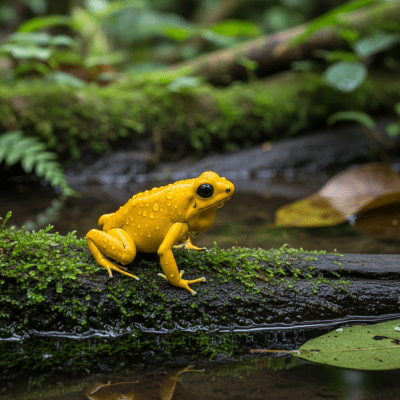
The Golden Poison Dart Frog is diurnal and terrestrial, spending its days among leaf litter and low vegetation. Its behavior is defined by caution and boldness: it moves confidently in daylight, relying on its toxicity to deter predators. Indigenous Emberá people have long used the frog’s skin secretions to poison blowgun darts for hunting, making its chemical defense a tool in human subsistence. In captivity, these frogs lose their toxicity due to dietary changes, but retain their striking appearance and active, alert demeanor.
Bring this kind into your world illustrated posters, mugs, and shirts.
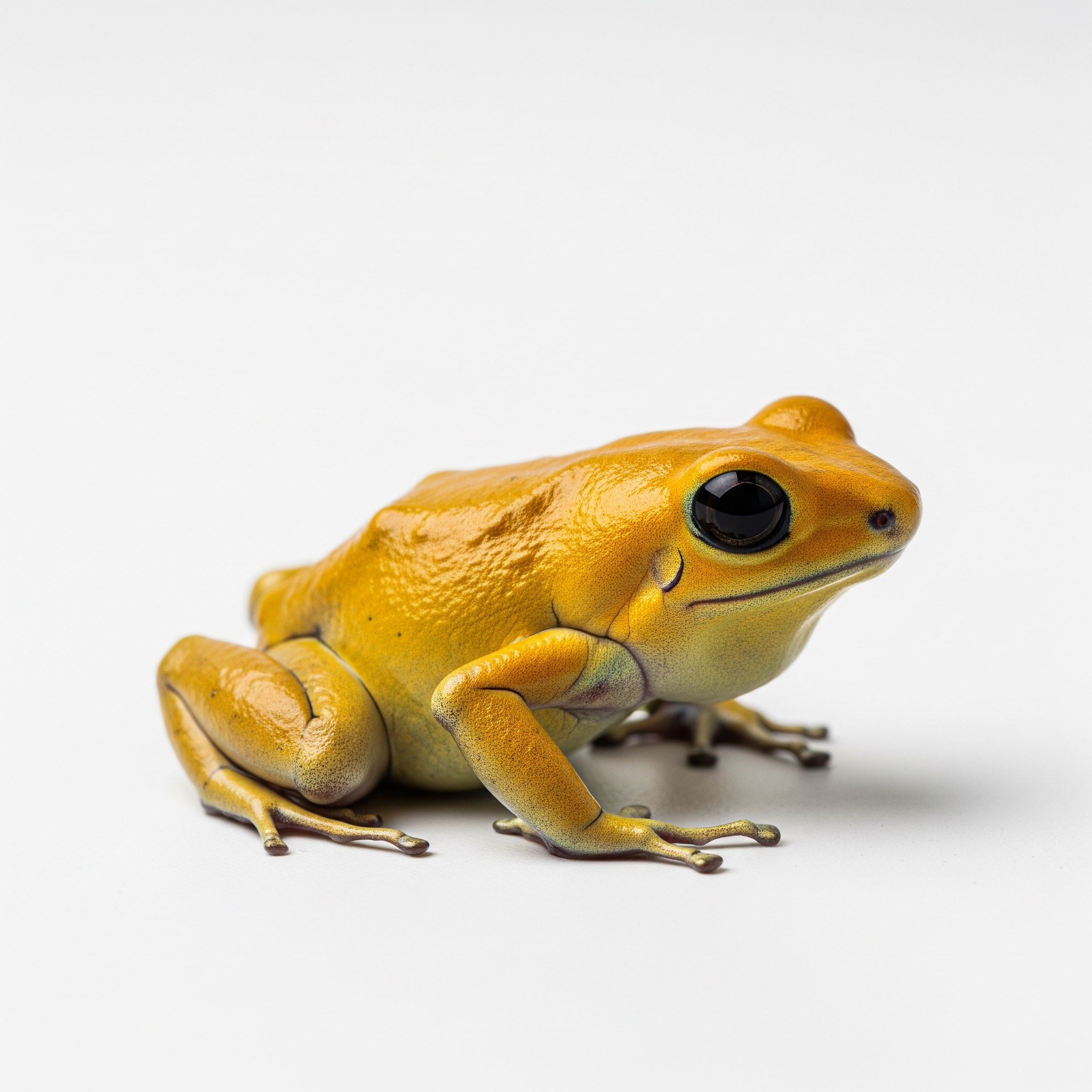
Archival print, museum-grade paper
Buy Poster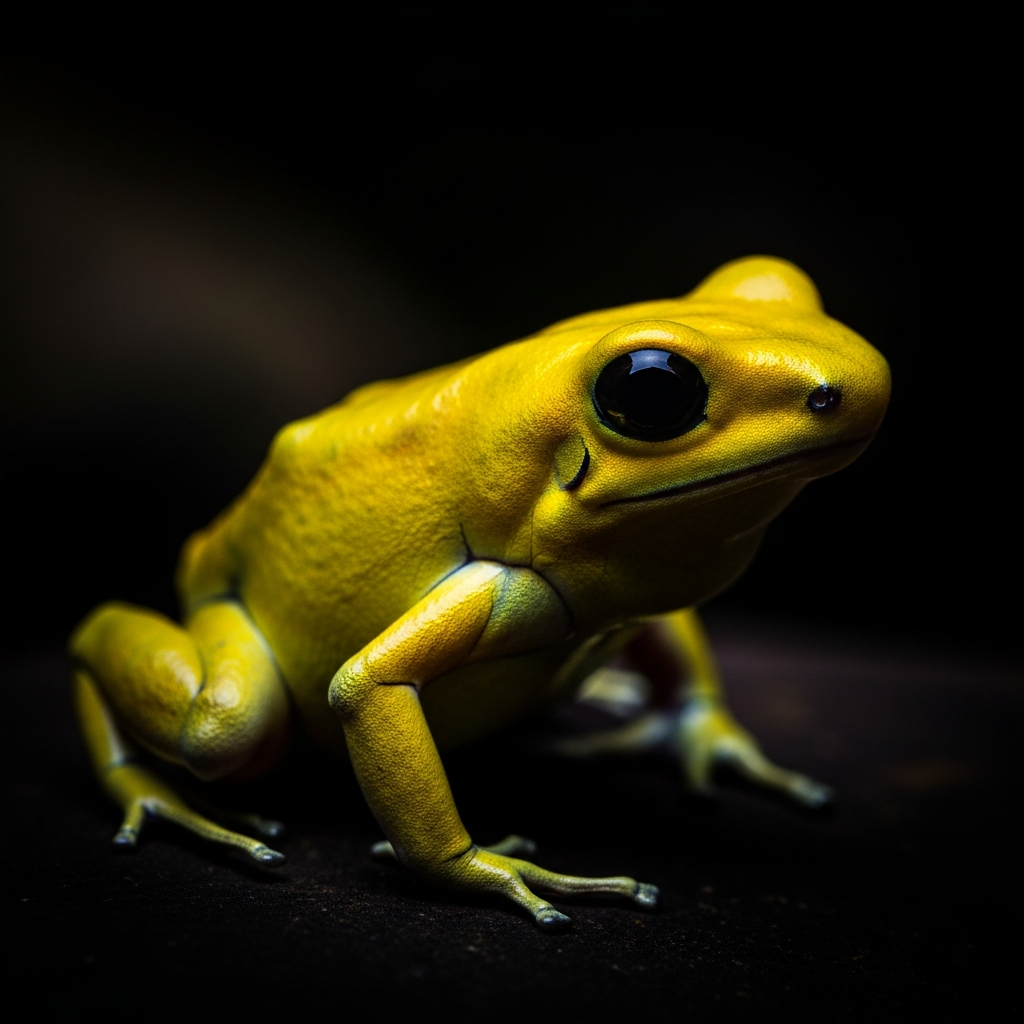
Stoneware mug, dishwasher safe
Buy Mug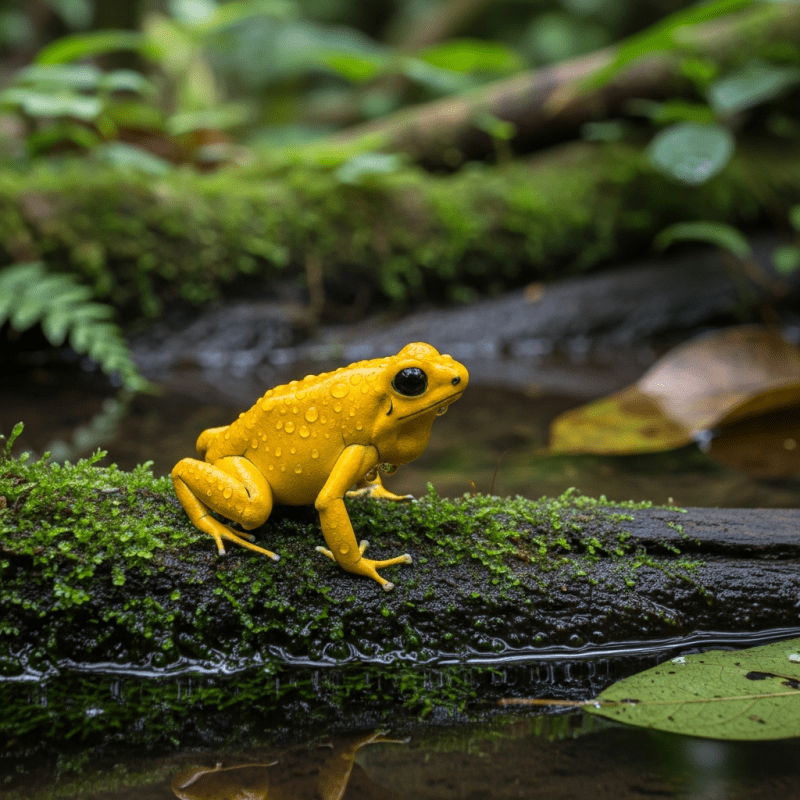
Soft cotton tee, unisex sizes
Buy ShirtThis frog holds a unique place in both indigenous tradition and global fascination. For the Emberá people, its skin secretions are vital for hunting, representing a deep connection between local ecology and culture. The Golden Poison Dart Frog has become an icon in natural history, conservation, and even popular media, symbolizing the wonders—and dangers—of rainforest biodiversity. Its vivid coloration and legendary toxicity have inspired art, documentaries, and scientific inquiry worldwide.
Native exclusively to the humid Pacific coastal rainforests of western Colombia, the Golden Poison Dart Frog inhabits leaf litter and low vegetation. Its distribution is highly localized, with populations found primarily in the Cauca Department. The species thrives in warm, moist environments with dense ground cover, making it a true rainforest specialist.
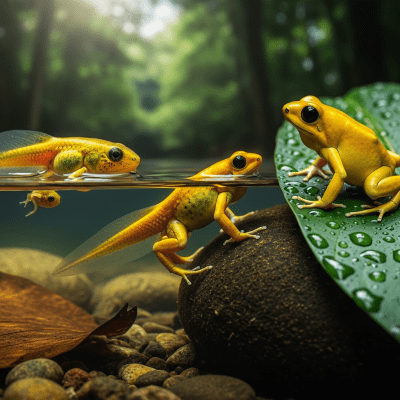
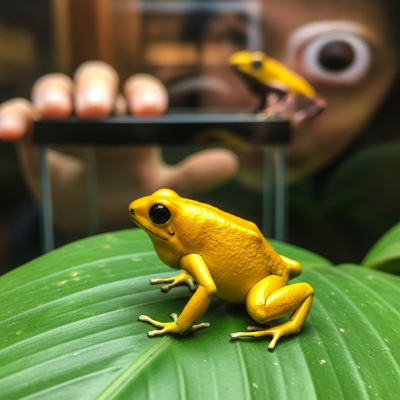
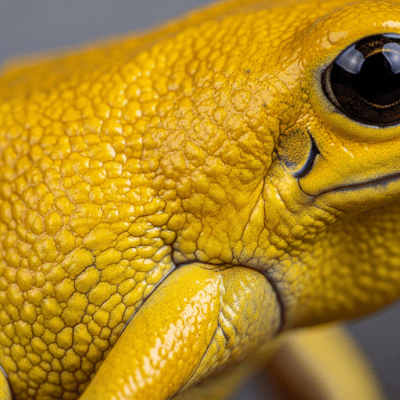
Unlike most frogs, the Golden Poison Dart Frog exhibits direct development: eggs are laid in moist terrestrial sites and hatch into miniature froglets, bypassing the aquatic tadpole stage. This adaptation allows the species to reproduce away from standing water, with parental care ensuring the survival of young in the challenging rainforest environment.
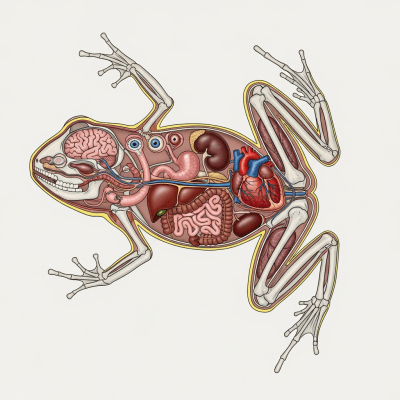
In the wild, this frog feeds on small beetles and ants, which supply the precursors for its potent batrachotoxin. Its diet is highly specialized, and the presence of toxin-producing insects in its habitat is essential for its chemical defenses. Captive frogs, lacking access to these insects, are non-toxic and subsist on alternative invertebrates.
The Golden Poison Dart Frog is a flagship example of aposematic coloration and chemical defense among amphibians. It plays a critical role in regulating insect populations and serves as a bioindicator of rainforest health. Its unique relationship with indigenous cultures and its role in local food webs highlight its ecological and cultural importance.
The species faces ongoing threats from habitat loss and environmental degradation, with populations restricted to a small native range. Conservation measures focus on habitat protection and monitoring, as its vulnerability to ecological change makes it a priority for biodiversity preservation in Colombia.
Highly sensitive to environmental changes, the Golden Poison Dart Frog is threatened by deforestation, pollution, and climate shifts. Its survival depends on intact rainforest ecosystems and the availability of toxin-bearing prey. While its toxicity deters most predators, it offers little resilience against habitat destruction and human encroachment.
Humans interact with this species in diverse ways: indigenous peoples utilize its toxins for hunting, while enthusiasts worldwide keep captive-bred frogs as pets. Scientists study its chemical defenses for insights into neurotoxins and ecological adaptation. However, the frog is not used for food or medicine, and its primary value lies in cultural heritage, scientific research, and conservation awareness.
The Golden Poison Dart Frog is not known to be invasive outside its native range, nor is it subject to specific regulatory restrictions. Its specialized habitat and dietary needs limit its ability to establish populations elsewhere.