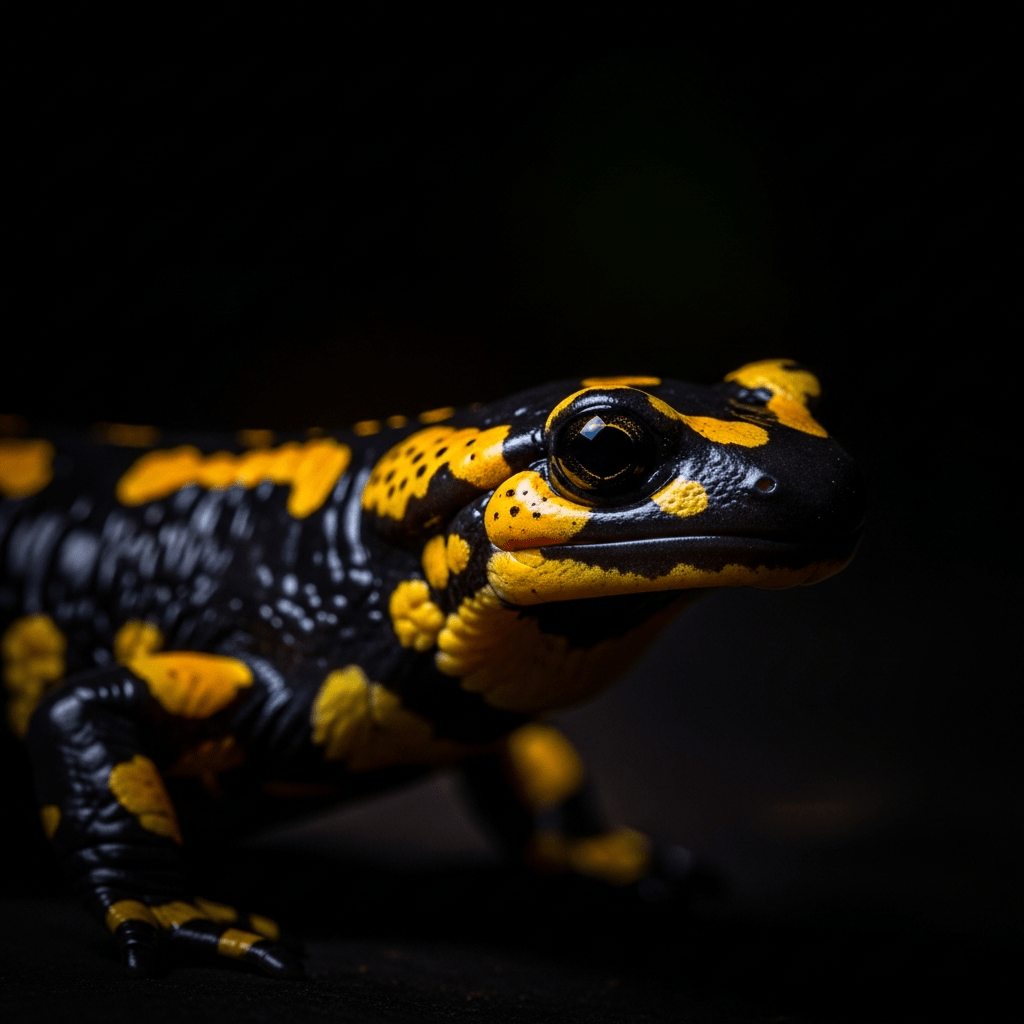
Fire Salamander
The Fire Salamander (Salamandra salamandra) is a vividly colored European amphibian, renowned for its striking black-and-yellow pattern and potent skin toxins that deter predators.
The Fire Salamander (Salamandra salamandra) is a vividly colored European amphibian, renowned for its striking black-and-yellow pattern and potent skin toxins that deter predators.
Native to the humid forests of Europe, the Fire Salamander was first formally described by Carl Linnaeus in 1758. Its presence in European folklore and historical texts stretches back centuries, with references often linking its fiery appearance to mythic tales. The species evolved within the family Salamandridae, adapting to terrestrial life while retaining aquatic larval stages, and today persists across a broad but fragmented range shaped by ancient woodlands and freshwater habitats.
The Fire Salamander belongs to the class Amphibia, order Caudata (also called Urodela), and family Salamandridae. Its scientific name is Salamandra salamandra. This group is distinguished by their life cycle, which typically includes aquatic larvae and terrestrial adults, and by their smooth, often brightly colored skin. Within its genus, several subspecies exist, each with unique coloration and regional distribution.
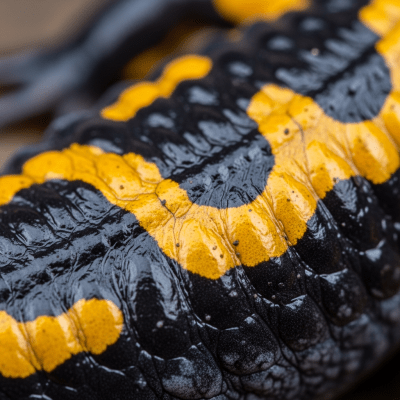
Fire Salamanders are robust, measuring 15–25 cm in length, with smooth, moist black skin dramatically marked by vivid yellow, orange, or red blotches or stripes. Their short limbs and rounded heads give them a distinctive silhouette. The intensity and pattern of their coloration can vary widely between subspecies and local populations, but the bold contrast always signals their toxic nature to would-be predators.
Primarily nocturnal, Fire Salamanders spend most of their lives on land, sheltering under logs and leaf litter in damp forests. They emerge at night to hunt small invertebrates and return to water only for breeding. Their skin secretes potent alkaloid toxins, making them unpalatable and providing a strong defense against predators. While not used by humans for food, they are sometimes kept as exotic pets, though their care requires specialized conditions and is regulated in many regions.
Bring this kind into your world illustrated posters, mugs, and shirts.

Archival print, museum-grade paper
Buy Poster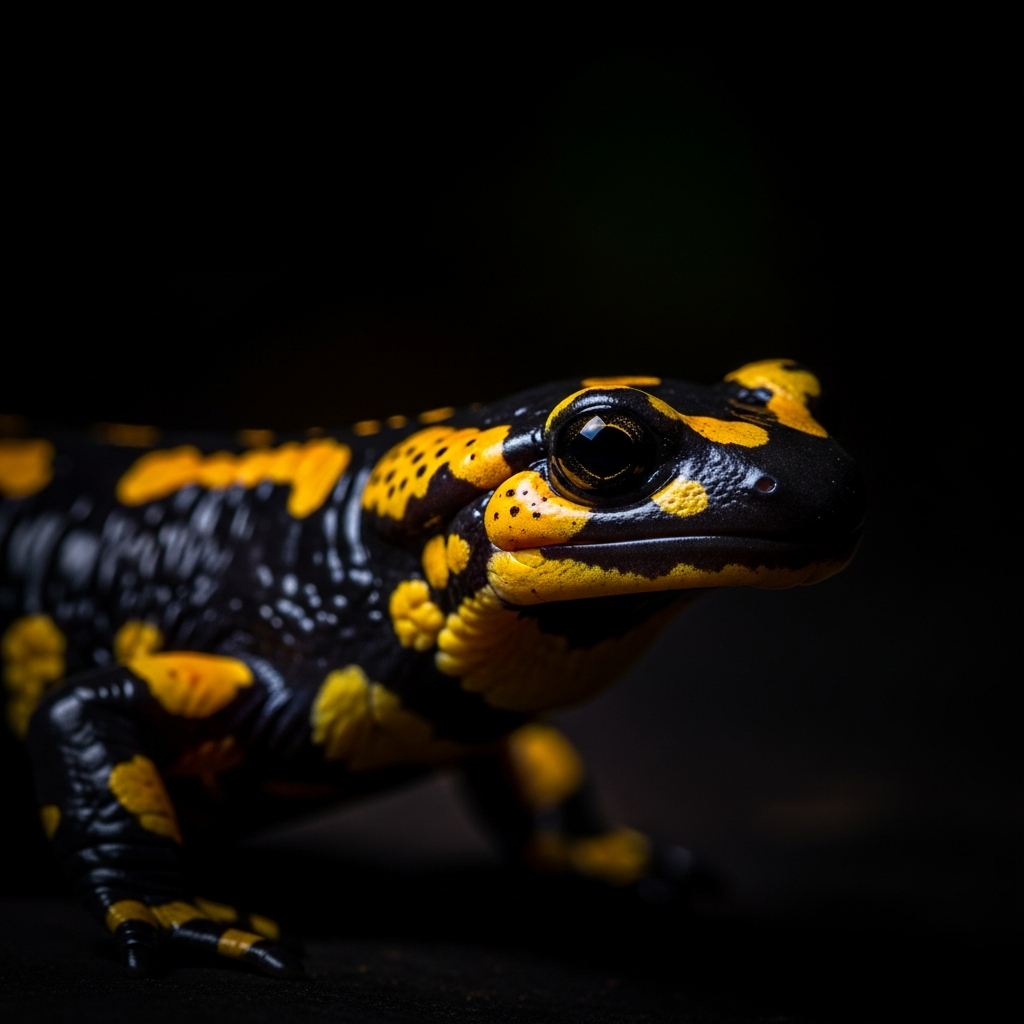
Stoneware mug, dishwasher safe
Buy Mug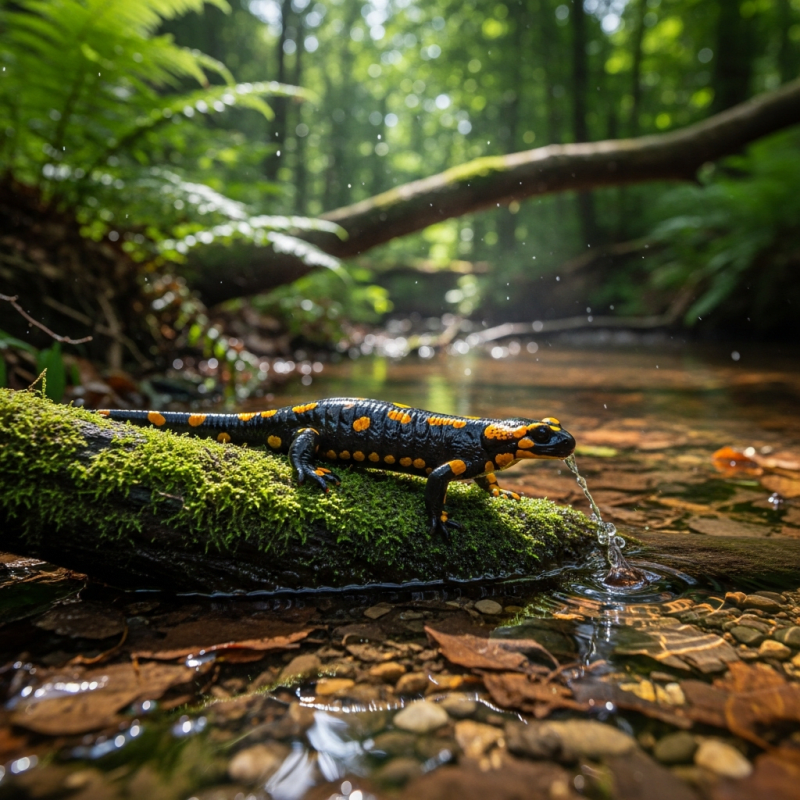
Soft cotton tee, unisex sizes
Buy ShirtFew amphibians are as deeply woven into European folklore as the Fire Salamander. Its dramatic coloration and secretive habits inspired myths that it could live in fire or was born from flames. Medieval and Renaissance literature often depicted it as a symbol of resilience and transformation, and its image appears in heraldry, art, and local legends throughout its native range.
Fire Salamanders inhabit moist, deciduous forests throughout central and southern Europe, from lowland woodlands to foothills and mountainous regions. They prefer areas with abundant leaf litter, logs, and access to clean freshwater sources for breeding. Their distribution is patchy, shaped by local climate, forest cover, and water quality, with several subspecies occupying distinct geographic zones.
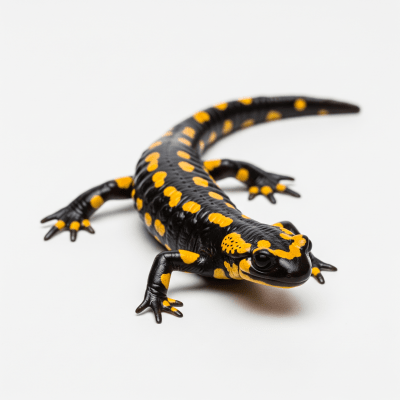
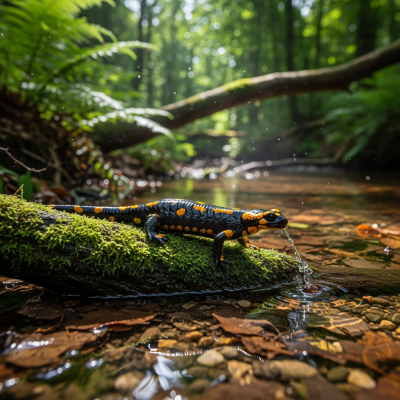
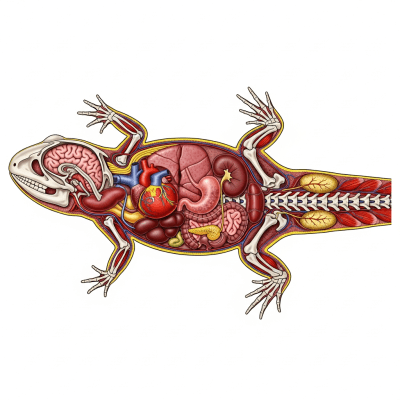
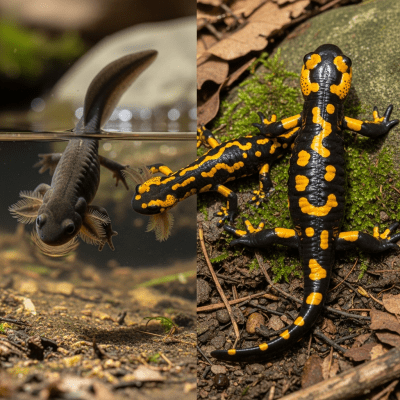
Adults are terrestrial and nocturnal, returning to freshwater only to breed. Females deposit larvae directly into streams or ponds, where the young develop aquatic features before undergoing metamorphosis to become land-dwelling adults. This dual life cycle—aquatic larvae, terrestrial adults—is a hallmark of many amphibians and helps the Fire Salamander exploit both aquatic and forest environments.
Fire Salamanders are carnivorous, feeding primarily on insects, worms, spiders, and other small invertebrates. They hunt at night, using their keen sense of smell and slow, deliberate movements to locate prey among leaf litter and under logs. Their diet helps regulate invertebrate populations within their forest habitats.
As predators of forest invertebrates, Fire Salamanders help maintain ecological balance and contribute to nutrient cycling. Their sensitivity to pollution and habitat change makes them valuable bioindicators—early warning signs of environmental stress. By occupying both aquatic and terrestrial niches during their life cycle, they link different parts of the forest ecosystem.
While the Fire Salamander is not currently listed as globally threatened, local populations are declining in parts of its range due to habitat loss, pollution, and disease (notably chytrid fungal infections). Conservation efforts focus on protecting forest habitats, maintaining clean water sources, and monitoring populations for emerging threats.
Fire Salamanders face significant threats from habitat destruction, water pollution, and infectious diseases such as chytridiomycosis. Despite their potent chemical defenses against predators, they are highly sensitive to environmental changes and cannot tolerate degraded habitats. Their resilience lies in their toxic skin secretions, which provide protection from most natural enemies, but human-induced stressors remain a major challenge.
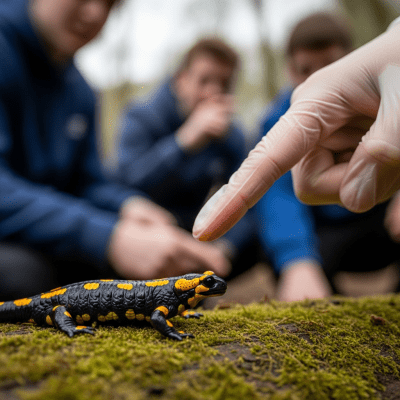
Humans interact with Fire Salamanders mainly through observation and study. Their vivid appearance and fascinating life history make them popular subjects in natural history and folklore. Occasionally, they are kept as exotic pets, but this is regulated due to their toxicity and conservation concerns. They are not used for food or medicine, and their presence in culture is largely symbolic.
The Fire Salamander is not considered invasive outside its native European range and is not subject to invasive species regulation. Its populations are primarily of conservation concern within its natural habitat.