
Eastern Newt
The Eastern Newt (Notophthalmus viridescens) is a vividly colored salamander native to eastern North America, renowned for its striking life cycle and ecological importance in forested and aquatic habitats.
The Eastern Newt (Notophthalmus viridescens) is a vividly colored salamander native to eastern North America, renowned for its striking life cycle and ecological importance in forested and aquatic habitats.
First described by Constantine Samuel Rafinesque in 1820, the Eastern Newt originates from the woodlands, ponds, and streams of eastern North America, spanning the eastern United States and southeastern Canada. Its discovery was based on specimens collected from these regions, where it remains a familiar sight in both aquatic and terrestrial environments.
The Eastern Newt belongs to the class Amphibia, order Caudata (salamanders and newts), family Salamandridae, and genus Notophthalmus. Its scientific name is Notophthalmus viridescens. Within the broader amphibian taxonomy, it is closely related to other North American newts and shares the characteristic dual life cycle typical of the group.
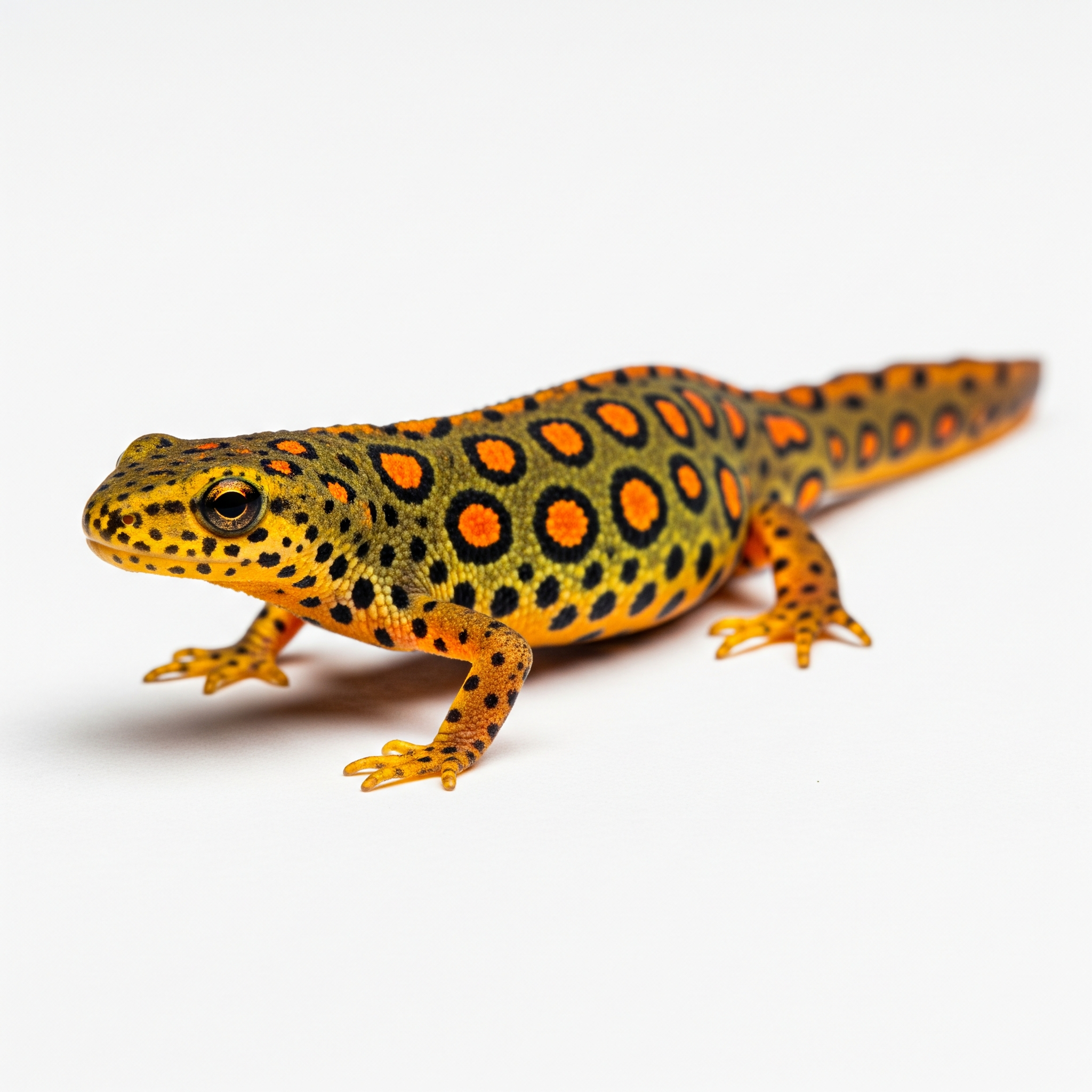
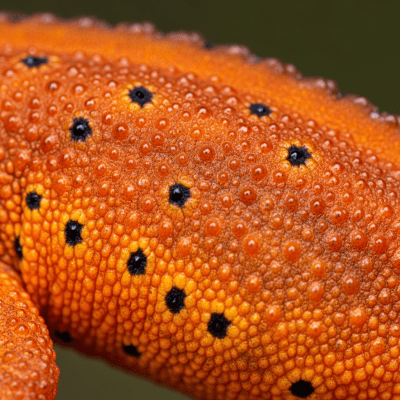
This species exhibits three distinct life stages: aquatic larvae with feathery external gills; a terrestrial juvenile known as the red eft, displaying a brilliant orange-red hue with rough skin and black-bordered red spots; and the adult aquatic stage, characterized by olive-green to yellow-brown coloration, a yellow belly, and the same signature red spots. Adults typically measure 7–12 cm in length, making them slender and agile in both water and on land.
The Eastern Newt undergoes a remarkable metamorphosis, transitioning from aquatic larvae to terrestrial red efts, and finally returning to water as sexually mature adults. The red eft stage is solitary and terrestrial, often seen crossing forest floors, while adults are more aquatic, swimming gracefully in ponds and slow-moving streams. Their skin secretes toxins, especially during the eft stage, deterring most predators. While not commonly kept as pets, they are valued in educational displays and as subjects of ecological research.
Bring this kind into your world illustrated posters, mugs, and shirts.
Archival print, museum-grade paper
Buy Poster
Stoneware mug, dishwasher safe
Buy Mug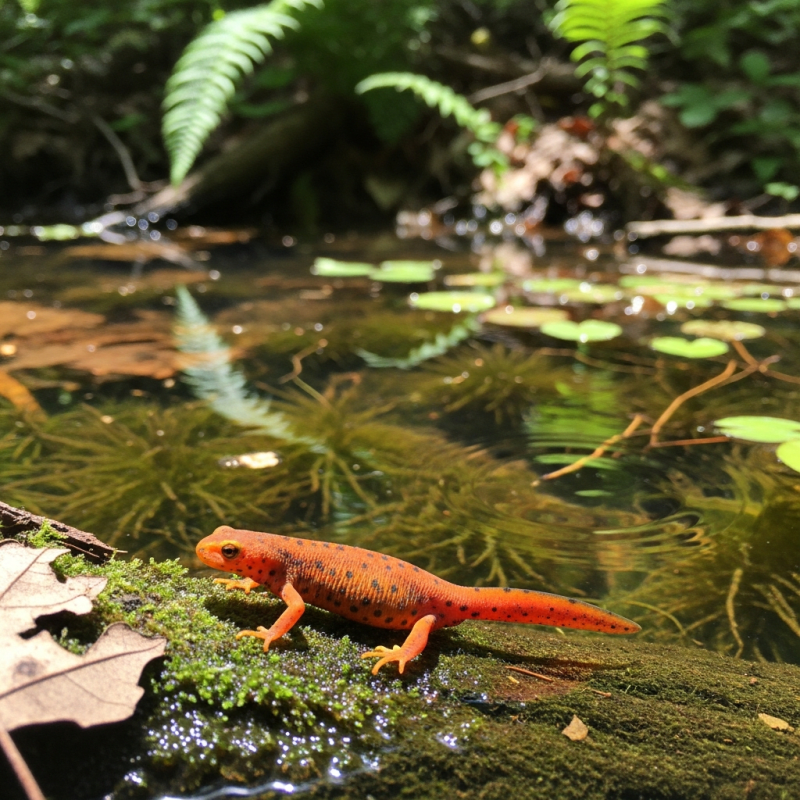
Soft cotton tee, unisex sizes
Buy ShirtThe Eastern Newt, particularly its vibrant red eft stage, is a familiar figure in nature guides and regional folklore across eastern North America. Its striking coloration and transformation have inspired local stories and educational programs, symbolizing resilience and the wonders of metamorphosis. The species is often featured in environmental education as an indicator of healthy ecosystems.
Eastern Newts inhabit a wide range of forested and aquatic environments, including ponds, lakes, slow-moving streams, and moist woodlands. Larvae and adults are aquatic, while juveniles (red efts) spend several years on land before returning to water. Their distribution covers the eastern United States and southeastern Canada, making them one of the most widespread newts in North America.
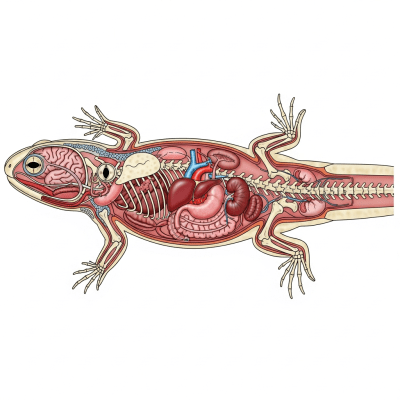
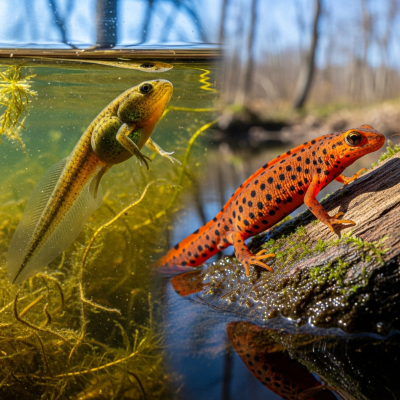

The life cycle of the Eastern Newt is notably complex. It begins as aquatic larvae with external gills, which after several months metamorphose into terrestrial red efts. The red eft stage lasts 2–3 years, during which the juveniles roam forest floors. Eventually, they return to aquatic habitats and transform into sexually mature adults, capable of breeding and continuing the cycle. Reproduction occurs in water, with females laying eggs attached to submerged vegetation.
Eastern Newts are predatory throughout their lives. Larvae and adults hunt for small aquatic invertebrates, such as insect larvae, worms, and tiny crustaceans. The terrestrial red eft stage feeds on insects, spiders, and other small creatures found on the forest floor. Their feeding behavior helps regulate populations of these organisms in both aquatic and terrestrial ecosystems.
As both predator and prey, the Eastern Newt is integral to the health of forested and aquatic ecosystems. It helps control populations of invertebrates and serves as a food source for larger animals. Its sensitivity to pollution and habitat changes makes it a valuable bioindicator, alerting scientists to shifts in environmental quality and ecosystem health.
The Eastern Newt is currently considered stable across most of its range, with no immediate threat of extinction. However, local populations can be affected by habitat loss, water pollution, and disease. Conservation efforts focus on protecting wetland habitats and monitoring environmental changes to ensure long-term survival.
Major threats to the Eastern Newt include water pollution, habitat destruction, and the spread of infectious diseases. Despite these challenges, the species displays notable resilience: the red eft stage is toxic to many predators, providing a chemical defense, and adults can adapt to a variety of aquatic habitats. Nevertheless, their sensitivity to environmental changes makes them vulnerable in degraded ecosystems.
Humans interact with Eastern Newts primarily through observation, research, and environmental education. They are occasionally kept in aquaria for display or study, but wild collection is discouraged to protect natural populations. The species is not used in culinary contexts and has minimal market value, emphasizing its ecological rather than economic importance.
The Eastern Newt is not considered invasive and has no known populations outside its native range that pose ecological concerns. There are currently no regulatory restrictions related to its spread or management.