Common Caecilian
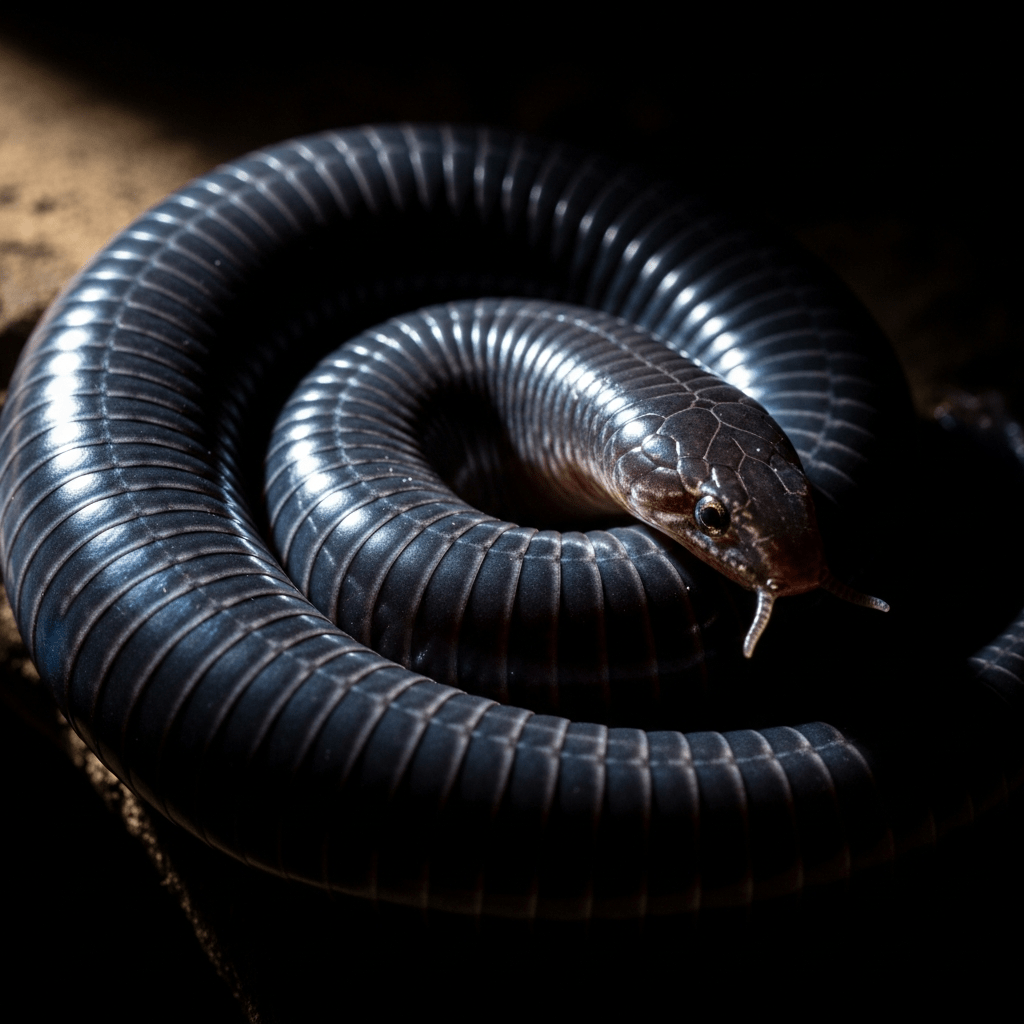
The Common Caecilian (Ichthyophis glutinosus) is a limbless, burrowing amphibian native to South Asia, recognized for its elongated, worm-like body and secretive subterranean lifestyle.
The Common Caecilian (Ichthyophis glutinosus) is a limbless, burrowing amphibian native to South Asia, recognized for its elongated, worm-like body and secretive subterranean lifestyle.
First described by Carl Linnaeus in 1758, the Common Caecilian originates from the moist soils of South Asia, particularly regions such as Sri Lanka and southern India. Its evolutionary roots lie within the order Gymnophiona, a group of amphibians uniquely adapted to life underground. Discovered from wild specimens rather than captive breeding, its lineage reflects ancient adaptations for fossorial existence in tropical environments.
The Common Caecilian belongs to the class Amphibia, order Gymnophiona (also known as Apoda), and family Ichthyophiidae. As a caecilian, it is part of a distinct group of amphibians separated from frogs, toads, salamanders, and newts by its limbless, burrowing morphology. Its scientific name is Ichthyophis glutinosus Linnaeus, 1758, and it is the accepted representative of its species in global taxonomic authorities.
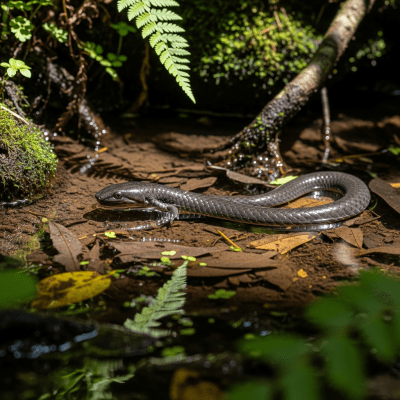
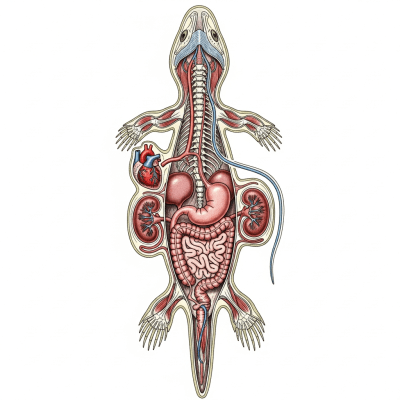
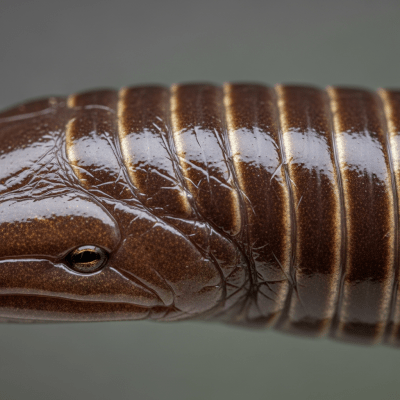
Visually, the Common Caecilian is strikingly different from other amphibians. Its body is long, cylindrical, and entirely limbless, measuring typically between 30 and 40 centimeters. The skin is smooth and dark bluish-grey, accented by vivid yellow stripes running along the sides. Its head is blunt, with tiny, reduced eyes hidden beneath the skin—an adaptation to its underground lifestyle. Annular grooves encircle its body, aiding movement through soil, while the overall form evokes a large, glossy earthworm.
Secretive and rarely seen, the Common Caecilian spends most of its life burrowing through moist earth near water bodies. It is primarily nocturnal and emerges only occasionally, often during heavy rains. Its behavior centers on hunting small invertebrates underground and laying eggs in damp soil. Unlike many amphibians, it has no documented use in culinary, commercial, or pet trade contexts; its primary value is ecological, serving as an indicator of healthy soil and ecosystem conditions.
Bring this kind into your world illustrated posters, mugs, and shirts.
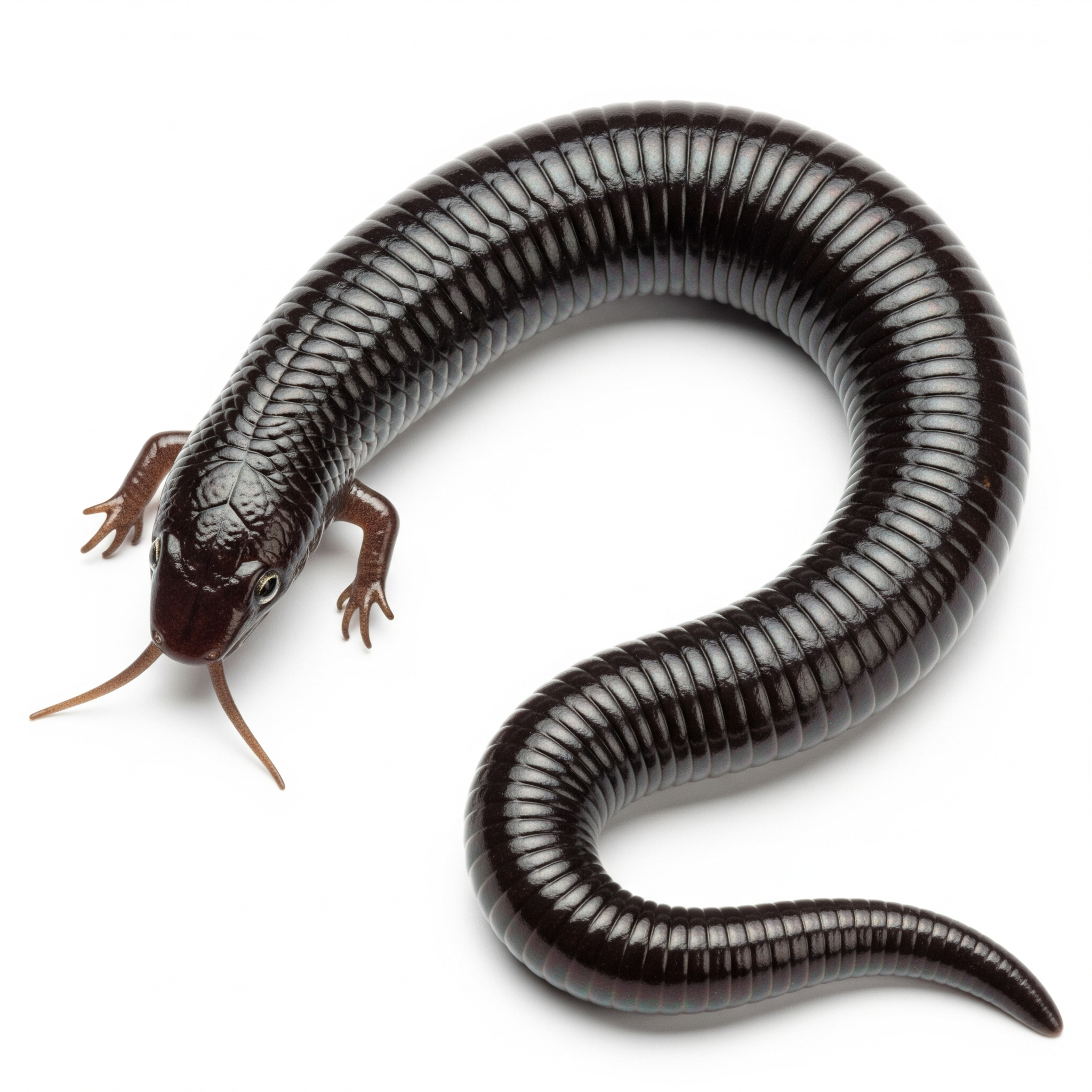
Archival print, museum-grade paper
Buy Poster
Stoneware mug, dishwasher safe
Buy Mug
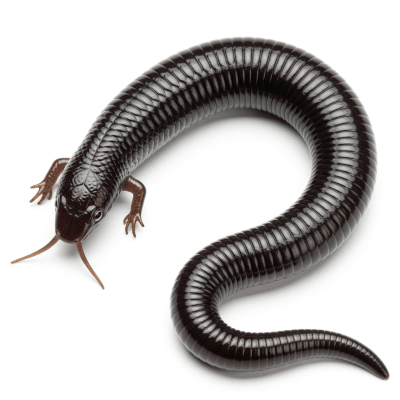
Soft cotton tee, unisex sizes
Buy ShirtWhile the Common Caecilian is not widely featured in global folklore or art, it is sometimes referenced in local cultures by names such as "Kandyan worm" or "Sri Lankan caecilian." Its secretive nature and unusual appearance have led to occasional curiosity and regional myths, but it does not hold significant symbolic or ritual importance. Its main cultural role is as a subject of scientific study and environmental awareness in South Asia.
The Common Caecilian is native to South Asia, with its range primarily spanning Sri Lanka and southern India. It thrives in subterranean habitats, burrowing in loose, damp soil near streams, ponds, or other water sources. Its preference for moist environments makes it sensitive to changes in soil quality and water availability, restricting its distribution to regions with suitable underground conditions.

This species is oviparous, laying eggs in moist soil close to water bodies. The eggs hatch into aquatic larvae, which spend their early life in water before undergoing metamorphosis to become terrestrial, burrowing adults. The transition from aquatic larva to subterranean adult is a hallmark of its dual life cycle, typical of many amphibians, but with unique adaptations for underground existence.
The Common Caecilian is a subterranean predator, feeding primarily on small invertebrates found in soil, such as earthworms, termites, and insect larvae. It hunts by sensing vibrations and chemical cues, capturing prey with a strong, muscular jaw. Its diet supports its role in maintaining soil health and controlling invertebrate populations underground.
As a burrowing amphibian, the Common Caecilian plays a vital role in soil aeration and nutrient cycling. It serves as a bioindicator species, reflecting the health of its ecosystem—declines in caecilian populations often signal environmental stress or pollution. By preying on soil invertebrates, it helps regulate their numbers and contributes to the balance of subterranean food webs.
The conservation status of the Common Caecilian is monitored by organizations such as the IUCN Red List. While it is not currently considered endangered, its populations are sensitive to habitat loss, soil pollution, and changes in land use. Protection of moist, undisturbed soils and water bodies is crucial for its continued survival, and its presence is often used to assess the ecological integrity of habitats in South Asia.
The Common Caecilian is notably tolerant of low-oxygen environments, a trait that aids its subterranean lifestyle. However, it is vulnerable to threats such as soil pollution, habitat disturbance, and deforestation. Agricultural chemicals and urban expansion pose significant risks, as they degrade the moist soils the species depends on. Its resilience is rooted in its ability to survive underground, but its specialized habitat requirements make it sensitive to environmental change.
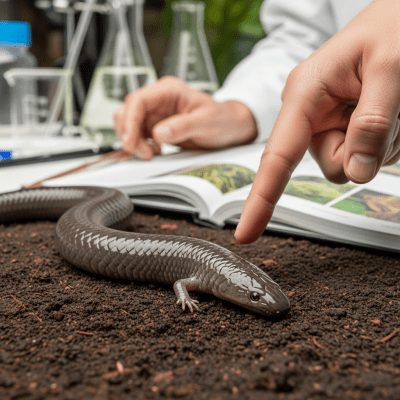
Direct human interaction with the Common Caecilian is rare due to its secretive habits and underground existence. It is not utilized for food, trade, or pets, and holds minimal economic value. Its significance lies in ecological and scientific contexts, where researchers study its biology to understand soil health, amphibian evolution, and environmental impacts. Conservationists also use its presence as an indicator of ecosystem integrity.
The Common Caecilian is not known to be invasive or subject to regulation outside its native range. Its specialized habitat requirements and limited dispersal capacity restrict its distribution to suitable environments in South Asia, with no documented cases of introduction or invasive populations elsewhere.