
Alpine Newt
The Alpine Newt (Ichthyosaura alpestris) is a vividly colored, medium-sized salamander native to central and southern Europe, renowned for its adaptability to both aquatic and terrestrial environments.
The Alpine Newt (Ichthyosaura alpestris) is a vividly colored, medium-sized salamander native to central and southern Europe, renowned for its adaptability to both aquatic and terrestrial environments.
First described by Laurenti in 1768, the Alpine Newt traces its origins to the mountainous regions of central and southern Europe. Its evolutionary lineage is rooted within the family Salamandridae, and the species has diversified into several subspecies, each reflecting unique geographic and morphological traits shaped by the varied landscapes of its native range.
The Alpine Newt belongs to the class Amphibia, order Caudata (also known as Urodela), and family Salamandridae. Its current genus, Ichthyosaura, reflects modern molecular and morphological revisions. As a salamander, it shares close relations with other newts and exhibits the classic amphibian dual life cycle, bridging aquatic and terrestrial worlds.
Medium in size, Alpine Newts typically measure 7–12 cm in length. Breeding males are striking, with vivid blue flanks, a spotted throat, and a bright orange belly, while females and non-breeding males display more muted hues. Their skin is smooth and moist, perfectly adapted for life both in water and on land. The species’ elegant coloration and sleek form make it a standout among European amphibians.
Alpine Newts are known for their seasonal migrations, moving between terrestrial habitats and aquatic breeding sites such as ponds and lakes. During the breeding season, males display vibrant colors to attract mates. Eggs are laid individually on aquatic vegetation, and the aquatic larvae undergo metamorphosis before transitioning to land. While not utilized commercially, Alpine Newts are sometimes kept in captivity for research and educational purposes.
Bring this kind into your world illustrated posters, mugs, and shirts.

Archival print, museum-grade paper
Buy Poster
Stoneware mug, dishwasher safe
Buy Mug
Soft cotton tee, unisex sizes
Buy ShirtThough not prominent in folklore or art, the Alpine Newt holds significance in European natural history and environmental education. Its presence in regional field guides and its role as a study species in ecological and evolutionary research underscore its importance in scientific and cultural contexts.
Alpine Newts are native to central and southern Europe, occupying a range of aquatic habitats such as ponds, lakes, and slow-moving streams, as well as surrounding terrestrial environments. They are particularly notable for their ability to live at high elevations, up to 2,500 meters, where they exploit both water and land throughout the year.




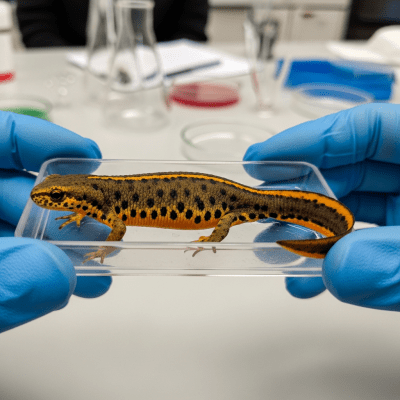

The Alpine Newt’s life cycle features a seasonal migration between terrestrial and aquatic habitats. Breeding occurs in water, where females lay eggs individually on aquatic vegetation. Larval development is entirely aquatic, with metamorphosis taking place after several months, allowing juveniles to transition to terrestrial life until the next breeding season.
While specific dietary details are not provided, Alpine Newts, like most salamanders, are carnivorous and typically feed on small aquatic invertebrates, insects, and larvae. Their feeding behavior is adapted to both aquatic and terrestrial settings, depending on the season and life stage.
As a key representative of the family Salamandridae, the Alpine Newt plays an important role in its ecosystem. It serves as both predator and prey, contributing to the regulation of aquatic invertebrate populations and acting as an indicator of environmental health due to its sensitivity to habitat changes and pollution.
The Alpine Newt is widely distributed and generally considered resilient, but local populations may face threats from habitat loss, pollution, and collection pressures. Conservation measures, including habitat protection and regulation of wild collection, are in place in several regions to safeguard this species.
Alpine Newts are notably tolerant of cold and can thrive at high elevations. However, they are vulnerable to environmental stressors such as habitat destruction, water pollution, and disease. Their ability to migrate between habitats and adapt to varying conditions provides some resilience, but ongoing conservation efforts remain important for their continued survival.
Human interaction with Alpine Newts is primarily limited to educational and research contexts, as well as the pet trade. There is no known culinary use. In some areas, regulations restrict wild collection to protect natural populations and maintain ecological balance.
While not considered invasive, the Alpine Newt’s collection from the wild is regulated or prohibited in certain regions due to conservation concerns, ensuring that populations remain stable and ecosystems are not disrupted.