Origin Story

First described in 1853 by Baird and Girard, the Western Diamondback Rattlesnake is a naturally occurring species originating from Texas and surrounding areas. It is not a product of captive breeding or hybridization but a wild lineage adapted to the deserts and semi-arid landscapes of its native range.

Classification

This species belongs to the class Reptilia, order Squamata, and family Viperidae. Within the genus Crotalus, it is identified as Crotalus atrox, placing it firmly among venomous pit vipers known for their heat-sensing pits and rattles.

Appearance or Form

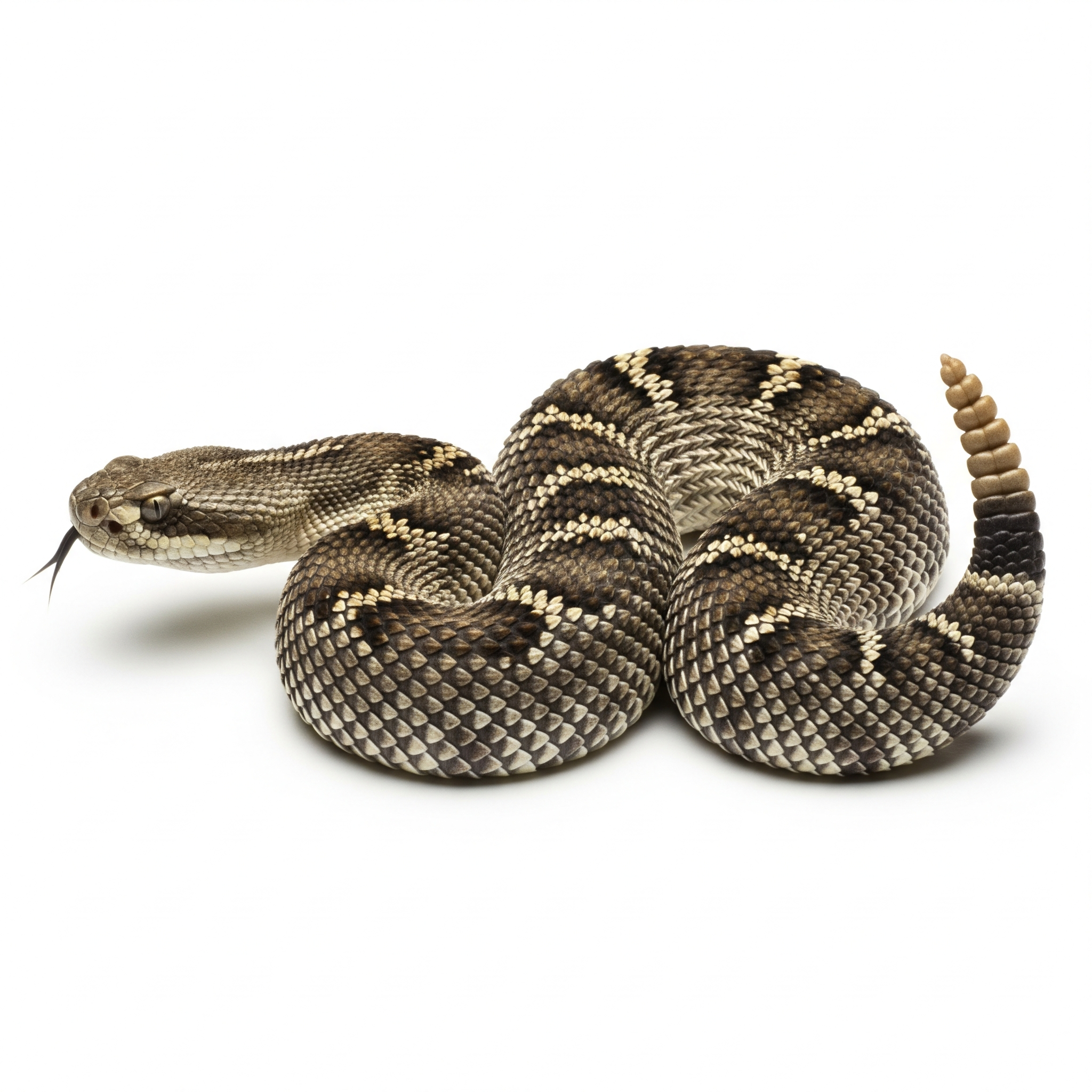
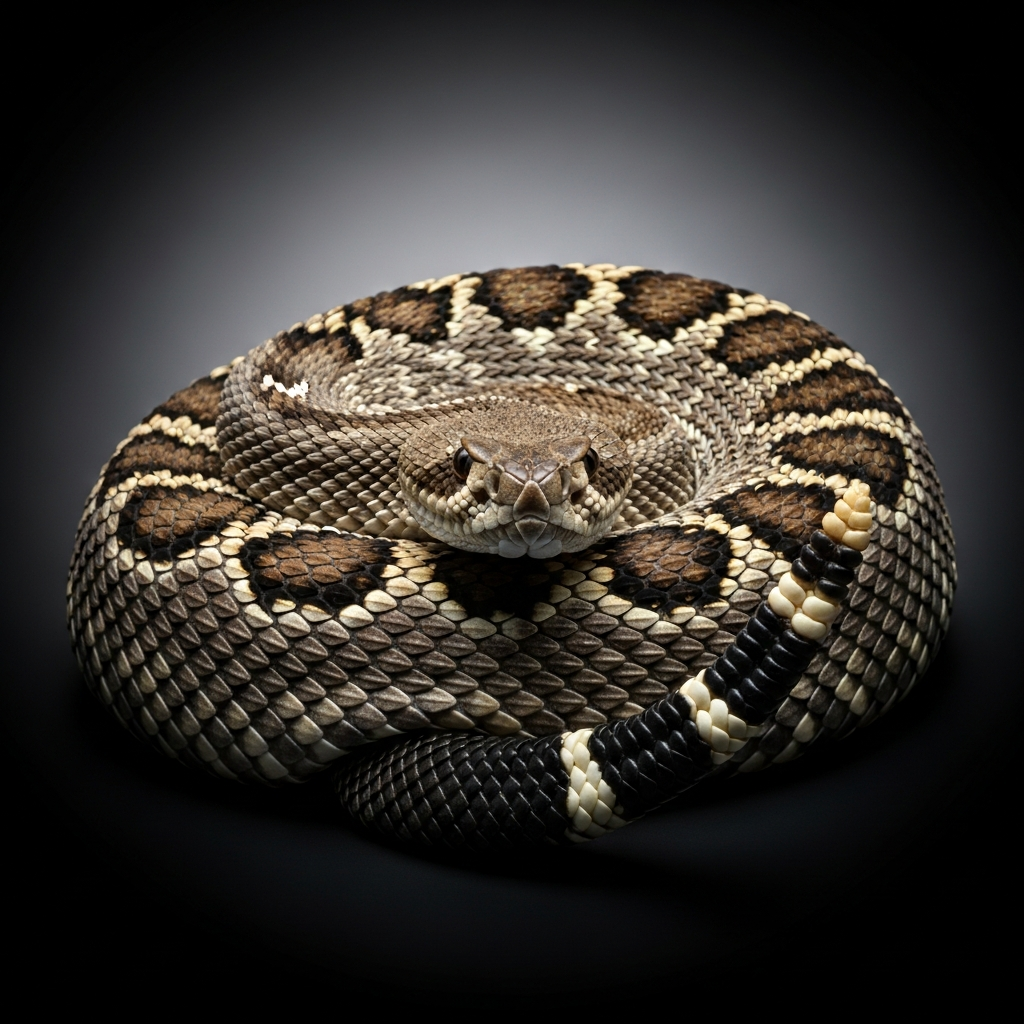
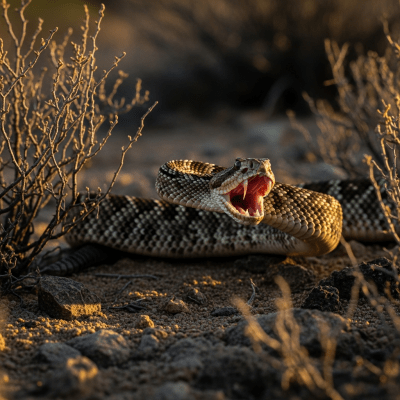
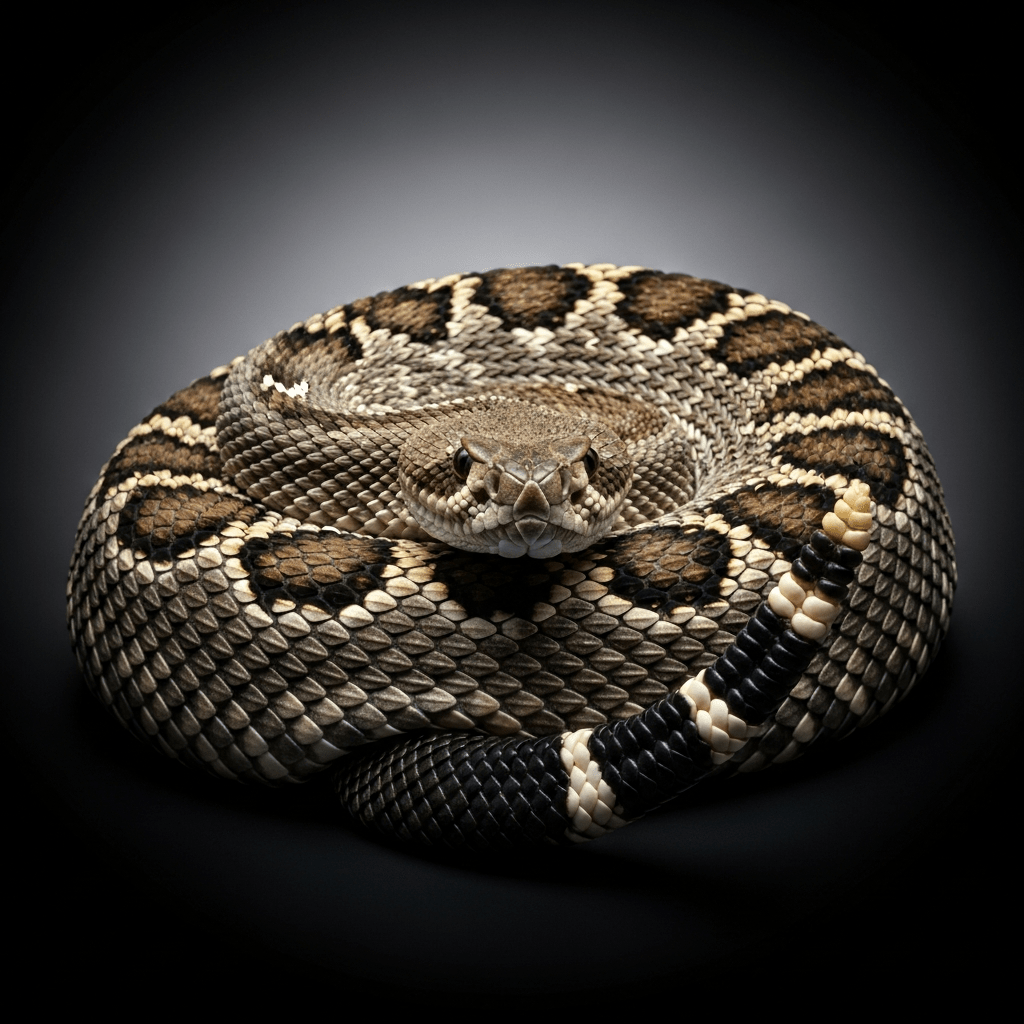
The Western Diamondback is a robust snake typically measuring 76 to 150 cm in length, with some individuals surpassing 213 cm. Its coloration ranges from grayish-brown to reddish, marked by bold, dark diamond-shaped blotches edged with lighter scales. The triangular head features heat-sensing pit organs between the eyes and nostrils, while the tail displays alternating black and white bands ending in a keratinous rattle that produces its signature sound.

Behavior or Usage

This terrestrial carnivore plays a vital ecological role as both predator and prey within its habitat. It hunts small mammals, birds, and reptiles, using venom that is hemotoxic to immobilize prey. The species is adapted to survive in arid environments, enduring long periods without water. Females give birth to live young after a gestation of four to five months, typically producing 10 to 20 offspring per litter.

Merchandise & Prints

Bring this kind into your world � illustrated posters, mugs, and shirts.

Western Diamondback Rattlesnake Western Diamondback Rattlesnake Poster

Western Diamondback Rattlesnake Poster

Archival print, museum-grade paper

Western Diamondback Rattlesnake Western Diamondback Rattlesnake Mug

Western Diamondback Rattlesnake Mug

Stoneware mug, dishwasher safe

Western Diamondback Rattlesnake Western Diamondback Rattlesnake Shirt

Western Diamondback Rattlesnake Shirt

Soft cotton tee, unisex sizes

Attributes & Insights

Taxon-Specific Insights

🌍Cultural Significance

The Western Diamondback Rattlesnake holds a prominent place in the cultural identity of the American Southwest. Its rattling tail is a symbol of warning and survival, often featured in Native American art and folklore. Today, it serves as an emblem in wildlife education, ecotourism, and regional symbolism, embodying the rugged spirit of desert landscapes.

📌Notable Facts

  • Adults can exceed two meters in length, making them one of the largest rattlesnake species.
  • The venom is hemotoxic, causing tissue damage and blood clotting disorders.
  • Its rattle is made of keratin and produces a distinctive warning sound to deter threats.
  • Despite its venom, it plays a crucial role in controlling rodent populations.
  • It can survive extended periods without water, an adaptation to its harsh environment.

🌍Habitat And Distribution

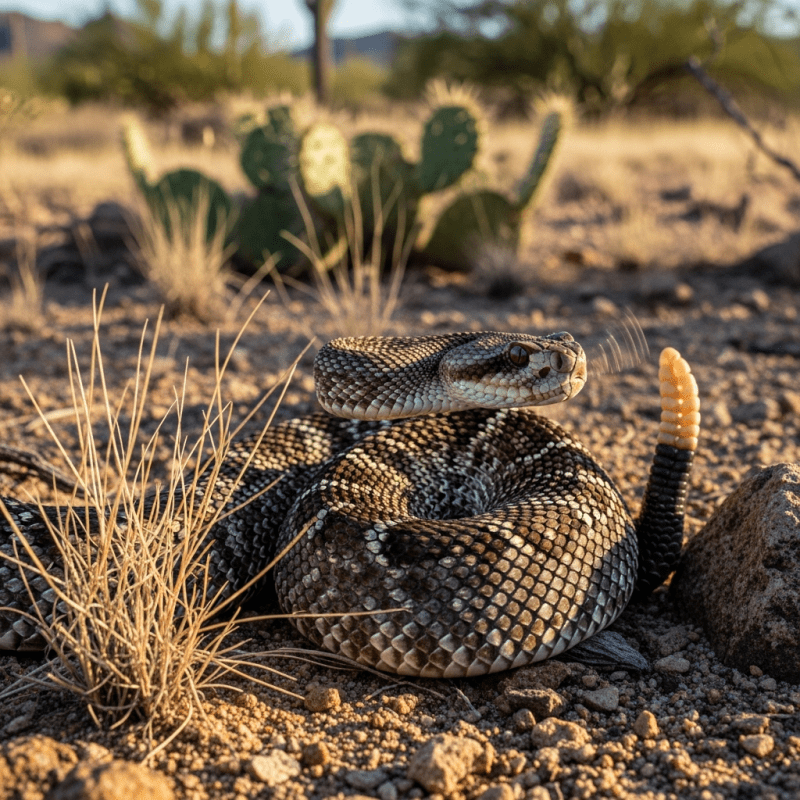
The Western Diamondback thrives in arid and semi-arid habitats across the southwestern United States—including Texas, Arizona, New Mexico, and Oklahoma—and northern Mexico. It favors deserts, grasslands, rocky hillsides, and scrublands where it can find shelter and prey.

Visual Variations

High quality studio photograph of a Western Diamondback Rattlesnake, belonging to the taxonomy reptiles
A detailed image of a Western Diamondback Rattlesnake (reptiles) in its typical natural habitat
Scientific cross-sectional illustration of a Western Diamondback Rattlesnake
A close-up macro photograph of the skin or scales of a Western Diamondback Rattlesnake
A dynamic action shot of a Western Diamondback Rattlesnake, part of the taxonomy reptiles, in motion such as climbing, swimming, basking, or hunting in its environment

Composition & Context

Taxon-Specific Insights

🦎Reproduction And Lifecycle

This species is ovoviviparous, with females giving birth to live young rather than laying eggs. After a gestation period of four to five months, litters typically consist of 10 to 20 offspring. Juveniles grow rapidly and reach sexual maturity within a few years. In the wild, individuals may live between 10 and 20 years.

⚠️Conservation And Threats

While not currently listed as threatened, the Western Diamondback faces pressures from habitat fragmentation, road mortality, and human persecution. Its adaptability to arid environments helps its survival, but ongoing habitat loss could impact populations. Conservation efforts focus on habitat preservation and public education to reduce unnecessary killings.

🤝Interaction With Humans

The Western Diamondback has a complex relationship with humans. It is sometimes hunted for its skin, used in leather goods, and its rattle is collected as a souvenir. Venom is harvested for research and antivenom production. Though occasionally consumed as novelty food, it is primarily valued for its ecological role and as a symbol in regional culture. Human activities, however, can lead to conflict and mortality for the species.

Faq

Is the Western Diamondback Rattlesnake dangerous to humans? Yes, its venom is potent and can cause serious injury, but bites are rarely fatal with prompt medical treatment.

Where is this rattlesnake commonly found? It inhabits arid and semi-arid regions of the southwestern U.S. and northern Mexico.

Does it lay eggs? No, females give birth to live young after a gestation period of several months.