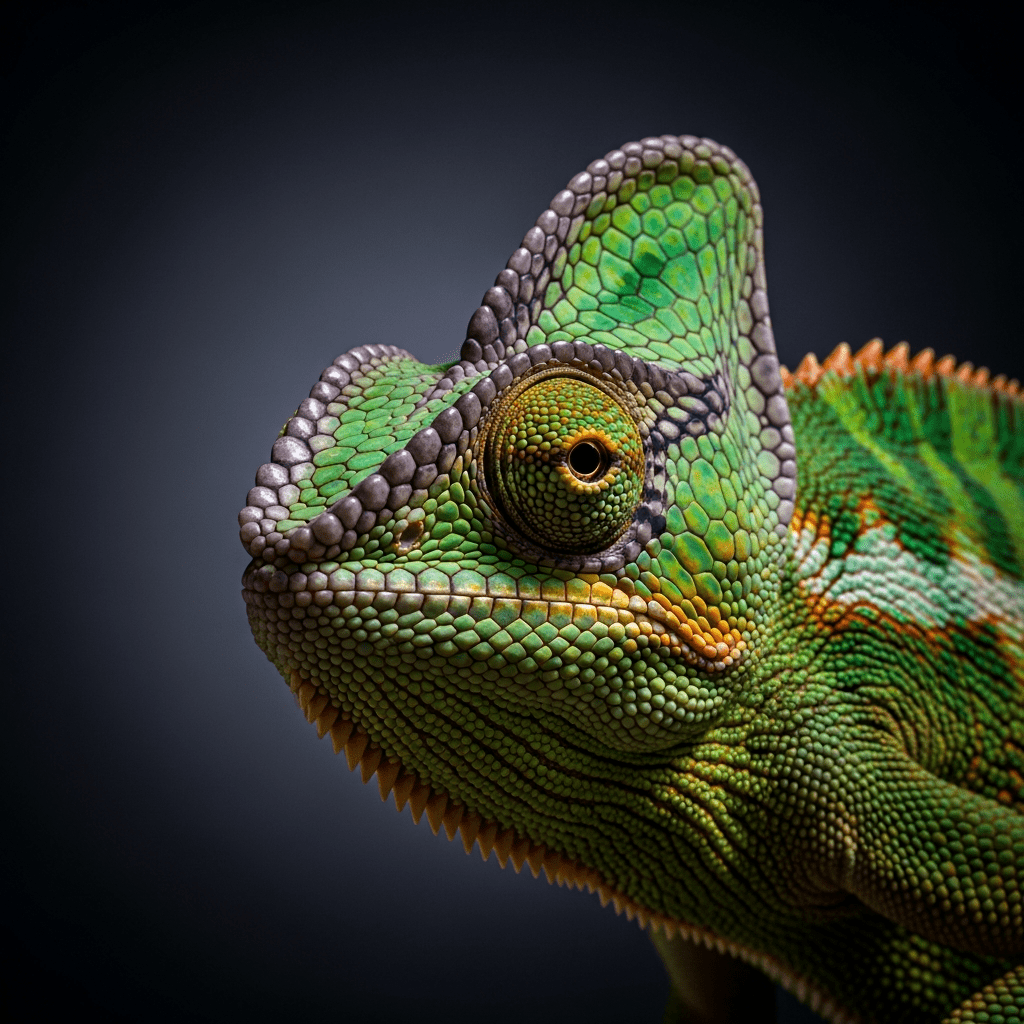
Veiled Chameleon
The Veiled Chameleon (Chamaeleo calyptratus) is a vibrant, arboreal lizard native to the Arabian Peninsula, celebrated for its distinctive helmet-like casque and remarkable ability to change color.
The Veiled Chameleon (Chamaeleo calyptratus) is a vibrant, arboreal lizard native to the Arabian Peninsula, celebrated for its distinctive helmet-like casque and remarkable ability to change color.
First described in 1851 by Duméril and Bibron, the Veiled Chameleon originates from Yemen and southwestern Saudi Arabia. It inhabits mountainous and coastal arboreal environments, with captive populations worldwide primarily descended from wild-caught imports in the late 20th century.
Belonging to the class Reptilia, the Veiled Chameleon is classified within the order Squamata, family Chamaeleonidae, genus Chamaeleo, and species calyptratus. This places it among the true chameleons, a group known for their specialized morphology and color-changing capabilities.
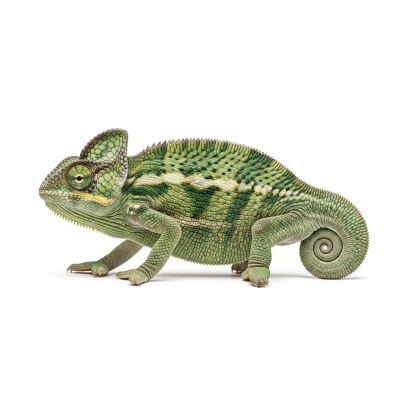
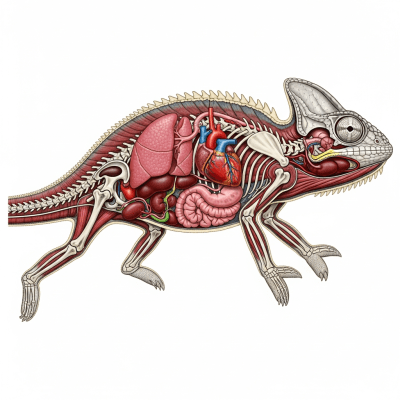
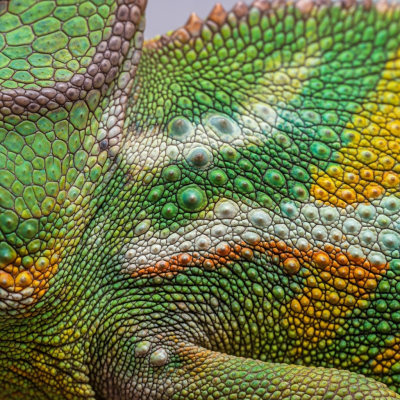
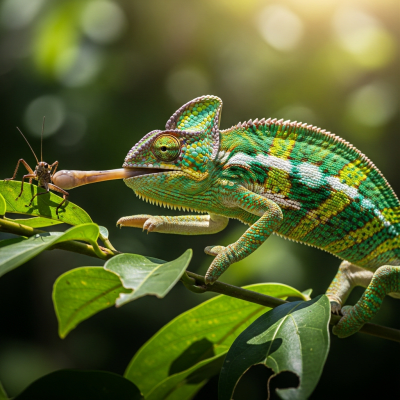
The Veiled Chameleon features a tall, laterally compressed body with a prominent casque atop its head, resembling a helmet. Males grow larger, reaching 35 to 61 cm in total length, while females are smaller at 28 to 33 cm. Its coloration varies from bright green to yellow, blue, and brown, shifting rapidly to reflect mood, health, or social signals. Equipped with independently mobile eyes, zygodactylous feet, and a prehensile tail, it is perfectly adapted for life in the trees.
Active during the day, the Veiled Chameleon primarily feeds on insects but may opportunistically consume vegetation. Its arboreal lifestyle is supported by its gripping feet and tail, allowing agile movement through branches. Juveniles grow rapidly, reaching sexual maturity within 4 to 6 months. While tolerant of varying humidity and temperature, they require proper UVB exposure and calcium to avoid metabolic bone disease in captivity.
Bring this kind into your world illustrated posters, mugs, and shirts.
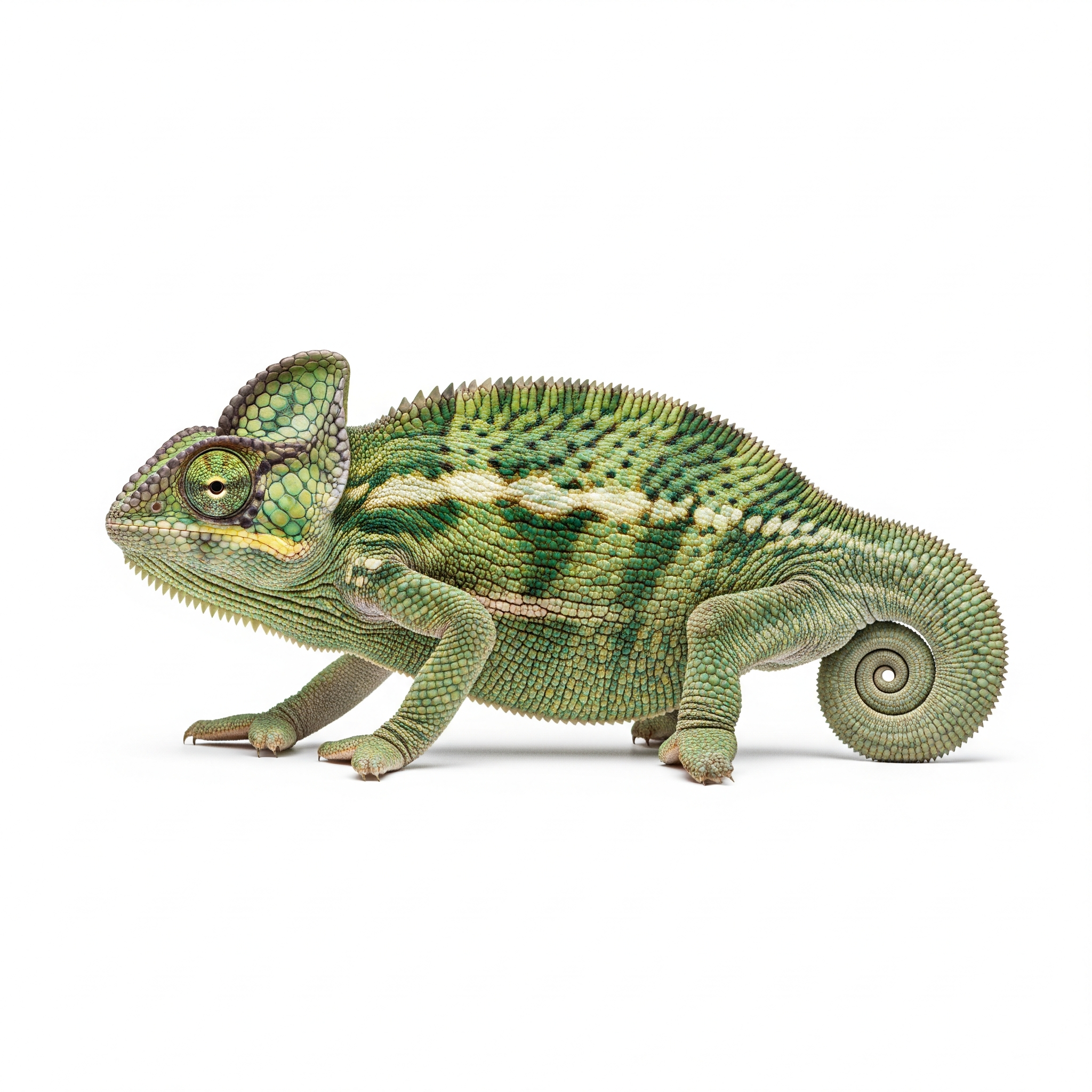
Archival print, museum-grade paper
Buy Poster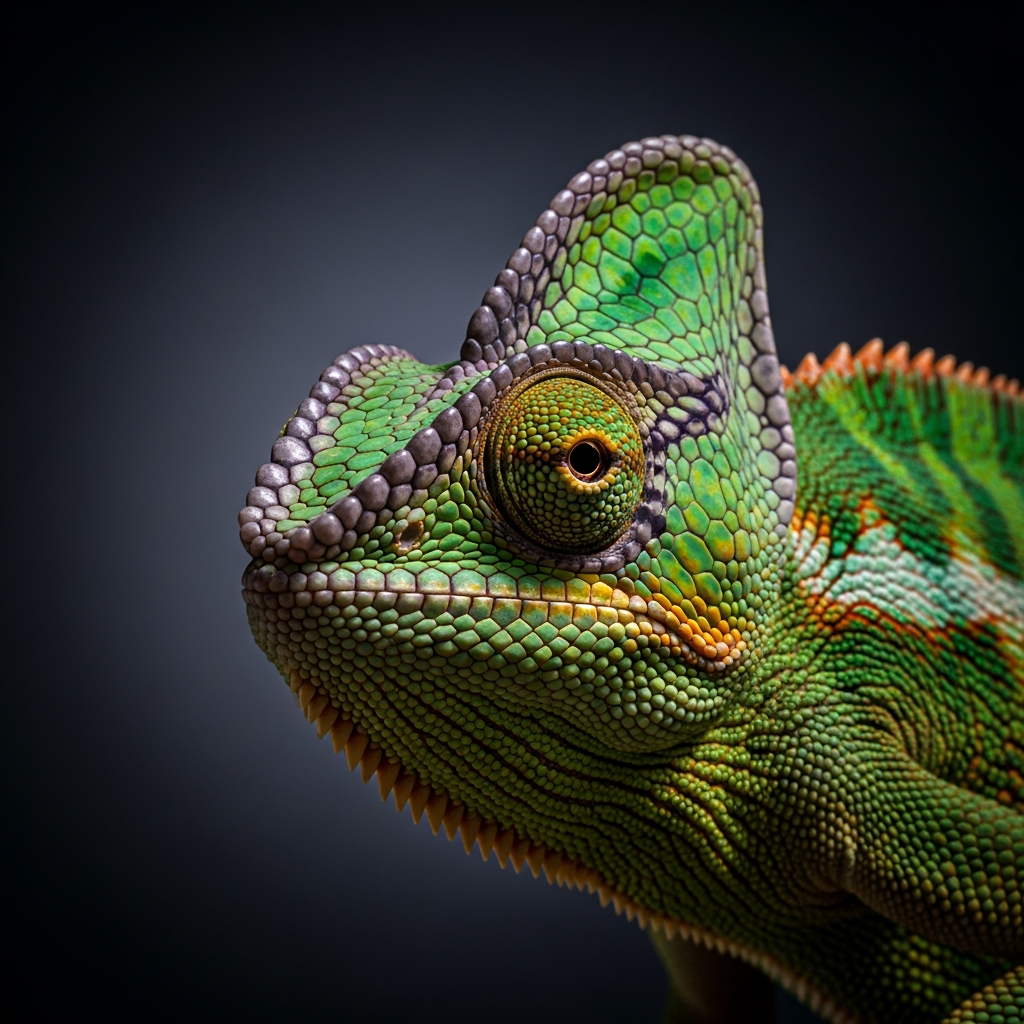
Stoneware mug, dishwasher safe
Buy Mug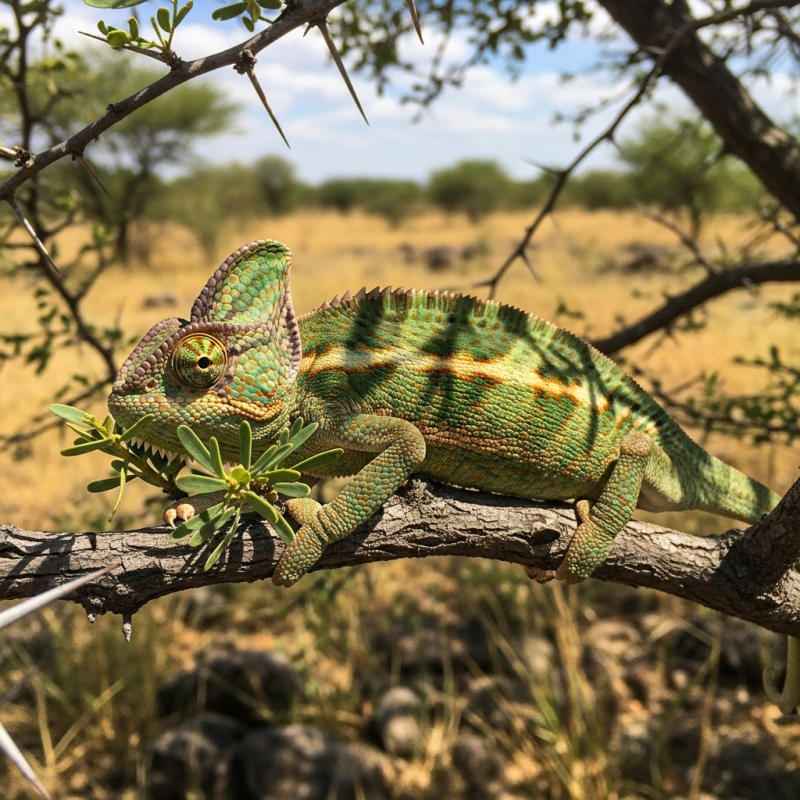
Soft cotton tee, unisex sizes
Buy ShirtThough not deeply rooted in traditional art or mythology, the Veiled Chameleon has gained popularity in modern culture as an exotic pet and educational ambassador. Its striking appearance and color-changing ability captivate enthusiasts and educators alike, making it a symbol of reptilian adaptability and beauty.
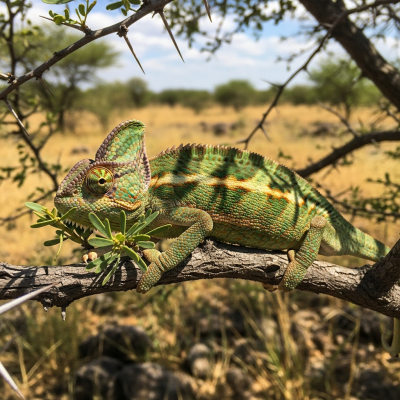
The Veiled Chameleon inhabits arboreal environments across Yemen and southwestern Saudi Arabia, favoring mountainous and coastal regions. It thrives in trees and shrubs where it can hunt insects and regulate its temperature using its casque.
Sexual maturity is reached rapidly, typically within 4 to 6 months. Females lay large clutches of 30 to 85 eggs, which develop underground before hatching. Lifespan averages around 5 years, with growth and development accelerated under optimal conditions.
The Veiled Chameleon currently lacks a formal IUCN conservation status, and no major threats have been identified. Its wide captive breeding reduces pressure on wild populations, though habitat disturbance in its native range could pose localized risks. There are no CITES restrictions specific to this species.
Primarily valued as an exotic pet, the Veiled Chameleon is widely bred commercially and kept in private collections and educational exhibits. While it has no culinary use, its popularity in the pet trade necessitates responsible husbandry and regulation to ensure animal welfare and prevent wild population depletion.