Tuatara
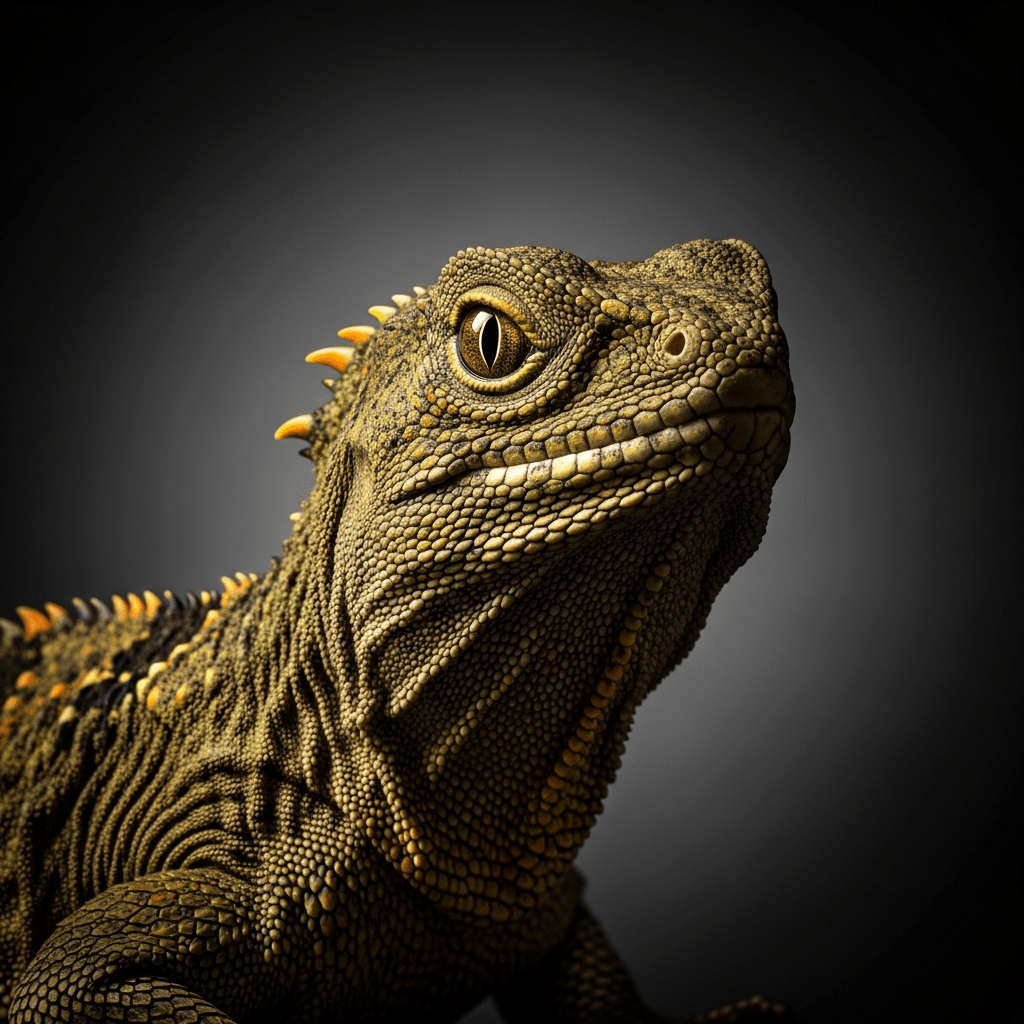
The tuatara (Sphenodon punctatus) is a distinctive reptile native to New Zealand, renowned as the sole surviving member of the ancient order Rhynchocephalia and often called a living fossil.
The tuatara (Sphenodon punctatus) is a distinctive reptile native to New Zealand, renowned as the sole surviving member of the ancient order Rhynchocephalia and often called a living fossil.
First described scientifically by John Edward Gray in 1831, the tuatara traces its lineage back to the Mesozoic era. All existing populations descend from wild individuals native to New Zealand, primarily inhabiting offshore islands such as Stephens Island and Little Barrier Island, with some protected mainland sanctuaries. Conservation breeding programs in New Zealand help maintain its genetic heritage without any known hybridization.
The tuatara belongs to the class Reptilia and is uniquely placed in the order Rhynchocephalia, which it solely represents today. Its genus is Sphenodon and species punctatus. This distinct classification highlights its evolutionary separation from other reptiles like lizards and snakes.
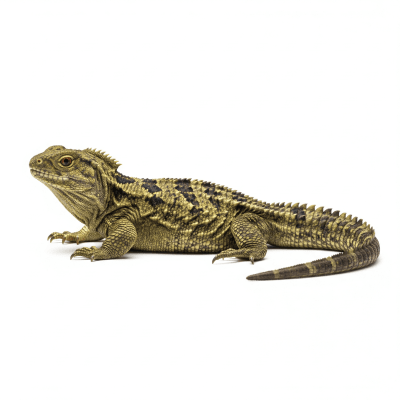
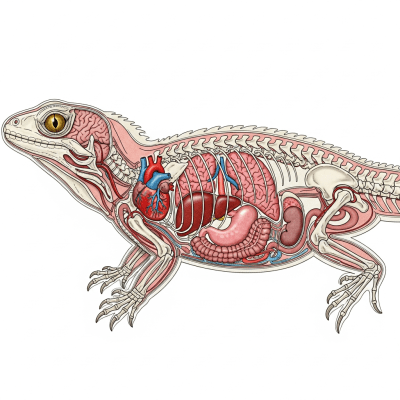
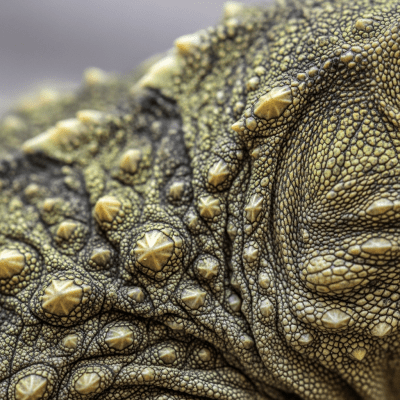
Tuataras are medium-sized reptiles, typically measuring around 50 centimeters in length and weighing close to one kilogram. They have a robust body with a spiny crest running along the back, more pronounced in males. Their coloration ranges from olive green to brownish-grey, sometimes adorned with white spots. A hallmark feature is the third "parietal" eye visible in juveniles, and their acrodont dentition includes two rows of teeth on the upper jaw and one on the lower, adapted for a shearing bite.
Primarily terrestrial, tuataras exhibit slow growth rates and remarkable longevity, often living over 60 years and sometimes exceeding a century. They tolerate cold climates, remaining active at temperatures as low as 5°C. Their low metabolic rate and disease resistance contribute to their survival, though they remain vulnerable to predation and habitat disruption.
Bring this kind into your world illustrated posters, mugs, and shirts.
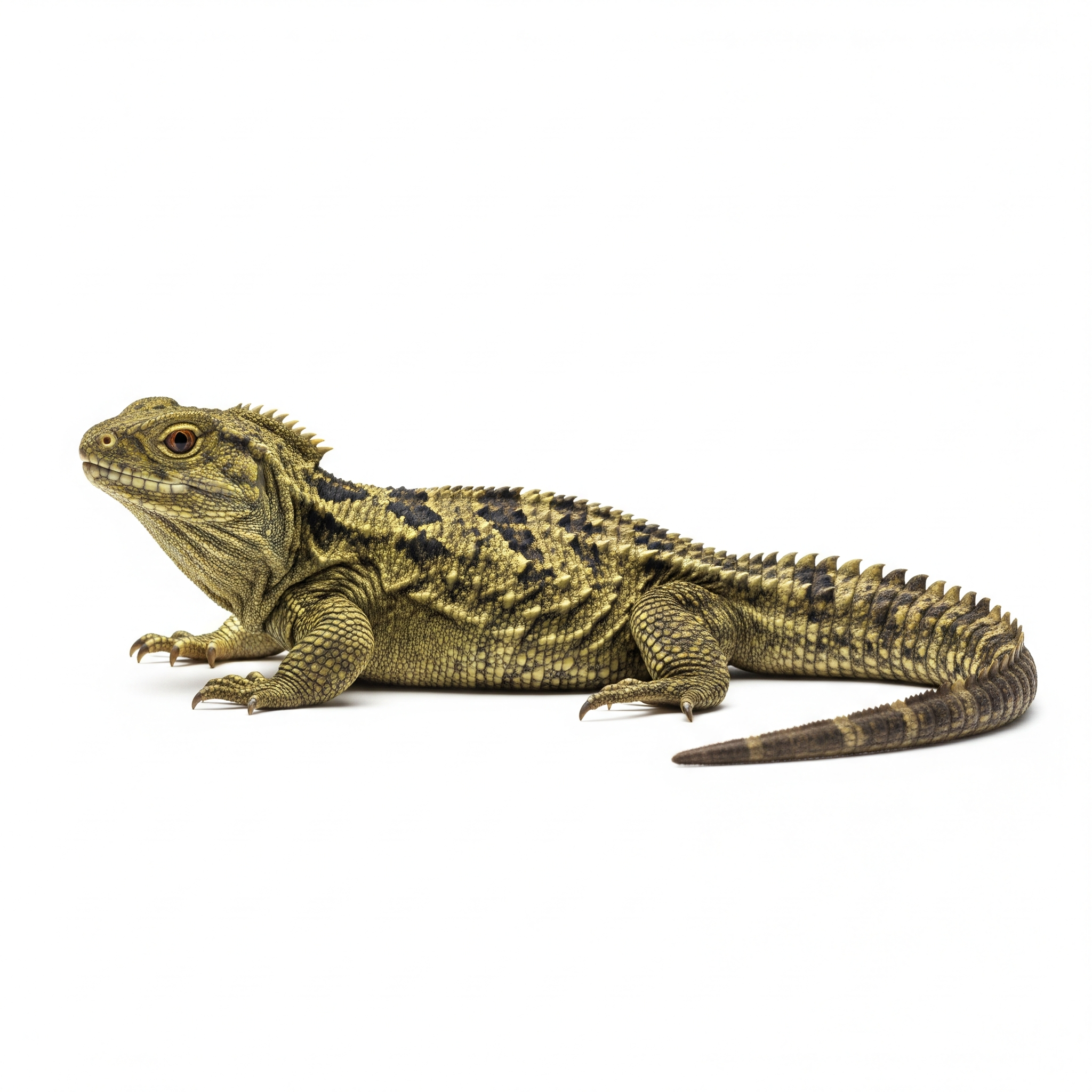
Archival print, museum-grade paper
Buy Poster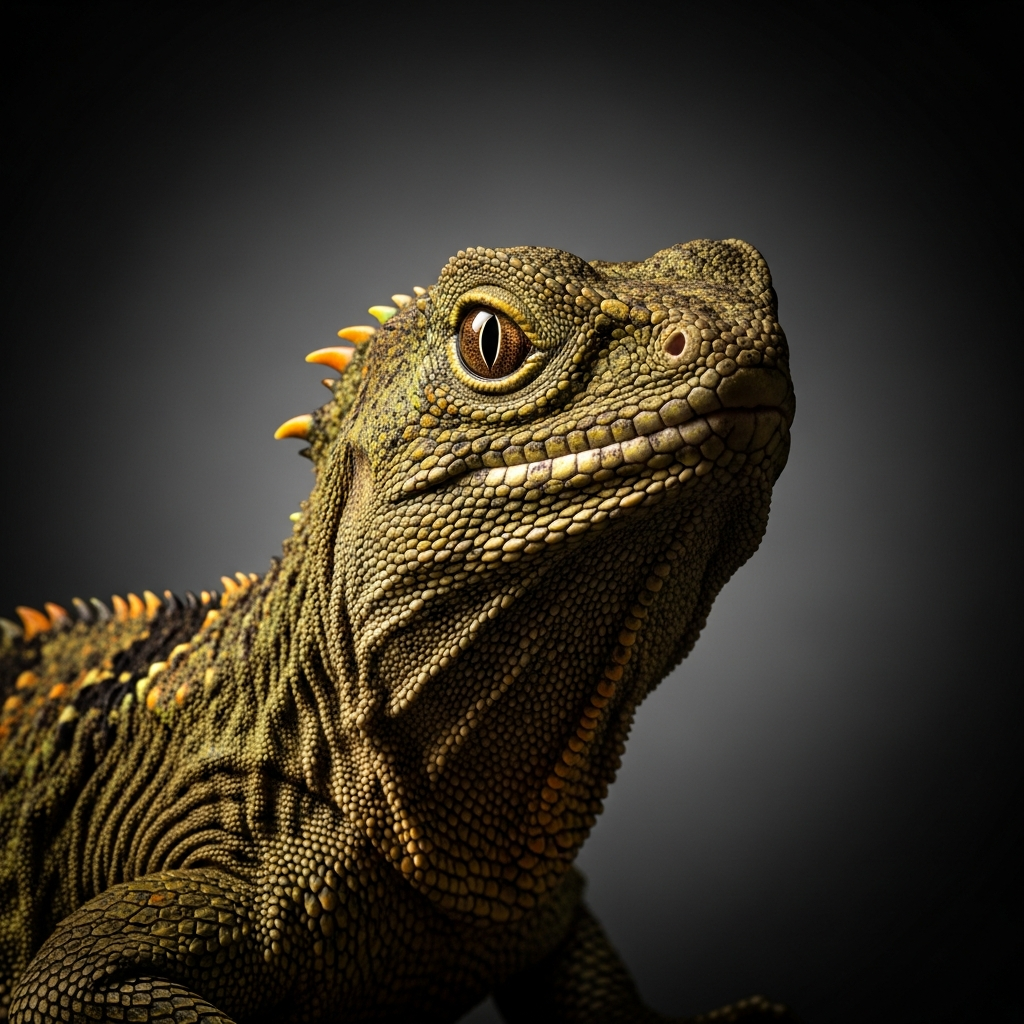
Stoneware mug, dishwasher safe
Buy Mug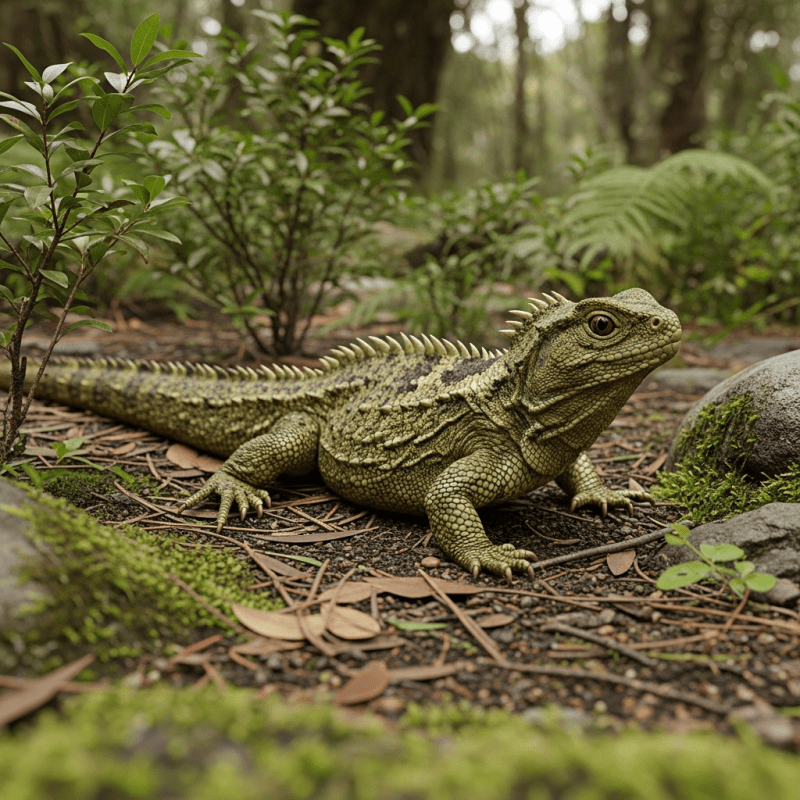
Soft cotton tee, unisex sizes
Buy ShirtThe tuatara holds deep cultural importance for the Māori people of New Zealand, who regard it as a taonga, or treasured species. Beyond cultural reverence, it serves as a flagship species for conservation efforts and a subject of evolutionary research, symbolizing ancient life forms that have persisted into the modern era.
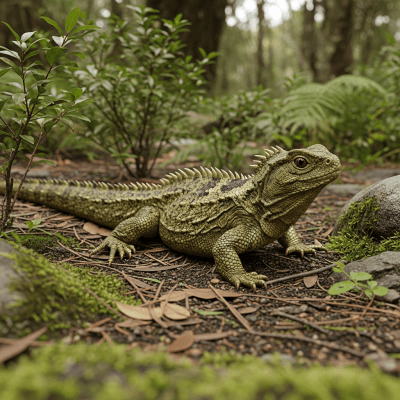
The tuatara inhabits terrestrial environments on New Zealand's offshore islands such as Stephens Island and Little Barrier Island, as well as select mainland sanctuaries. These habitats provide the cool, temperate conditions and shelter necessary for their survival, free from introduced predators.

Tuataras reproduce by laying eggs every two to five years. Their oviparous reproduction involves an exceptionally long incubation period of 11 to 16 months—the longest among reptiles. Juveniles display the characteristic third parietal eye, which fades with age. Growth is slow, and individuals reach maturity over several years, contributing to their extended lifespan.
While the tuatara is not currently classified with a specific IUCN status in this data, it faces threats from habitat disturbance and introduced predators. Conservation efforts in New Zealand include protected reserves and breeding programs to safeguard its populations. Strict legal protections prohibit commercial exploitation, ensuring its survival as a unique species.
Humans impact tuataras primarily through conservation initiatives aimed at preserving their fragile populations. They are not part of the pet trade or culinary use and are protected under New Zealand law. Tuataras are displayed in zoos and wildlife parks for education and research, fostering awareness of their evolutionary significance and ecological role.