
Sulcata Tortoise
The Sulcata Tortoise (Centrochelys sulcata), also known as the African spurred tortoise, is the largest mainland tortoise species, renowned for its impressive size, sandy coloration, and distinctive spurs on its hind legs.
The Sulcata Tortoise (Centrochelys sulcata), also known as the African spurred tortoise, is the largest mainland tortoise species, renowned for its impressive size, sandy coloration, and distinctive spurs on its hind legs.
First described by John Edward Gray in 1831, the Sulcata Tortoise originates from the Sahel region of Africa, spanning countries such as Chad, Sudan, Mali, Niger, and Ethiopia. This species thrives in arid environments at the southern edge of the Sahara Desert. While wild populations remain in these regions, captive-bred Sulcatas are now widespread across the United States, Europe, and Asia, primarily through the exotic pet trade.
The Sulcata Tortoise belongs to the class Reptilia, order Testudines, and family Testudinidae. Its genus is Centrochelys and the species is sulcata. Historically, it has been classified under synonyms such as Geochelone sulcata and Testudo sulcata, reflecting its taxonomic revisions over time.
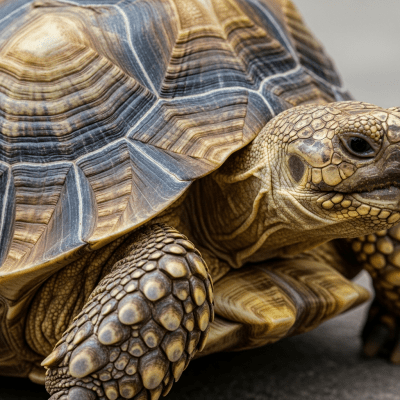
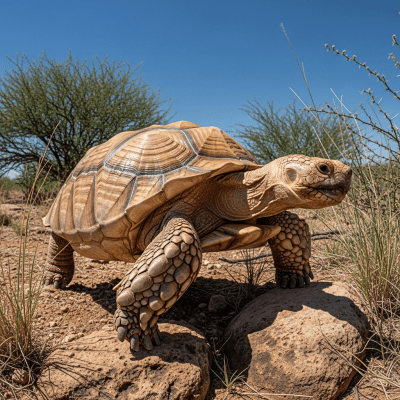
The Sulcata features a high-domed carapace colored sandy to yellow-brown, complemented by a lighter plastron beneath. Its thick, wrinkled skin is well adapted to dry, arid climates. One of its most distinctive traits is the presence of large, conical spurs on its hind legs, alongside deeply serrated anterior scutes that give the shell a rugged texture. Adults typically reach lengths of around 60 cm and can weigh up to 100 kg, making them robust and imposing tortoises.
Primarily diurnal and herbivorous, Sulcata tortoises graze on grasses and succulents native to their arid habitats. They are terrestrial creatures known for their strong burrowing behavior, which helps regulate body temperature and retain moisture in harsh desert conditions. Juveniles grow rapidly, and the species can live for over 70 years under optimal care. While resistant to drought, they are vulnerable to respiratory and metabolic bone diseases if exposed to excessive humidity or poor nutrition.
Bring this kind into your world illustrated posters, mugs, and shirts.

Archival print, museum-grade paper
Buy Poster
Stoneware mug, dishwasher safe
Buy Mug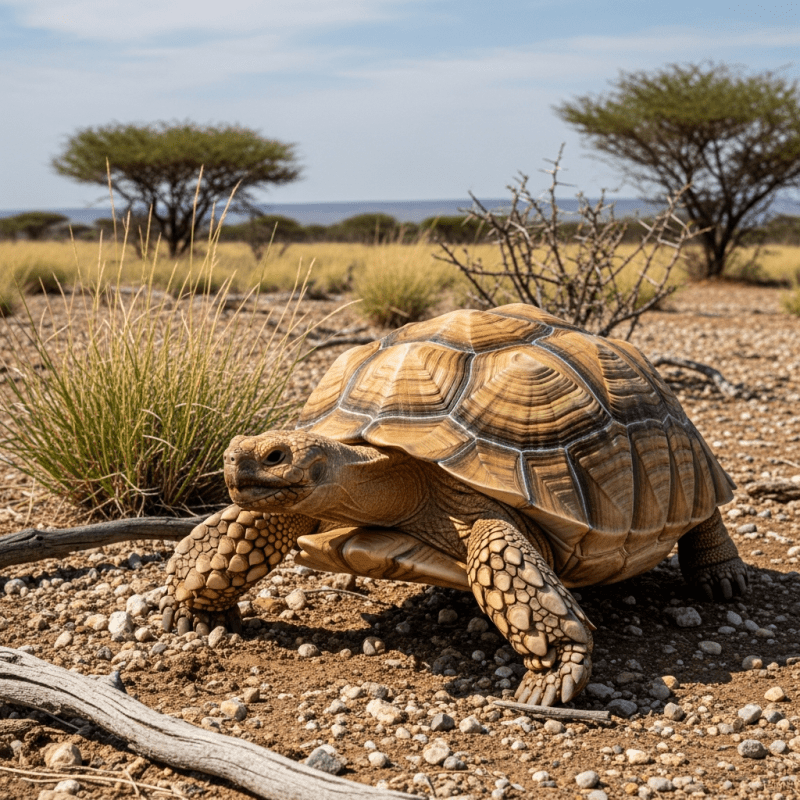
Soft cotton tee, unisex sizes
Buy ShirtWhile the Sulcata Tortoise holds limited traditional cultural roles in its native range, it has gained prominence worldwide as a popular exotic pet and educational ambassador. Its hardy nature and docile temperament have made it a favorite in zoological collections and environmental education programs, symbolizing resilience and adaptation to extreme environments.
The Sulcata Tortoise is native to the Sahel region of Africa, covering parts of Chad, Sudan, Mali, Niger, and Ethiopia. It thrives in arid environments at the southern edge of the Sahara Desert, where it inhabits dry savannas and semi-desert areas. Its strong burrowing habits enable it to cope with the extreme temperatures and scarce water availability characteristic of these habitats.


While specific reproductive details are less documented, Sulcata Tortoises reach sexual maturity after several years, with juveniles exhibiting rapid growth. Females lay clutches of eggs in burrows, where incubation occurs in the warm, dry soil. The species can live for over 70 years, with a lifecycle adapted to survive the challenging conditions of its native arid environment.
Listed under CITES Appendix II, the Sulcata Tortoise faces trade restrictions to prevent overexploitation of wild populations. Although not currently assessed by the IUCN Red List, habitat loss and illegal collection pose potential threats. Conservation efforts focus on regulating trade, promoting captive breeding, and protecting natural habitats to ensure the species' long-term survival.
The Sulcata Tortoise is widely kept as an exotic pet and bred commercially across the globe. Its hardy nature and calm disposition make it a favored species for reptile enthusiasts. Additionally, it serves educational roles in zoos and conservation programs. However, its large size and specialized care requirements mean it is not suitable for all pet owners. Trade in wild-caught individuals is restricted, emphasizing the importance of responsible captive breeding.