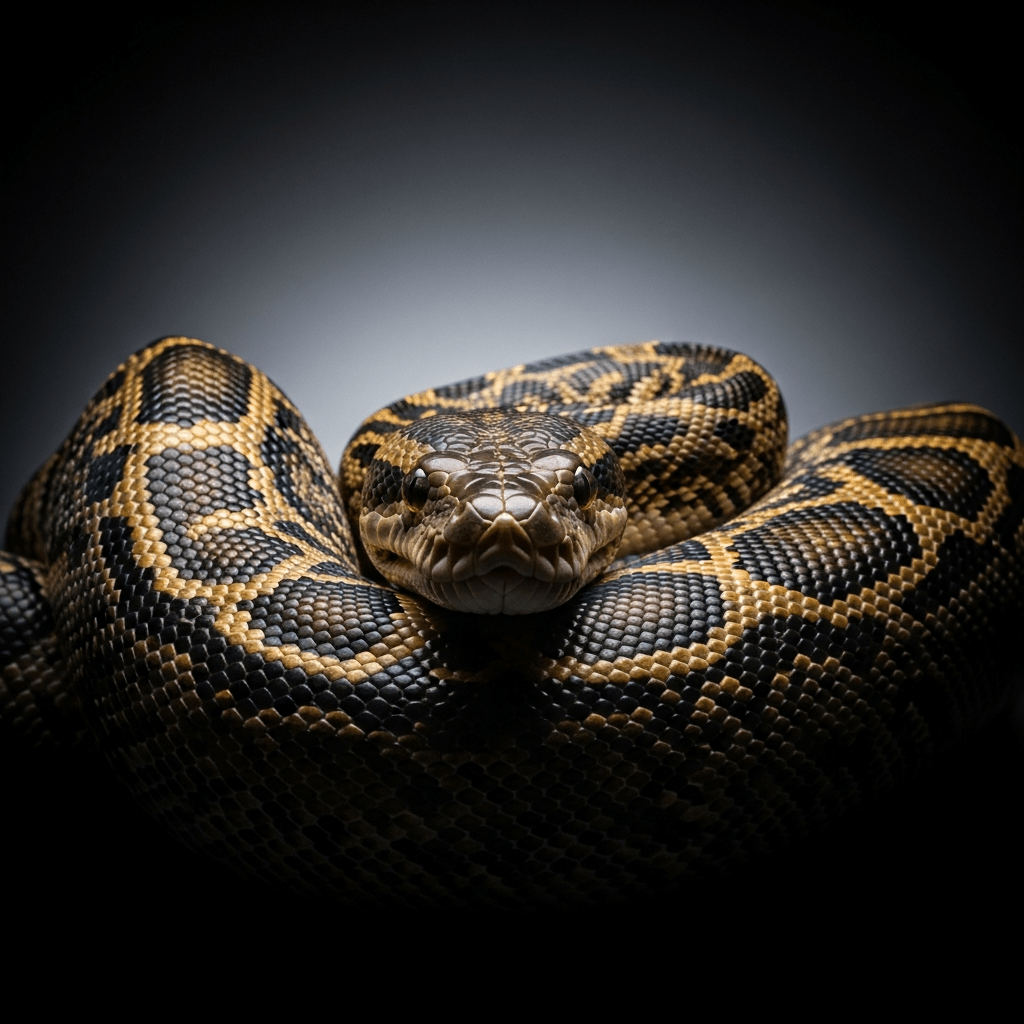
Reticulated Python
The reticulated python (Malayopython reticulatus) is the longest living snake species, celebrated for its striking geometric skin pattern and remarkable length, often exceeding 6 meters.
The reticulated python (Malayopython reticulatus) is the longest living snake species, celebrated for its striking geometric skin pattern and remarkable length, often exceeding 6 meters.
First described in 1837 by Hermann Schlegel, the reticulated python originates from Southeast Asia, with its type locality on the island of Java, Indonesia. It is a wild species with a broad natural distribution, and while captive breeding programs exist worldwide, individual provenance is typically recorded by zoological or commercial breeders.
Belonging to the class Reptilia, the reticulated python is classified within the order Squamata and family Pythonidae. Its genus is Malayopython, and its species name is reticulatus. Historically known as Python reticulatus, it is now recognized under the genus Malayopython.
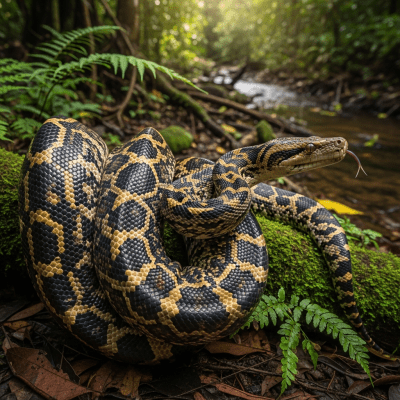
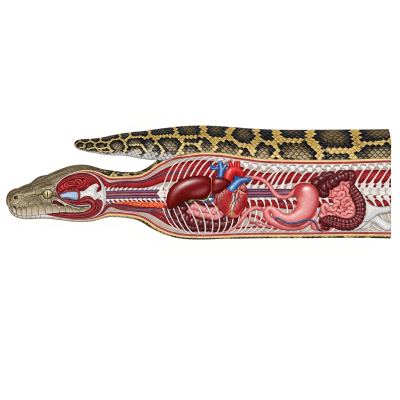
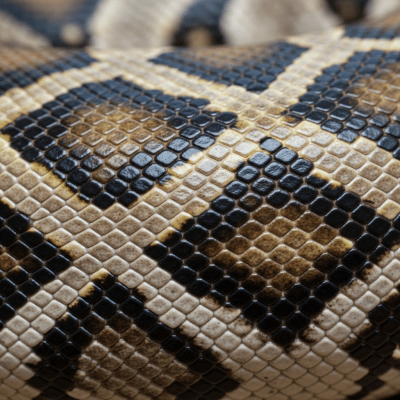
This python features a slender yet muscular body and a distinct triangular head. Its most notable trait is the intricate, net-like pattern of gold, black, white, and brown scales that cover its skin, giving it a reticulated appearance. Adults typically reach lengths of 3 to 6 meters, with some exceptional individuals growing up to 10 meters and weighing as much as 100 kilograms.
The reticulated python is a carnivorous constrictor, subduing prey by coiling around and suffocating it. It inhabits both aquatic and terrestrial environments, demonstrating adaptability across humid habitats. Juveniles grow rapidly, slowing as they mature, and females exhibit maternal care by incubating their eggs until hatching.
Bring this kind into your world illustrated posters, mugs, and shirts.
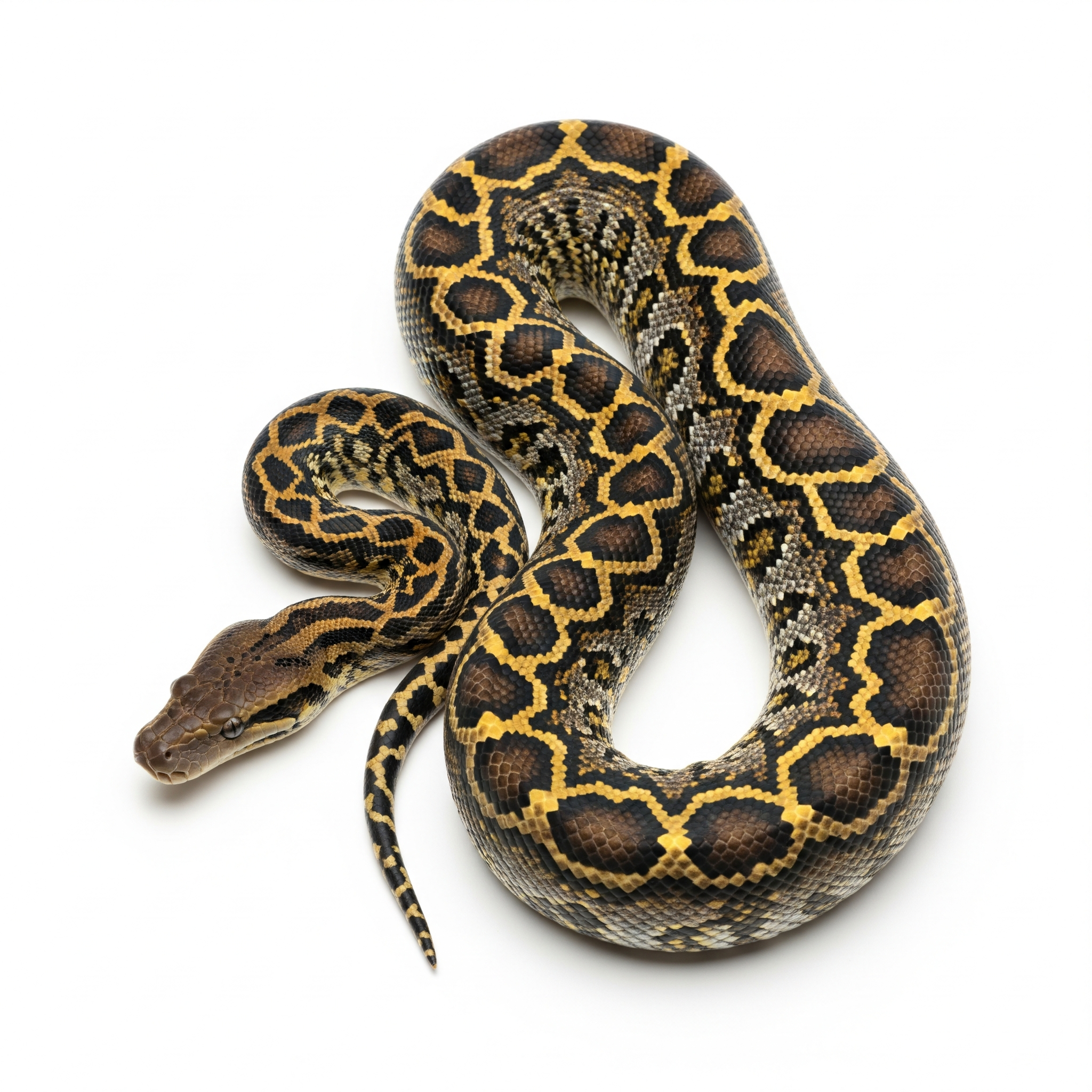
Archival print, museum-grade paper
Buy Poster
Stoneware mug, dishwasher safe
Buy Mug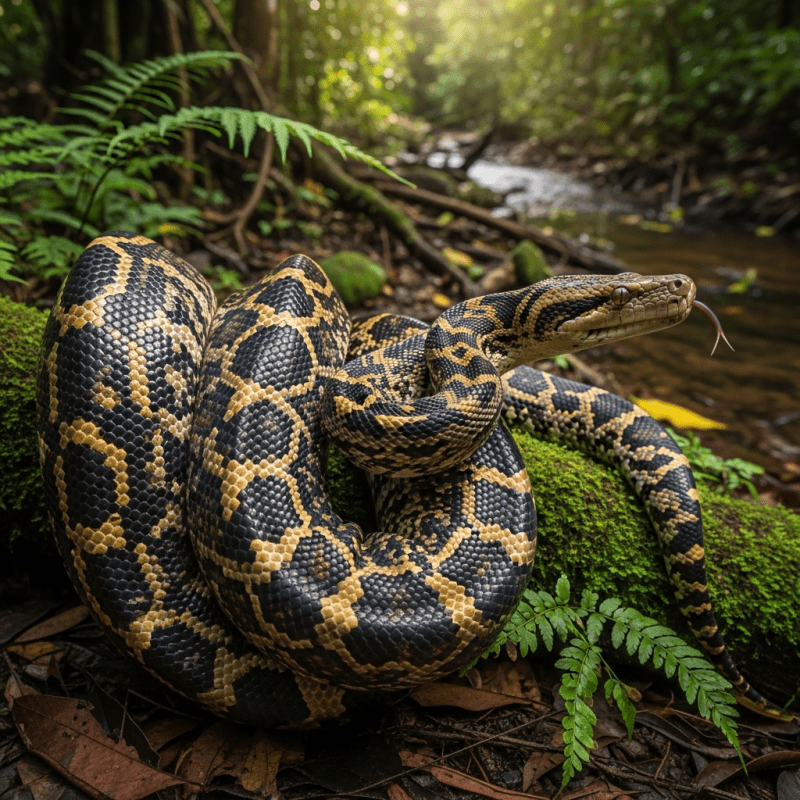
Soft cotton tee, unisex sizes
Buy ShirtIn parts of Southeast Asia, the reticulated python holds cultural importance, appearing in local folklore and traditional medicine. Its striking skin pattern has also inspired artistic representations, while its leather is prized in luxury fashion for items like handbags and belts.
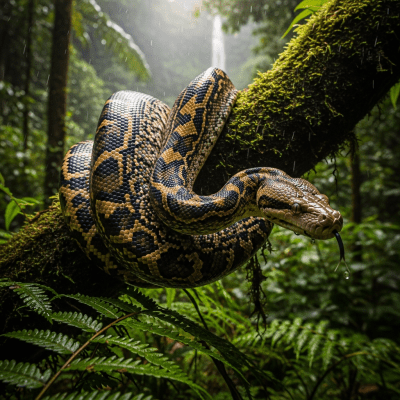
The reticulated python inhabits a wide range of environments across Southeast Asia, including rainforests, wetlands, and riverine areas. It thrives in both aquatic and terrestrial settings, showing remarkable adaptability to humid tropical climates.
Sexual maturity is typically reached between 2 and 4 years of age. The species is oviparous, laying clutches of 15 to 80 eggs. Females demonstrate maternal care by coiling around their eggs to incubate them until they hatch, ensuring optimal temperature and protection during development.
While the reticulated python is not currently assessed by the IUCN Red List, it is protected under CITES Appendix II to regulate international trade and prevent overexploitation. Major threats include habitat loss due to deforestation and hunting for its valuable skin and meat.
Humans interact with reticulated pythons through the pet trade, where they are sought after for their impressive size and appearance. The species is also harvested for its skin, which is used in luxury leather products, and occasionally for local consumption. Conservation regulations require permits for trade to balance human use with species protection.