
Red-Eared Slider
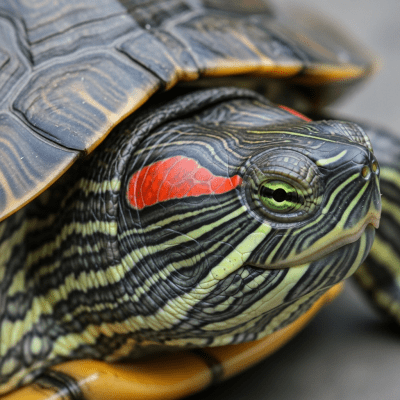
The Red-eared Slider (Trachemys scripta elegans) is a freshwater turtle renowned for the distinctive red stripe behind each eye and its widespread presence as both a native and invasive species.
The Red-eared Slider (Trachemys scripta elegans) is a freshwater turtle renowned for the distinctive red stripe behind each eye and its widespread presence as both a native and invasive species.
Native to the southern United States, particularly the Mississippi River basin, the Red-eared Slider was first described scientifically by Wied-Neuwied in 1839. Its wild populations form the basis for most captive specimens, with no specific breeder or institution linked to its initial discovery.
This turtle belongs to the class Reptilia, order Testudines, family Emydidae, and genus Trachemys. The species is scripta, with the subspecies elegans distinguished by its characteristic red ear markings.
The Red-eared Slider is a medium-sized turtle with an oval, moderately domed green carapace marked by yellowish patterns. Its plastron is yellow with irregular dark spots. The most striking feature is the prominent red patch behind each eye, giving the species its common name. Females tend to be larger than males, while males have longer claws and tails.
Highly adaptable, the Red-eared Slider thrives in various freshwater habitats such as ponds, lakes, and rivers, requiring access to basking sites for thermoregulation. It is omnivorous, feeding on aquatic plants, insects, fish, and carrion. Juveniles grow rapidly under favorable conditions. While tolerant of moderate pollution and climate variability, the species is vulnerable to respiratory infections and shell rot if kept in poor conditions.
Bring this kind into your world illustrated posters, mugs, and shirts.

Archival print, museum-grade paper
Buy Poster
Stoneware mug, dishwasher safe
Buy Mug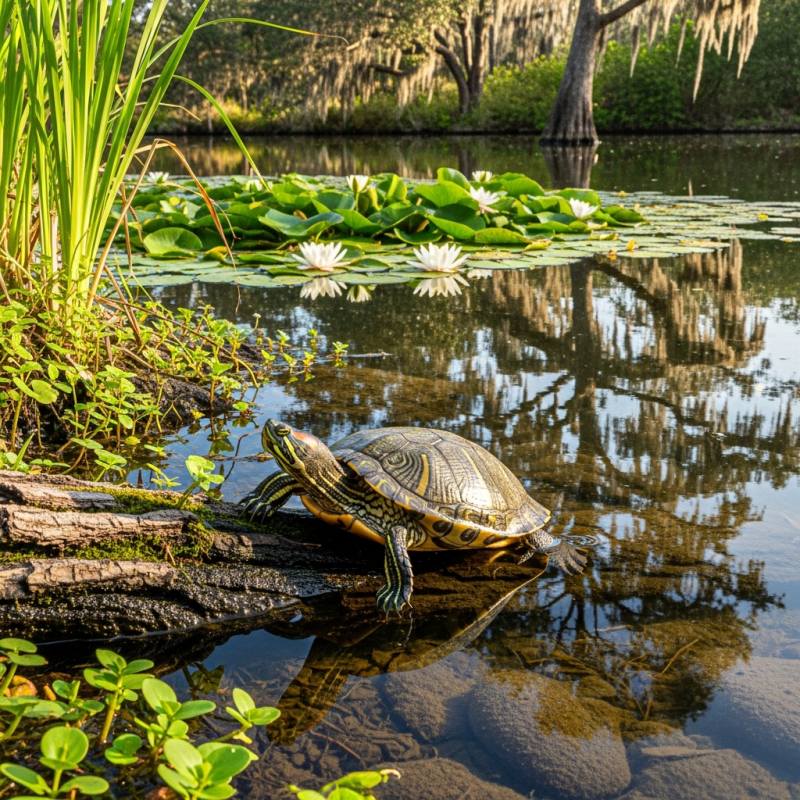
Soft cotton tee, unisex sizes
Buy ShirtAs one of the most popular pet turtles worldwide, the Red-eared Slider features prominently in the pet trade and educational settings. Its vivid markings and manageable size have made it a common subject in herpetological research and public awareness, though its invasive status has also sparked ecological concern and regulatory attention.
The Red-eared Slider inhabits freshwater environments such as ponds, lakes, rivers, and marshes with abundant aquatic vegetation and accessible basking sites. Its native range centers on the southern United States within the Mississippi River basin. Due to the pet trade, established populations now exist across Europe, Asia, and Australia, often thriving in diverse aquatic habitats.




While specific reproductive details are not fully detailed here, Red-eared Sliders typically reach sexual maturity within a few years. Females lay clutches of eggs in sandy or soft soil near water. Hatchlings grow rapidly under optimal conditions, and the species can live for over 30 years in captivity, with shorter lifespans in the wild due to predation and environmental pressures.
Although not currently listed with a specific IUCN status, the Red-eared Slider faces threats primarily from habitat degradation and poor captive care leading to disease. Its invasive populations pose ecological risks by competing with native turtles and altering aquatic ecosystems. Consequently, many regions have implemented trade restrictions and regulations to control its spread.
The Red-eared Slider is deeply intertwined with human activity, chiefly through the global pet trade where it is the most commonly sold freshwater turtle. It serves educational and research purposes but has also become an invasive species in many countries due to release or escape from captivity. These introductions have ecological impacts, prompting legal measures to limit trade and release to protect native biodiversity.