
Painted Turtle
The painted turtle (Chrysemys picta) is a widespread North American freshwater turtle known for its smooth, dark shell accented with vivid red and yellow markings.
The painted turtle (Chrysemys picta) is a widespread North American freshwater turtle known for its smooth, dark shell accented with vivid red and yellow markings.
First described by Johann Gottlob Schneider in 1783, the painted turtle is a wild species native to North America. It naturally inhabits a broad range of freshwater environments without any known captive origin or breeding institution. Four subspecies reflect regional variations across its range.
The painted turtle belongs to the class Reptilia, order Testudines, and family Emydidae. Its genus is Chrysemys and species picta. This classification places it among freshwater turtles distinguished by their shelled bodies and aquatic habits.
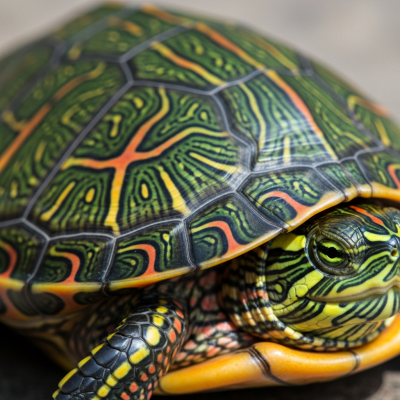
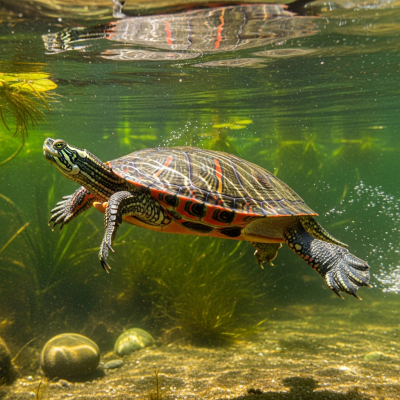
Adults measure typically 10 to 25 cm in carapace length, featuring a smooth, oval shell that ranges from black to olive. The carapace is strikingly marked with bright red and yellow stripes along its edges, while the plastron is usually yellow with a possible dark central blotch. The head, neck, and limbs display yellow stripes, and red markings often appear on the legs and tail. Females tend to be larger, whereas males have longer foreclaws and tails.
Painted turtles are diurnal and omnivorous, feeding on aquatic plants, insects, crustaceans, and carrion. They are ectothermic, frequently basking to regulate their body temperature. Adapted to cold climates, they overwinter buried in mud at the bottom of water bodies. Their growth rates and lifespan vary by region, with individuals living 20 years or more in the wild.
Bring this kind into your world illustrated posters, mugs, and shirts.

Archival print, museum-grade paper
Buy Poster
Stoneware mug, dishwasher safe
Buy Mug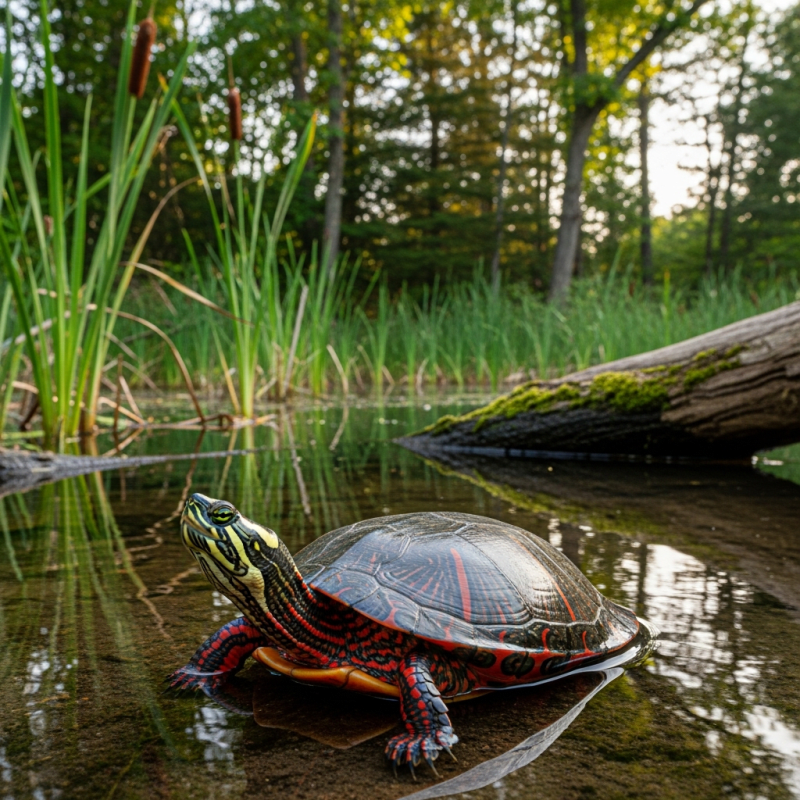
Soft cotton tee, unisex sizes
Buy ShirtWhile not prominent in widespread cultural myths, the painted turtle holds value in environmental education and ecological research. Its vivid coloration and common presence in North American wetlands make it a familiar symbol of freshwater ecosystems in local art and natural history contexts.
Native across much of North America, painted turtles inhabit freshwater environments such as ponds, lakes, and slow-moving rivers. They prefer calm waters with abundant aquatic vegetation, which supports their omnivorous diet and basking behavior.

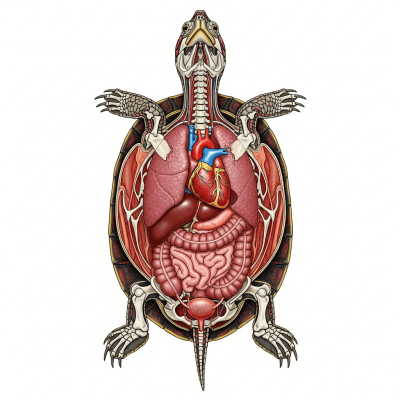
Painted turtles breed seasonally, with females laying clutches of eggs in sandy or soft soil near water. Hatchlings emerge after incubation and begin aquatic life immediately. Growth rates and lifespan vary by subspecies and region, with individuals reaching sexual maturity after several years and living multiple decades.
Though not currently listed as threatened, painted turtles face risks from habitat degradation, pollution, and road mortality. Many regions regulate or prohibit their harvest to protect populations. Conservation efforts focus on preserving wetland habitats and minimizing human impacts.
Painted turtles interact with humans primarily through habitat overlap and occasional pet trade. They serve as important ecological indicators of wetland health and are valued in environmental education. Legal protections limit their collection, and human activities such as road construction can pose significant threats.