Leopard Gecko
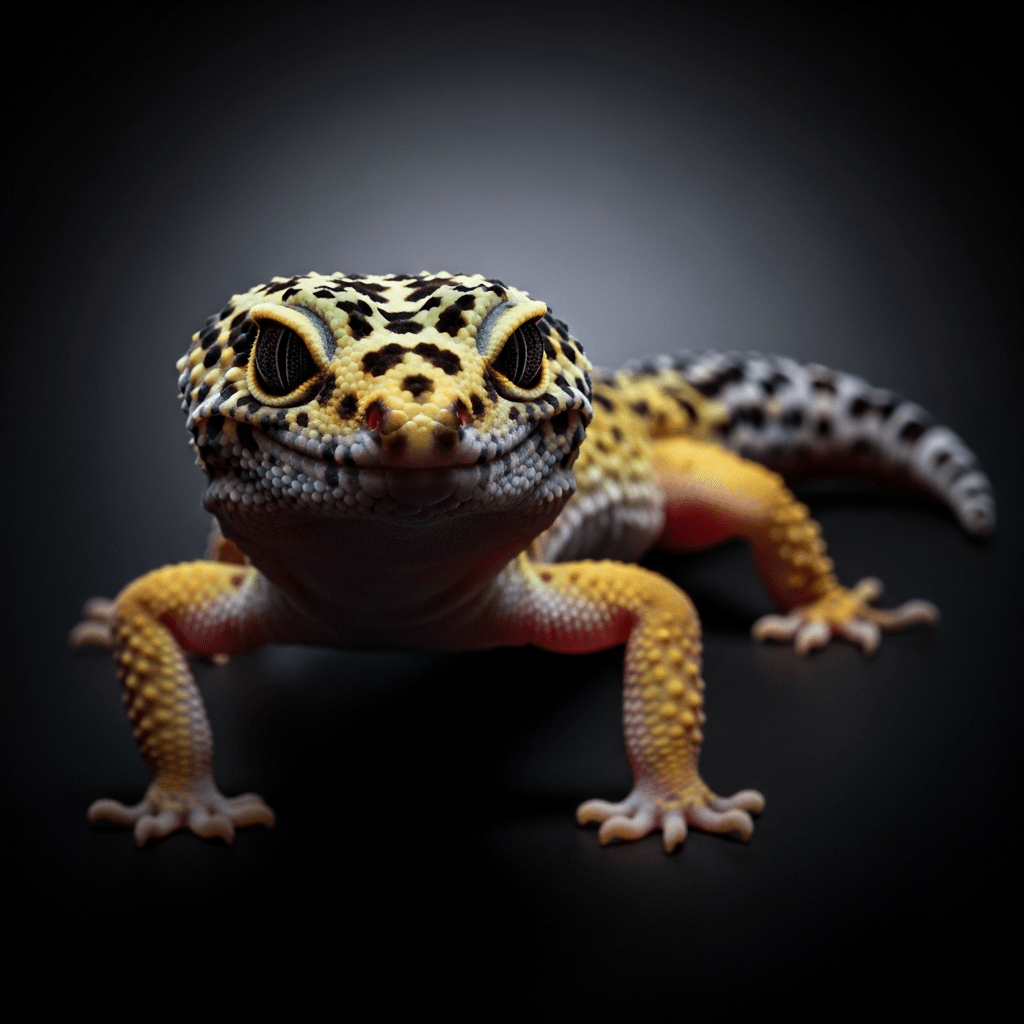
The Leopard Gecko (Eublepharis macularius) is a small, nocturnal lizard native to arid regions of South Asia, prized for its distinctive spotted pattern and gentle temperament.
The Leopard Gecko (Eublepharis macularius) is a small, nocturnal lizard native to arid regions of South Asia, prized for its distinctive spotted pattern and gentle temperament.
First described by Edward Blyth in 1854, the Leopard Gecko originates from Afghanistan, Pakistan, northwestern India, and parts of Iran. Over recent decades, captive breeding worldwide has produced numerous color morphs and lineages, with commercial operations established across North America, Europe, and Asia.
Belonging to the class Reptilia, the Leopard Gecko is classified within the order Squamata, family Eublepharidae, genus Eublepharis, and species macularius. It is one of the few geckos possessing movable eyelids, distinguishing it within its group.
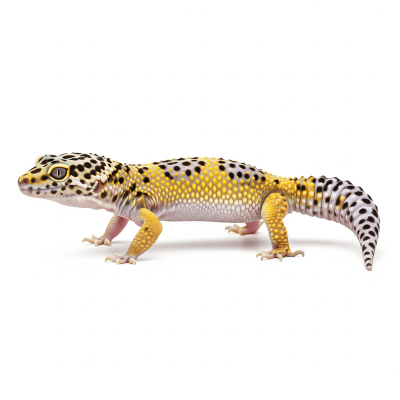
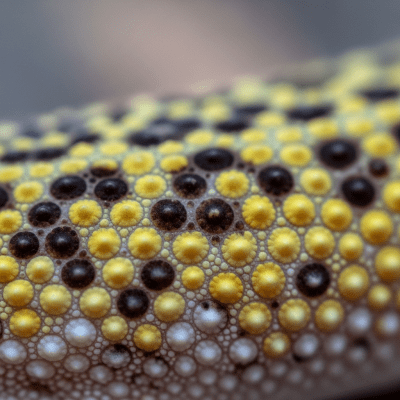
Leopard Geckos typically measure around 18 centimeters in length and weigh about 45 grams, with females generally smaller than males. Their skin is granular, featuring a base coloration ranging from yellow to tan, adorned with dark brown or black spots. Captive breeding has introduced a wide variety of color and pattern morphs such as albino, blizzard, tangerine, and enigma. Notable physical traits include a robust, fat-storing tail, movable eyelids, and digits lacking adhesive pads, reflecting their terrestrial lifestyle.
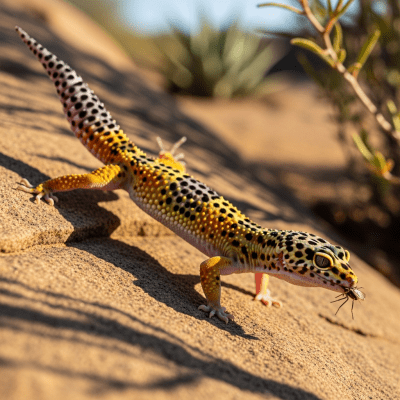
This species is primarily nocturnal and insectivorous, adapted to terrestrial habitats. Leopard Geckos exhibit a docile nature, making them suitable for handling and popular as pets. They grow at a moderate rate, reaching sexual maturity between 12 and 18 months. While resilient to arid environments, they require proper care to avoid health issues such as metabolic bone disease.
Bring this kind into your world illustrated posters, mugs, and shirts.
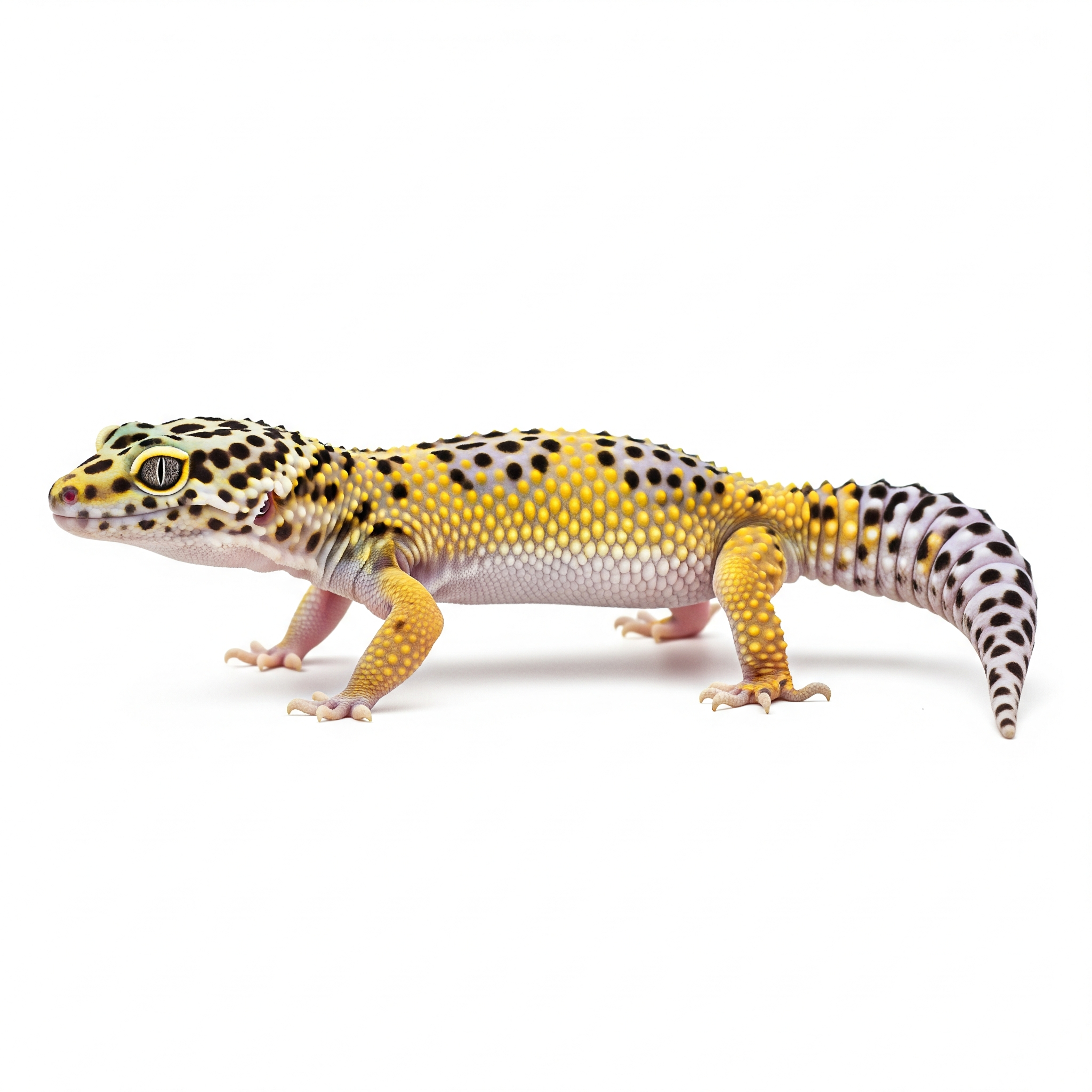
Archival print, museum-grade paper
Buy Poster
Stoneware mug, dishwasher safe
Buy Mug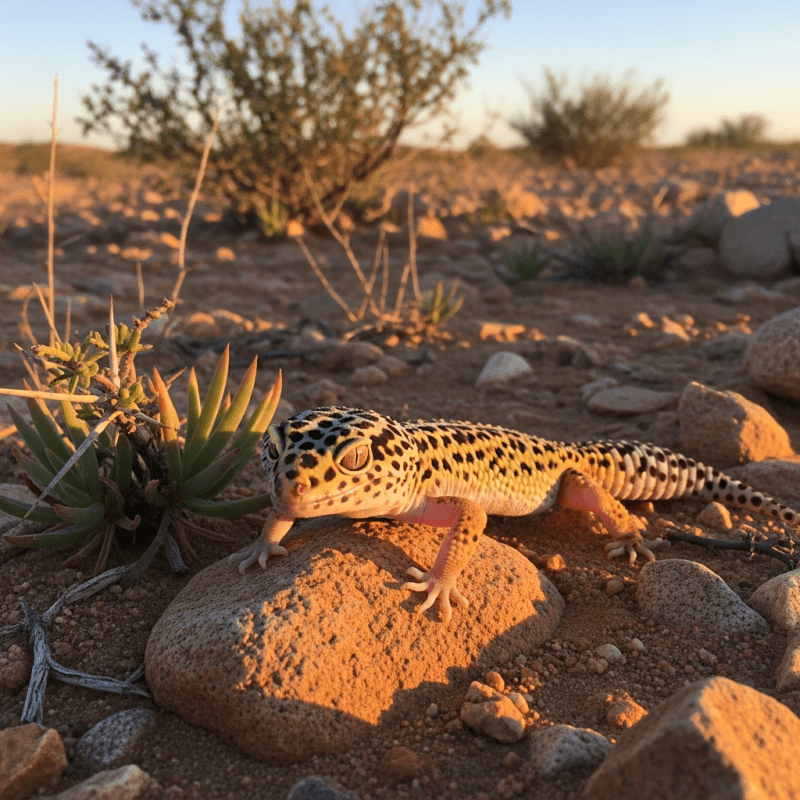
Soft cotton tee, unisex sizes
Buy ShirtWhile the Leopard Gecko does not hold a prominent place in traditional art or mythology, it has gained cultural significance through its popularity in the pet trade and herpetoculture. Its diverse morphs and approachable temperament have made it a favorite among reptile enthusiasts and educators worldwide.
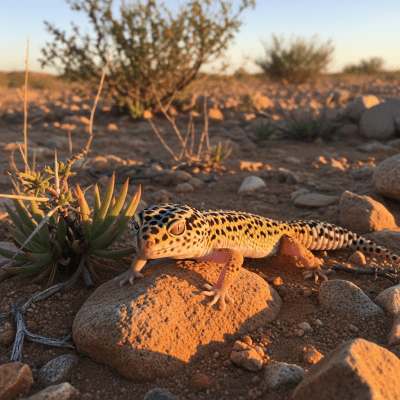
Native to the arid and semi-arid regions of Afghanistan, Pakistan, northwestern India, and parts of Iran, Leopard Geckos inhabit rocky deserts and dry grasslands. Their terrestrial habits suit these environments, where they shelter under rocks and in burrows to escape extreme temperatures.

Leopard Geckos reach sexual maturity between 12 and 18 months of age. While detailed clutch size and breeding behaviors vary, captive breeding programs have successfully maintained and expanded diverse morph lineages. Their moderate growth rate and manageable size contribute to their popularity in herpetoculture.
Currently, the Leopard Gecko is not listed with a specific IUCN conservation status. Wild populations face habitat pressures from human encroachment, but captive breeding reduces collection pressures. No significant invasive concerns or trade restrictions apply, though responsible husbandry is essential to prevent health issues in captivity.
Leopard Geckos have a strong presence in the pet trade and educational settings, prized for their ease of care and variety of color morphs. Commercial breeding operations worldwide supply the demand, supporting both hobbyists and scientific education. They are not used for culinary purposes or traditional medicine, and their interaction with humans is largely positive and controlled.