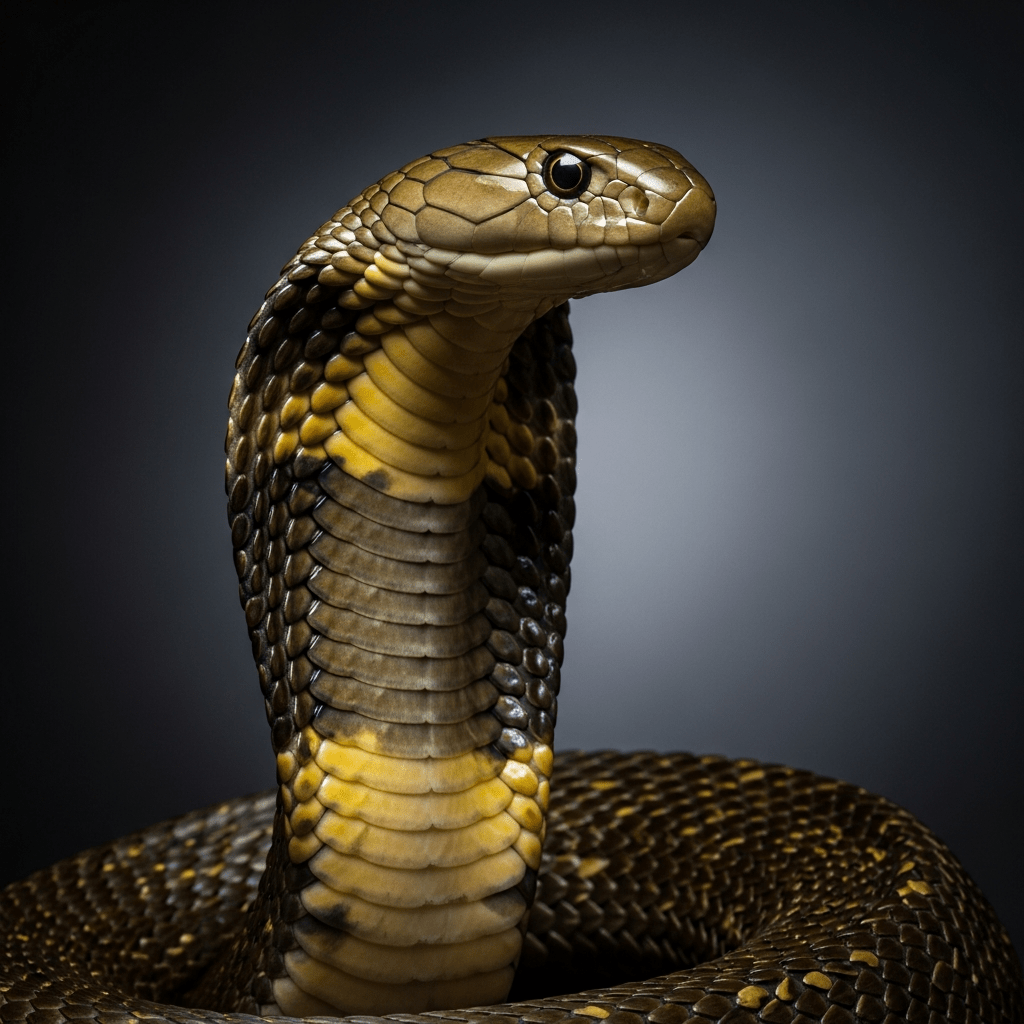
King Cobra
The King Cobra (Ophiophagus hannah) is the world’s longest venomous snake, famed for its imposing hood and potent neurotoxic venom.
The King Cobra (Ophiophagus hannah) is the world’s longest venomous snake, famed for its imposing hood and potent neurotoxic venom.
First described by Theodore Edward Cantor in 1836, the King Cobra originates from the forests and wetlands of South and Southeast Asia. It is a monotypic species with no recognized subspecies, primarily sourced from wild populations.
The King Cobra belongs to the class Reptilia and order Squamata, within the family Elapidae. Its genus is Ophiophagus, with the species name hannah, distinguishing it as a unique lineage among venomous snakes.
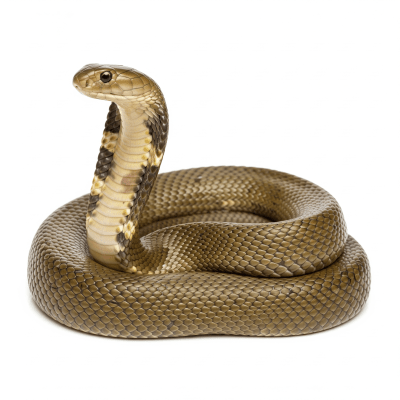
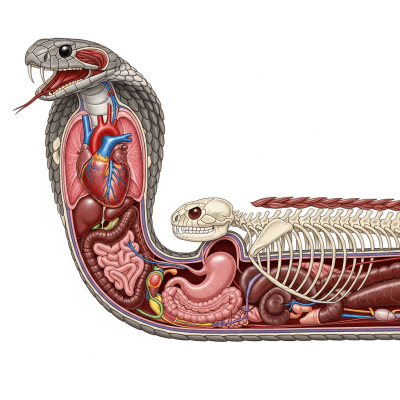
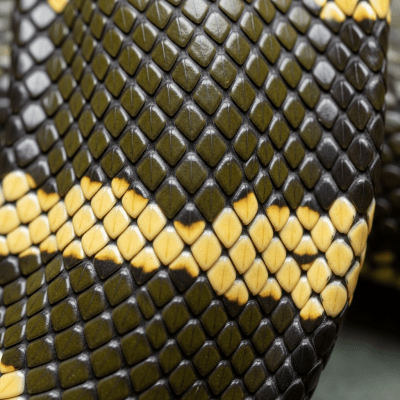
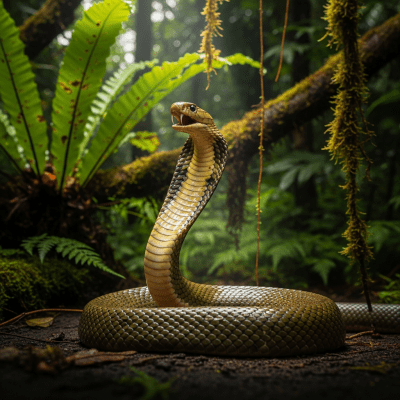
This slender snake can reach up to 5.85 meters (19.2 feet) in length, making it the longest venomous snake on Earth. Its coloration ranges from olive and brown to black, adorned with pale yellow crossbands. A broad head distinct from its neck supports an expandable hood, a hallmark feature. Large, fixed front fangs deliver its powerful venom.
The King Cobra is a top carnivorous predator known for its rapid juvenile growth and solitary, territorial nature. Uniquely among snakes, it builds nests and actively guards its eggs. It exhibits high resistance to its own venom but juveniles remain vulnerable to predation by large mammals and birds of prey.
Bring this kind into your world illustrated posters, mugs, and shirts.
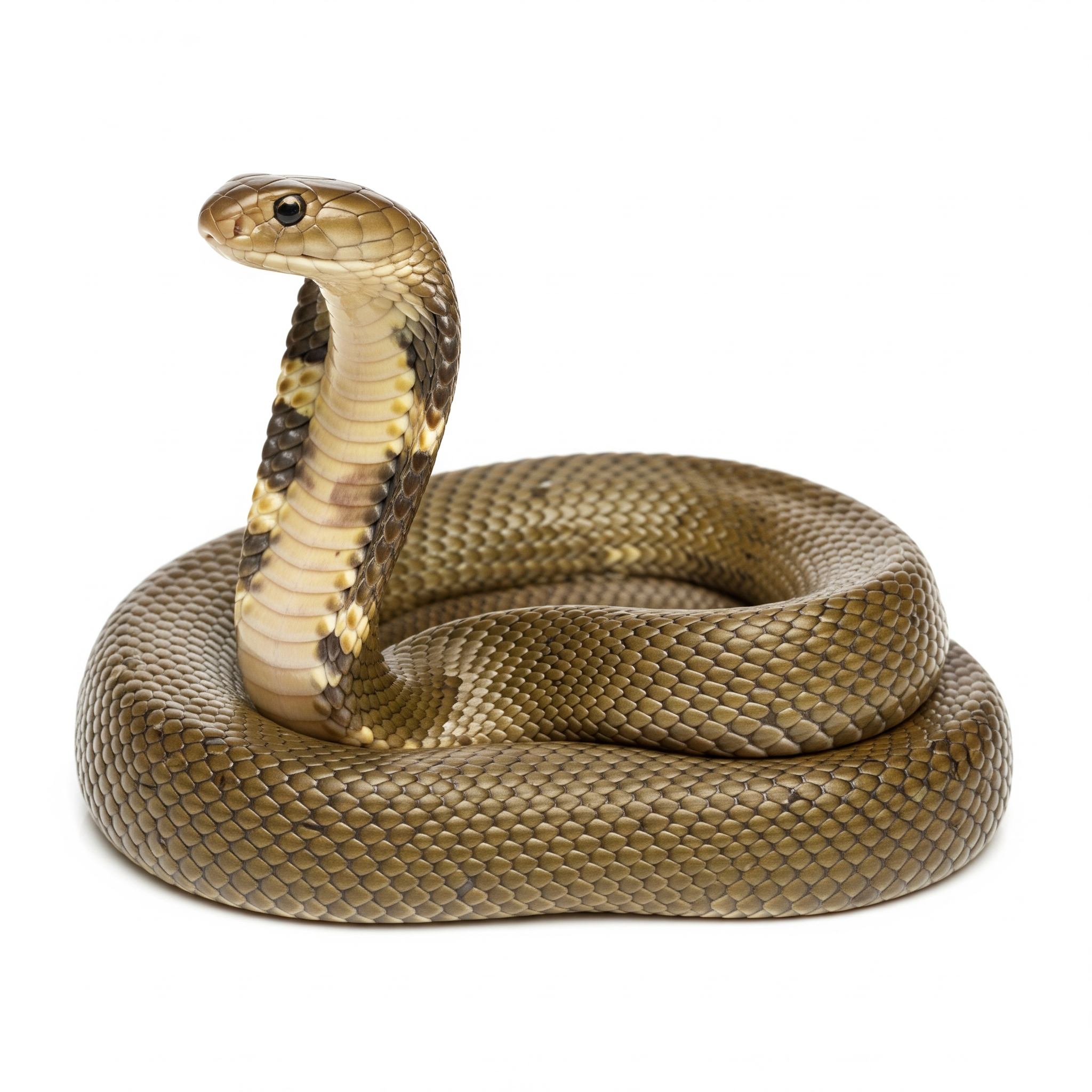
Archival print, museum-grade paper
Buy Poster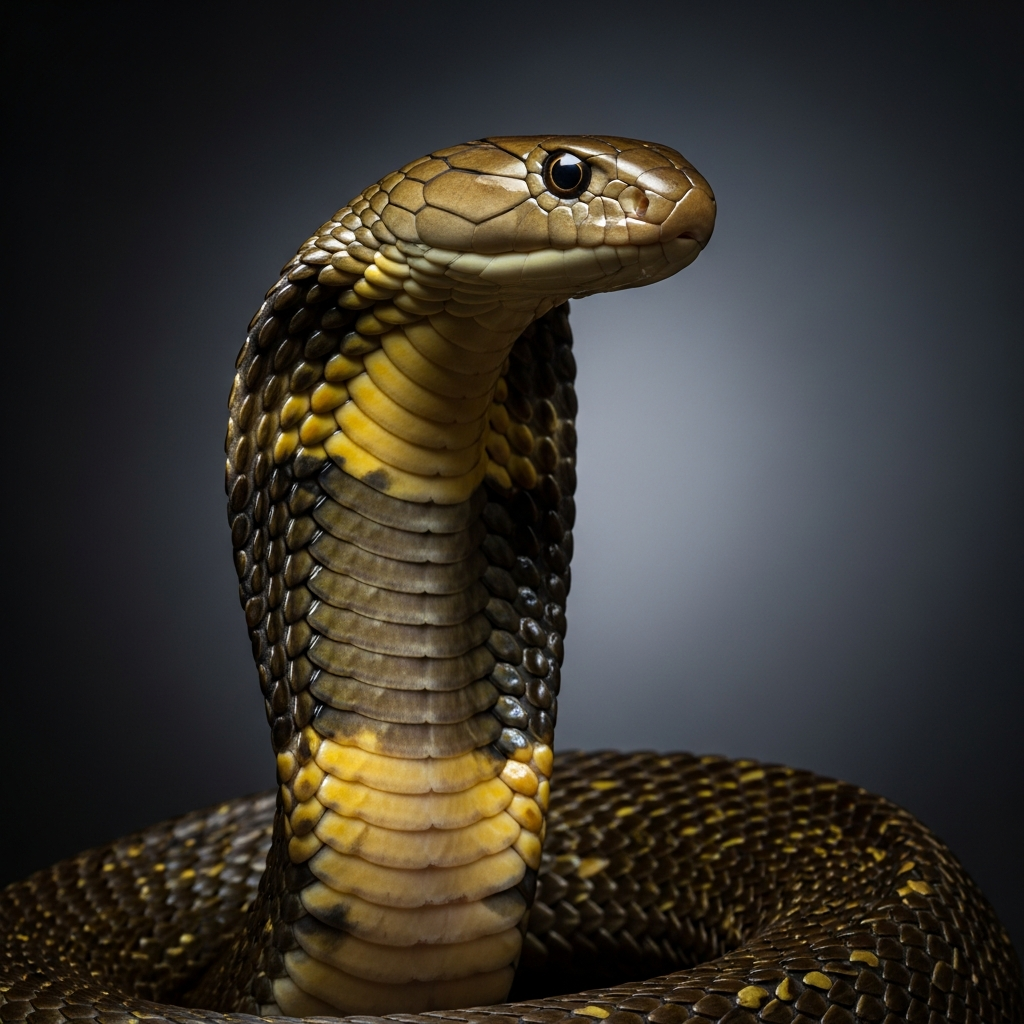
Stoneware mug, dishwasher safe
Buy Mug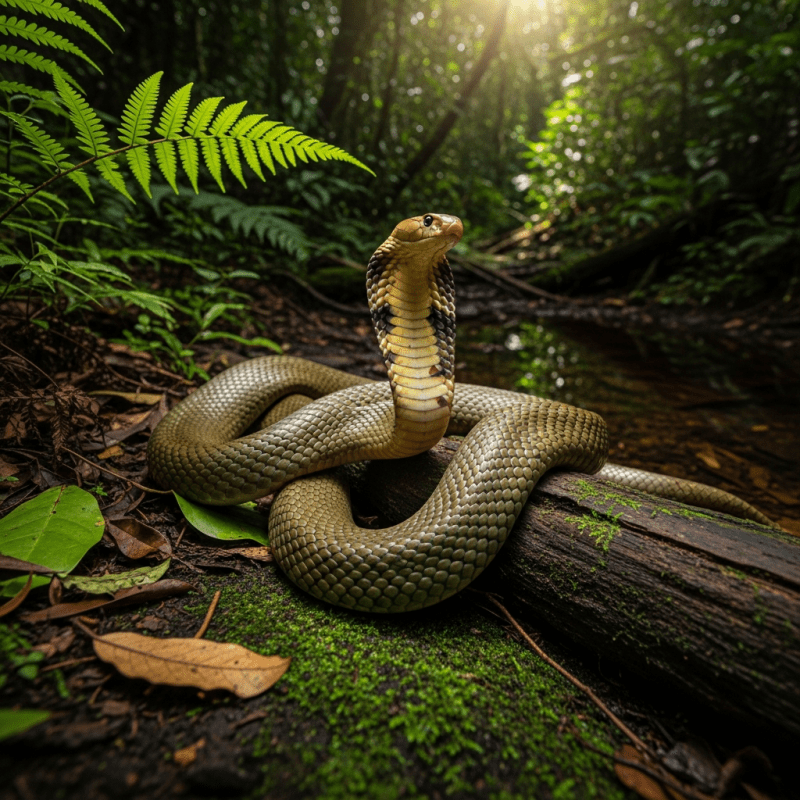
Soft cotton tee, unisex sizes
Buy ShirtDeeply revered in Hindu and Buddhist traditions, the King Cobra symbolizes power and protection. It features prominently in regional myths and religious art, reflecting its esteemed status across South and Southeast Asia.
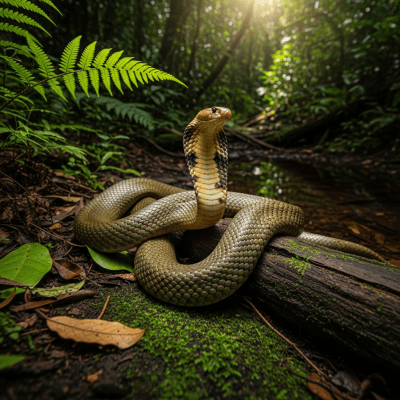
The King Cobra thrives in diverse forested and wetland habitats throughout South and Southeast Asia. Its range spans countries including India, Thailand, Malaysia, Indonesia, and the Philippines, favoring dense vegetation and proximity to water sources.
Unlike most snakes, the King Cobra builds nests to lay eggs and vigilantly guards them until hatching. Details on clutch size and sexual maturity vary, but the species exhibits relatively rapid juvenile growth. Lifespan in the wild is estimated around 20 years.
While its exact conservation status is not formally assessed, the King Cobra faces threats from habitat loss, persecution, and illegal trade. International regulations control its trade, and conservation efforts emphasize habitat protection and public education.
The King Cobra holds a complex relationship with humans: it is feared for its venom yet revered culturally. It appears in traditional medicine and snake wine, though such uses are increasingly restricted. The species is also sought after for exotic pet trade and public display, with strict regulations governing these activities.