Green Vine Snake
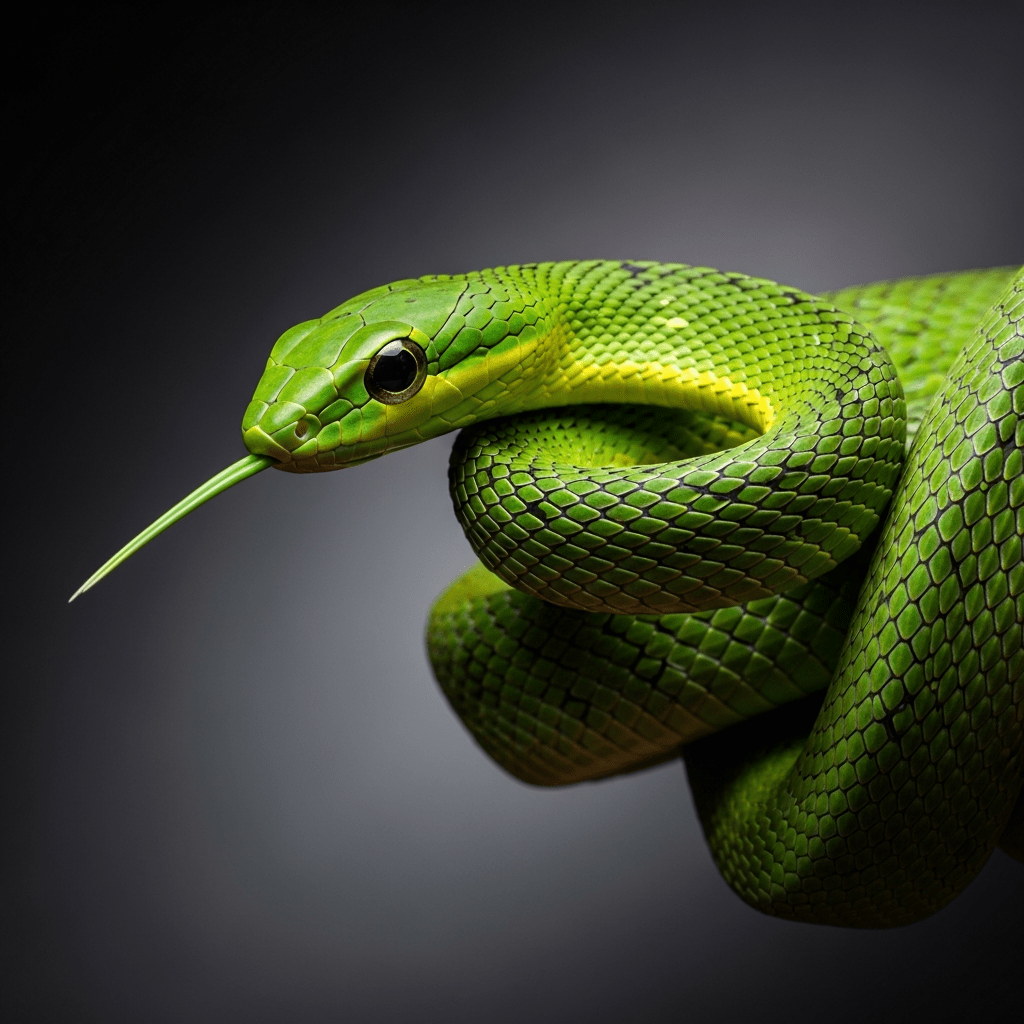
The Green Vine Snake (Ahaetulla nasuta) is a slender, arboreal reptile native to South and Southeast Asia, known for its vivid green coloration and elongated pointed snout that aids in camouflage among foliage.
The Green Vine Snake (Ahaetulla nasuta) is a slender, arboreal reptile native to South and Southeast Asia, known for its vivid green coloration and elongated pointed snout that aids in camouflage among foliage.
First described by John Edward Gray in 1835, the Green Vine Snake's original type specimen was collected in Sri Lanka. It has since been recognized across South and Southeast Asia, with most individuals in captivity originating from wild populations rather than captive breeding.
The Green Vine Snake belongs to the class Reptilia and order Squamata, within the genus Ahaetulla. It is part of the broader group of snakes distinguished by their elongated bodies and specialized hunting adaptations, fitting into the traditional Linnaean taxonomy as Ahaetulla nasuta.
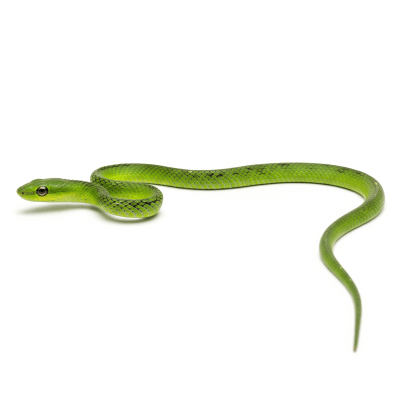
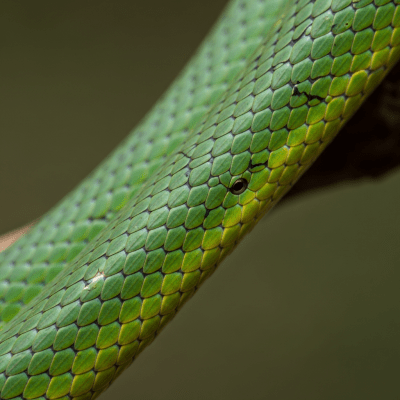
This species is characterized by an extremely slender body reaching about 1.75 meters in length, with a bright green dorsal surface and a lighter ventral side. Its most distinctive features include an elongated, sharply pointed snout and horizontal pupils that provide binocular vision. The Green Vine Snake possesses rear-fanged dentition and a smooth, streamlined form that enhances its arboreal lifestyle.
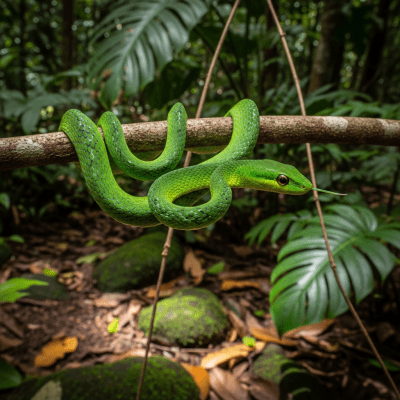
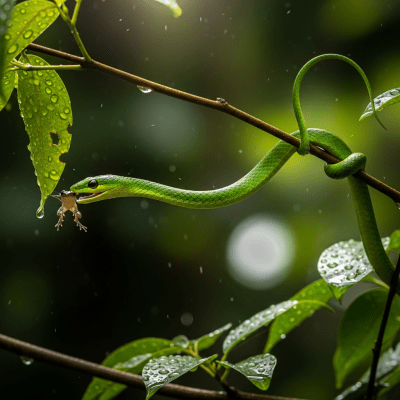
The Green Vine Snake is an arboreal predator that primarily feeds on small vertebrates. Its slow, deliberate movements and cryptic coloration allow it to blend seamlessly into leafy environments. It grows continuously and reaches sexual maturity around two to three years of age. Adapted to life in trees, it is sensitive to habitat disturbances and low temperatures, relying on camouflage and stealth to hunt effectively.
Bring this kind into your world illustrated posters, mugs, and shirts.
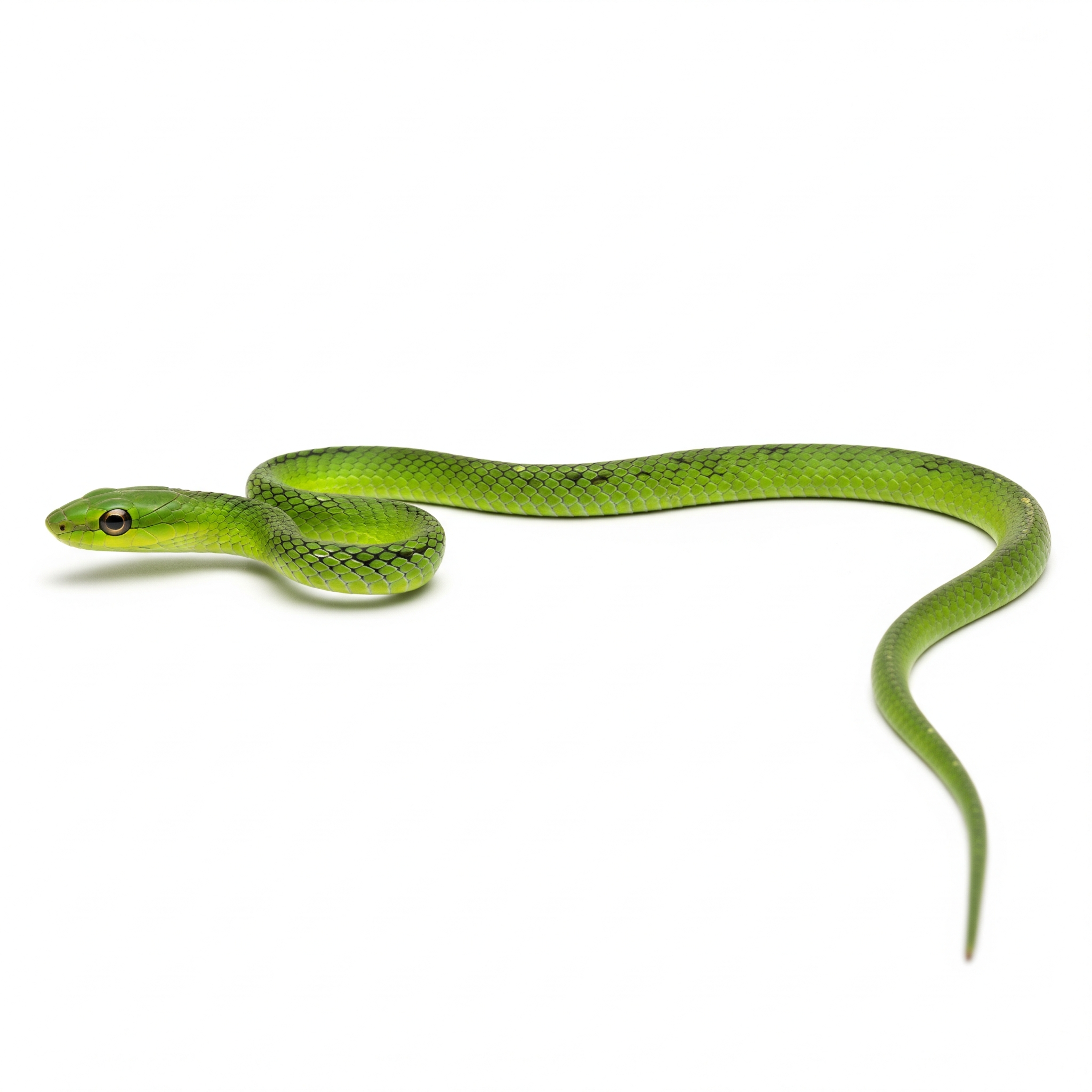
Archival print, museum-grade paper
Buy Poster
Stoneware mug, dishwasher safe
Buy Mug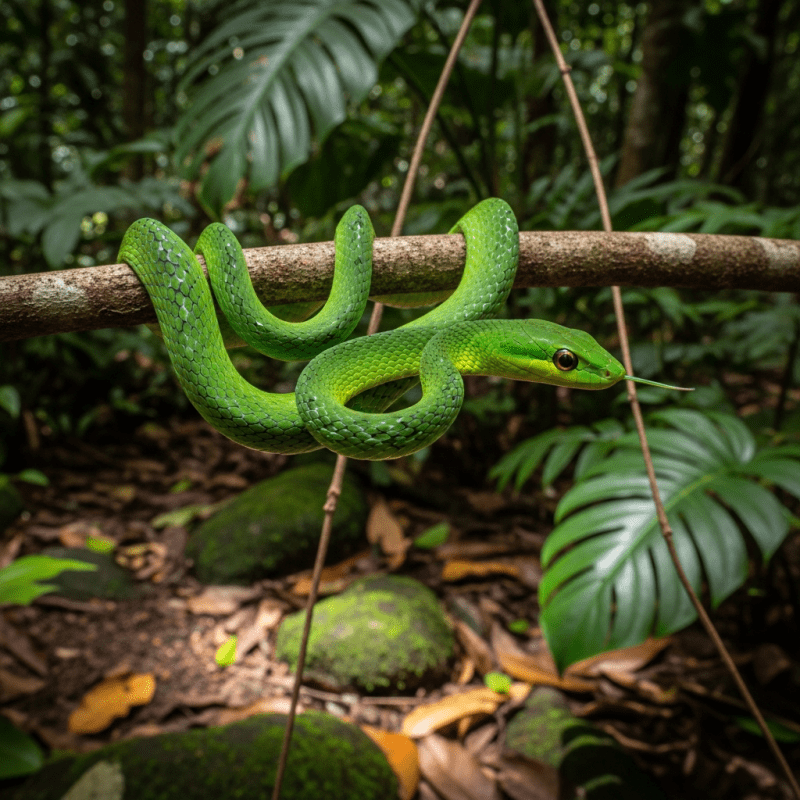
Soft cotton tee, unisex sizes
Buy ShirtWhile not widely prominent in folklore or art, the Green Vine Snake’s striking appearance and elusive nature have made it a subject of fascination in regions where it is native. Its slender form and vivid green color often inspire admiration among reptile enthusiasts and contribute to its occasional presence in the exotic pet trade.
The Green Vine Snake is native to forested habitats throughout South and Southeast Asia. It thrives in arboreal environments where dense foliage provides both cover and hunting grounds. Its range includes countries such as Sri Lanka, India, and parts of Southeast Asia, favoring warm, humid climates with abundant tree cover.

Details on the Green Vine Snake’s reproduction are limited, but it reaches sexual maturity at approximately two to three years of age. It exhibits continuous growth throughout its life. Like many arboreal snakes, it likely lays eggs, though specific clutch sizes and breeding behaviors remain under-documented.
While the Green Vine Snake is not currently listed with a specific conservation status, it faces threats from habitat disturbance and deforestation that reduce its arboreal habitats. Its sensitivity to environmental changes underscores the importance of preserving forest ecosystems in its native range.
The Green Vine Snake occasionally appears in the exotic pet trade due to its striking appearance, but its specialized care needs and protected status in some regions limit widespread captivity. It is not used for food or traditional medicine and generally avoids human contact, posing little risk or benefit beyond ecological balance and educational interest.