Green Iguana
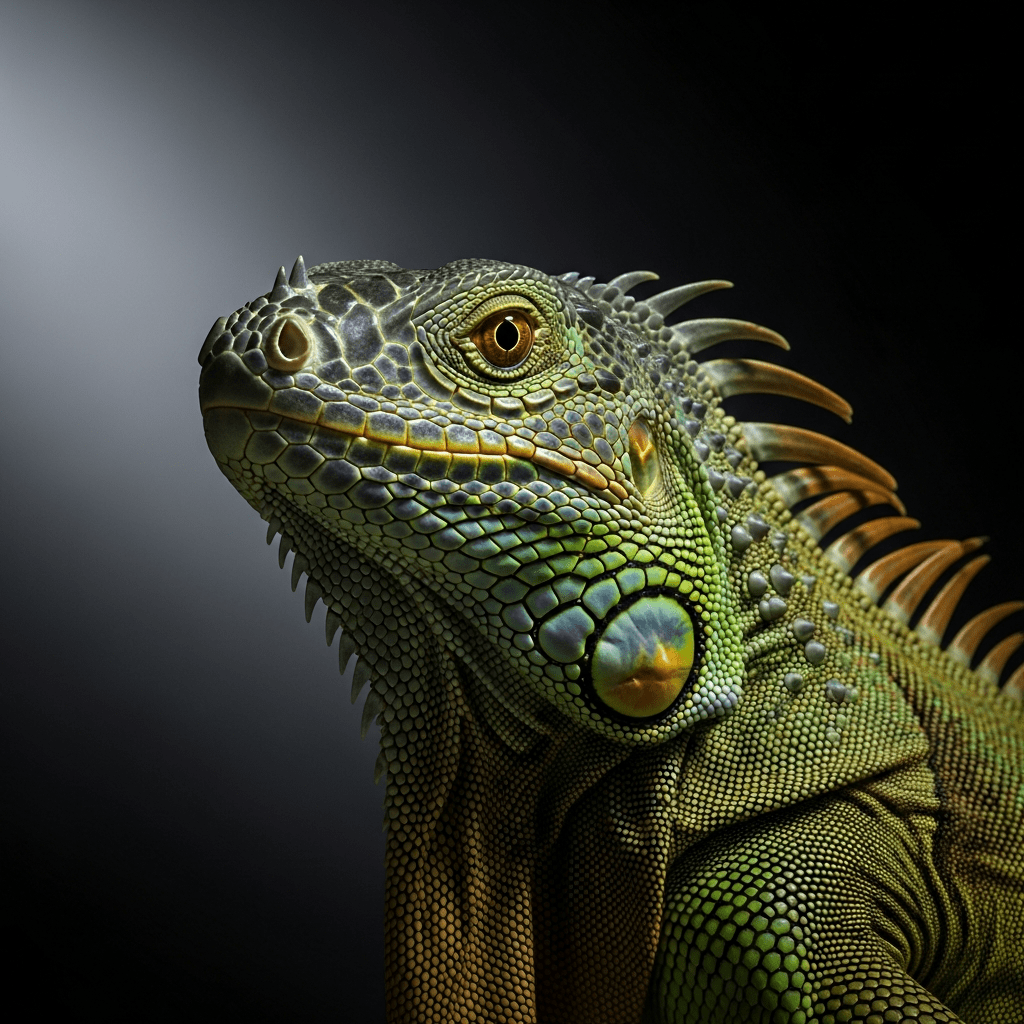
The Green Iguana (Iguana iguana) is a large, vibrant, arboreal lizard native to Central and South America, renowned for its striking coloration and adaptability.
The Green Iguana (Iguana iguana) is a large, vibrant, arboreal lizard native to Central and South America, renowned for its striking coloration and adaptability.
First described by Carl Linnaeus in 1758, the Green Iguana originates from the tropical forests of Central and South America. Its wild lineage remains intact, with captive populations derived from wild-caught individuals or breeding programs across the United States, Europe, and Asia.
The Green Iguana belongs to the class Reptilia, order Squamata, family Iguanidae, genus Iguana, and species iguana. This places it among the diverse group of scaled reptiles known as lizards.
The Green Iguana is a robust lizard typically measuring around 1.2 meters in length, including its tail. Juveniles display bright green coloration, while adults exhibit a range of hues from green and brown to orange and blue, influenced by region and genetics. Distinctive features include a prominent dewlap beneath the chin, a row of dorsal spines along the back, and a laterally compressed body that aids in arboreal movement.
Diurnal and primarily herbivorous, the Green Iguana feeds on leaves, flowers, and fruit. It thrives in arboreal habitats, skillfully navigating the forest canopy. Juveniles grow rapidly, reaching sexual maturity within two to three years. The species tolerates high humidity and moderate drought but is vulnerable to cold temperatures and metabolic bone disease in captivity.
Bring this kind into your world illustrated posters, mugs, and shirts.
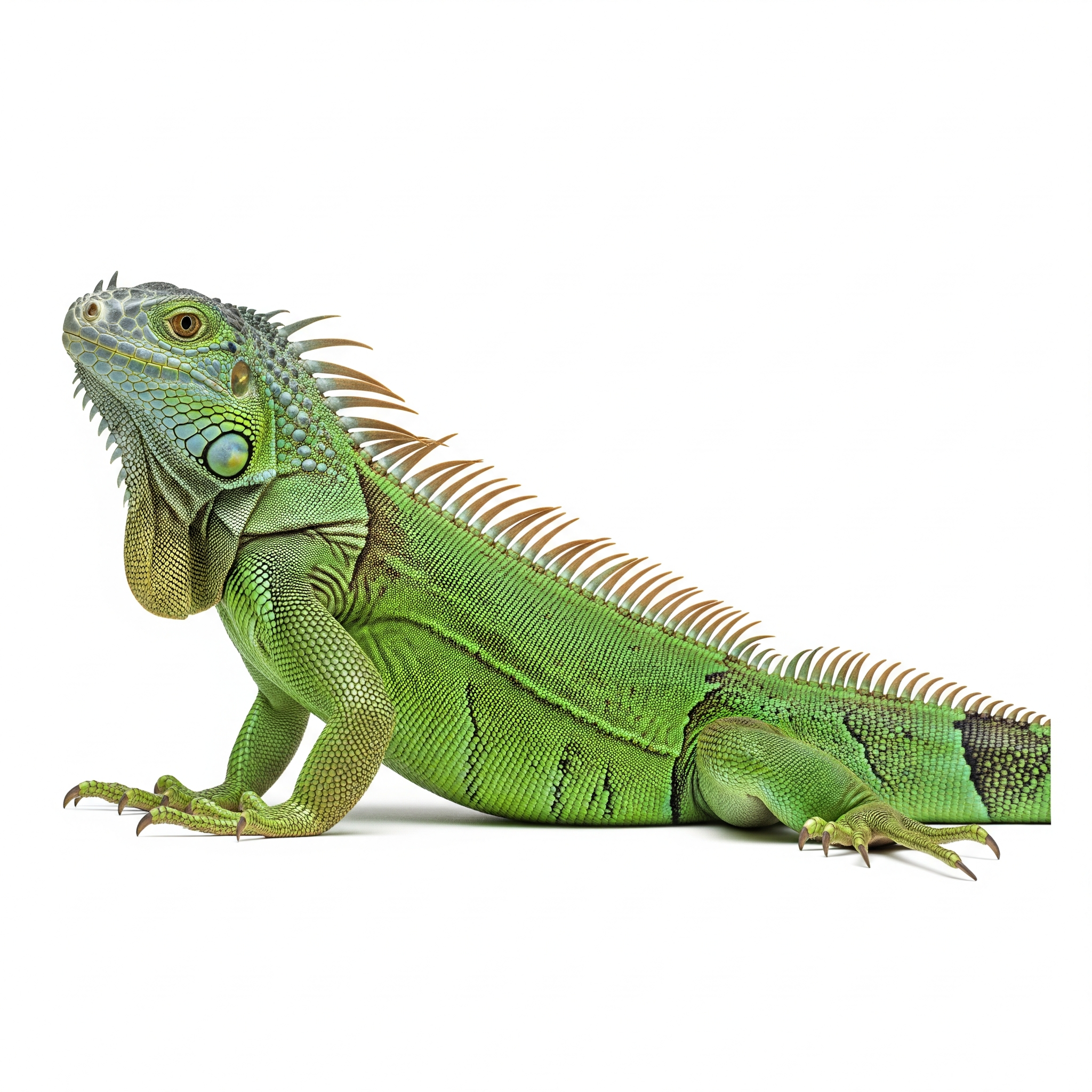
Archival print, museum-grade paper
Buy Poster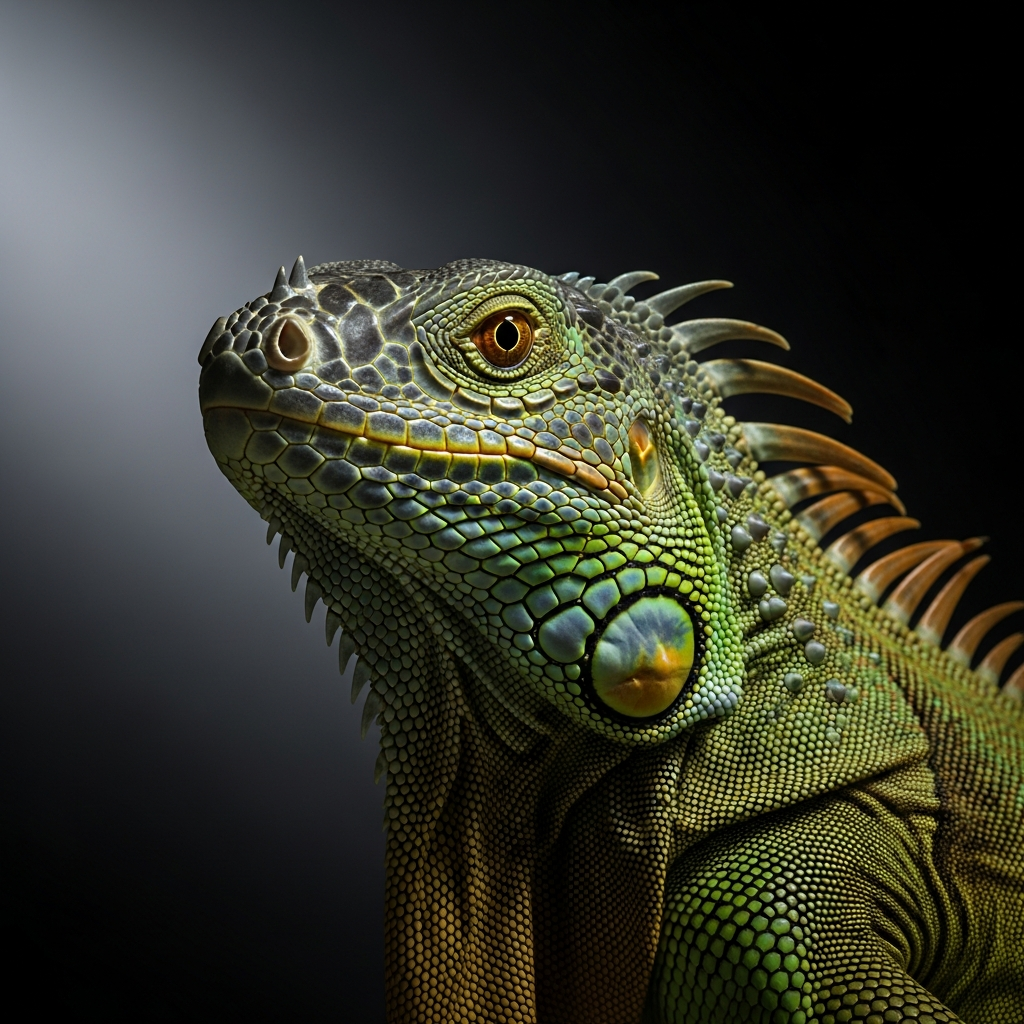
Stoneware mug, dishwasher safe
Buy Mug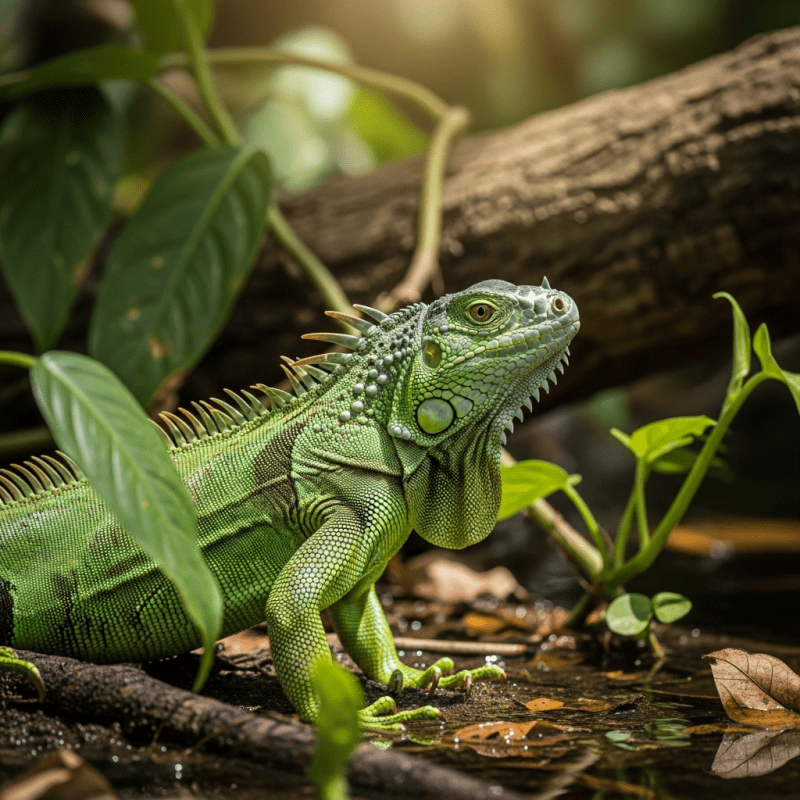
Soft cotton tee, unisex sizes
Buy ShirtIn parts of Central and South America, the Green Iguana holds culinary value, occasionally hunted for its meat, colloquially known as "bamboo chicken." Beyond food, it features prominently in pet trade, educational programs, zoos, and herpetological research, reflecting its broad cultural and scientific importance.
The Green Iguana inhabits arboreal tropical forests throughout Central and South America. Its natural range extends across countries with warm, humid environments where it occupies the forest canopy. Due to the pet trade and accidental releases, it has also established invasive populations in Florida, Puerto Rico, and several Caribbean islands.

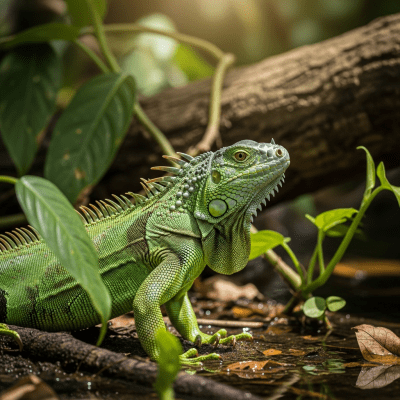

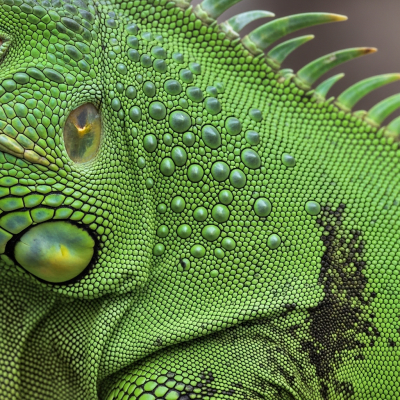
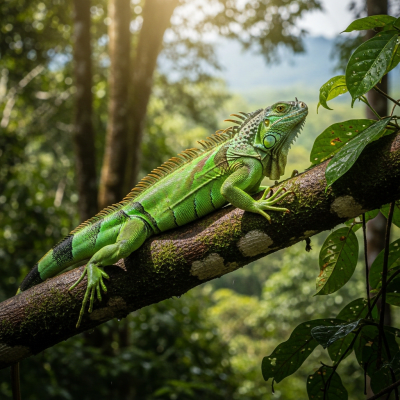
Green Iguanas grow rapidly and typically reach sexual maturity between two and three years of age. While specific breeding behaviors vary, males display brighter colors during mating season to attract females. Females lay clutches of eggs in burrows, and hatchlings begin life as bright green juveniles, gradually changing coloration as they mature.
Although not currently listed with a formal IUCN status, the Green Iguana faces threats from habitat loss and the pet trade. Its adaptability has led to invasive populations outside its native range, which can disrupt local ecosystems. Conservation efforts focus on regulating trade and educating the public on responsible pet ownership.
The Green Iguana is widely traded as a pet worldwide, prized for its striking appearance and manageable size. It also serves educational and research purposes in zoos and institutions. However, escaped or released individuals have established invasive populations, causing ecological concerns in non-native regions. In some cultures, it is hunted for food, adding to its complex relationship with humans.